
Required Practical: Investigating Resistance
These experiments can be carried out to see how RESISTANCE (R) in an electrical circuit is influenced by factors like the LENGTH OF THE WIRE and the COMBINATION OF RESISTORS in the circuit.
Calculating Resistance
You can calculate the resistance in a circuit by using AMmetres AND VOLTmetres:

Measures CURRENT (I) in AMPERES (A).
Always connect the ammeter in SERIES with the component.

Measures POTENTIAL DIFFERENCE (V) in VOLTS (V).
Always connect the voltmeter in PARALLEL across the component.
Once you have CURRENT and POTENTIAL DIFFERENCE values, you can use the following equation to find RESISTANCE:

There are TWO experiments you can carry out in this practical:
1. INVESTIGATING RESISTANCE AND LENGTH OF WIRE
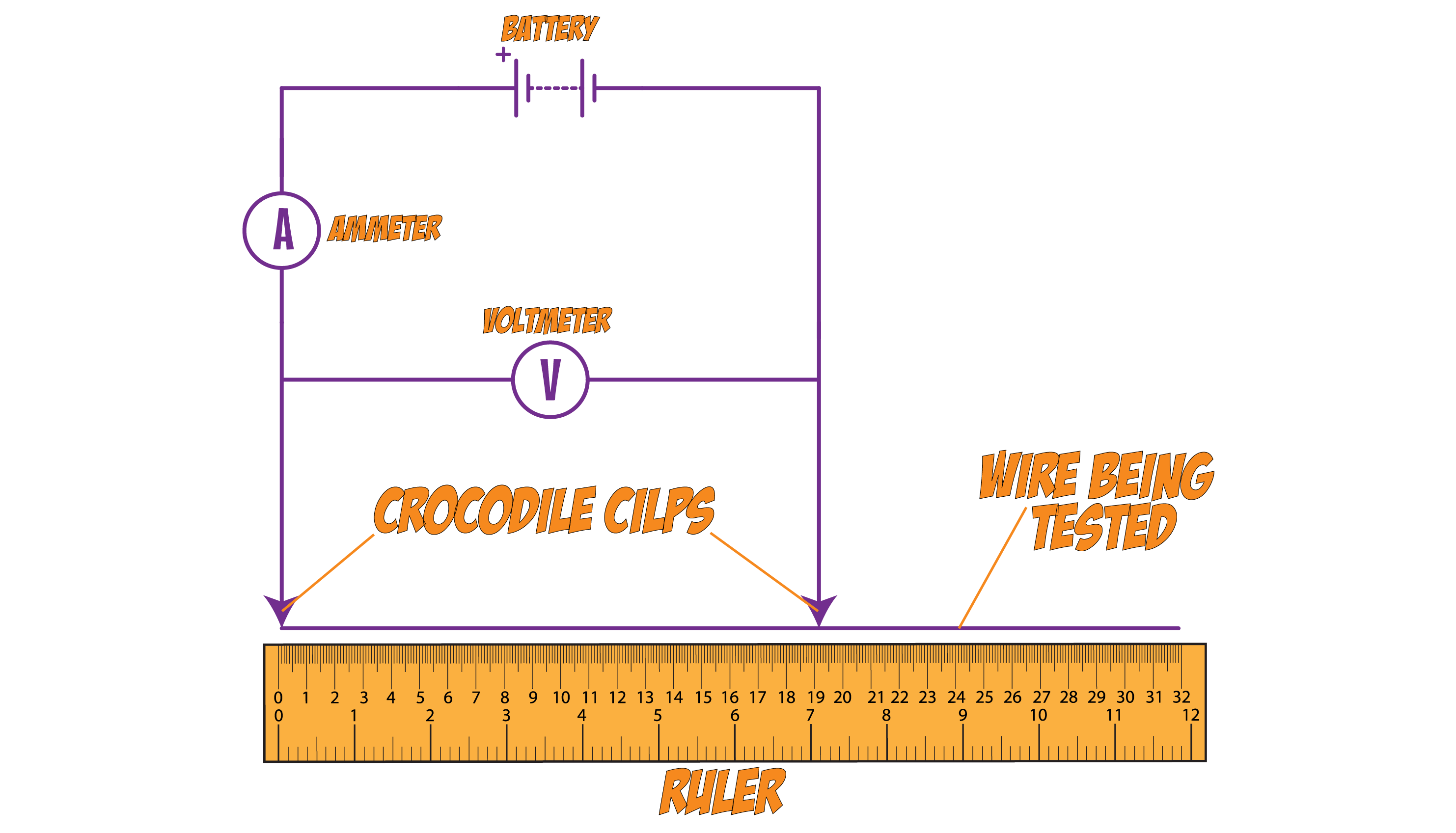
Method:
- Connect a crocodile clip to the wire at 0 cm on the ruler.
- Connect a second crocodile clip at a set length on the wire being investigated, e.g. 5 cm.
- Note the current (I) and potential difference (V).
- Move the second clip to a new length, e.g., 10 cm, and record again.
- Repeat for various lengths and record all measurements.
- Use the formula V = I × R to calculate RESISTANCE.
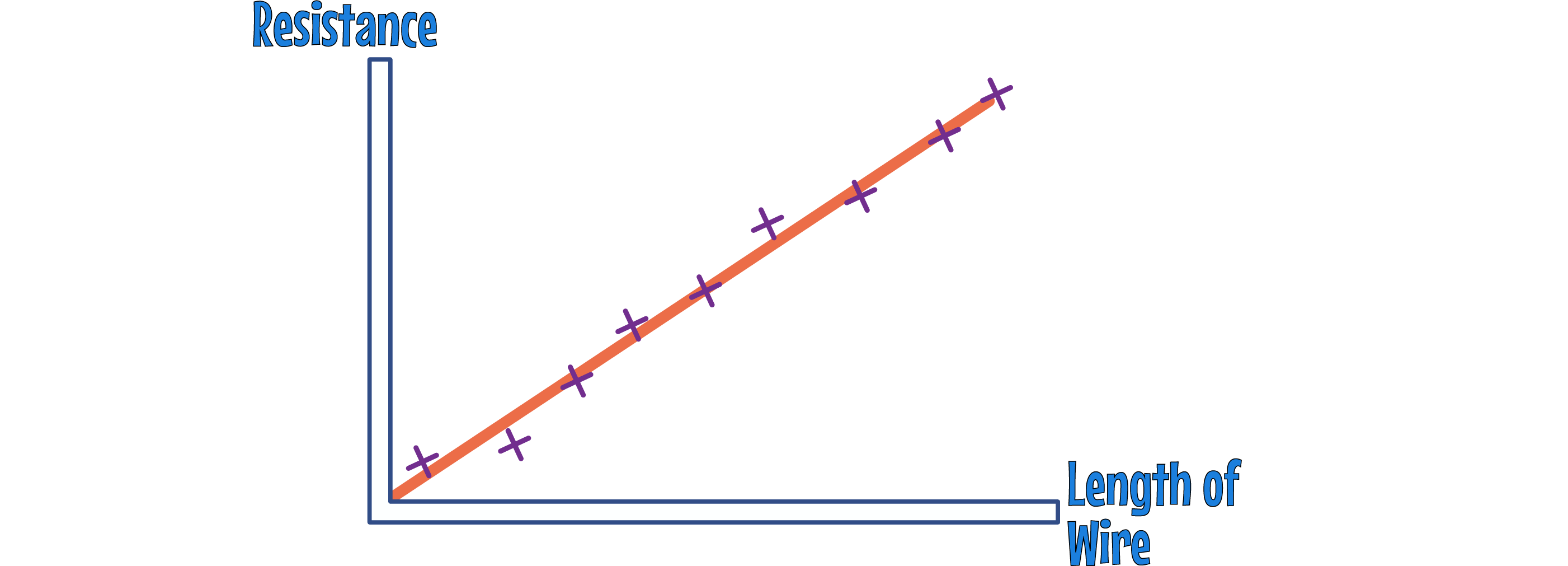
- Plot a graph of resistance against wire length and draw a LINE OF BEST FIT.
Ensure that the circuit is DISCONNECTED between readings, as the wire would warm up and affect the resistance readings.
2. INVESTIGATING COMBINATIONS OF RESISTORS IN SERIES AND PARALLEL
The number of resistors, and their arrangement can affect the TOTAL resistance in the circuit.
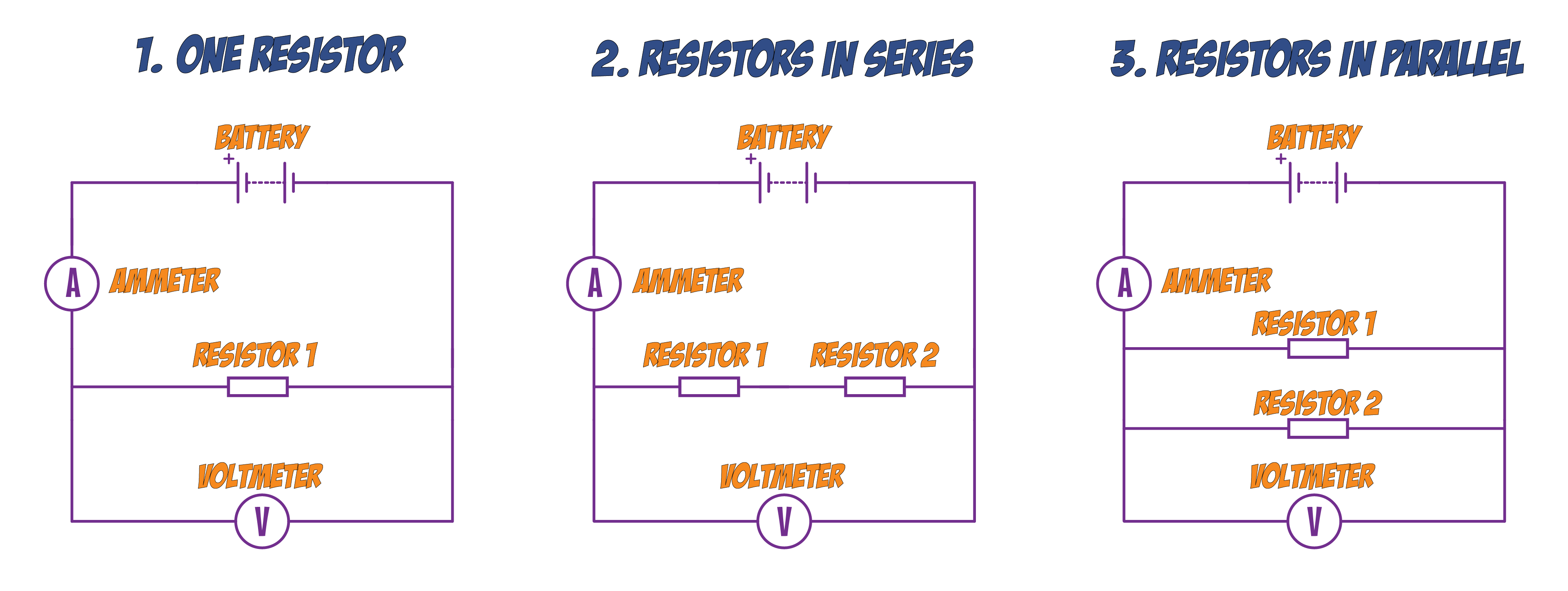
To investigate how resistors in SERIES and in PARALLEL affect the overall resistance, you can set up the following 3 circuits:
Method
1. For the FIRST circuit, note down the AMMETER and VOLTMETER values, and use the formula to work out the RESISTANCE of RESISTOR 1.
2. Repeat this method for RESISTOR 2.
3. Connect the SECOND CIRCUIT and work out the resistance.
4. Connect the THIRD CIRCUIT and work out the resistance.
Results
In Series:
- The resistance of the combined resistors in SERIES is equal to the SUM of the two individual resistances.
- This is because the electrons flow through just ONE path through both resistors, so the current does too.
In Parallel
- The resistance of the combined resistors in PARALLEL is LESS than the sum of the two individual resistances.
- This is because the electrons are SPLIT between the different paths (or 'loops') but the resistors still have the SAME POTENTIAL DIFFERENCE across them.