
The Life Cycle of Stars

Stars begin their life in a CLOUD OF DUST AND GAS (mostly made of hydrogen), known as a NEBULA.
GRAVITATIONAL ATTRACTION pulls the dust and gas together to form a PROTOSTAR.
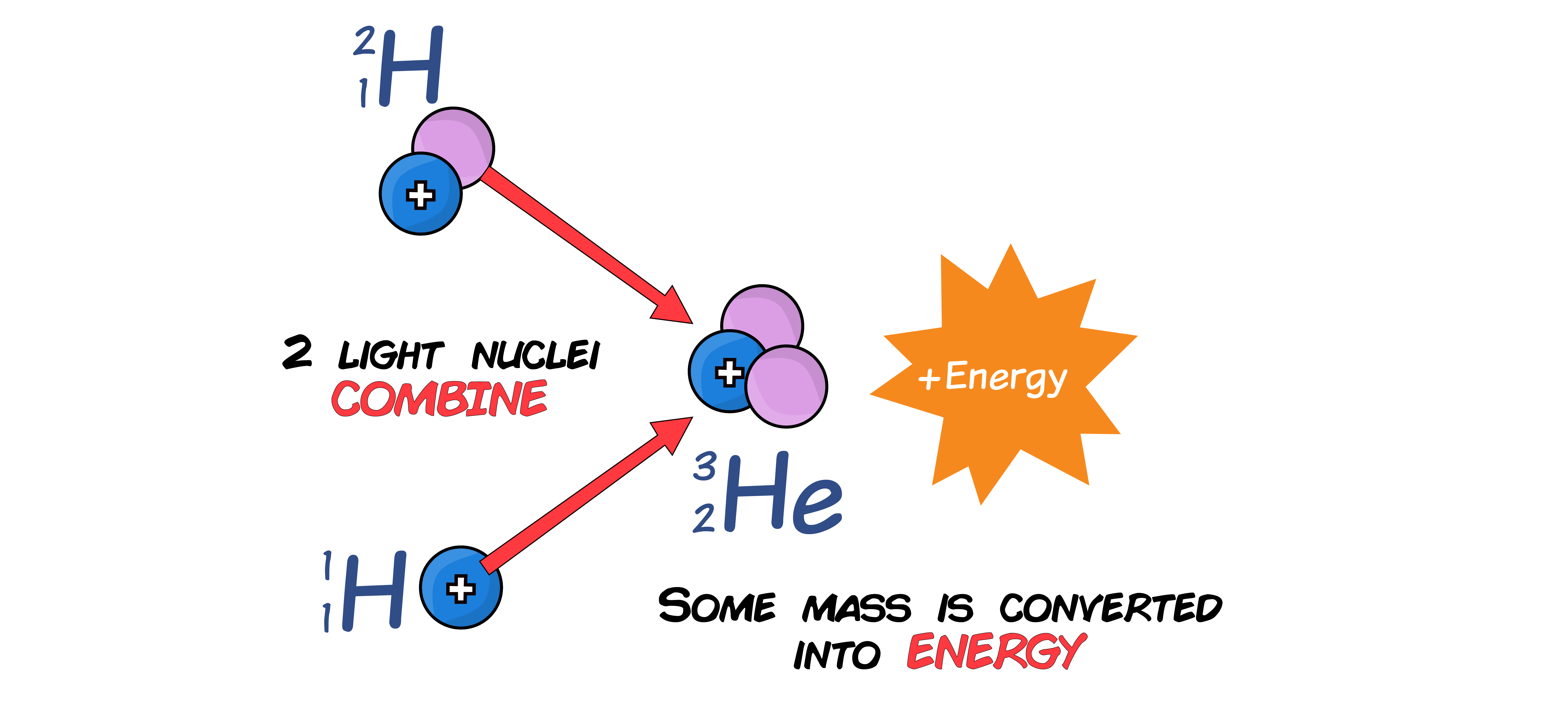
As the protostar’s TEMPERATURE rises due to increasing pressure and collisions, it reaches a point where NUCLEAR FUSION occurs.
During this process, SMALL HYDROGEN NUCLEI fuse to form LARGER HELIUM NUCLEI. This fusion releases ENERGY.
The star then enters a MAIN SEQUENCE phase. During this phase, there are TWO forces acting on the star:
1. GRAVITATIONAL FORCES INWARDS
2. OUTWARDS PRESSURE due to FUSION
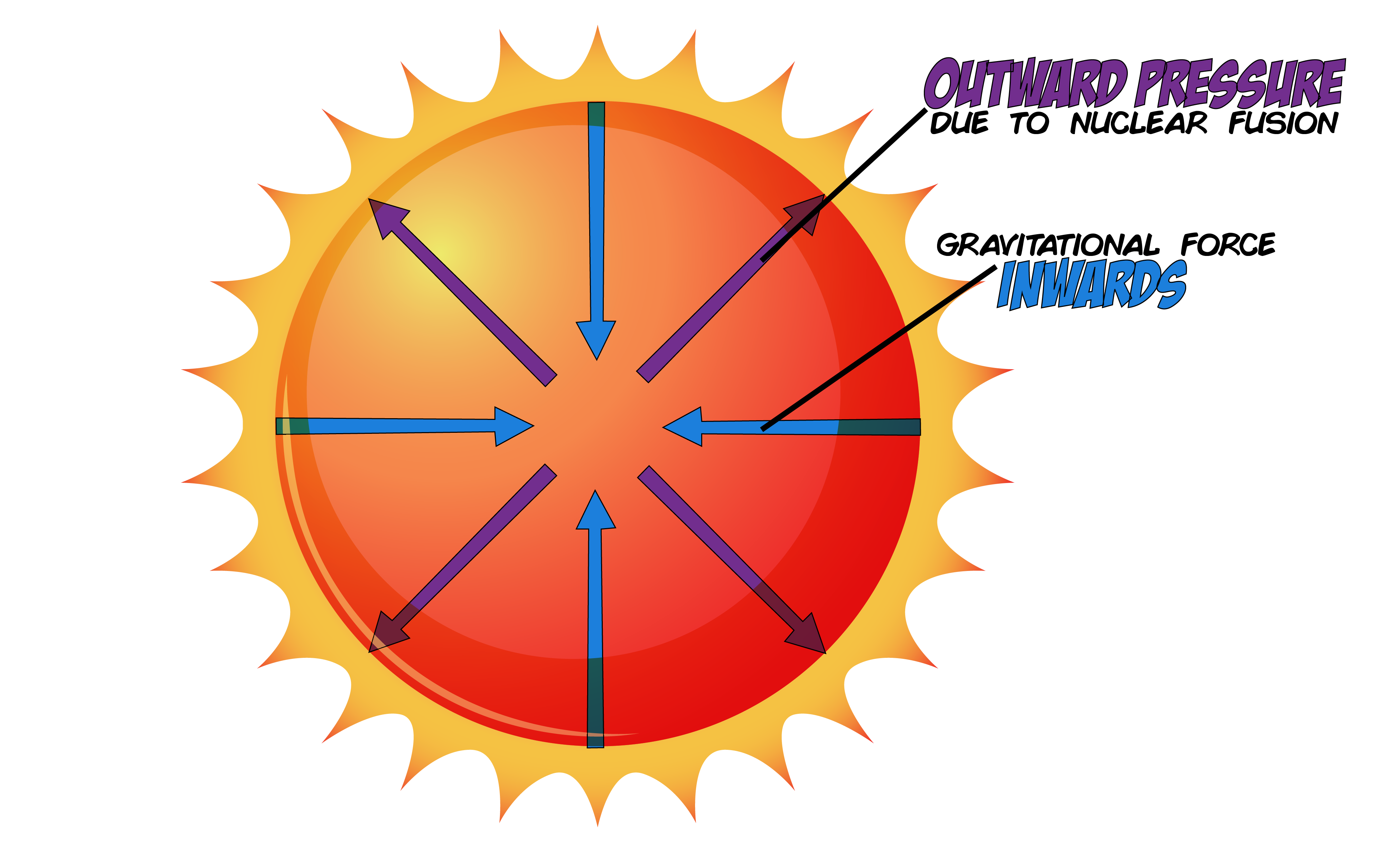
During this period, the OUTWARDS PRESSURE from nuclear fusion becomes EQUAL to the INWARD GRAVITATIONAL FORCE and the star becomes STABLE.
This is the period that stars spend MOST of their lives in and can last for several billion years.
As the star’s hydrogen supply begins to RUN OUT, it leaves the main sequence.
Depending on its size, it can become a RED GIANT or a RED SUPER GIANT.
Smaller Stars
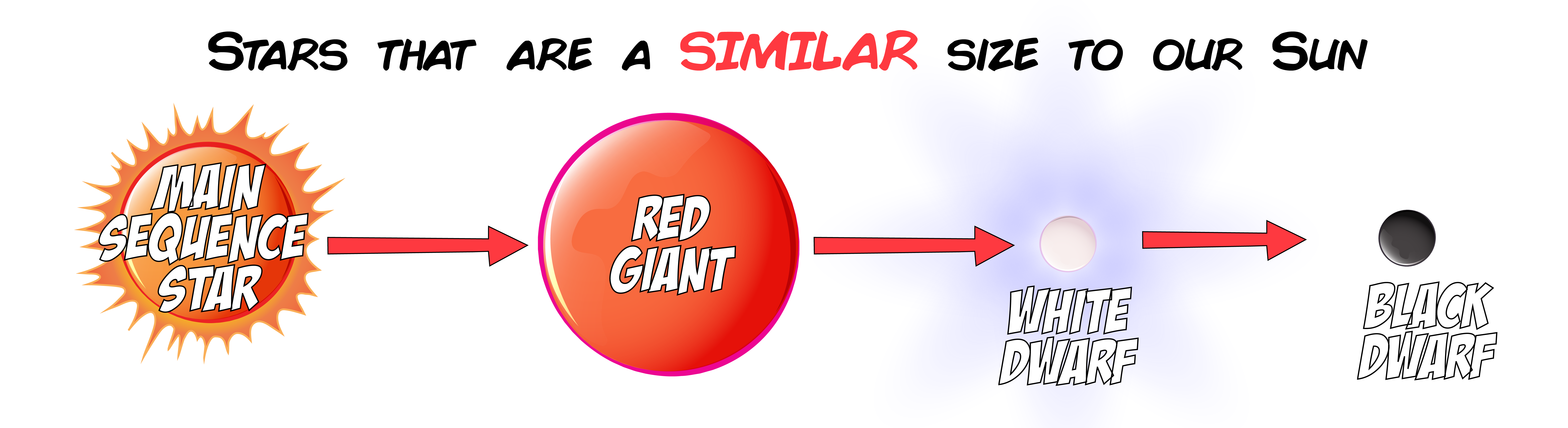
For stars with a SIMILAR SIZE to our SUN, when the HYDROGEN RUNS OUT, the star EXPANDS to become a RED GIANT.
During this stage, the star uses the HELIUM it has as a fuel.
The HELIUM fuses to form HEAVIER ELEMENTS in the core while the outer surface COOLS.
After the RED GIANT phase, the star COLLAPSES to become a WHITE DWARF.
Over time, as it cools and emits less energy, it fades into a BLACK DWARF.
Larger Stars
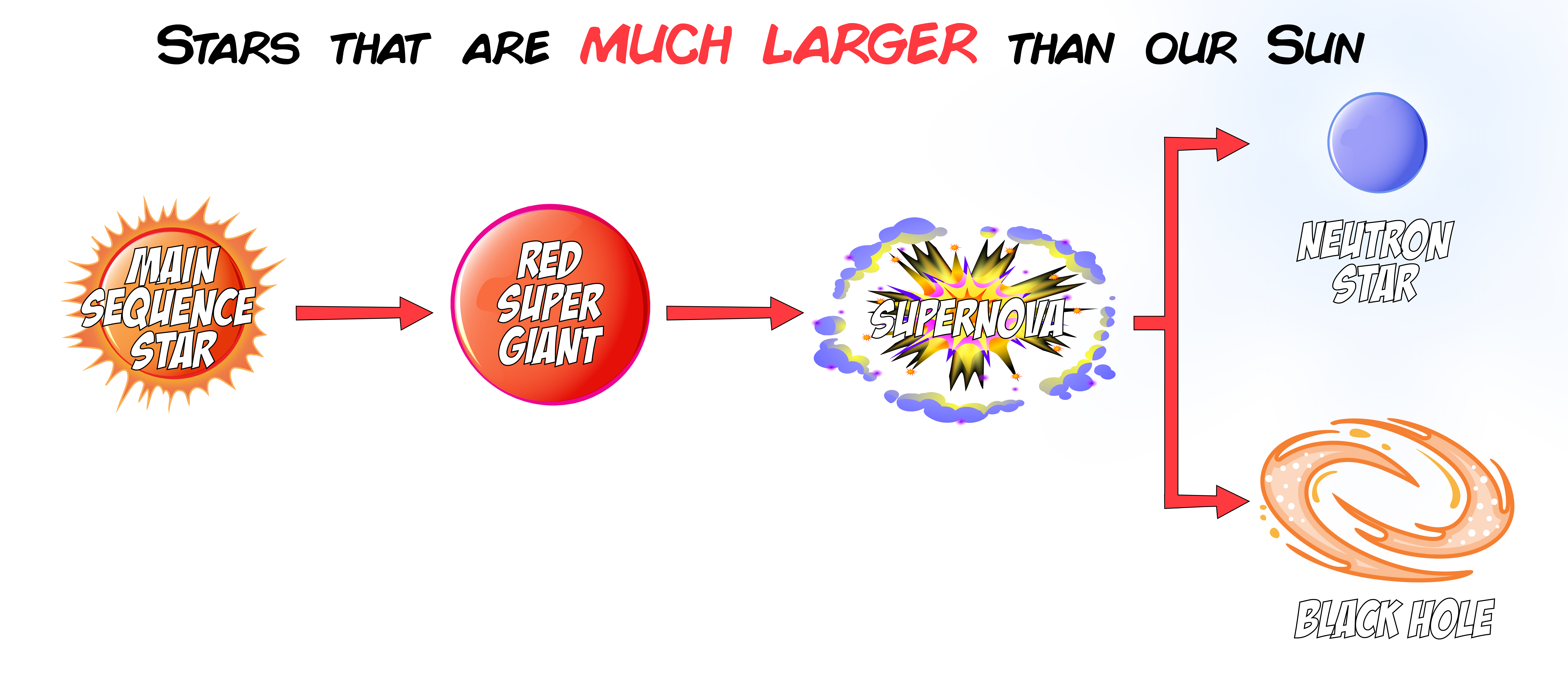
Stars with a much LARGER size to our sun form a RED SUPER GIANT instead of a red giant.
When the hydrogen RUNS OUT for LARGER stars, FUSION of even HEAVIER ELEMENTS up to IRON occur.
The star EXPANDS to become a RED SUPERGIANT which is much LARGER than a red giant.
Eventually the star COLLAPSES RAPIDLY and EXPLODES into a SUPERNOVA.
The HUGE amount of energy from the SUPERNOVA allows elements HEAVIER than IRON to be created and DISTRIBUTED throughout the universe.
This explosion leaves behind a NEUTRON STAR, or if the star's core is VERY MASSIVE, it would form a BLACK HOLE.