Orbital Motion
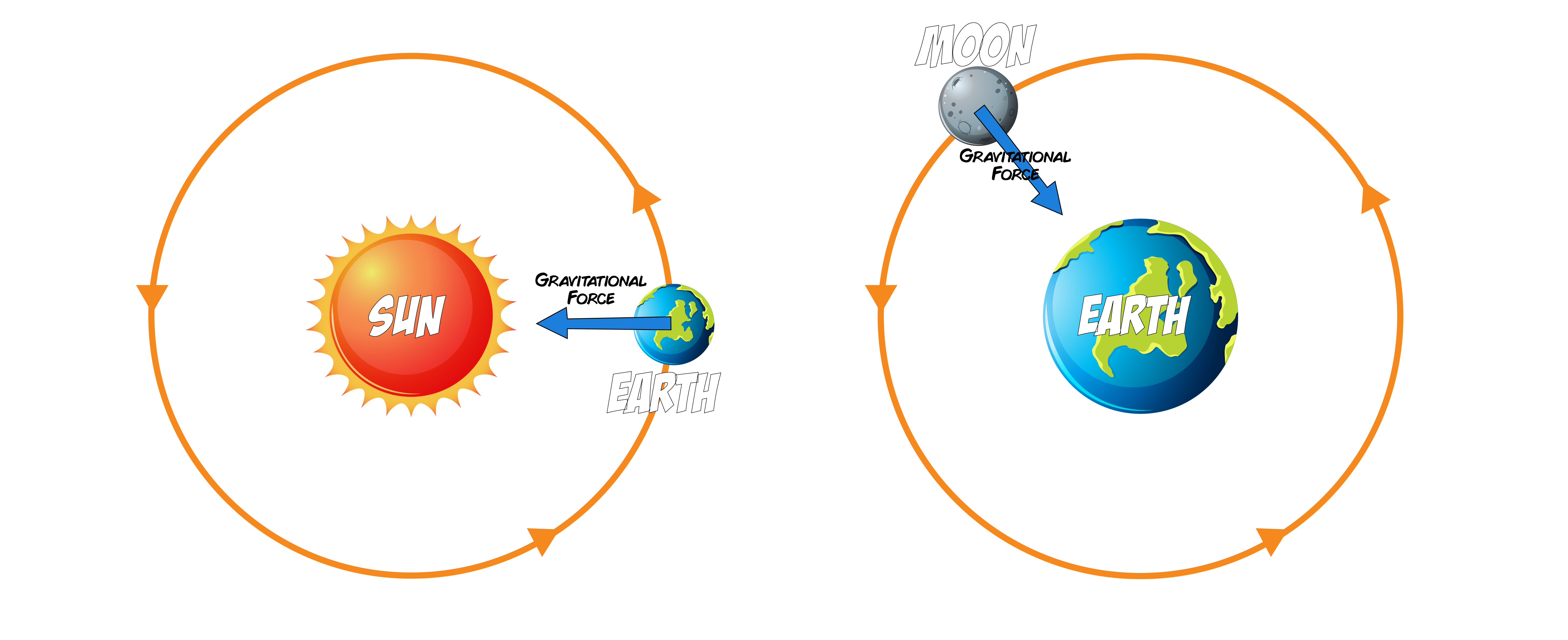
When a planet orbits a star, the GRAVITY of the star acts on the PLANET and allows it to maintain a CIRCULAR ORBIT.
For SATELLITES, it is the gravity of a PLANET that allows it to maintain its orbit.
When an object is orbiting in a circular path at a CONSTANT SPEED, its SPEED stays the SAME but its DIRECTION is CHANGING.
A CHANGE IN DIRECTION (even if speed is constant), means the VELOCITY of the object changes.
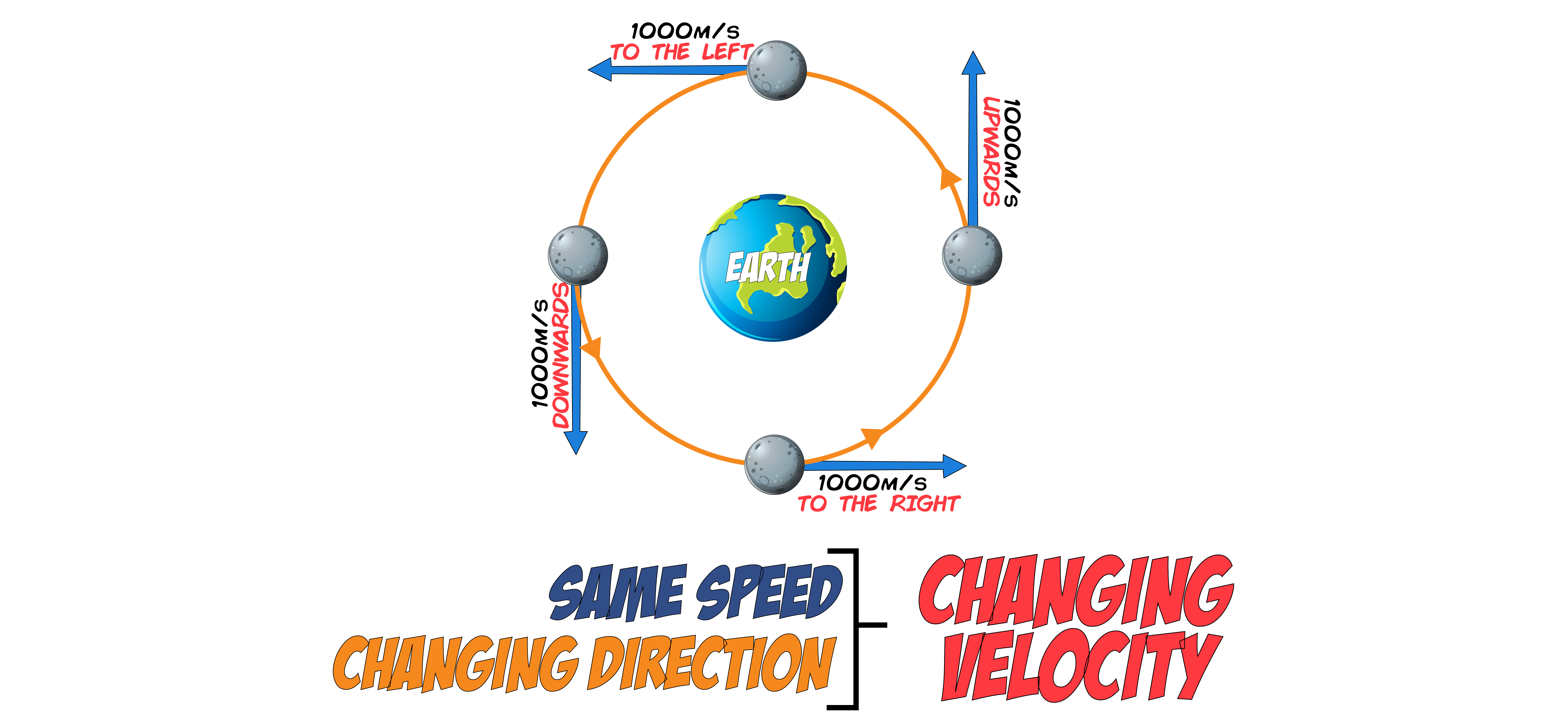
This is because velocity is a VECTOR so it depends on both magnitude (speed) AND direction.
A CHANGE in VELOCITY in a given time is the definition of ACCELERATION - This means an object moving in a circular path is ACCELERATING.
According to NEWTON'S SECOND LAW, if an object is ACCELERATING, then there must be a resultant FORCE acting on it. This force is the GRAVITATIONAL FORCE from the object in the CENTRE and it always act TOWARDS the CENTRE.
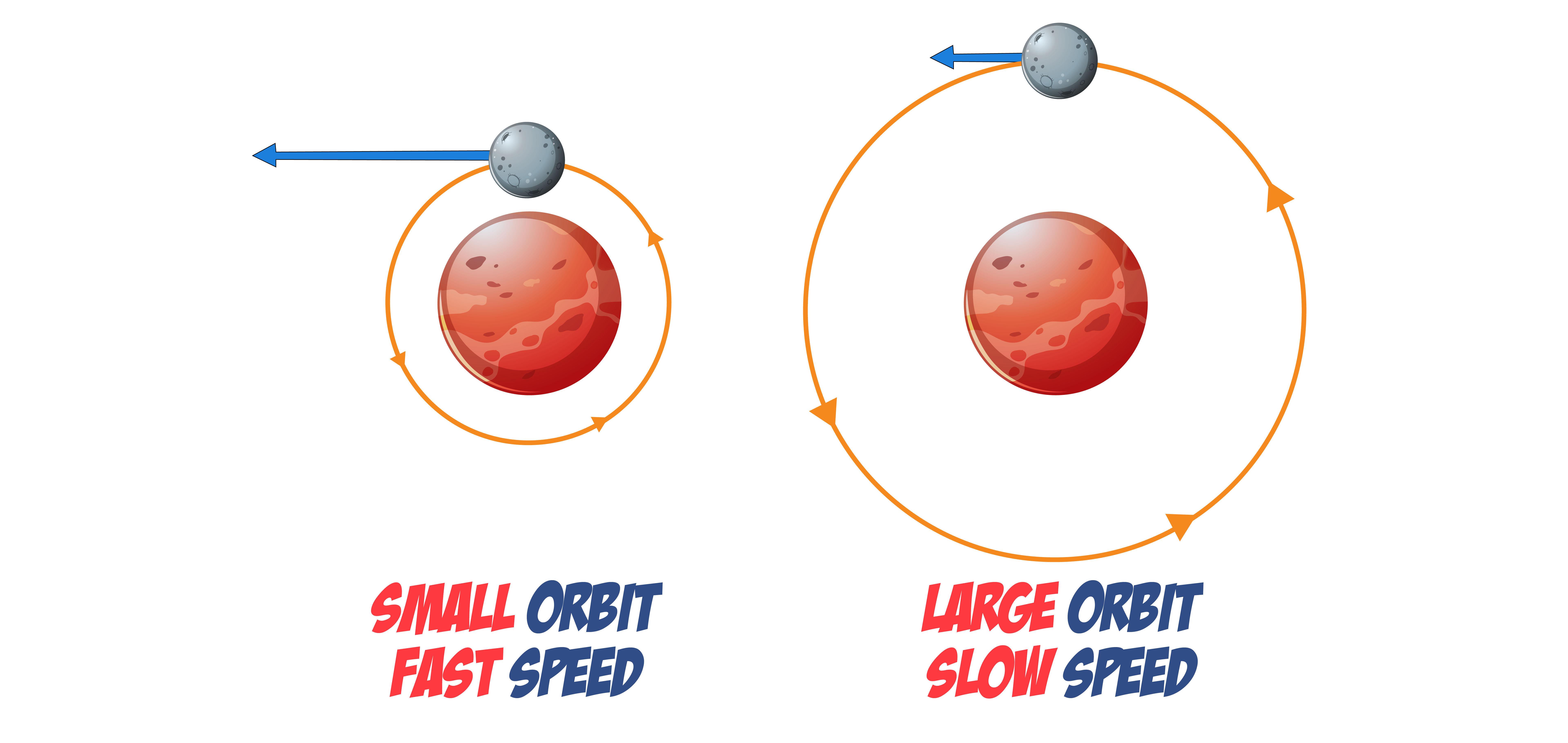
For an ORBIT to remain STABLE without changes in the orbital speed, the RADIUS of the orbit must be CONSTANT.
If the speed CHANGES, adjustments in the orbital radius are required to maintain a STABLE orbit.
A SMALLER radius will result in the speed of the orbiting object to get FASTER.