Newton's First and Second Law
Newton's First Law
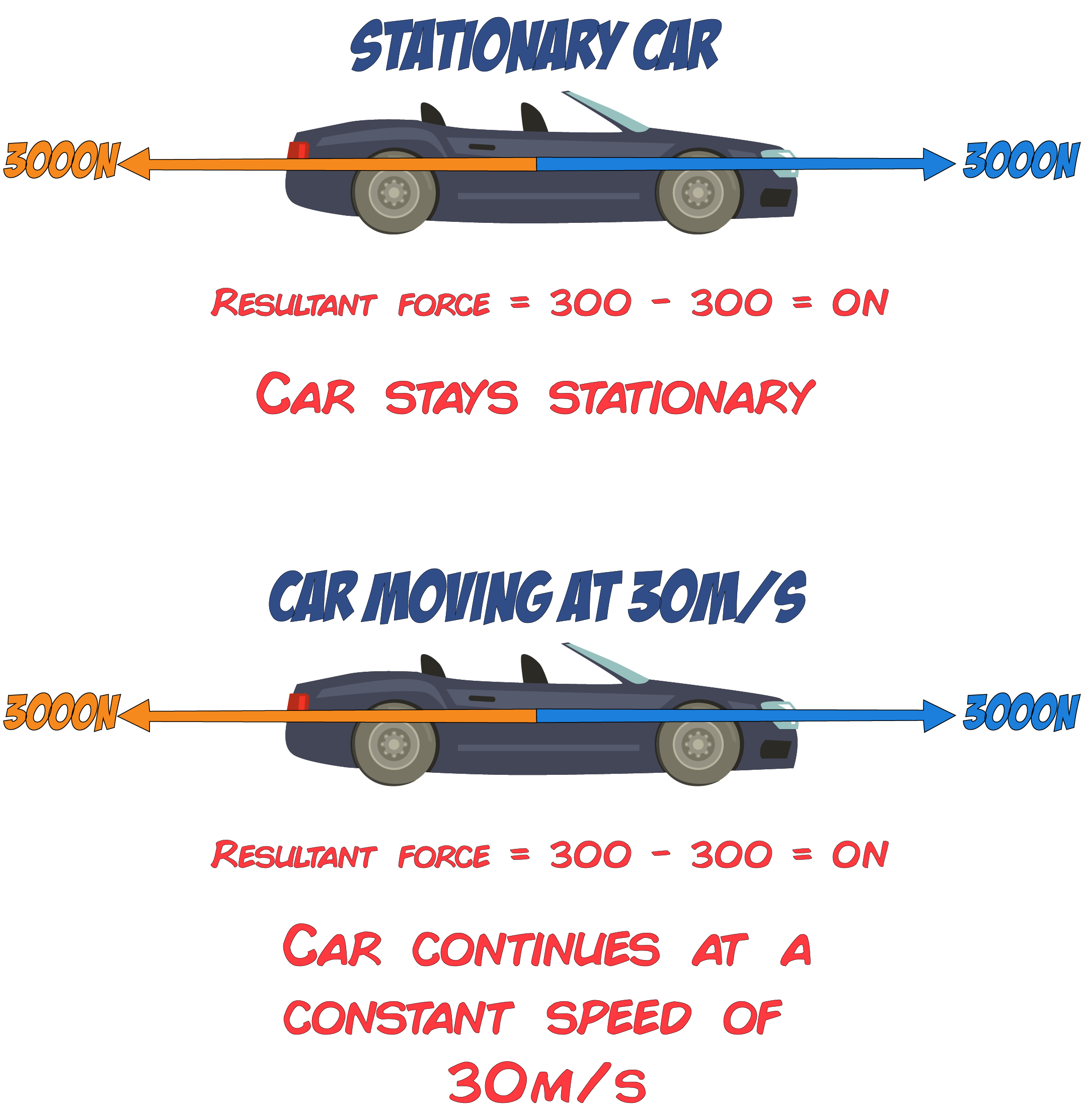
NEWTON'S FIRST LAW states that if there is NO RESULTANT force on an object and:
- the object is STATIONARY, it will REMAIN STATIONARY.
- the object is MOVING, the object continues to move at the SAME VELOCITY (same speed and direction).
Newton’s Second Law
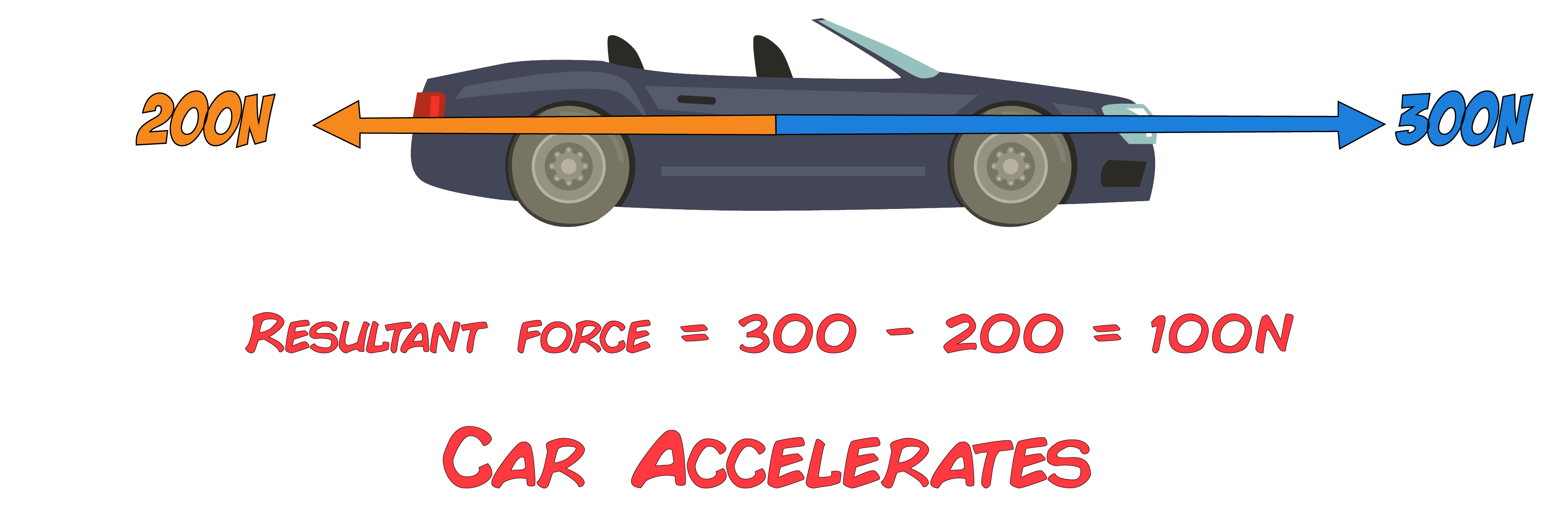
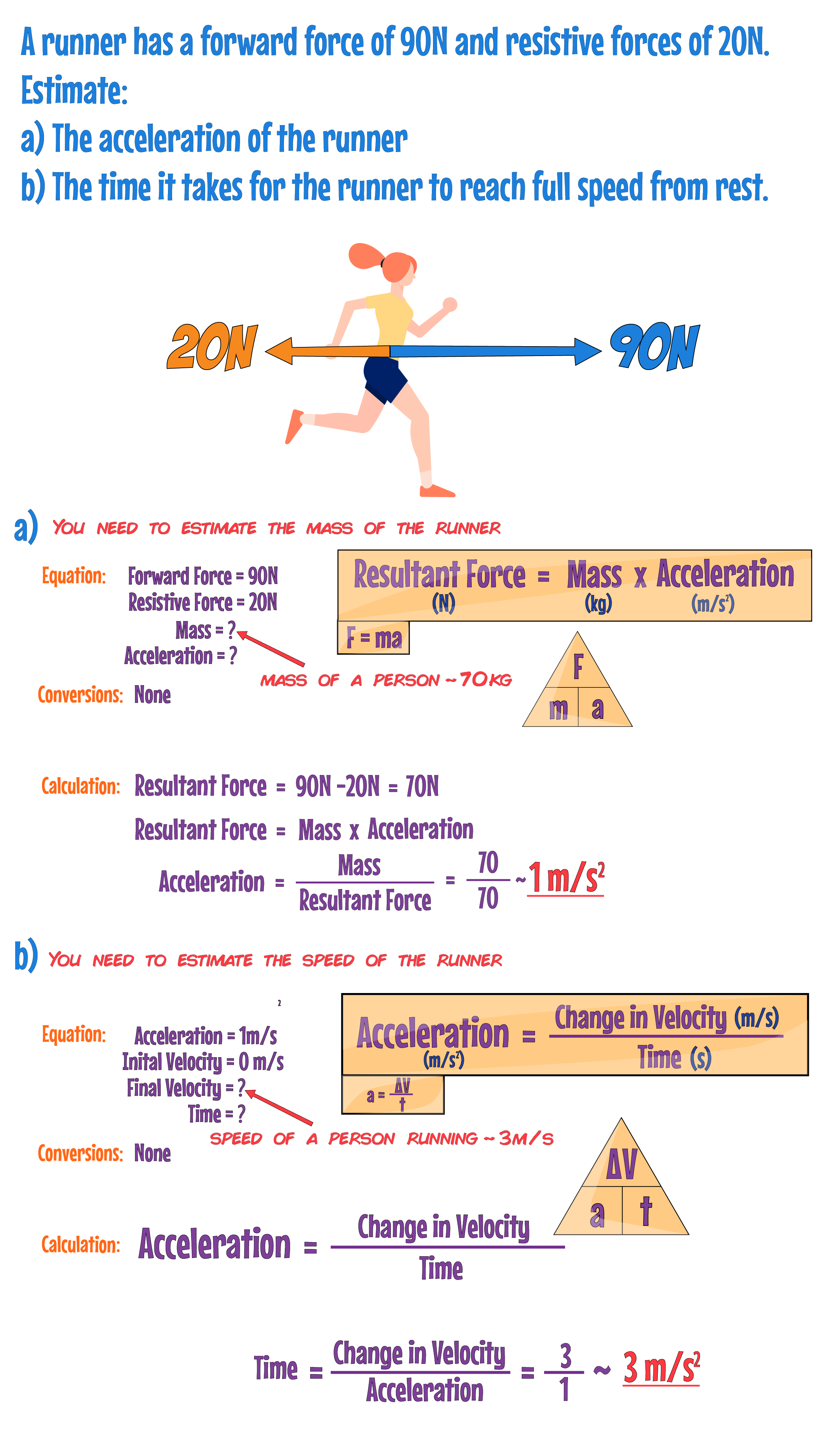
NEWTON'S SECOND LAW states that if there IS a RESULTANT force on an object, the object will ACCELERATE with an ACCELERATION that is DIRECTLY PROPORTIONAL to its RESULTANT FORCE and INVERSELY PROPORTIONAL to its mass.
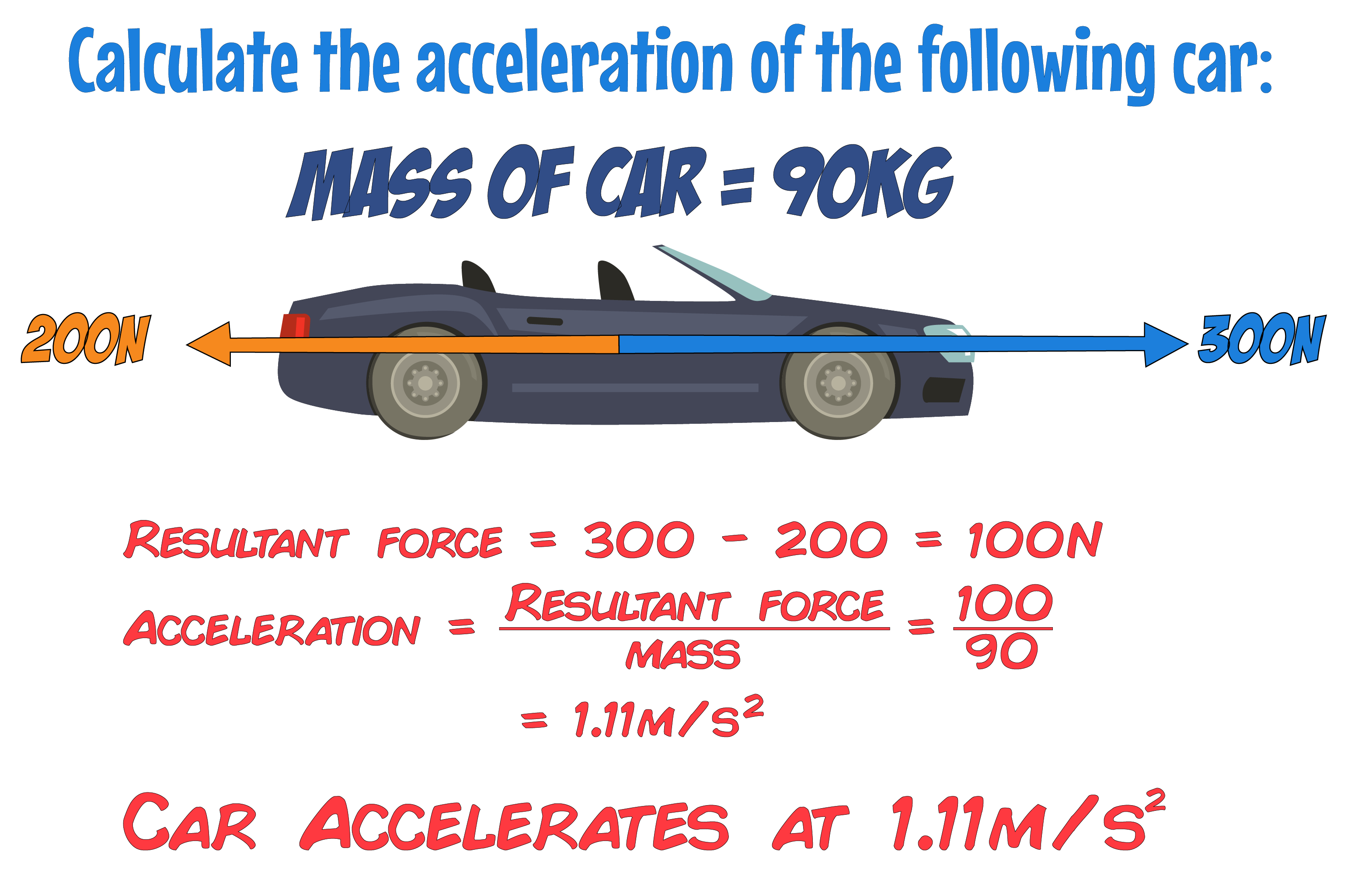
The law can be summarised by the equation:

- F is the resultant force in newtons (N)
- m is the mass in kilograms (kg)
- a is the acceleration in metres per second squared (m/s²).
Newton’s Third Law
NEWTON'S THIRD LAW states that when TWO objects interact, the forces they exert on each other are EQUAL and OPPOSITE.
In other words, if OBJECT A exerts a force on OBJECT B, OBJECT B will exert an EQUAL and OPPOSITE force back onto OBJECT A.
Example: Pushing Against a Wall
If you stand and PUSH against a wall with your hands, you are exerting a force on the wall (the action force). According to Newton's Third Law, the wall PUSHES BACK against your hands with an EQUAL and OPPOSITE force (the reaction force). Even though it might not be obvious, because the wall is sturdy and doesn't move, the forces are still present and EQUAL in magnitude.
 In this situation, you DON'T move, nor does the wall, but the force pairs are there, EQUAL in size and OPPOSITE in direction. The reason you and the wall don't move (assuming it's a solid wall) is because the wall is strong enough to withstand your push without breaking or moving, and your muscles are reacting to the resistance provided by the wall, allowing you to maintain your balance and not fall backward.
Example: Bowling Ball Hitting a Pin
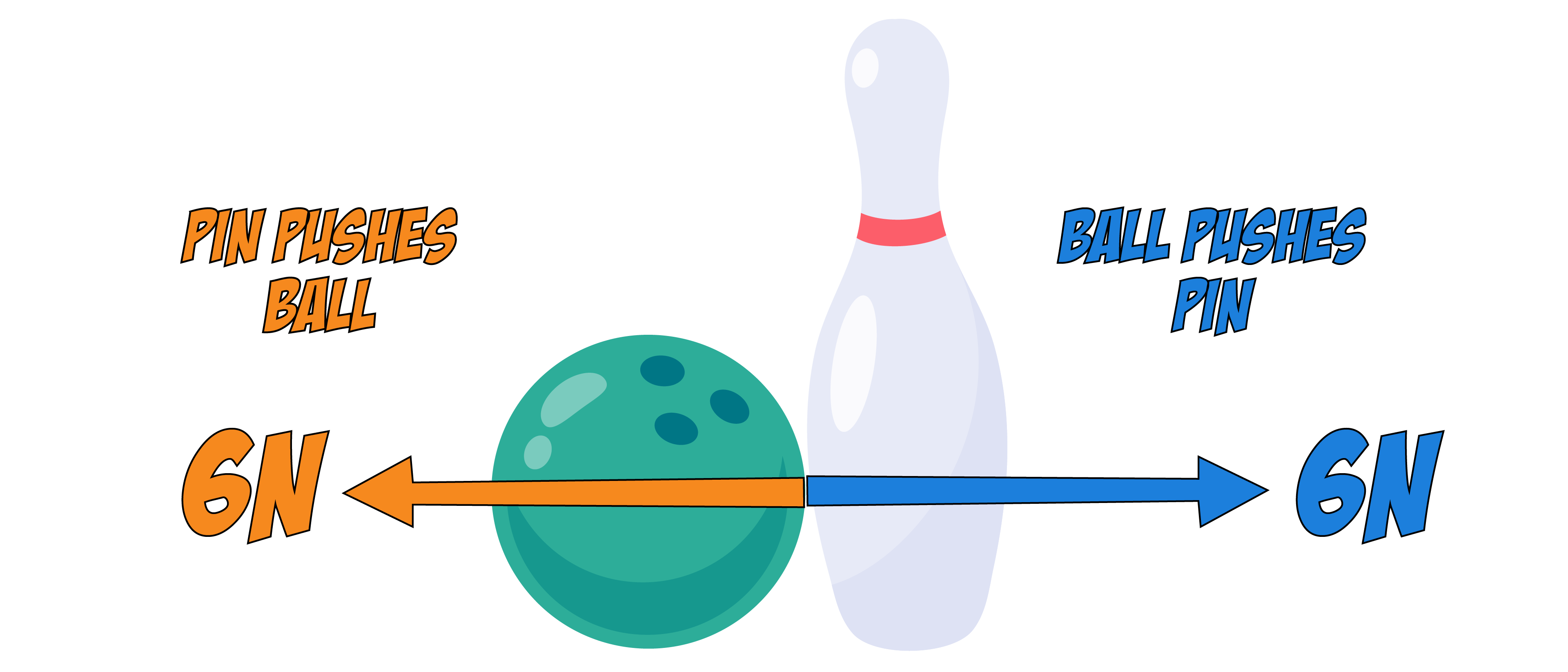
- The bowling ball exerts a FORCE on the pin in the direction of its motion (action force).
- In response, the pin exerts an EQUAL and OPPOSITE force back on the bowling ball (reaction force).
This interaction causes the pin to be knocked over (if the force is sufficient) while the bowling ball experiences a small change in velocity due to the force exerted by the pin. The effect on the bowling ball is less noticeable due to its much greater mass compared to the pin.
INERTIA
INERTIA is an object's natural tendency to keep doing what it's currently doing — to stay still if at rest, or keep moving if in motion, unless an external force acts on it.
It is not just a measure of how much something weighs (that's mass), but how much it resists speeding up or slowing down.
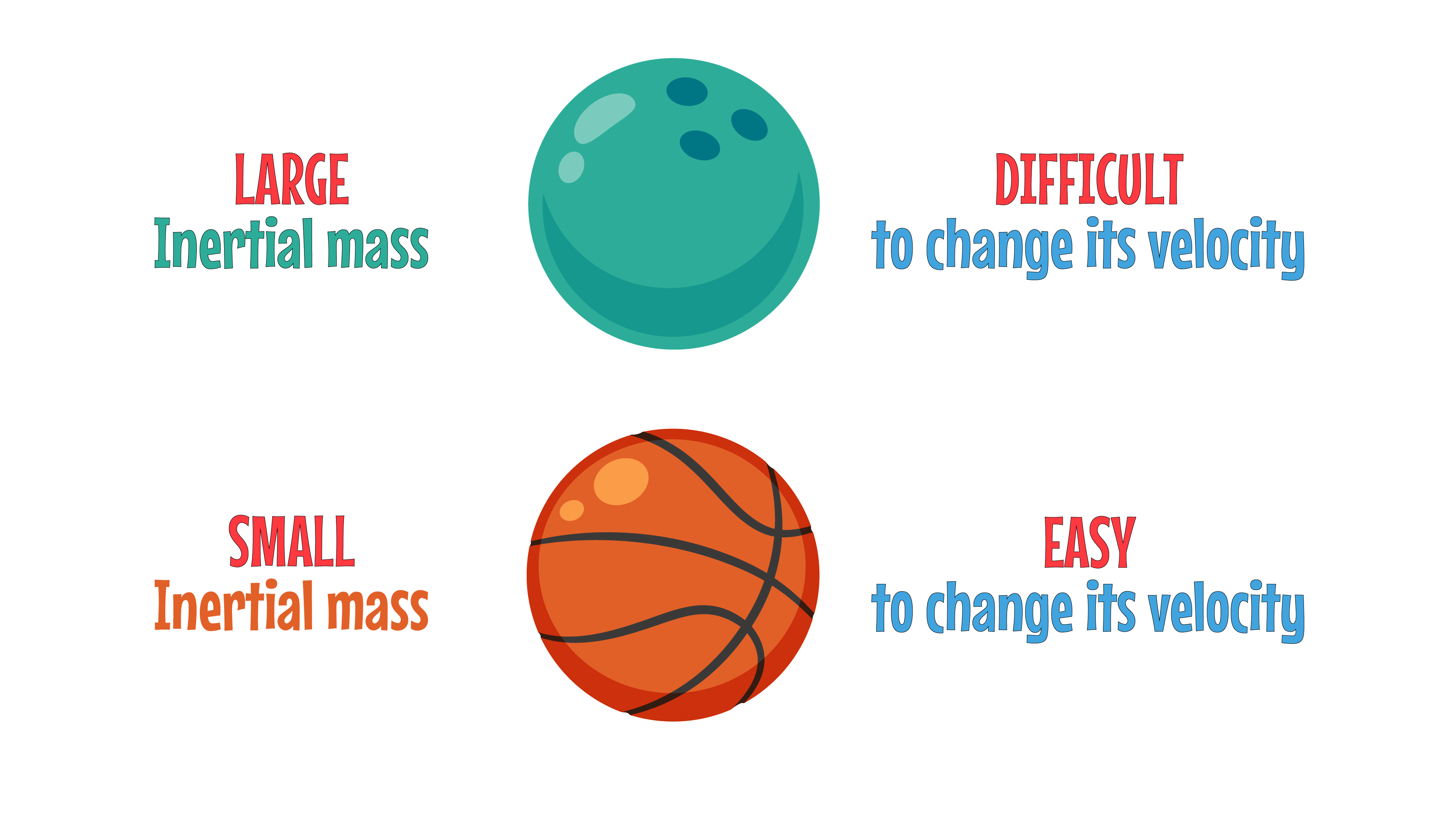
INERTIAL MASS is a measure of how difficult it is to CHANGE the VELOCITY of an object. It tells us how much force would be required to give an object a certain acceleration. It's the ratio of FORCE OVER ACCELERATION.

A larger inertial mass means an object will NOT speed up or slow down as easily — it will RESIST changes in motion more than an object with a smaller inertial mass.
This is why a bowling ball is harder to start rolling, or stop, compared to a basketball.