Distance and Displacement
Distance
DISTANCE measures how far an object has travelled, regardless of its starting point or final position. It is a SCALAR quantity, meaning it only has magnitude and NO direction.
e.g. Let’s say a person travels from location A to B to C in the following diagram:
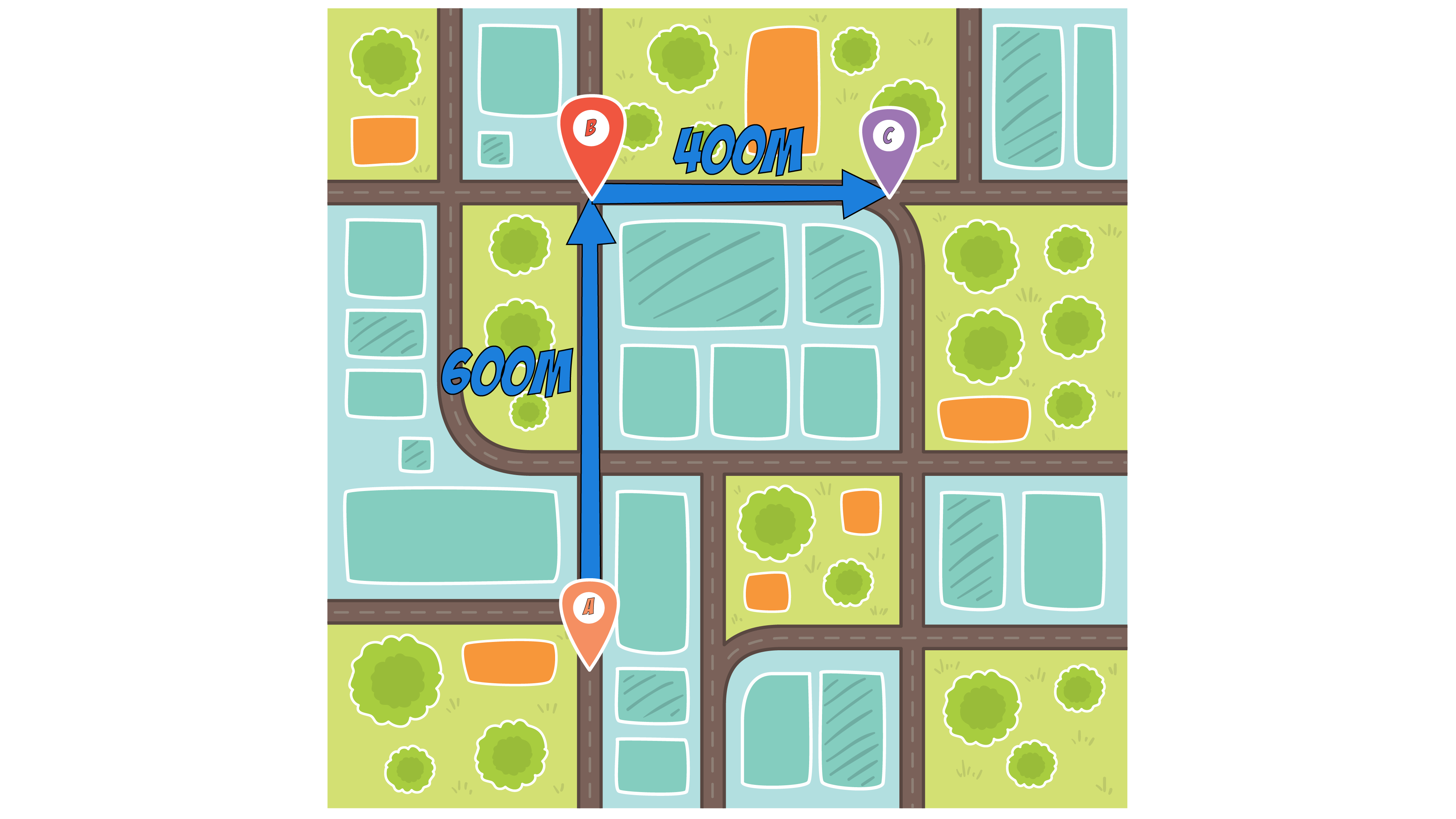
The total DISTANCE travelled by the person would be:
600m + 400m = 1000m
Displacement
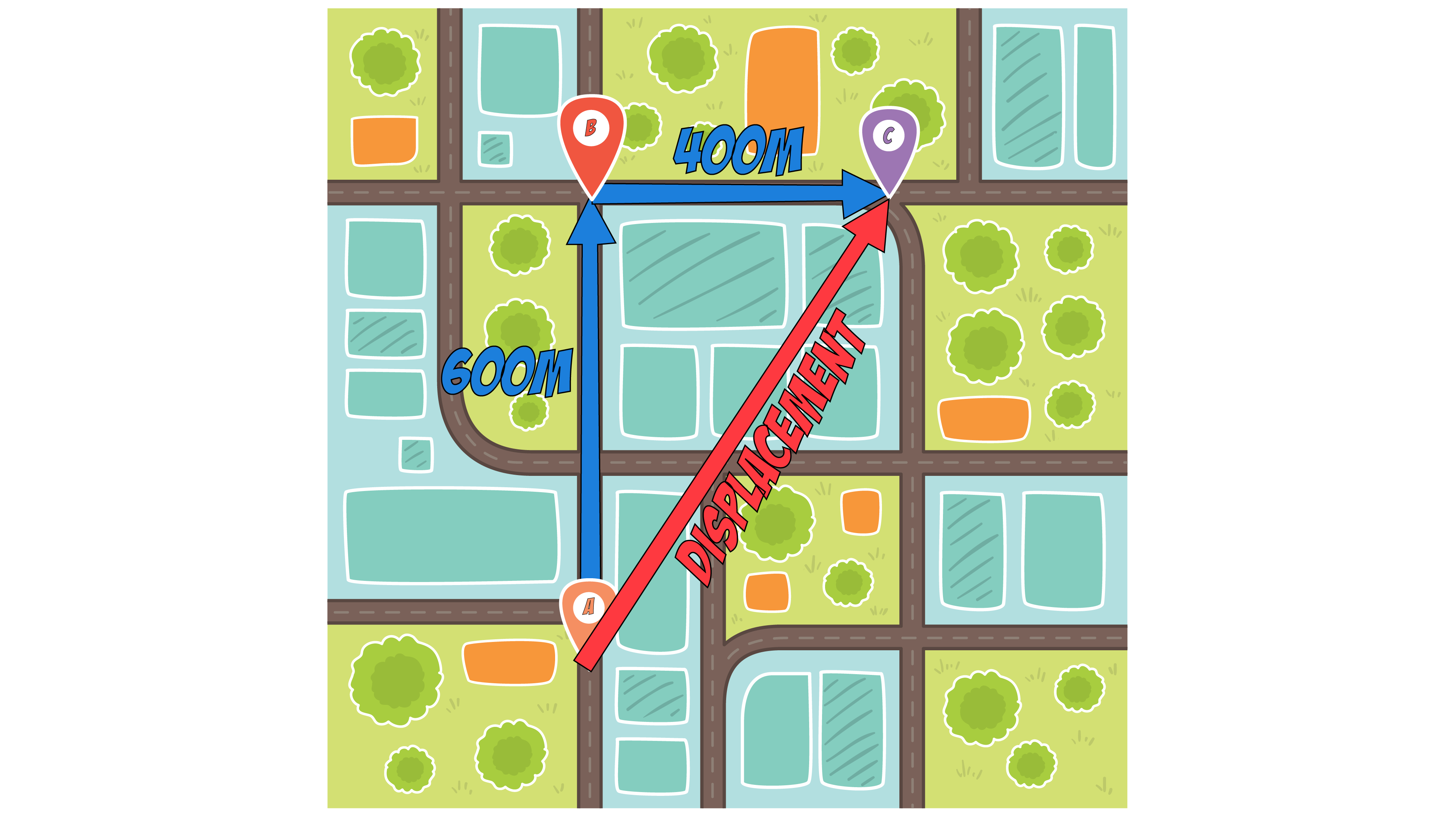
DISPLACEMENT refers to how far an object is from its starting point and in what direction — it's a straight-line measurement from START to FINISH.
Unlike distance, displacement is a VECTOR quantity because it considers both magnitude AND direction.
e.g. To find the DISPLACEMENT of the same example, you would look at the DIRECT distance from the START (point A) to the FINISH (point C).
Speed
It is a SCALAR quantity, meaning it only considers magnitude and
The formula for speed is:

The SPEED OF SOUND in air, is roughly 330 m/s, and it can vary depending on what substance it travels through.

Velocity
VELOCITY is the speed of an object in a given DIRECTION, which makes it a VECTOR.
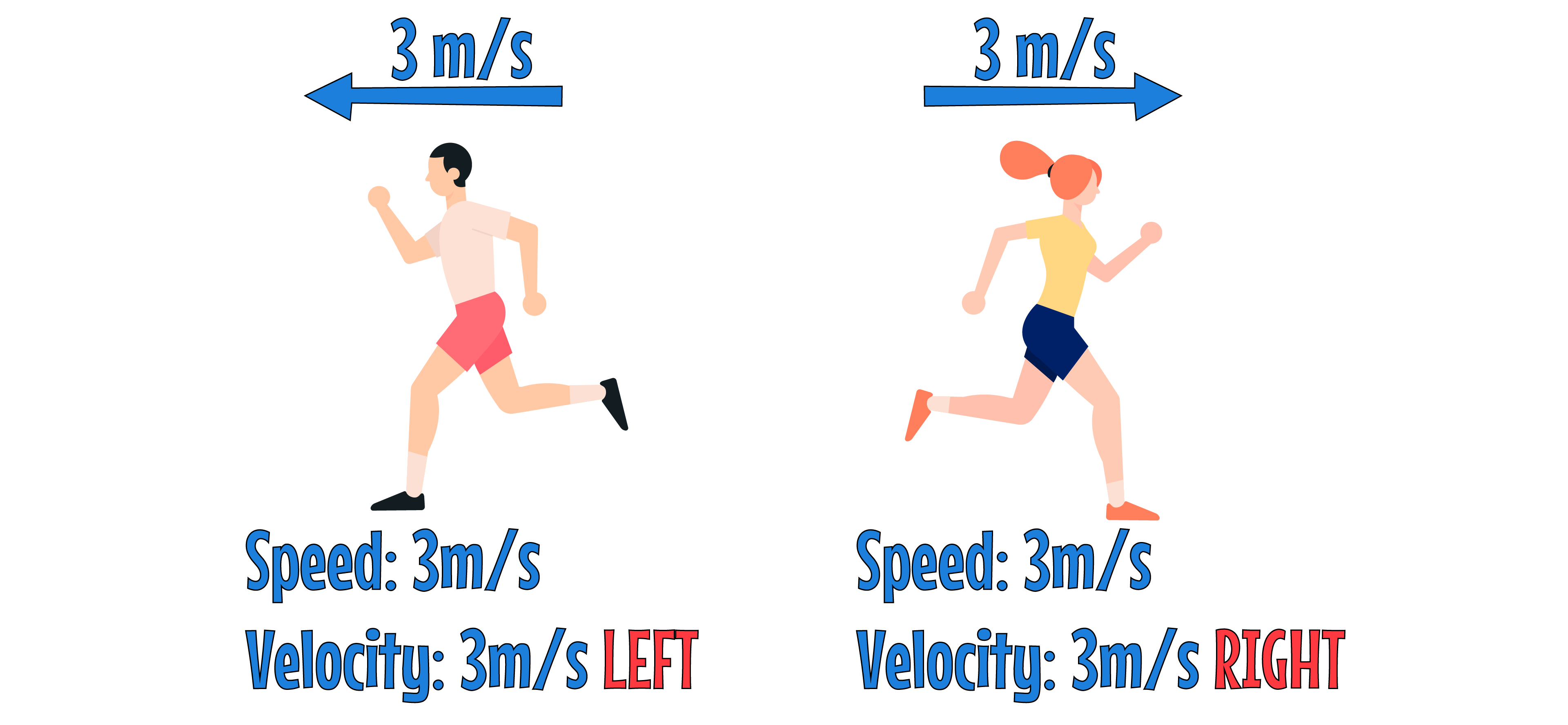
In the above example, the SPEED of both runners is the SAME, but the VELOCITY is different as they are running in DIFFERENT DIRECTIONS.
Now consider a car driving around a roundabout in CIRCULAR MOTION at a CONSTANT SPEED of 30 m/s:
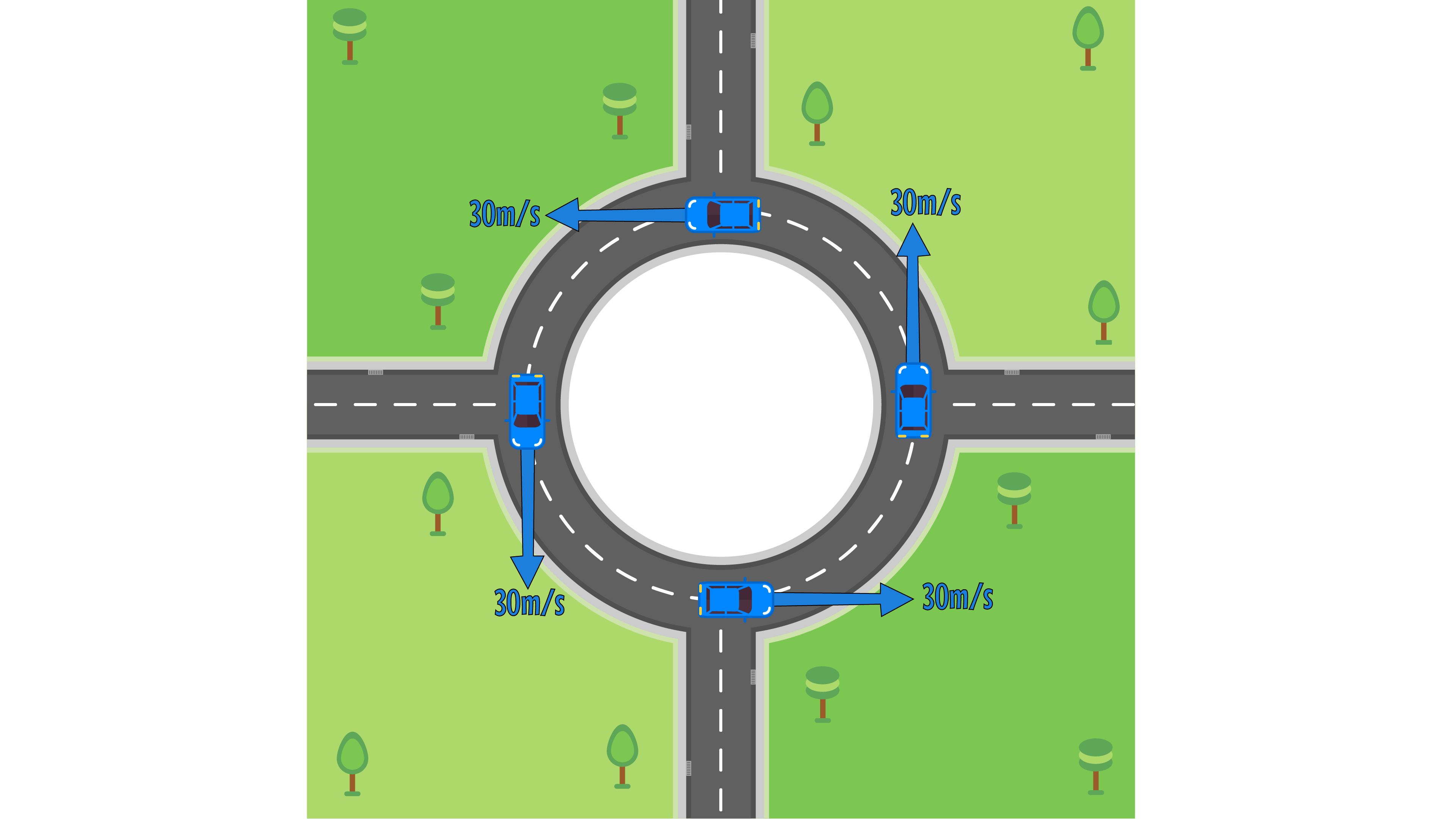
Even though the SPEED is CONSTANT, the VELOCITY is NOT because the DIRECTION that the car moves in is ALWAYS CHANGING.
Distance-Time Graphs
If an object moves along a straight line, the distance it travels can be represented by a DISTANCE-TIME graph.
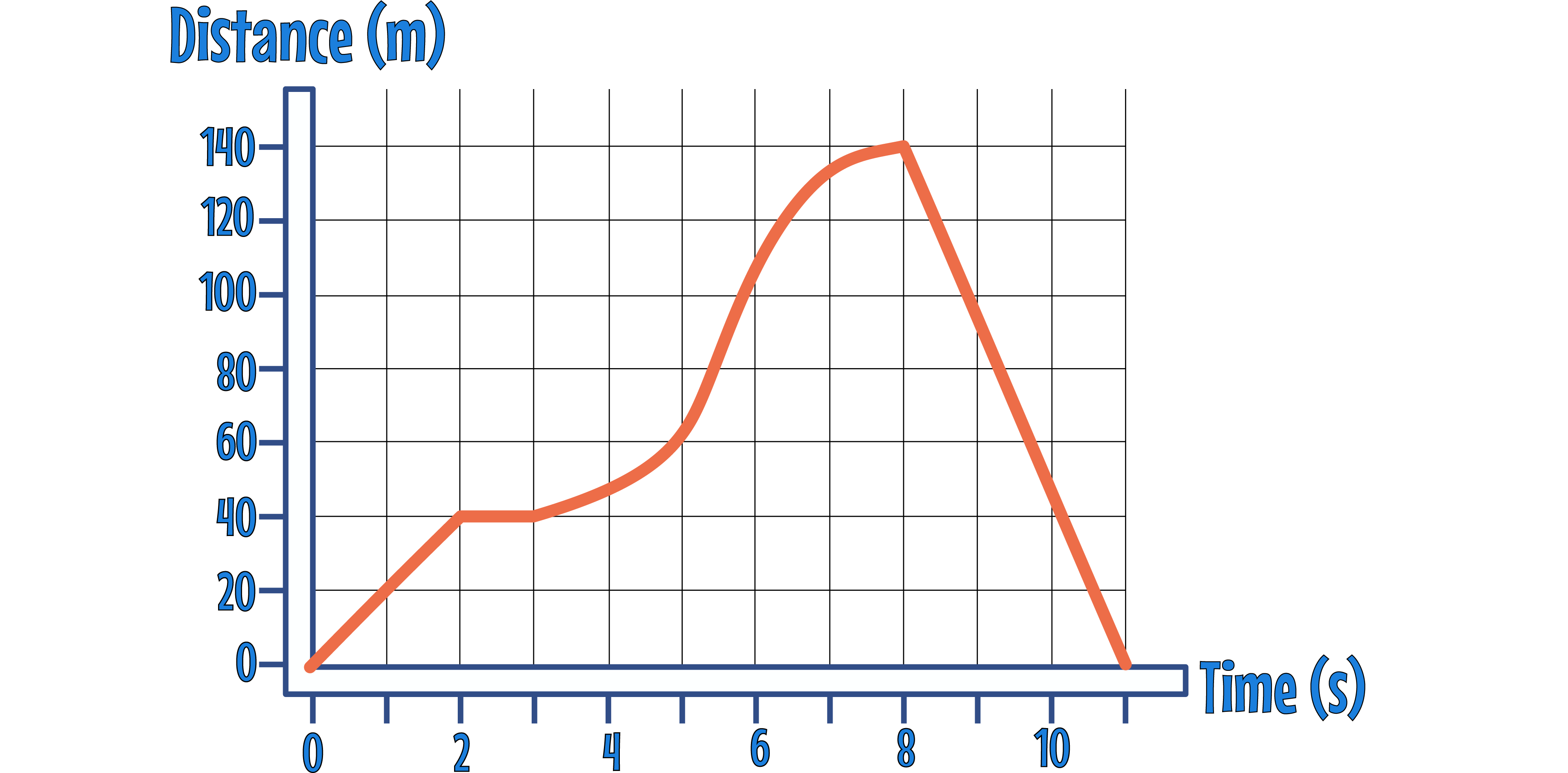
The GRADIENT (steepness) of the line tells you the SPEED of the object. The STEEPER the line, the GREATER the speed.
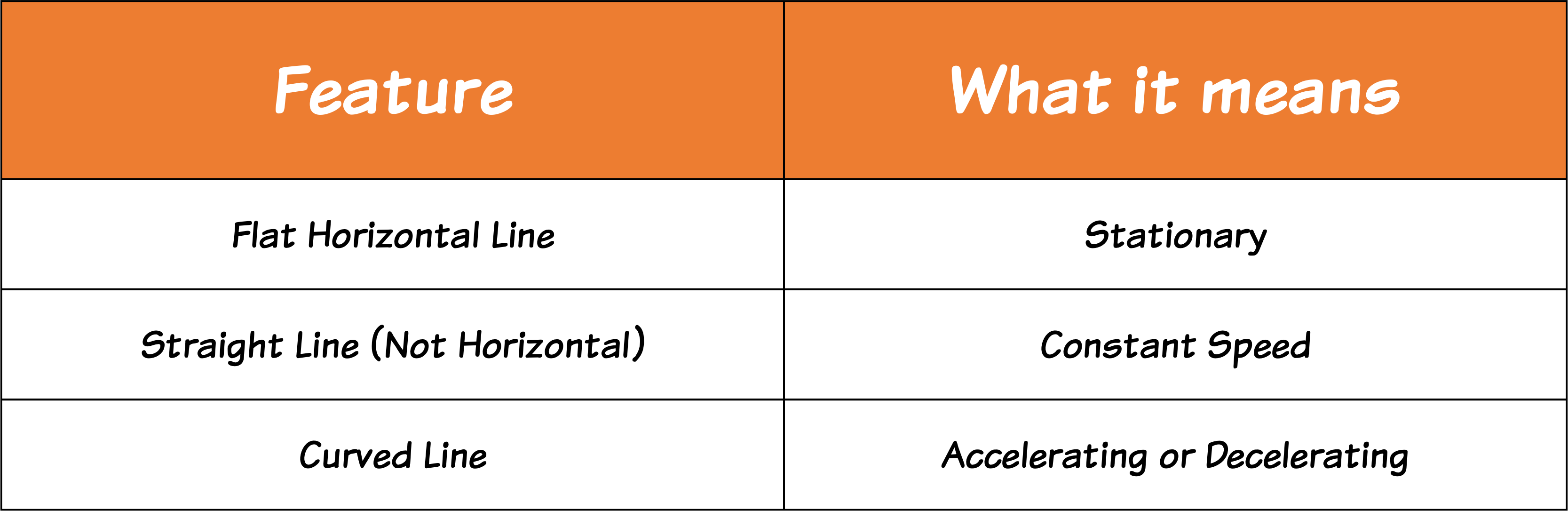
Different features on a distance-time graph can tell you different information about how an object is travelling.
Let’s use this information to describe the motion of an object with the following distance-time graph:
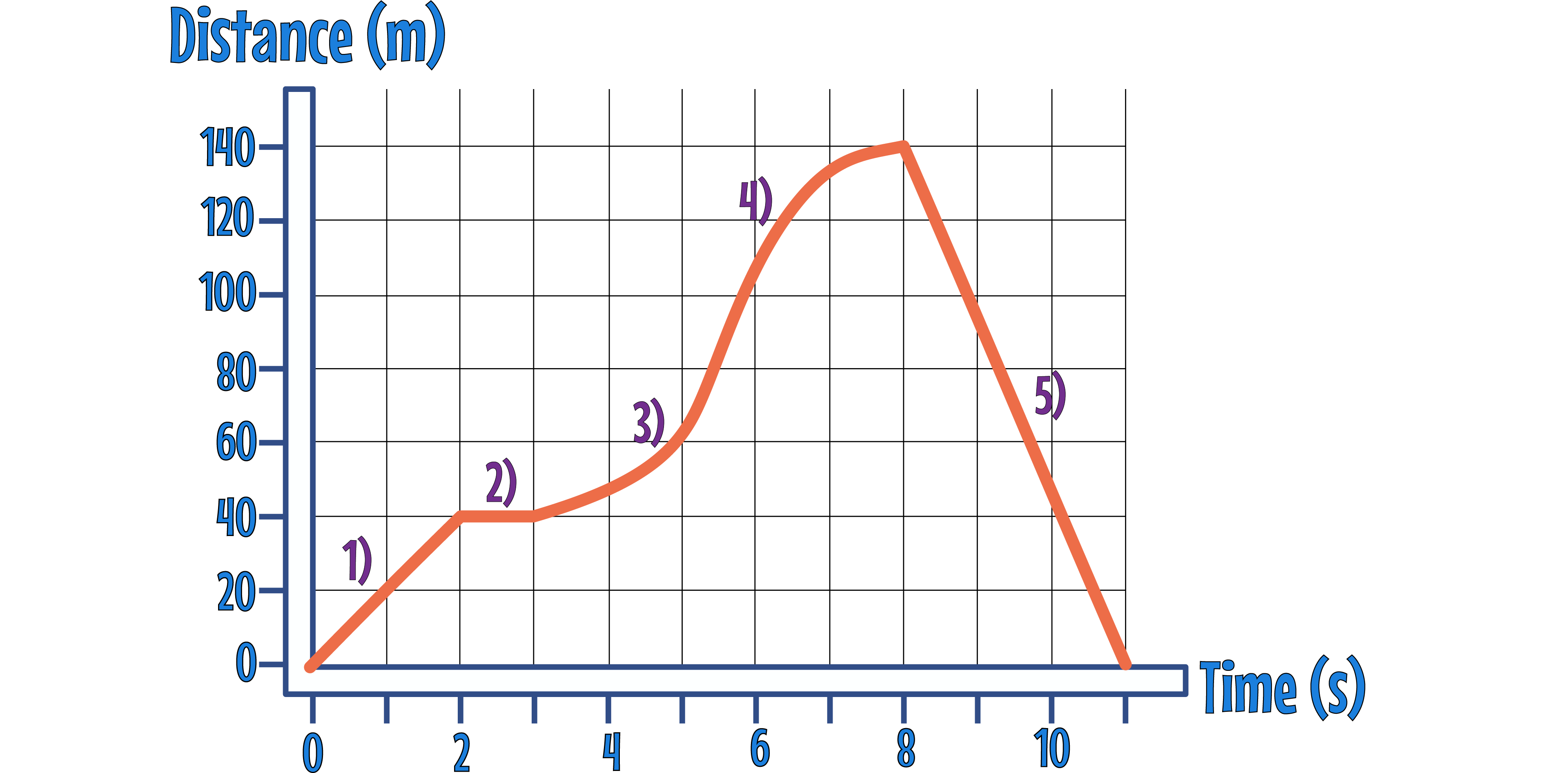
Section 1:
A STRAIGHT LINE means the object is travelling at a CONSTANT SPEED. You can calculate the speed by using the equation:
Speed = Distance/Time = 40/2 = 20m/s
Section 2:
A FLAT HORIZONTAL line means the object is STATIONARY for 1s.
Section 3:
The CURVED line is getting STEEPER, which means the GRADIENT is INCREASING.
This means the SPEED is INCREASING, so the object is ACCELERATING.
Section 4:
The CURVED line is getting LESS STEEP, which means the GRADIENT is DECREASING.
This means the SPEED is DECREASING, so the object is DECELERATING.
Section 5:
The STRAIGHT LINE means the object is travelling at a CONSTANT SPEED. You can calculate the speed by using the equation:
Speed = Distance/Time = 120/(11-8) = 40m/s
The fact that the line goes DOWNWARDS, tells you the object is travelling back to a distance of 0, which means it's travelling BACKWARDS to return to its starting position.
Using Tangents
CURVED LINES on distance-time graphs mean the object is ACCELERATING or DECELERATING.
You can work out its SPEED at a particular time by drawing a TANGENT and finding its GRADIENT.
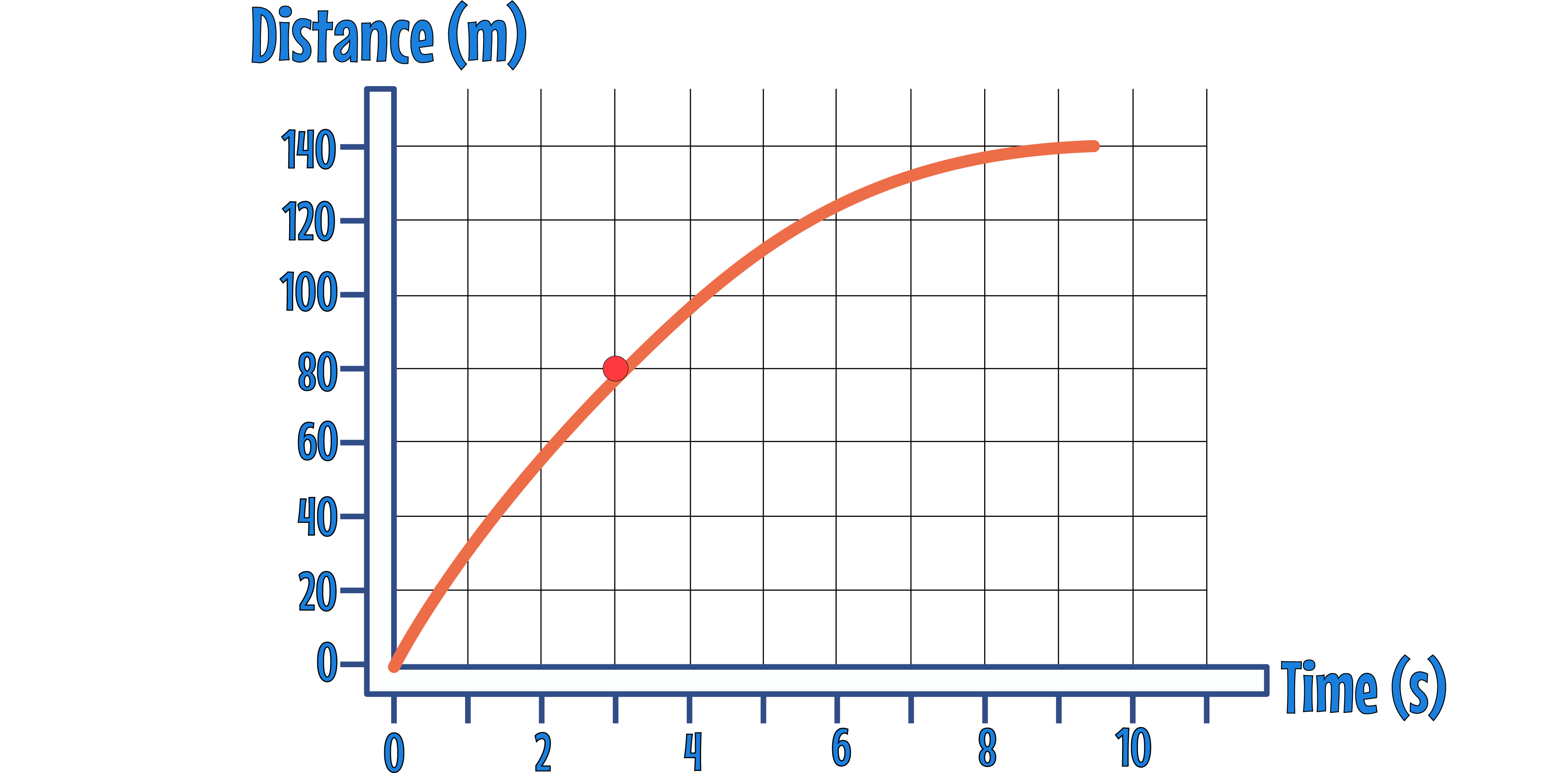
This graph shows an object DECELERATING. You can find the SPEED at 3s by drawing a TANGENT at 3s and finding its GRADIENT.

Acceleration
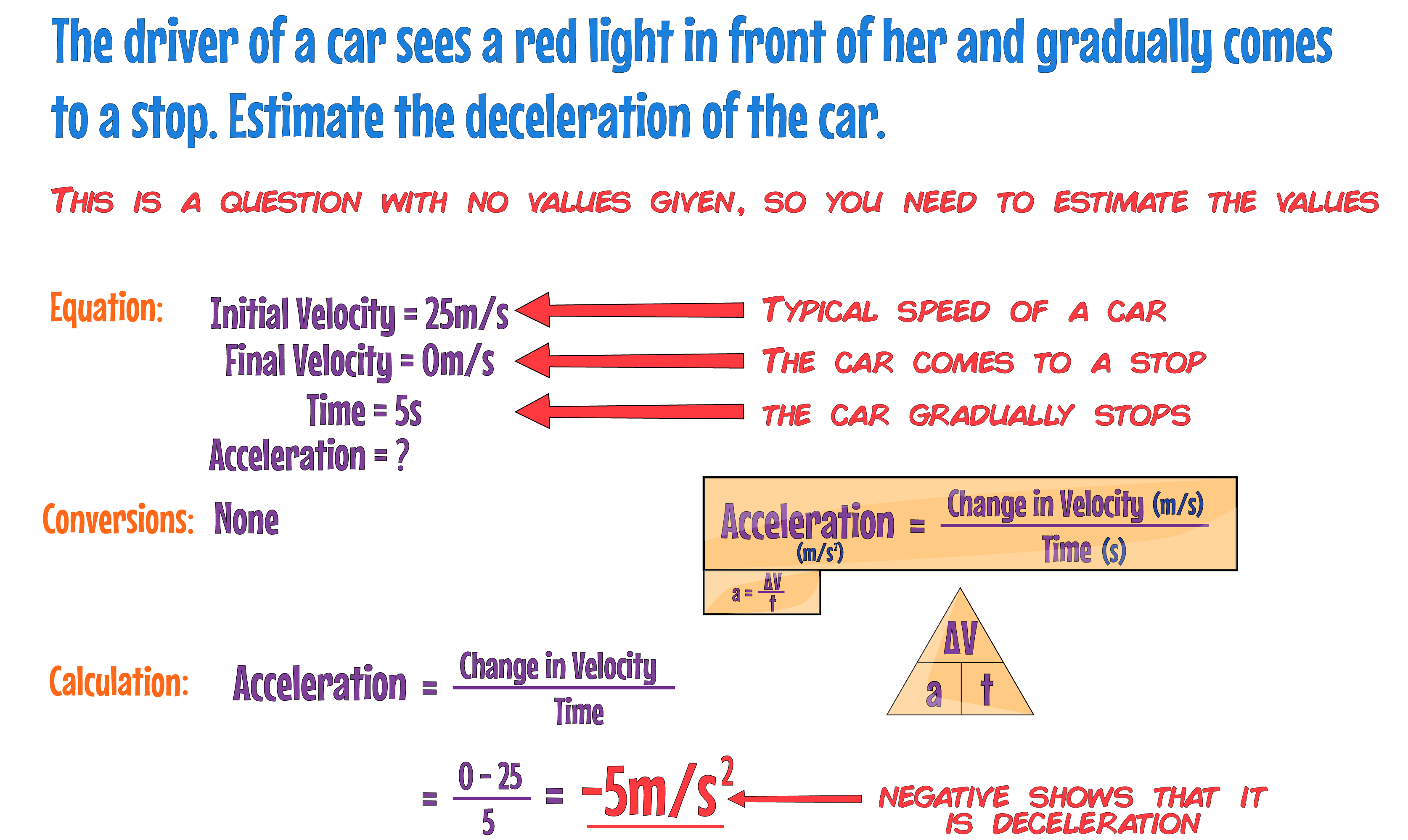
ACCELERATION is the rate at which an object changes its velocity.
It is a VECTOR quantity, which means it includes both magnitude and DIRECTION.
If the value of ACCELERATION is POSTIVE, the object is getting FASTER (accelerating).
If the value of ACCELERATION is NEGATIVE, the object is getting SLOWER (decelerating).
Average Acceleration
To find average acceleration, we use the equation:

Where:
- Δv is the change in VELOCITY in Metres per second (m/s).
- t is the TIME taken for this change in Seconds) (s).
- a is the ACCELERATION in Metres per second squared (m/s²).
Uniform Acceleration
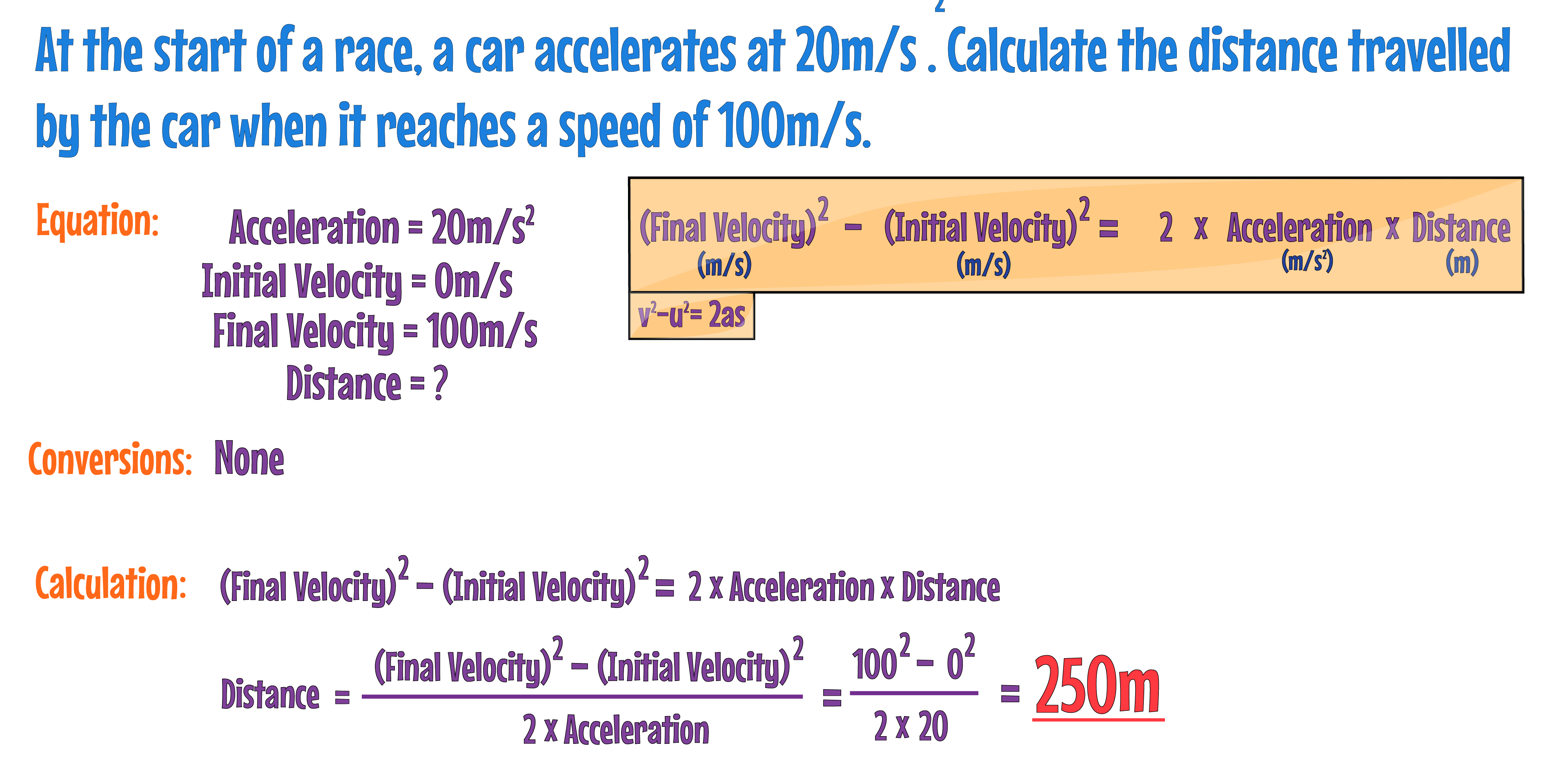
For uniform acceleration, the following equation can be used:

Where:
- v is the FINAL VELOCITY.
- u is the INITIAL VELOCITY.
- a is the ACCELERATION.
- s is the DISTANCE travelled.
Velocity-Time Graphs
If an object moves along a straight line, the velocity it travels at can be represented by a velocity–time graph:
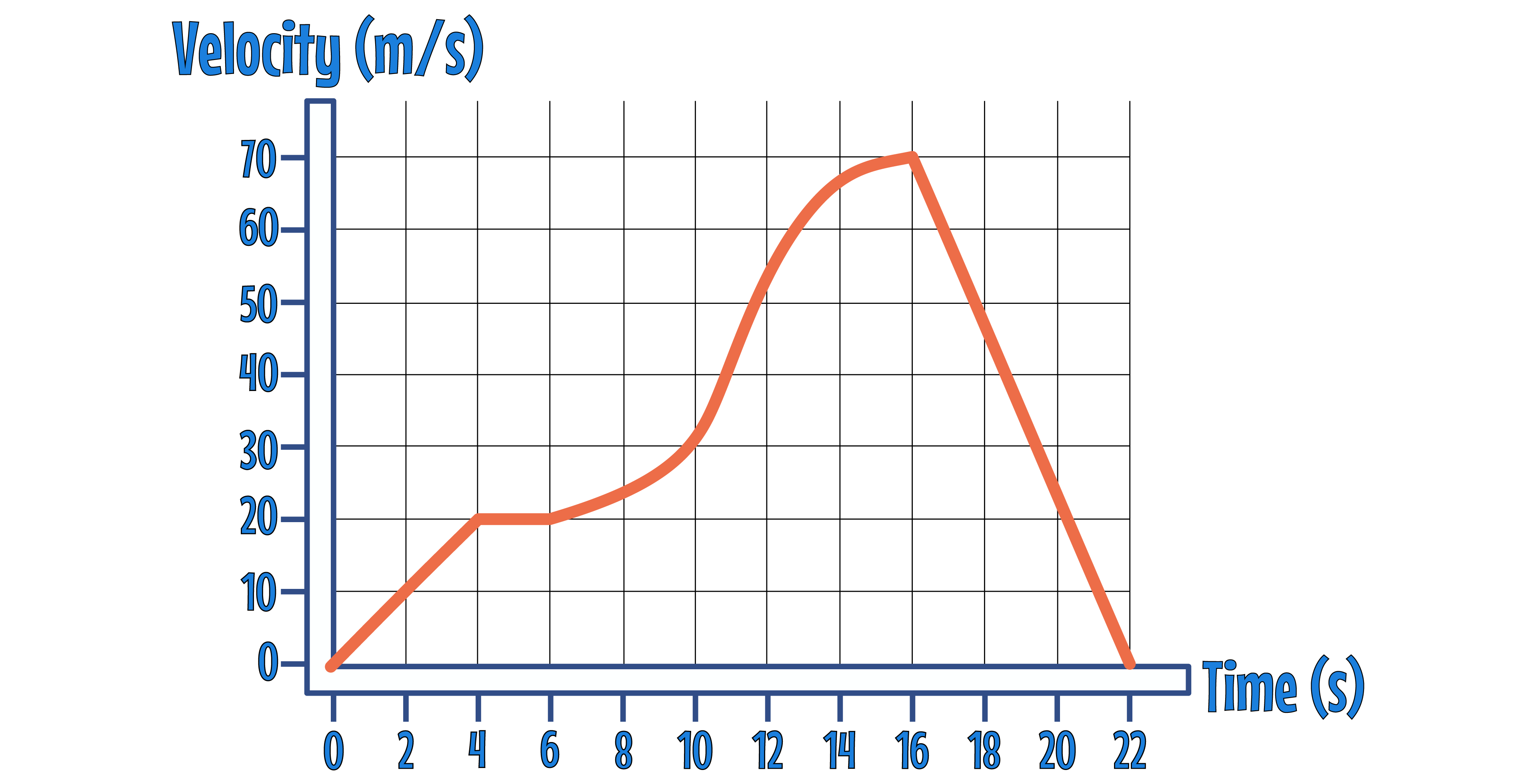
The GRADIENT (steepness) of the line tells you the ACCELERATION of the object. The STEEPER the line, the GREATER the ACCELERATION.
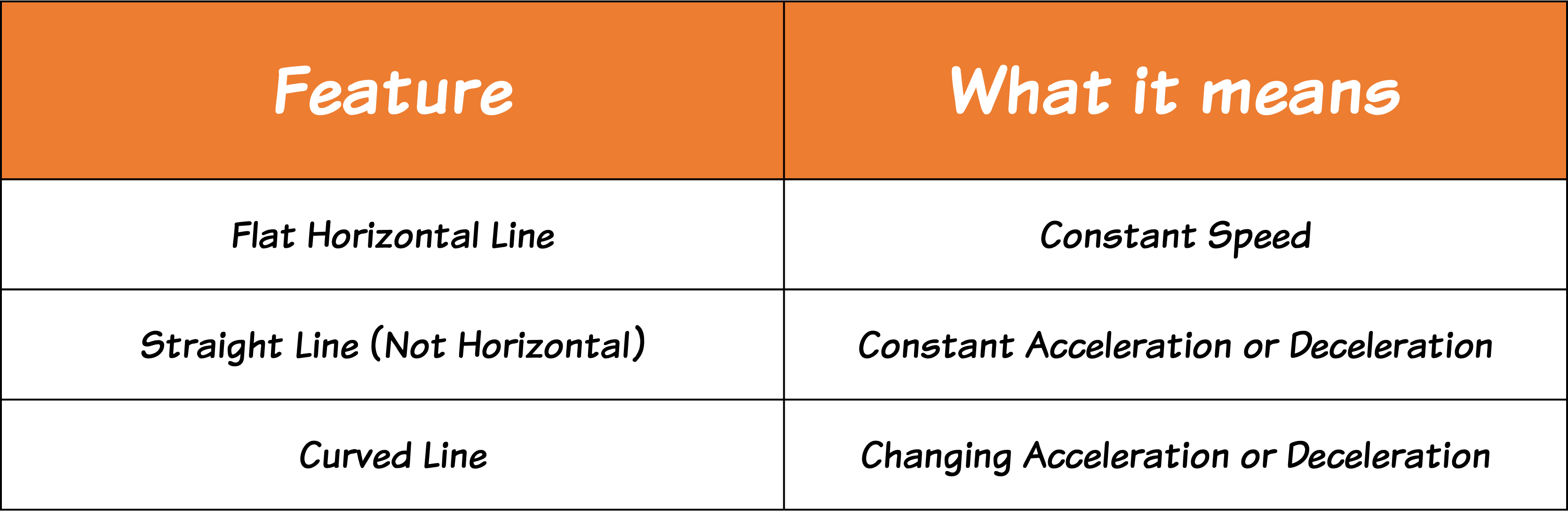
Different features on a velocity-time graph can tell you different information about how an object is travelling.
Let’s use this information to describe the motion of an object with the following velocity-time graph:
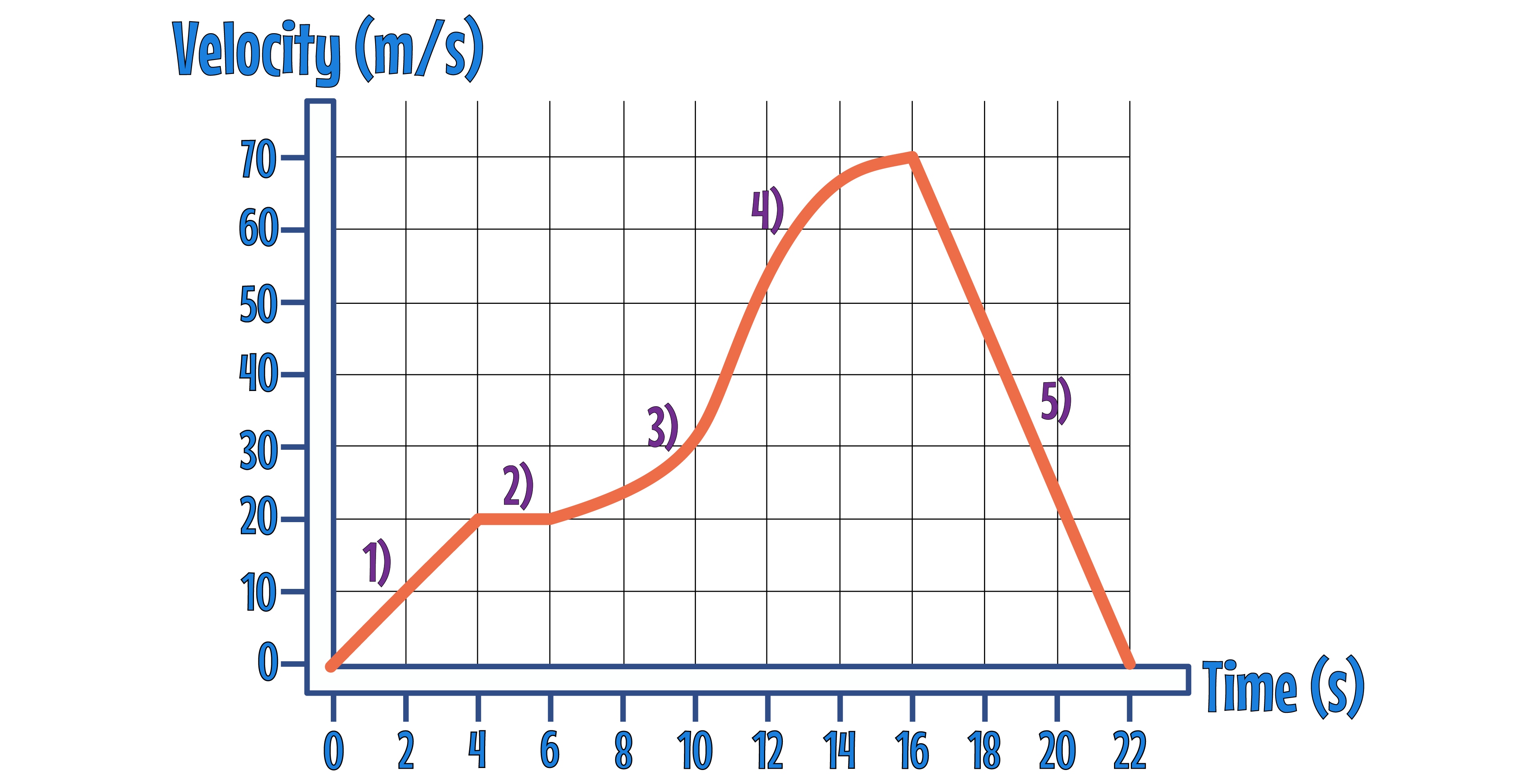
Section 1:
A STRAIGHT LINE means the object is travelling at a CONSTANT ACCELERATION. You can calculate the acceleration by using the equation:
Acceleration = Change in velocity/Time = 20/4 = 5m/s2
Section 2:
A FLAT HORIZONTAL line means the object is travelling at a CONSTANT SPEED of 20m/s for 2s.
Section 3:
The CURVED line is getting STEEPER, which means the GRADIENT is INCREASING.
This means the ACCELERATION is INCREASING.
Section 4:
The CURVED line is getting LESS STEEP, which means the GRADIENT is DECREASING.
This means the ACCELERATION is DECREASING.
Section 5:
The STRAIGHT LINE means the object is travelling at a CONSTANT ACCELERATION. You can calculate the acceleration by using the equation:
acceleration = change in velocity/time = 70/22-16 = 11.7m/s2
The fact that the line goes DOWNWARDS, tells you the VELOCITY IS DECREASING, meaning the object is DECELERATING.
This means the acceleration is NEGATIVE so the value is -11.7m/s2.
Using Tangents
CURVED LINES on velocity-time graphs mean the object has a CHANGING ACCELERATION or DECELERATION.
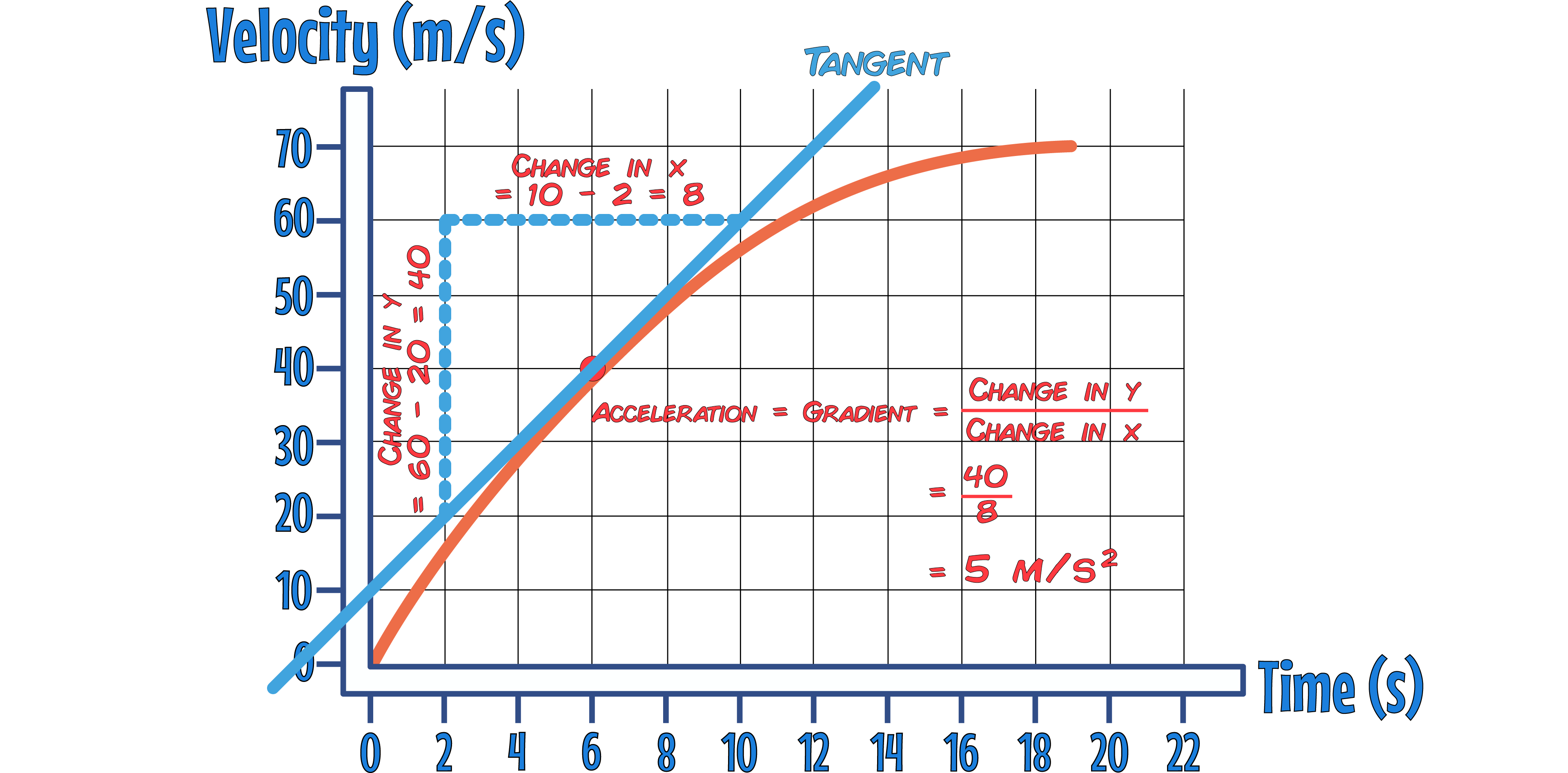
You can work out its ACCELERATION at a particular time by drawing a TANGENT and finding its GRADIENT.
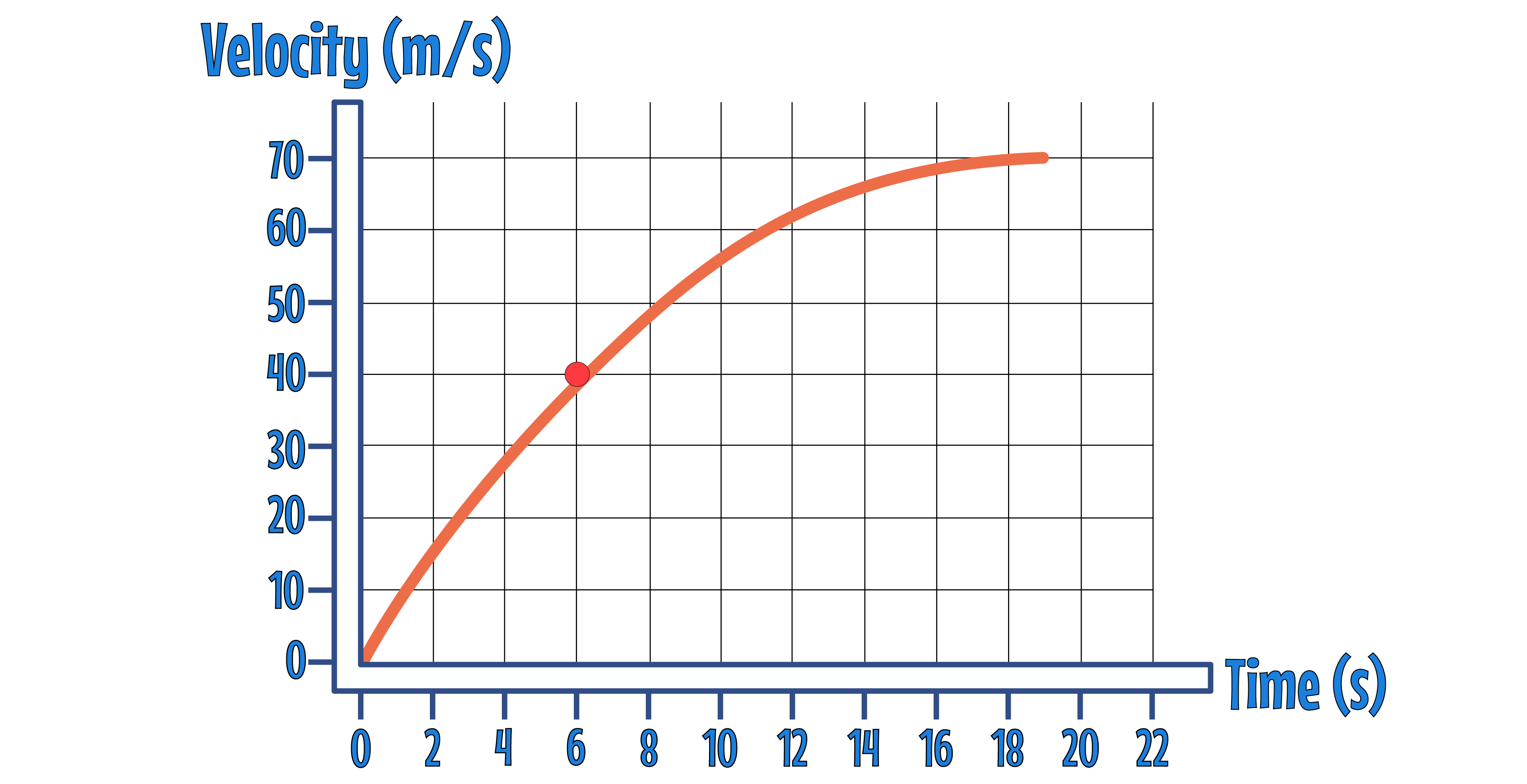
This graph shows an object DECELERATING. You can find the ACCELERATION at 6s by drawing a TANGENT at 6s and finding its GRADIENT.
The Area Under the Graph
You can find the DISTANCE travelled by an object by working out the AREA UNDER THE GRAPH:
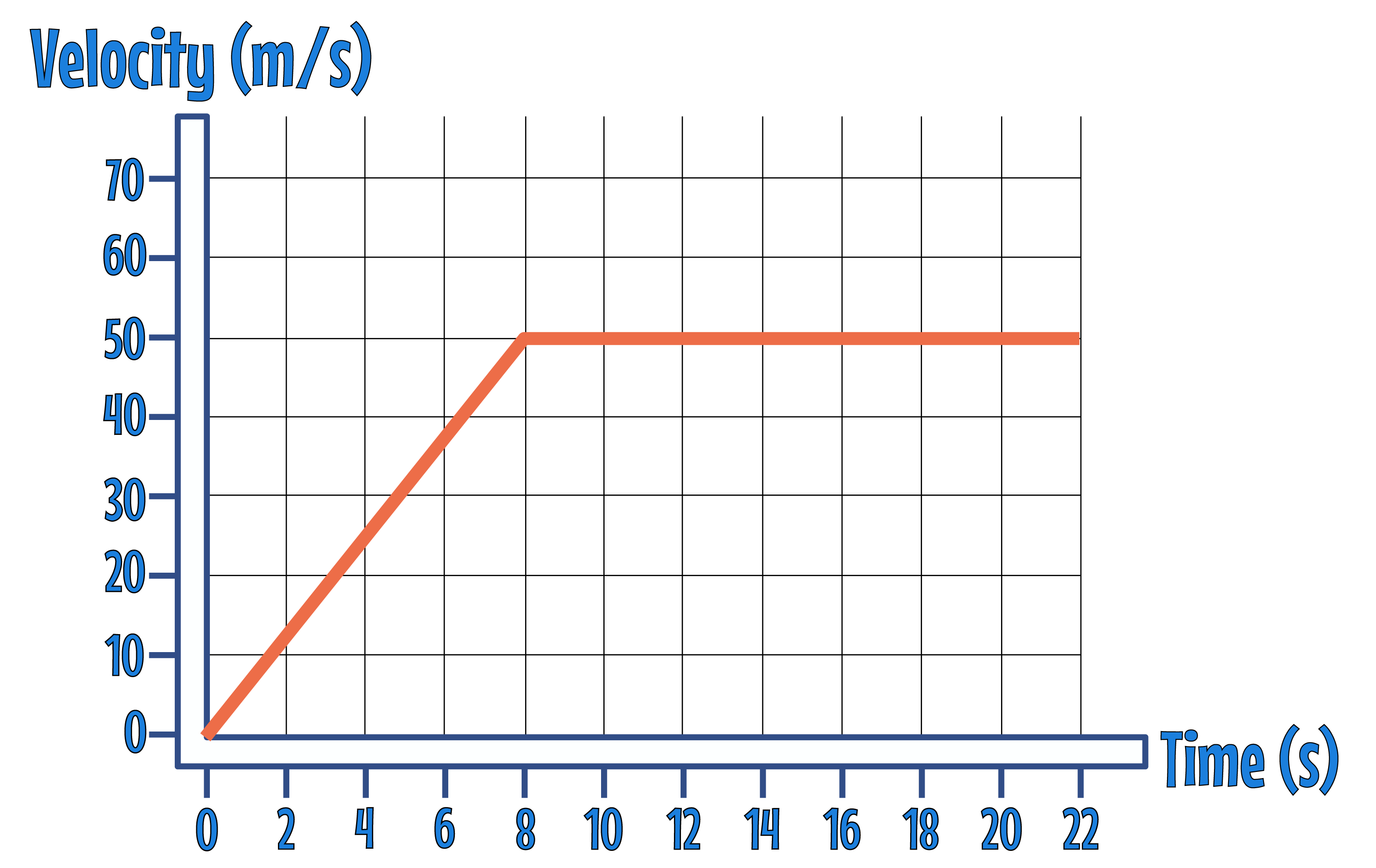
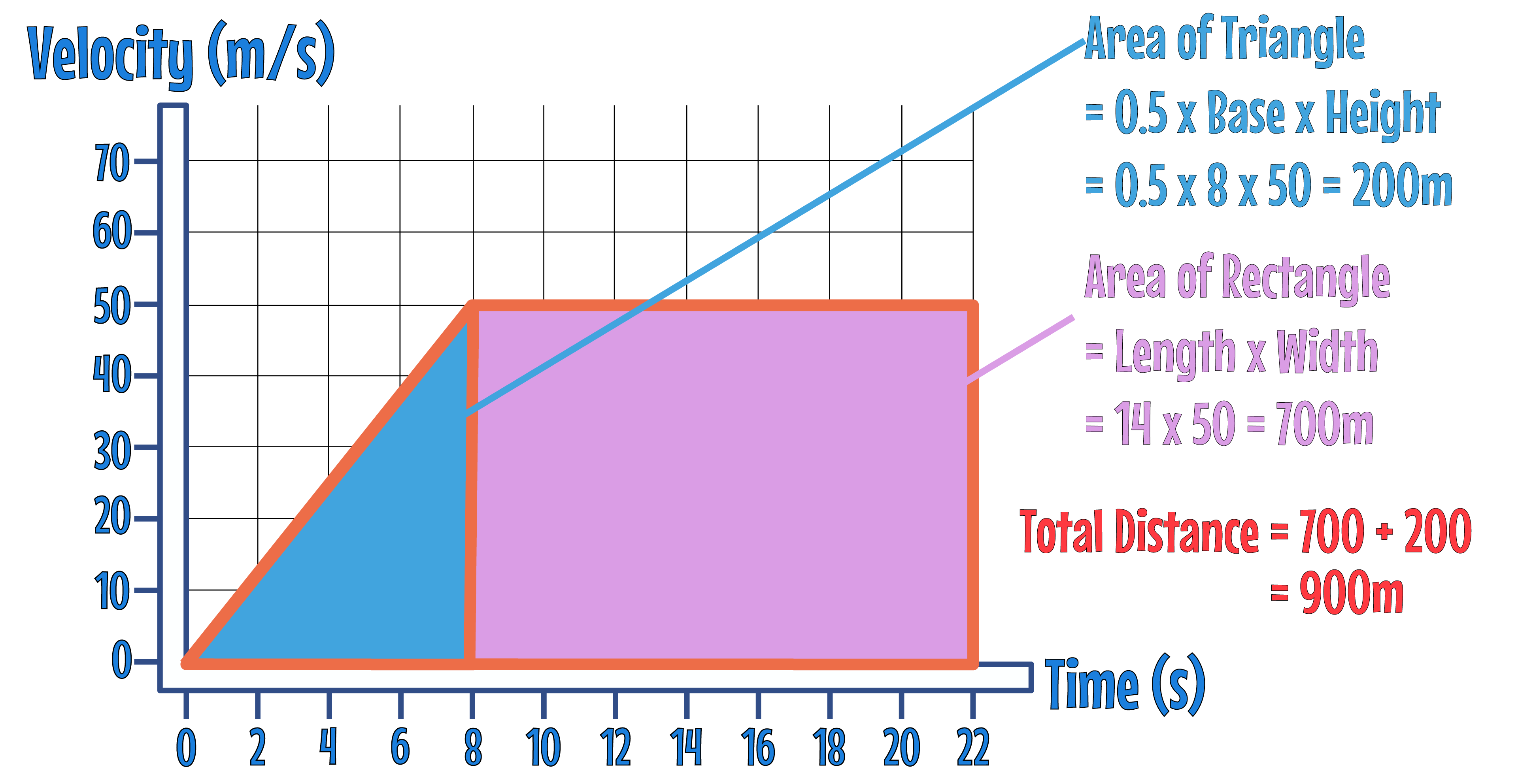
E.g. To find the distance travelled by the object after 22s, you need to find the TOTAL AREA under the graph up until 22s.
The total area can be broken down into a TRIANGLE and a RECTANGLE:
Terminal Velocity
Acceleration due to Gravity
All objects on Earth experience GRAVITATIONAL ATTRACTION towards the centre of the planet. This means when an object is in FREE FALL, it moves DOWNWARDS.
NEAR the surface of the Earth, you can assume ALL objects fall with an acceleration of 9.8m/s2.
This assumption can be made when you assume there is NO DRAG (AIR RESISTANCE), meaning there is a CONSTANT acceleration.
In real life however, when an object moves through a liquid or gas, there IS a DRAG FORCE present which affects the motion.
Drag
- DRAG is a resisting force encountered by an object moving through a FLUID (a GAS or LIQUID).
- It always acts in the OPPOSITE direction to the motion of the object.
- Examples of DRAG are AIR RESISTANCE and WATER RESISTANCE.
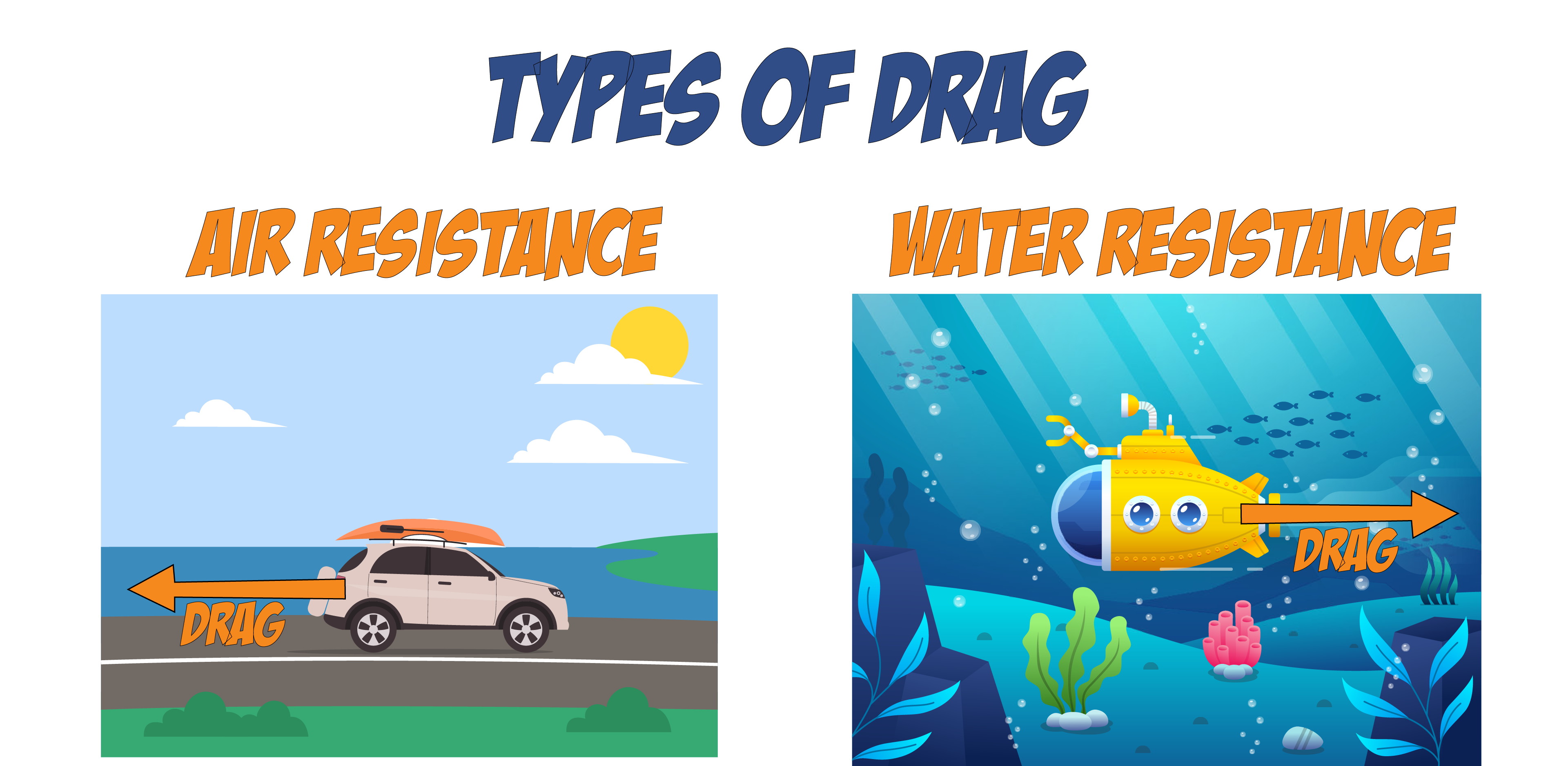
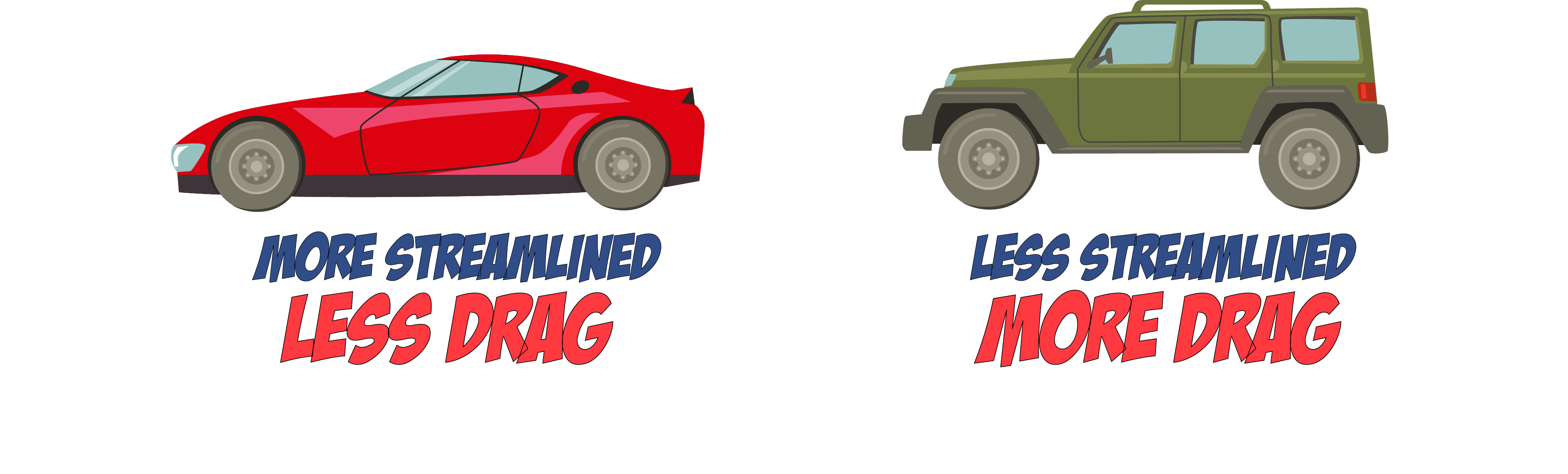
Drag is affected by the SPEED of the object and its SHAPE.
You can REDUCE the drag experienced by a moving object by:
1. DECREASING the SPEED of the object.
2. Making the object MORE STREAMLINED.
Terminal Velocity
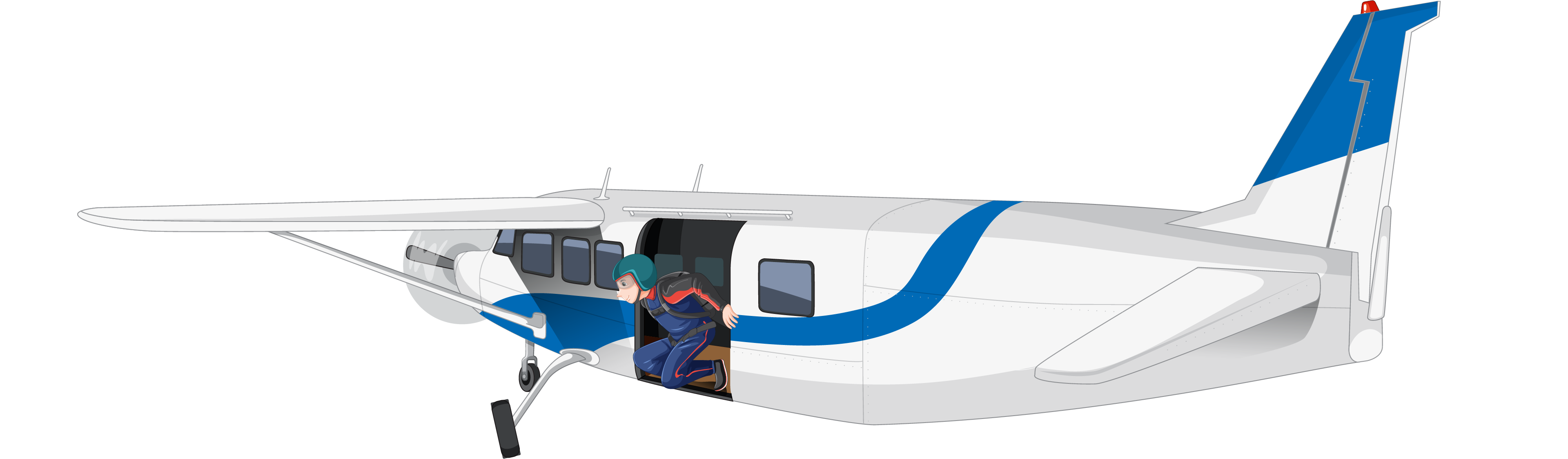
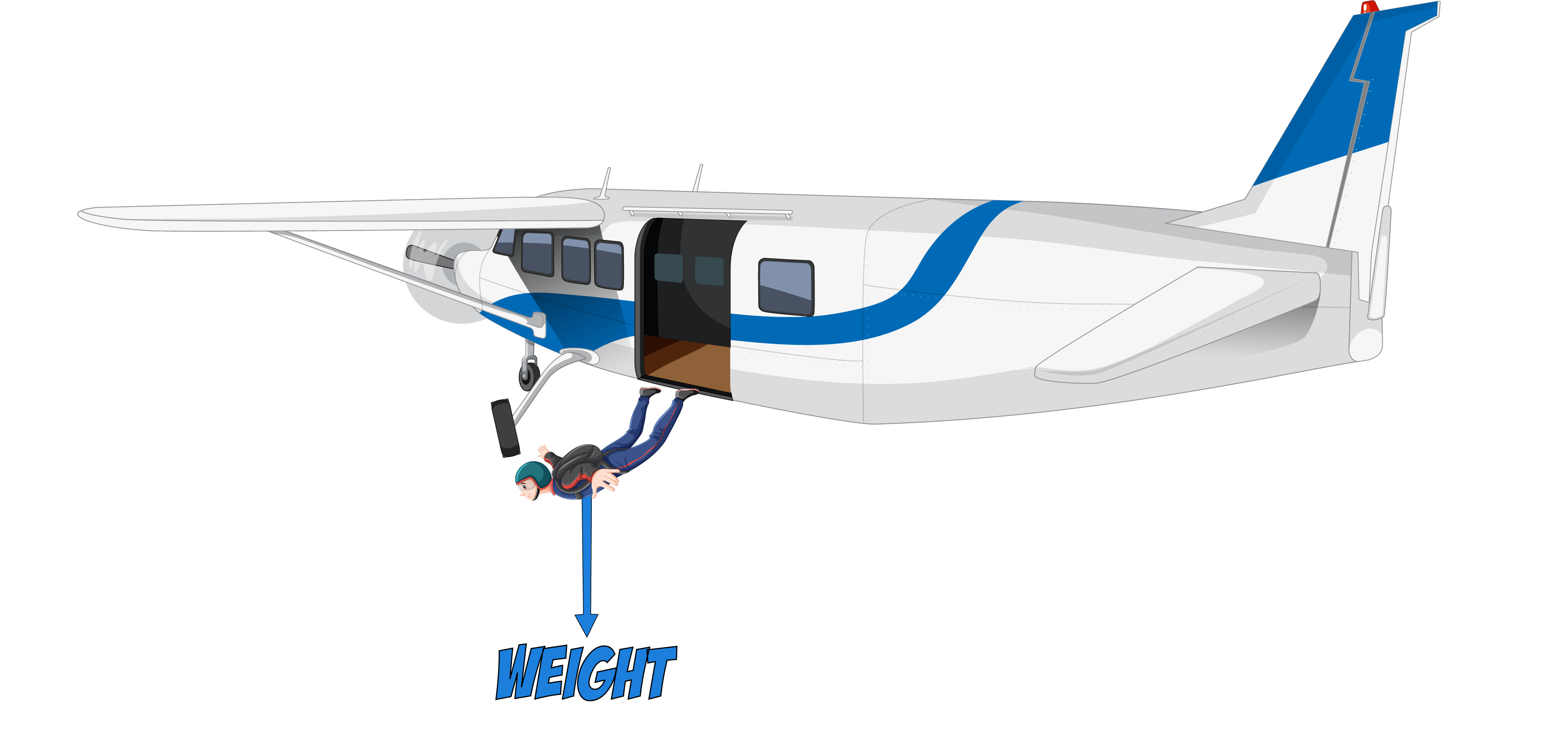
Consider a skydiver jumping out of a plane. Initially, the only force acting on him is WEIGHT due to gravity. This causes him to ACCELERATE downwards.
As the skydiver ACCELERATES, the speed INCREASES which means the DRAG also INCREASES.
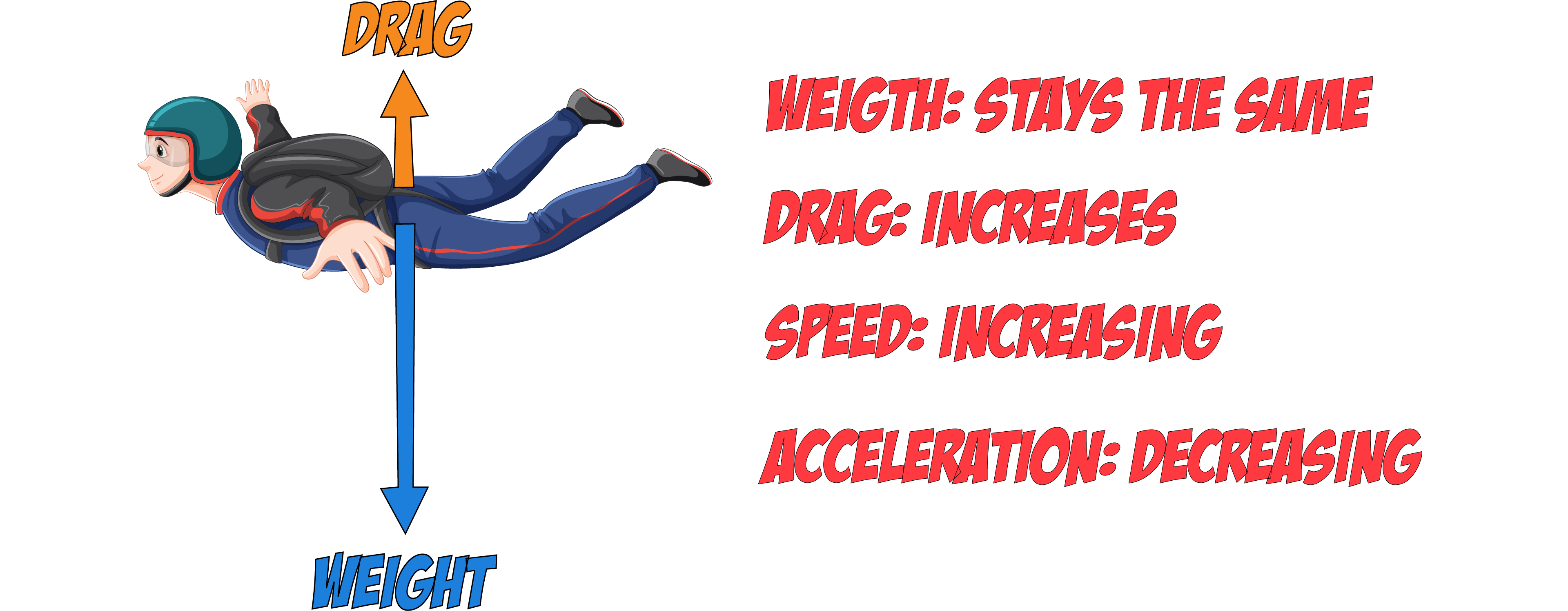
This means the RESULTANT FORCE on the skydiver DECREASES so the ACCELERATION also DECREASES.
The drag force keeps INCREASING until it becomes EQUAL to the weight.

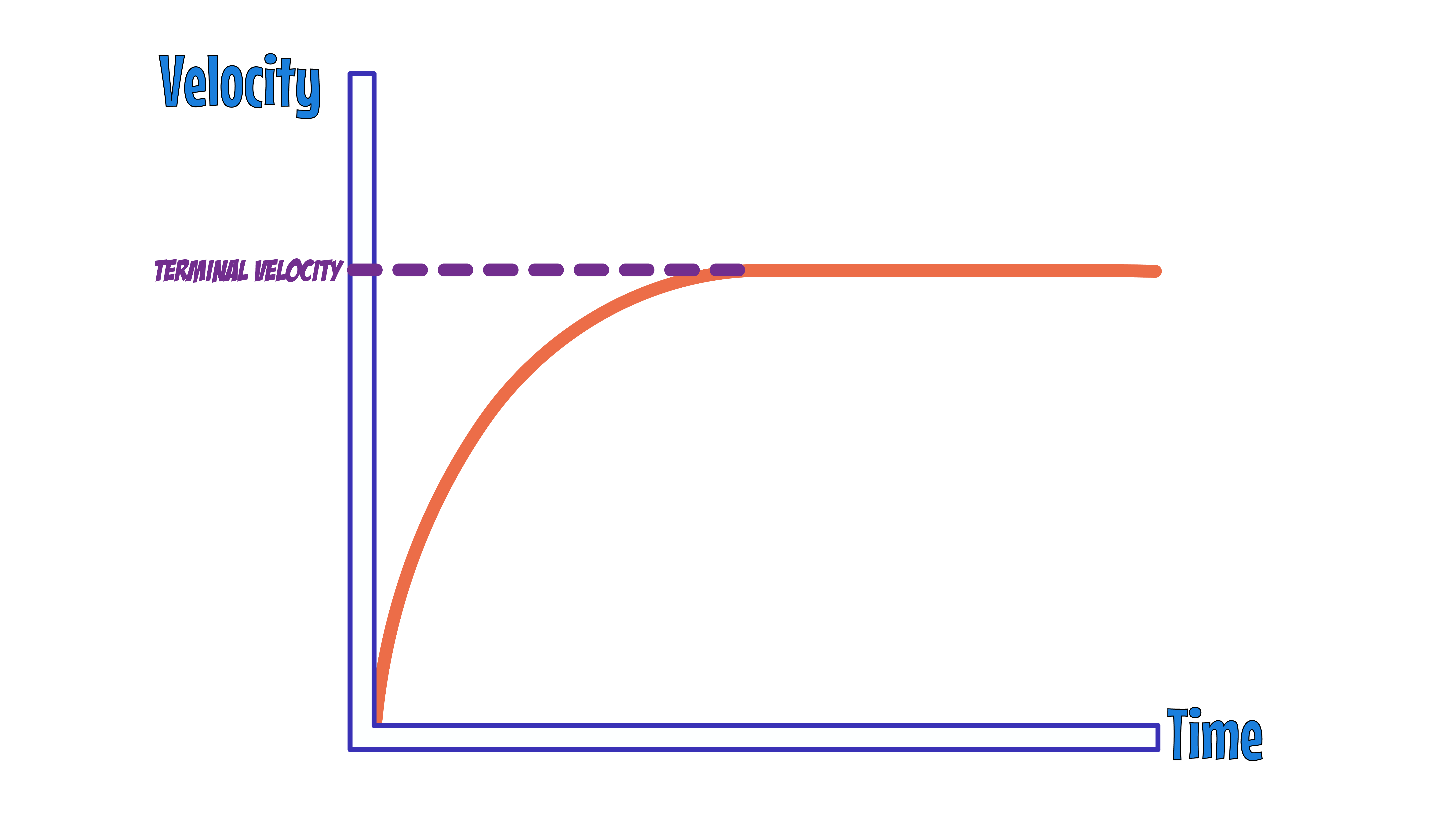
At this point, the resultant force is ZERO which means there is NO ACCELERATION and the skydiver travels at a CONSTANT SPEED (Newton’s 1st Law). This speed is known as the TERMINAL VELOCITY and is the MAXIMUM SPEED the skydiver reaches.
The Velocity-Time graph for the skydiver would look like this: