
Electrical Energy Transfers
- Everyday electrical appliances are designed to bring about ENERGY TRANSFERS.
- The AMOUNT OF ENERGY an appliance transfers depends on two things:
- How long the appliance is on (time).
- The power rating of the appliance.
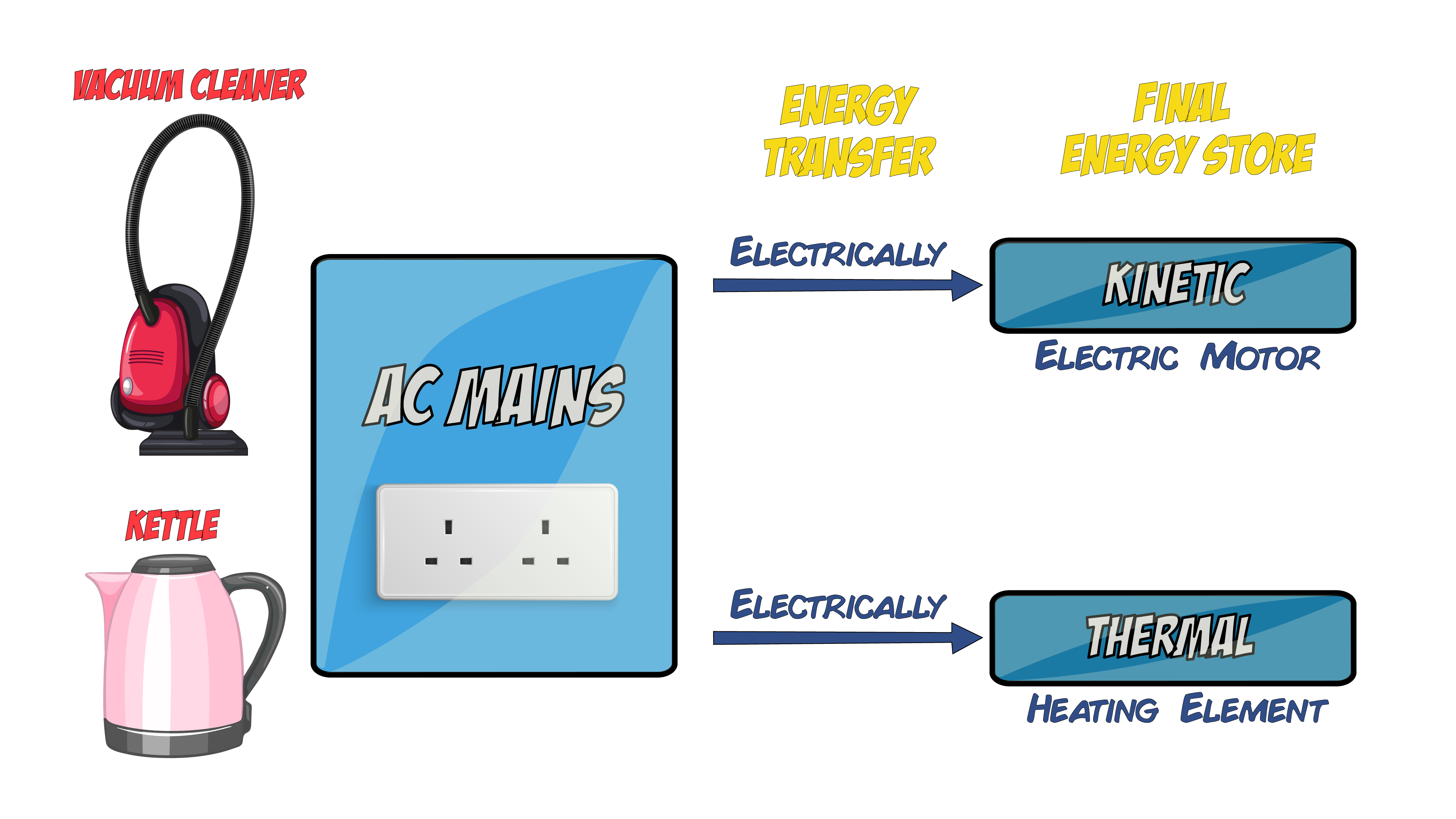
- Appliances transfer energy ELECTRICALLY from either BATTERIES (if it’s battery powered) or the AC MAINS (if it needs to be plugged in).
- Here are some examples of appliances and their energy transfers:
ELECTRICAL ENERGY
WORK IS DONE when charge flows through a circuit.
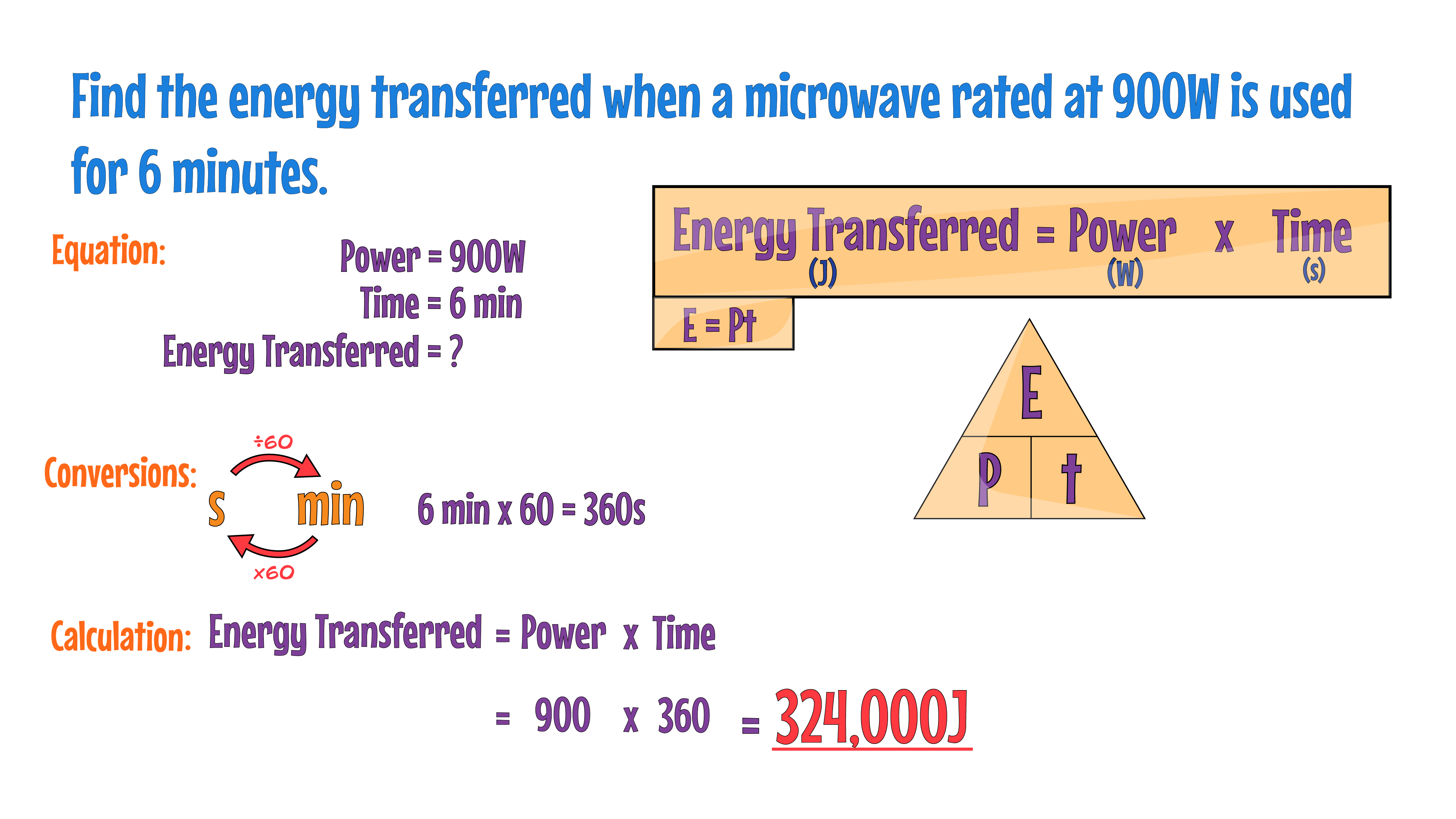
The amount of energy transferred by electrical work can be calculated using the equation:

Where:
- E is the energy transferred in Joules (J).
- P is the power in Watts (W).
- t is the time in Seconds (s).
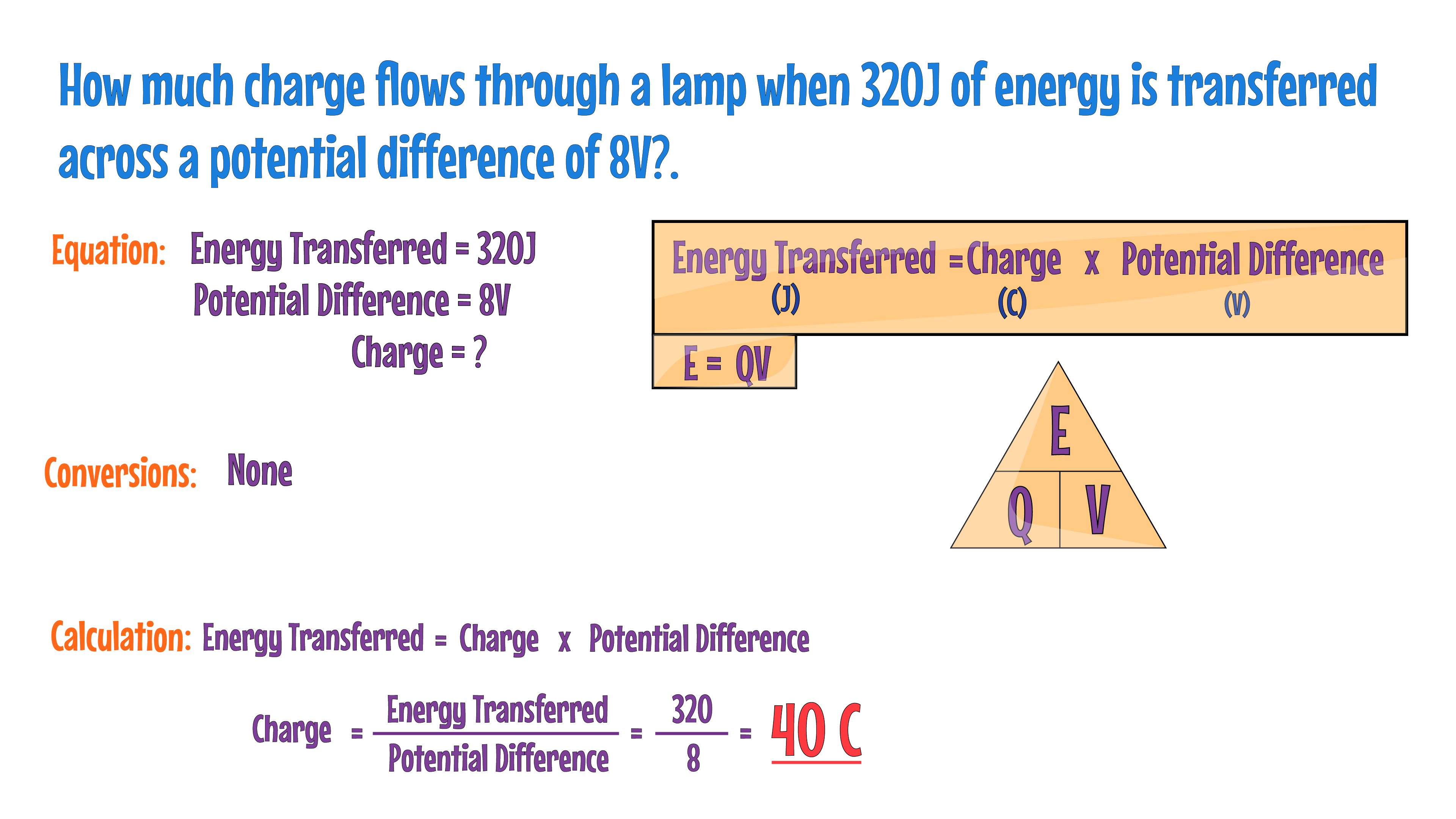
Another way to express ENERGY TRANSFERRED is by the product of CHARGE FLOW and POTENTIAL DIFFERENCE:
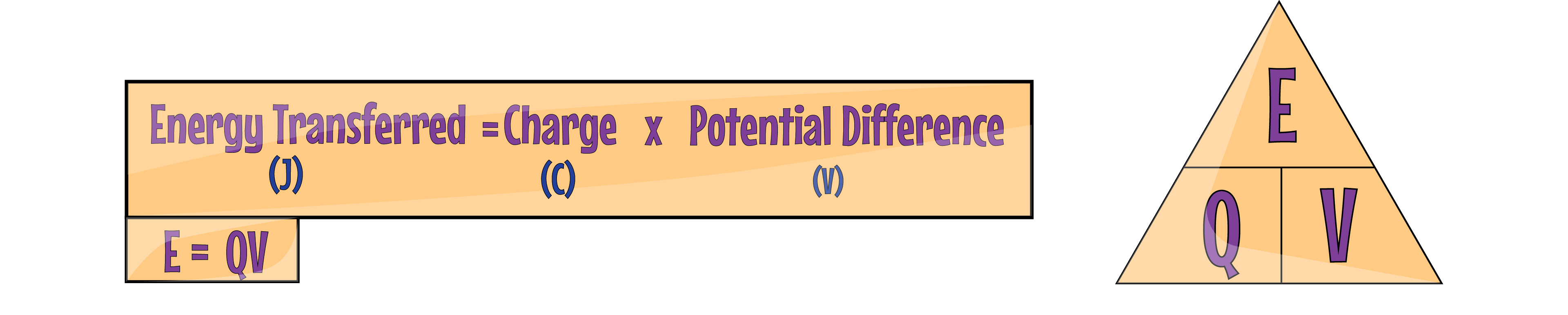
Where:
- Q is the charge flow in Coulombs (C).
- V is the potential difference in Volts (V).
- E is the energy transferred in Joules (J).
Power Ratings
- Every electrical appliance has a POWER RATING which tells you how much energy it needs to work.
- It's possible to describe the POWER RATINGS and how they relate to changes in stored energy. For example, a high-power appliance like a toaster uses more energy in a shorter amount of time compared to a low-power appliance like a clock.