Electrical Power
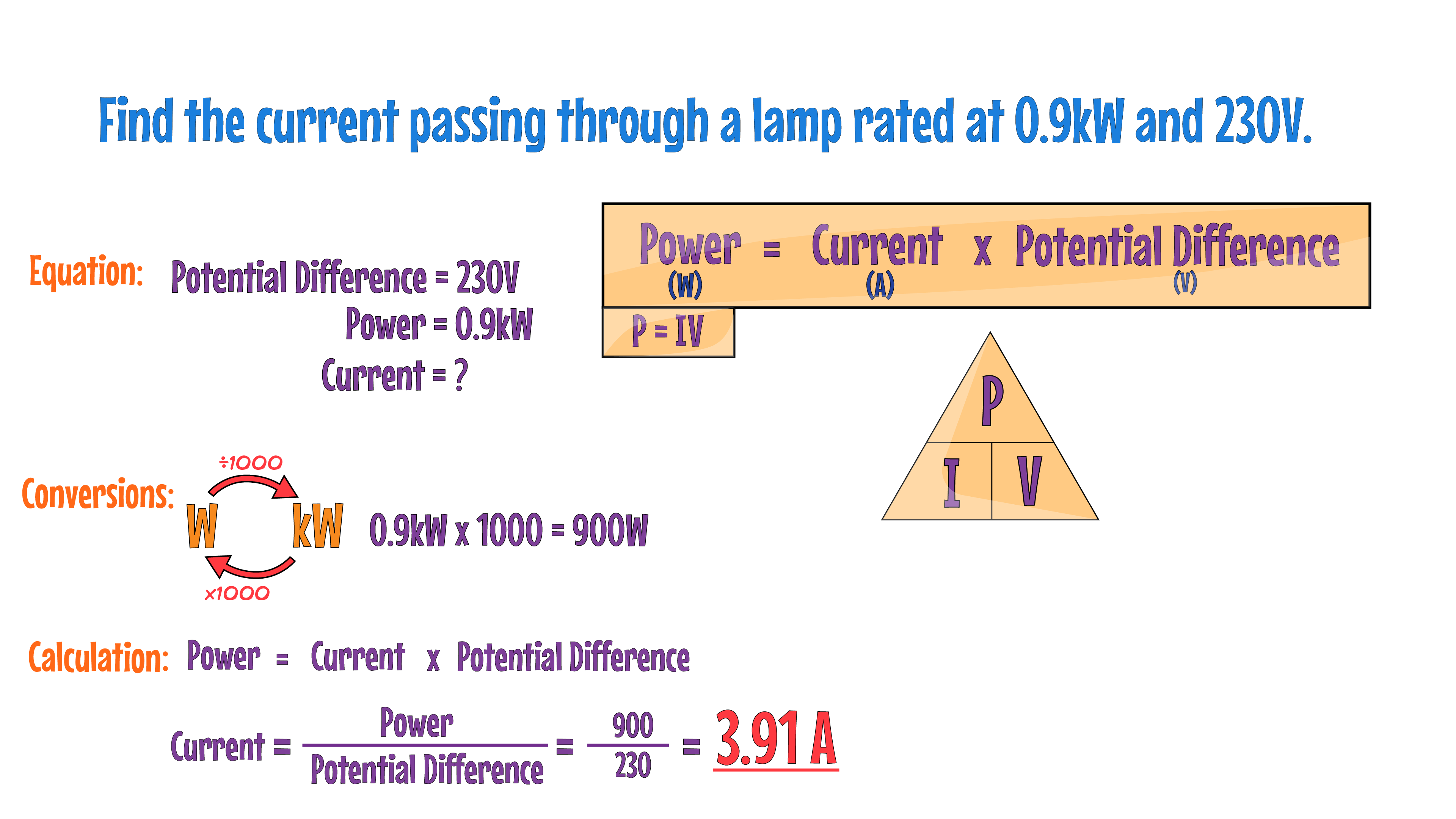
POWER is the rate at which energy is transferred or converted. In an electrical circuit, POWER is calculated as the product of POTENTIAL DIFFERENCE and CURRENT:
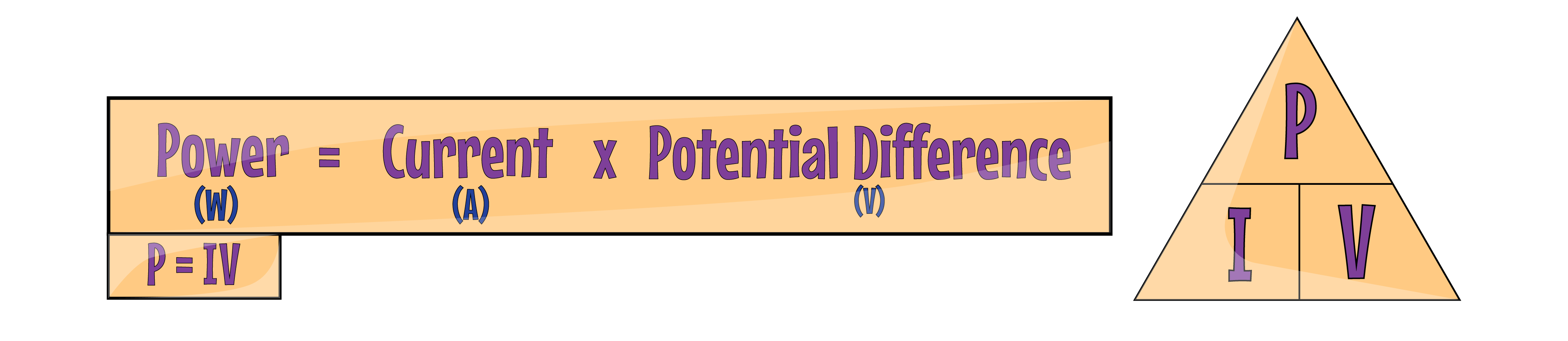
This formula tells you how much energy is used per second when a current flows through a component at a certain potential difference.
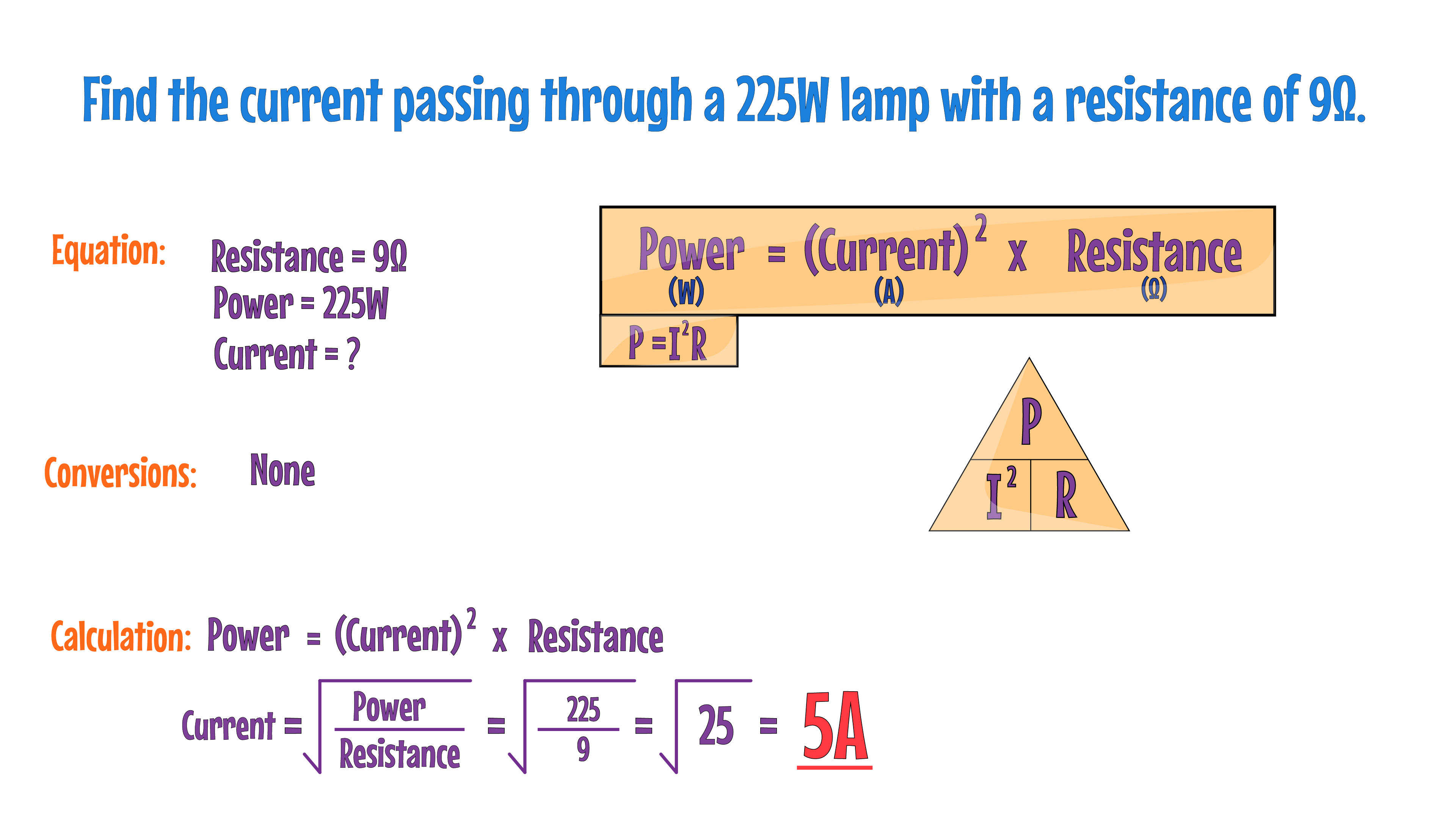
There's another way to calculate POWER if you know the RESISTANCE of a component and the CURRENT flowing through it:
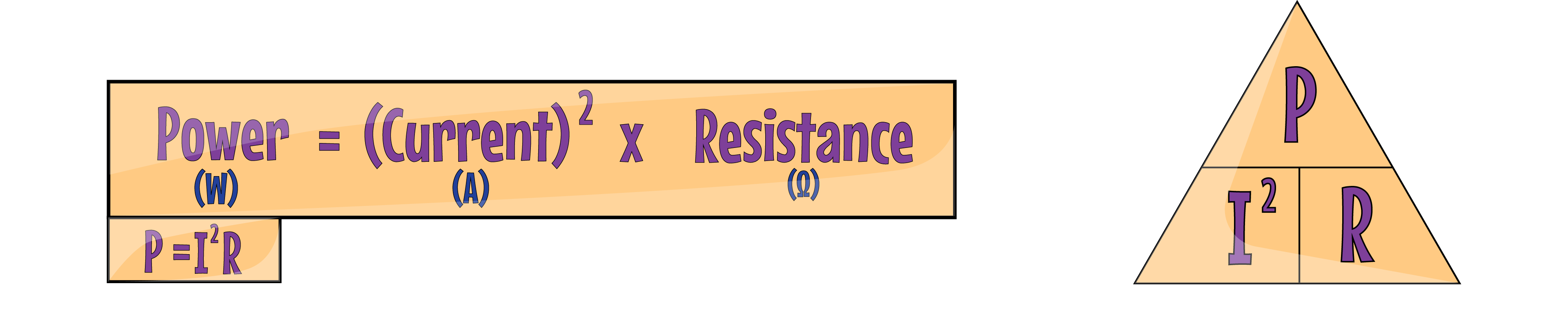
This shows that POWER also depends on the square of the CURRENT and the RESISTANCE the current encounters.
- Power is measured in Watts (W)
- Potential Difference (Voltage) is measured in Volts (V).
- Current is measured in Amperes (A).
- Resistance is measured in Ohms (Ω).