The National Grid
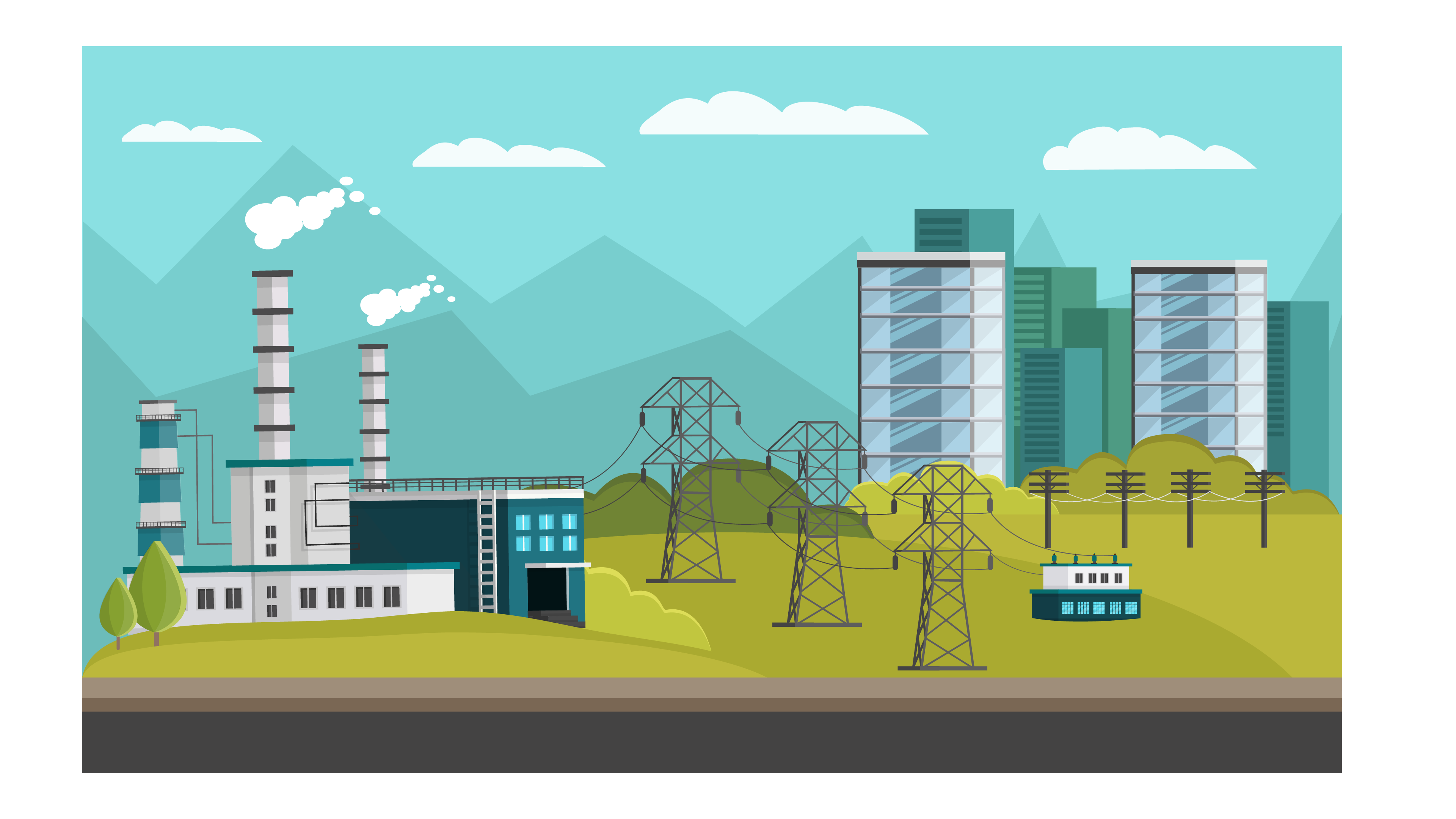
- The NATIONAL GRID is a large network consisting of CABLES and TRANSFORMERS. It connects POWER STATIONS to CONSUMERS, distributing electricity across the country.
The Role of High Potential Difference and Low Current
- The NATIONAL GRID operates using a HIGH POTENTIAL DIFFERENCE (PD) and a LOW CURRENT to transmit electricity efficiently.
- A high CURRENT would lead to a significant amount of ENERGY being LOST as HEAT in the cables, so it's avoided by using a HIGH POTENTIAL DIFFERENCE which allows for a LOW CURRENT.
- A lower CURRENT reduces ENERGY LOSS and prevents the wires from heating up too much, making the grid more efficient.
Transformers
TRANSFORMERS are used to change the POTENTIAL DIFFERENCE for efficient energy transmission over long distances.
There are TWO types of TRANSFORMERS:
1. STEP-UP TRANSFORMERS
These INCREASE the POTENTIAL DIFFERENCE and DECREASE the CURRENT.
2. STEP-DOWN TRANSFORMERS
These decrease the POTENTIAL DIFFERENCE and INCREASE the CURRENT.
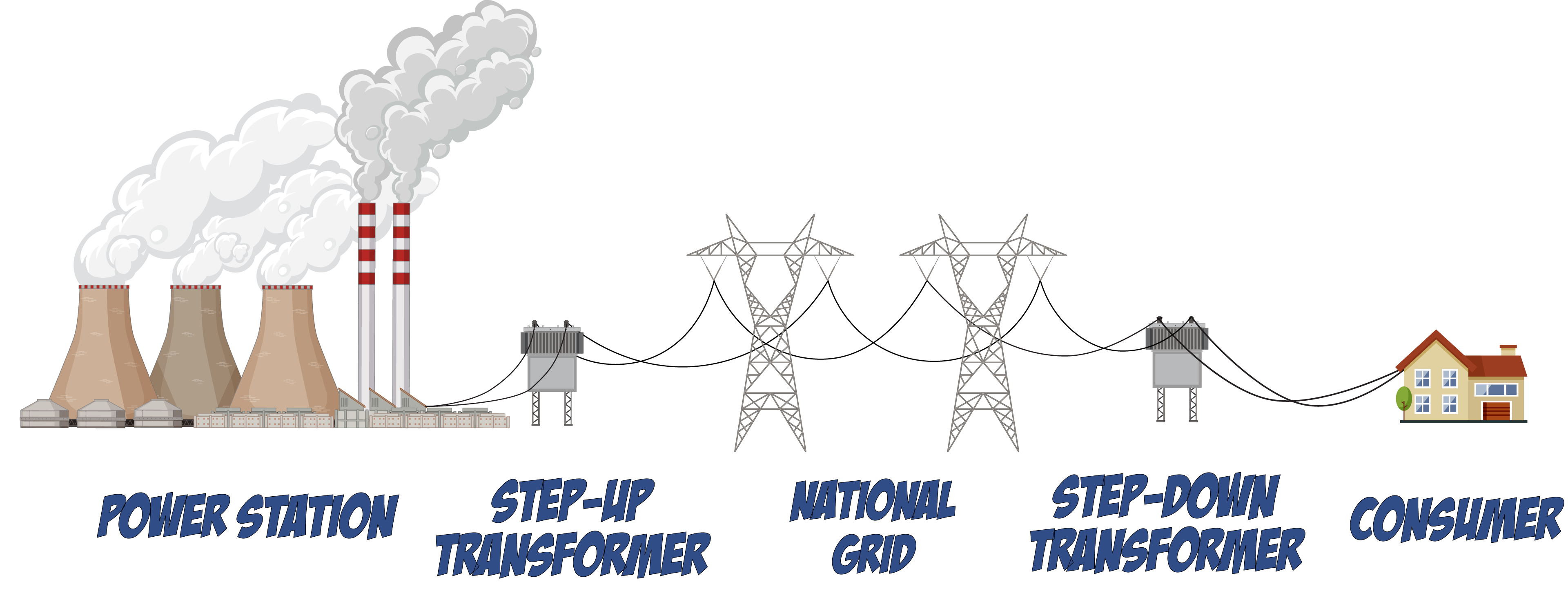
The electricity generated from the POWER STATION first goes through a STEP-UP transformer, which INCREASES the POTENTIAL DIFFERENCE and DECREASES the CURRENT so that it can travel long distances and minimise ENERGY LOST as HEAT.
Just before the current reaches the consumer, it passes through a STEP-DOWN transformer which DECREASES the POTENTIAL DIFFERENCE and INCREASES the CURRENT. This is done so that it's at a SAFE LEVEL for the consumer to use (230V and 50Hz).
Transformer Equation
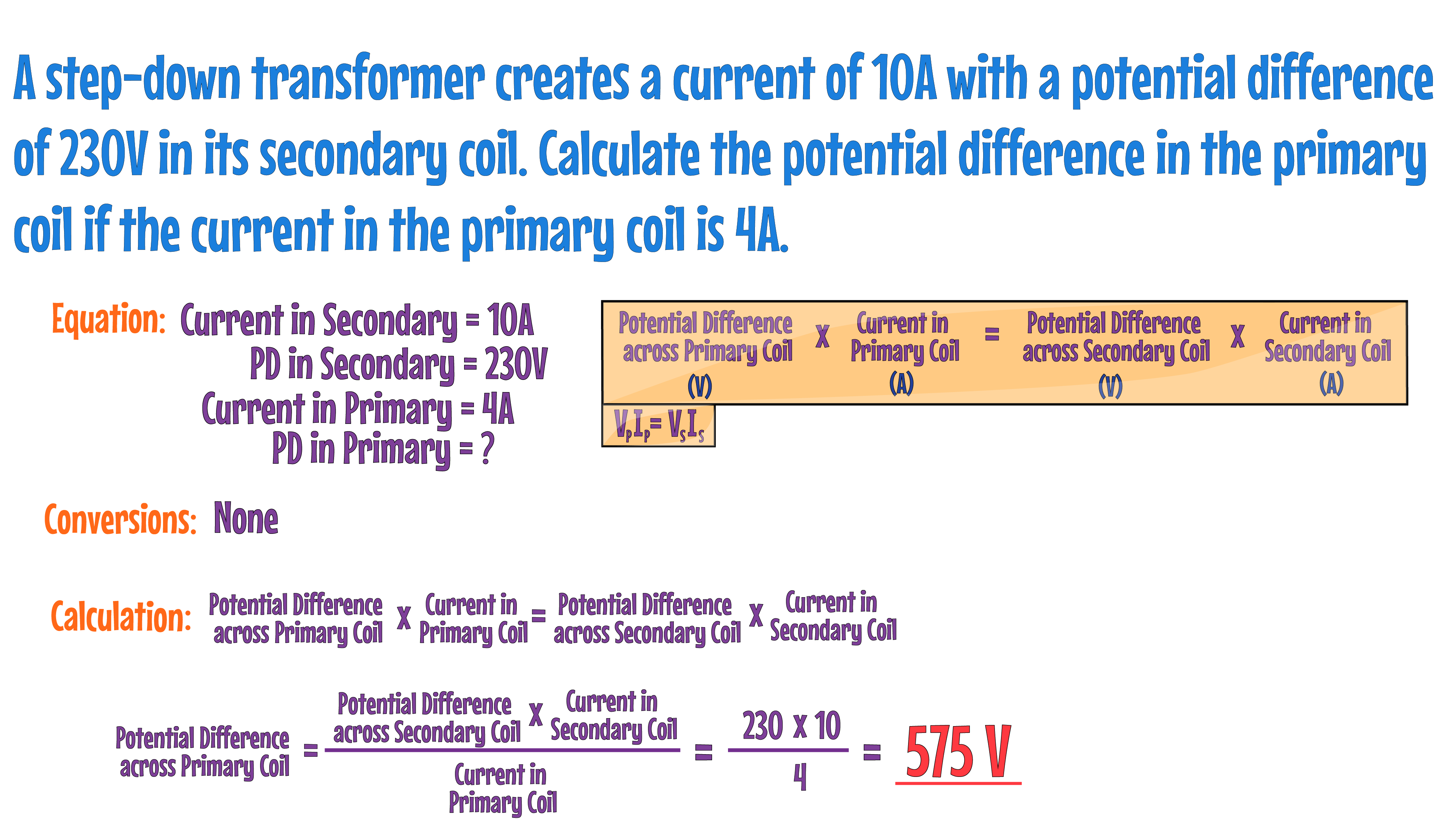
Transformers are made up of two coils of wire, called the PRIMARY and SECONDARY coils, around a magnetic iron core.
The POWER transferred by a transformer is almost equal in the primary and secondary coils. By knowing this we can derive the following equation:

- Where:
- VP and IP are the POTENTIAL DIFFERENCE and CURRENT in the PRIMARY coil.
- VS and IS are the POTENTIAL DIFFERENCE and CURRENT in the SECONDARY coil.