Energy Changes in Systems
Whenever you heat up or cool down an object, there is a CHANGE IN ENERGY.
The amount of energy STORED or RELEASED from a system as its temperature changes can be calculated by knowing the SPECIFIC HEAT CAPACITY.
SPECIFIC HEAT CAPACITY
Different materials need different amounts of energy to change their temperature.
The SPECIFIC HEAT CAPACITY (SHC) is a property that tells us how much heat energy (in joules) is needed to raise the temperature of 1 kilogram of a substance by 1 degree Celsius (°C).
It's a property of a material that tells you how easy it is to HEAT UP or COOL DOWN.
Here's a simple way to understand it:
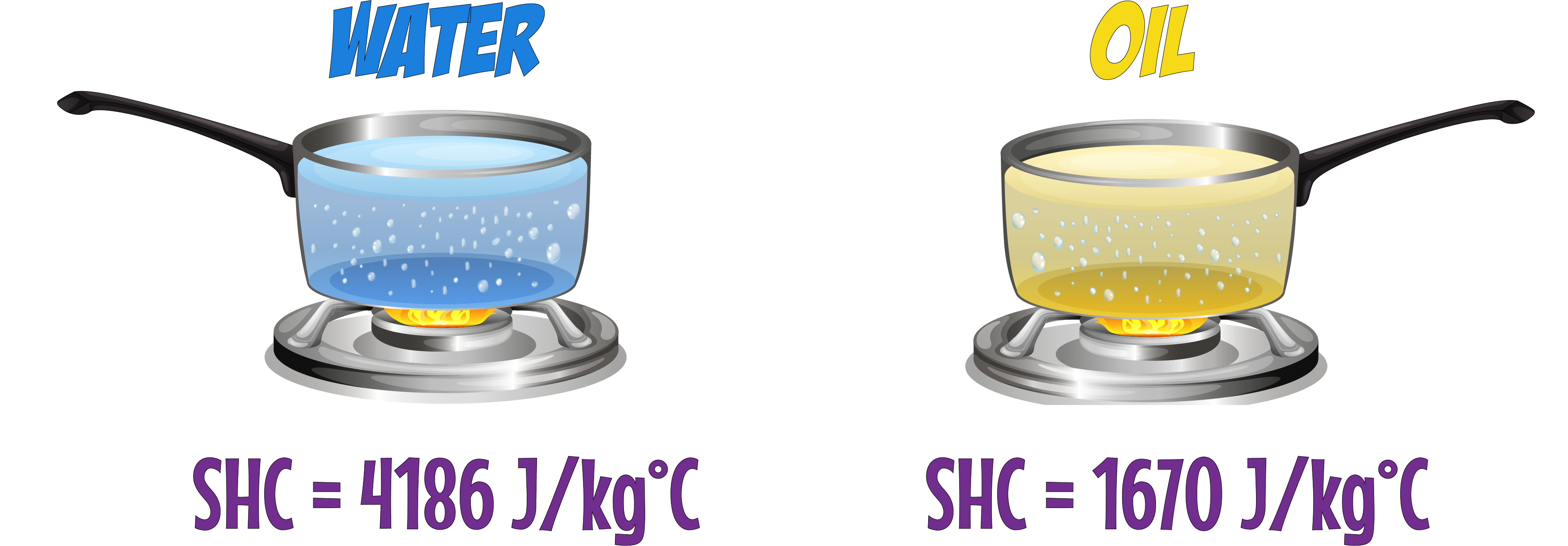
- Water has a SPECIFIC HEAT CAPACITY of 4186 J/kg°C. This means it takes 4186 Joules to heat 1 kg of water by 1°C.
- Oil has a lower SPECIFIC HEAT CAPACITY of 1670 J/kg°C, so it needs LESS energy to heat up.
- This means the oil heats up and cools down more easily than water.
CALCULATING THERMAL ENERGY
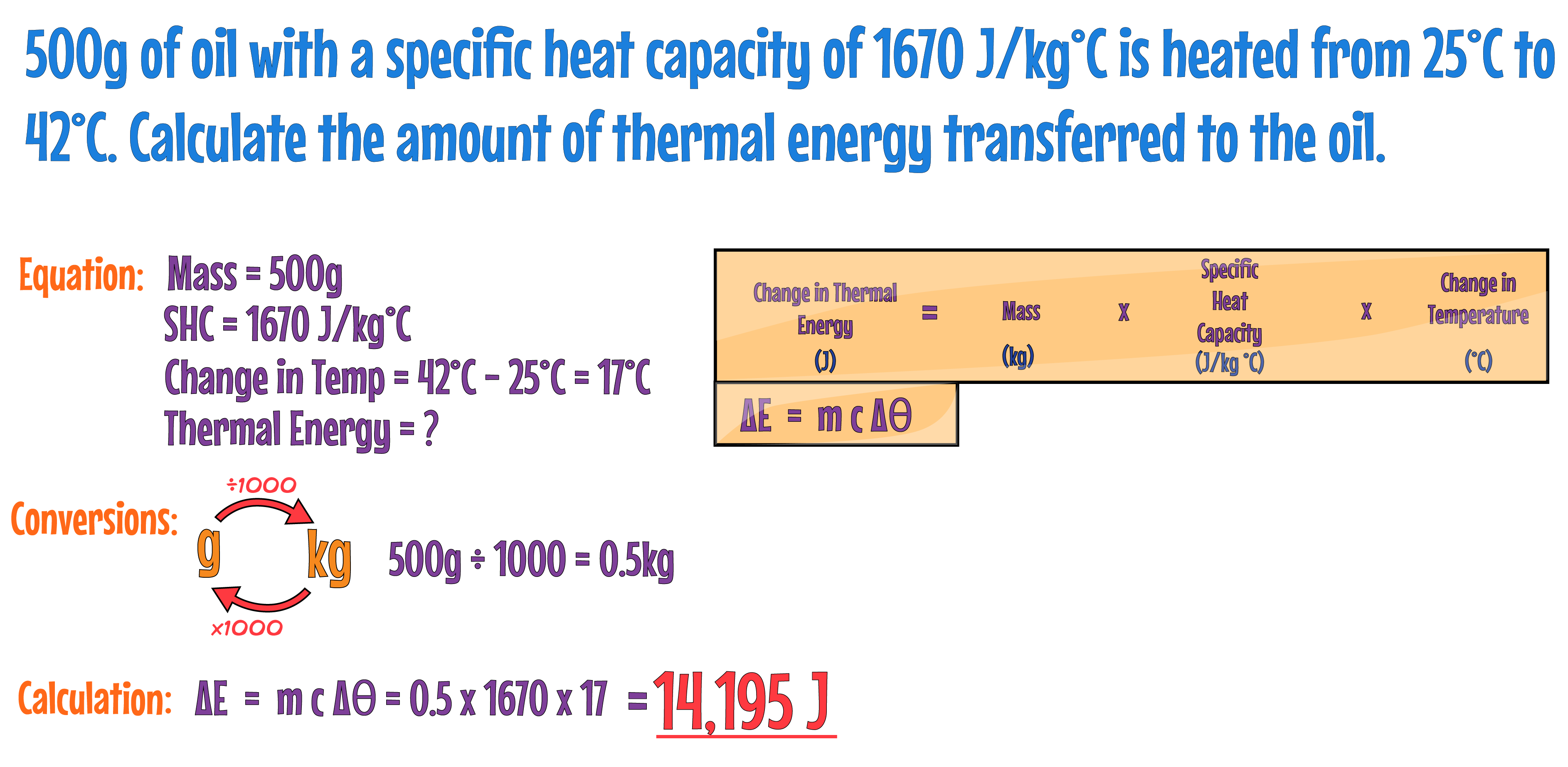
To calculate the change in thermal energy of a system, you can use the formula: