
Required Practical: Specific Heat Capacity
This experiment shows you how to measure the SPECIFIC HEAT CAPACITY of a substance like aluminium.
EQUIPMENT NEEDED
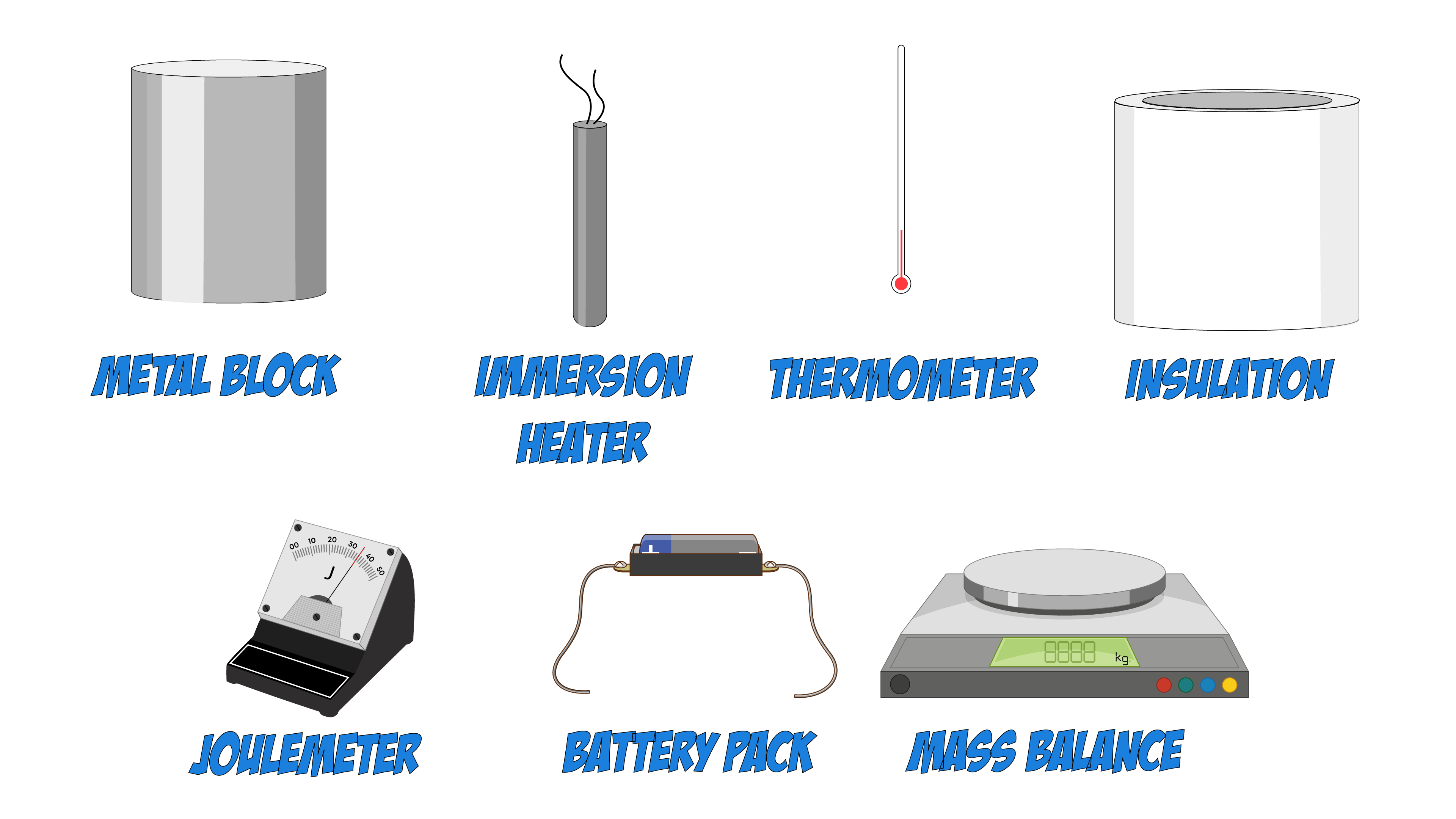
- METAL BLOCK: Made of the material you are testing, like aluminium, with holes for the heater and thermometer.
- IMMERSION HEATER: To provide heat to the metal block.
- THERMOMETER: To measure the temperature of the metal block.
- INSULATION: To minimise heat loss from the metal block.
- JOULEMETER: To measure the amount of energy used.
- MASS BALANCE: To measure the mass of the metal block.
- BATTERY PACK: To supply power to the immersion heater.
PROCEDURE
- MEASURING MASS:
- Use the MASS BALANCE to measure the mass of the metal block. Record the value.
- SETTING UP THE EXPERIMENT:
- Place the metal block into insulation and insert both the IMMERSION HEATER and THERMOMETER into the appropriate holes in the block.
- Connect the IMMERSION HEATER to the BATTERY PACK and the JOULEMETER.
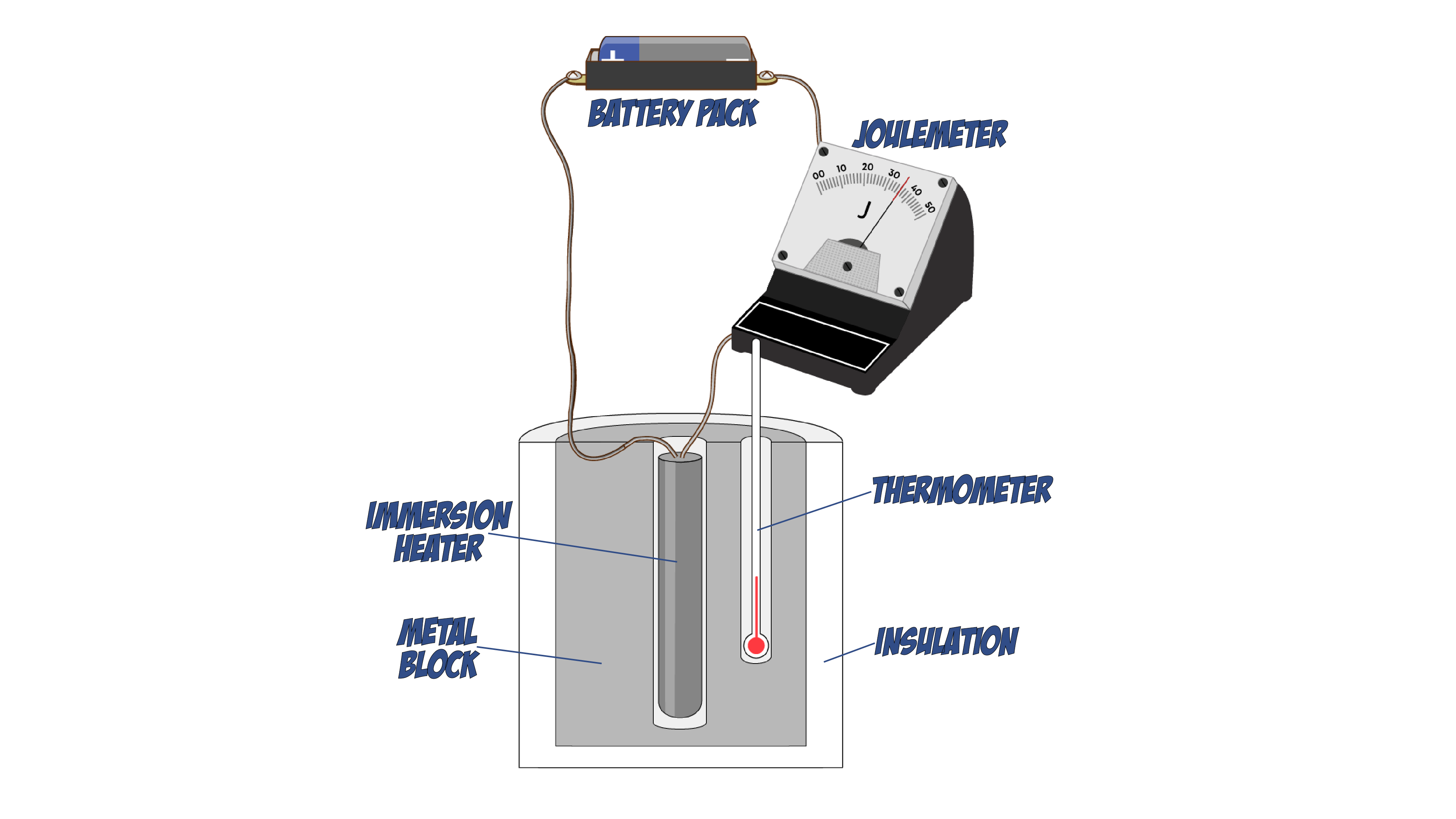
- HEATING AND MEASURING:
- Turn on the IMMERSION HEATER to start heating the metal block.
- Record the initial temperature from the THERMOMETER and the initial energy from the JOULEMETER.
- CALCULATING SPECIFIC HEAT CAPACITY:
- Once you have finished heating, turn OFF the heater.
- Record the final temperature and energy readings.
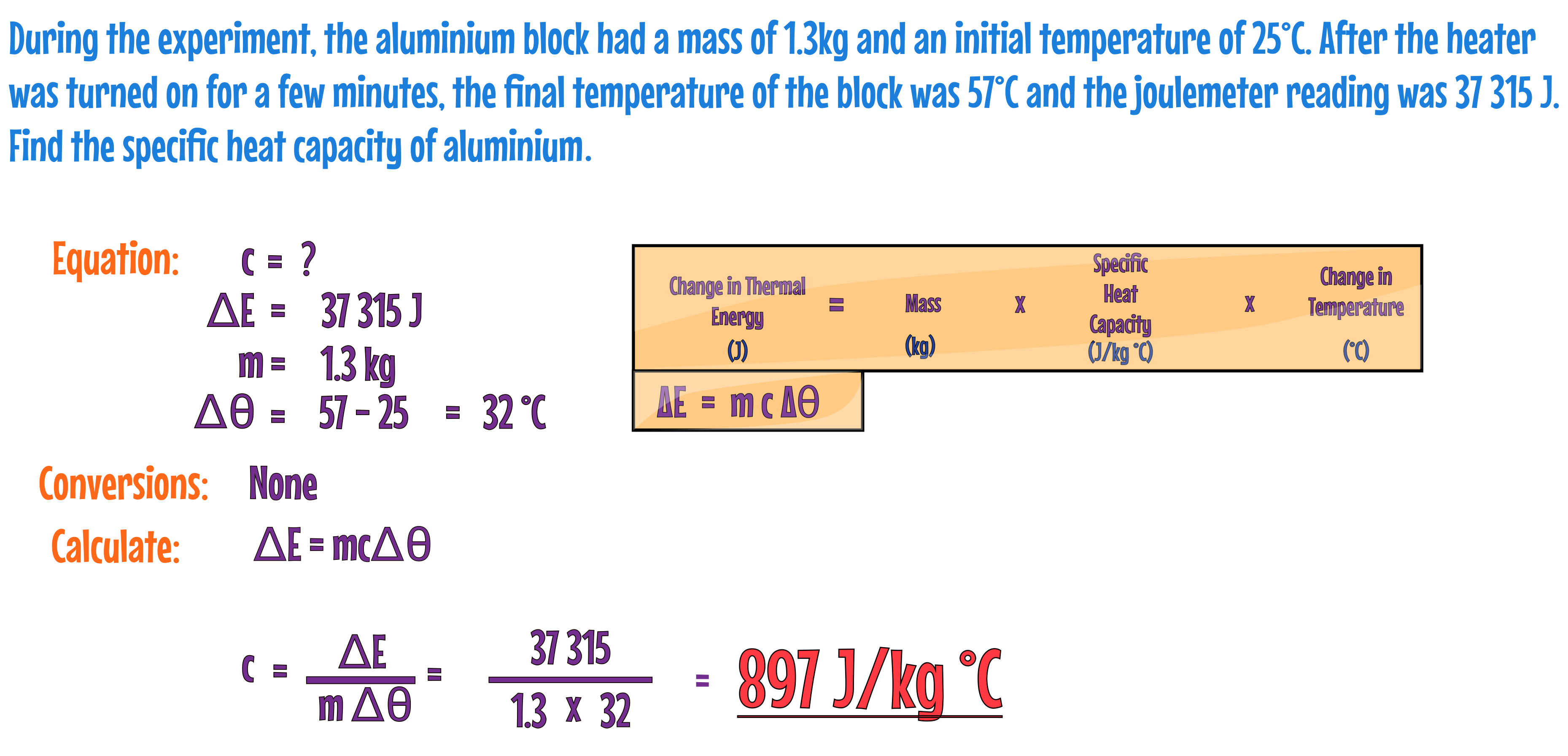
- Use the SPECIFIC HEAT CAPACITY equation.
Here's an example of a calculation you can do after this experiment:
You can do a similar experiment for finding out the specific heat capacity of a liquid.

Use a polystyrene cup with a lid to minimise heat lost to the surroundings, to make calculations more ACCURATE.