Changes in Energy
KINETIC ENERGY
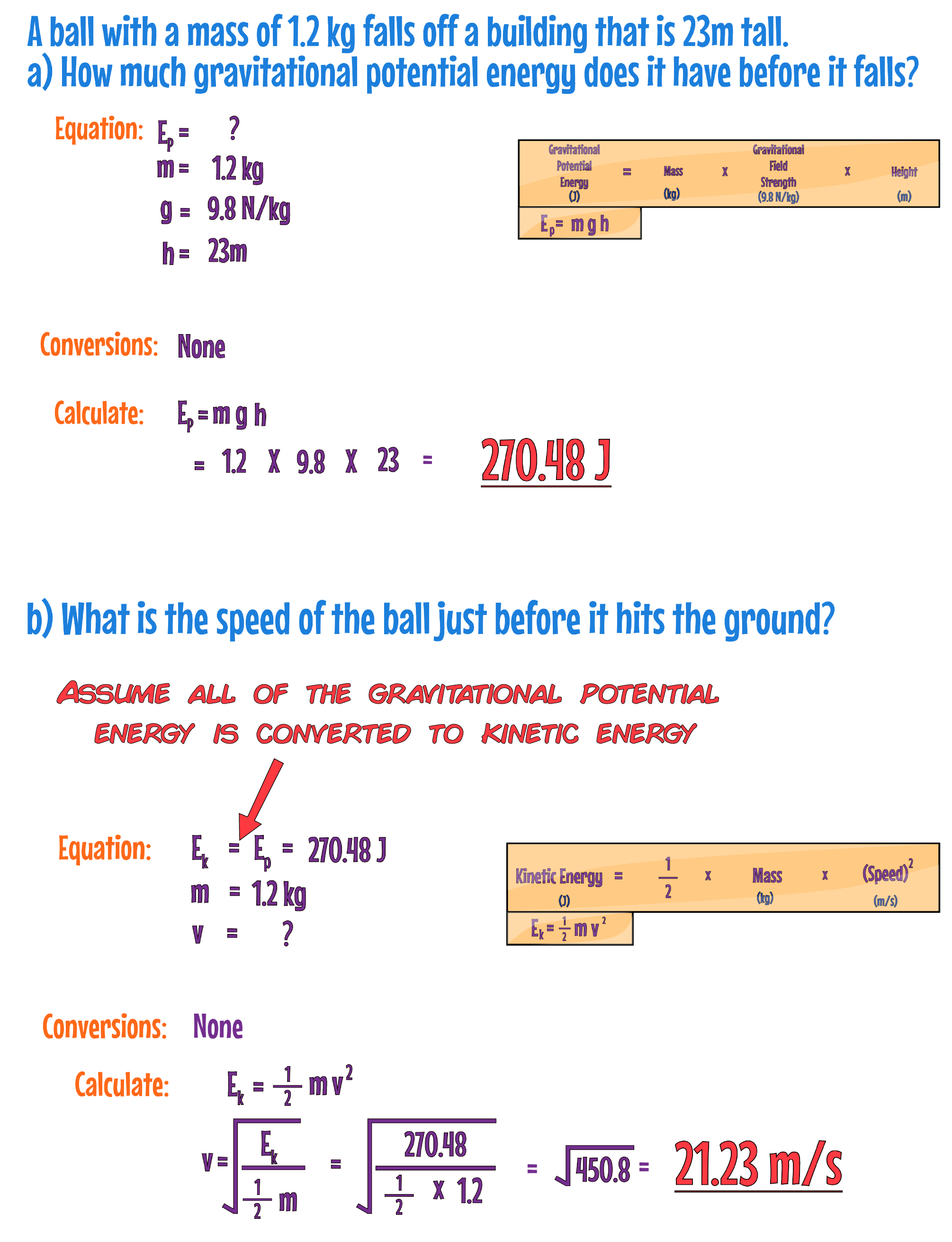
Kinetic Energy (KE) is the energy that a MOVING object has. You can calculate the Kinetic Energy of an object using the formula:

- Kinetic Energy is measured in Joules (J).
- Mass is measured in Kilograms (kg).
- Speed is measured in Metres per Second (m/s).
ELASTIC POTENTIAL ENERGY
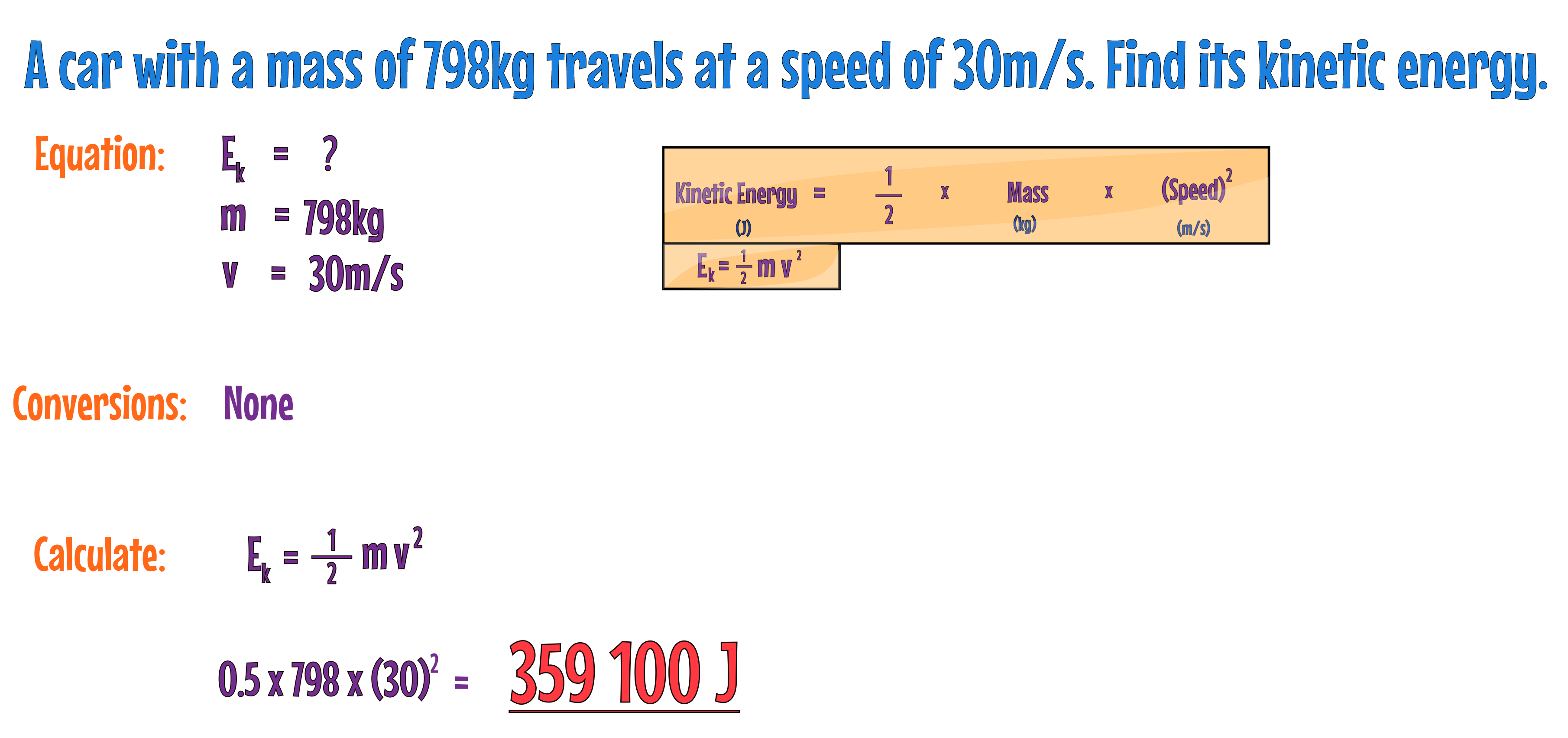
Elastic Potential Energy (EPE) is the energy stored in elastic materials as the result of being STRETCHED or COMPRESSED. Elastic Potential Energy can be calculated with the formula:

- Elastic Potential Energy is also measured in Joules (J).
- Spring Constant (k) measures how stiff the object being stretched is and is measured in Newtons per Metre (N/m).
- Extension (e) is how much the object is stretched or compressed and is measured in Metres (m).
GRAVITATIONAL POTENTIAL ENERGY
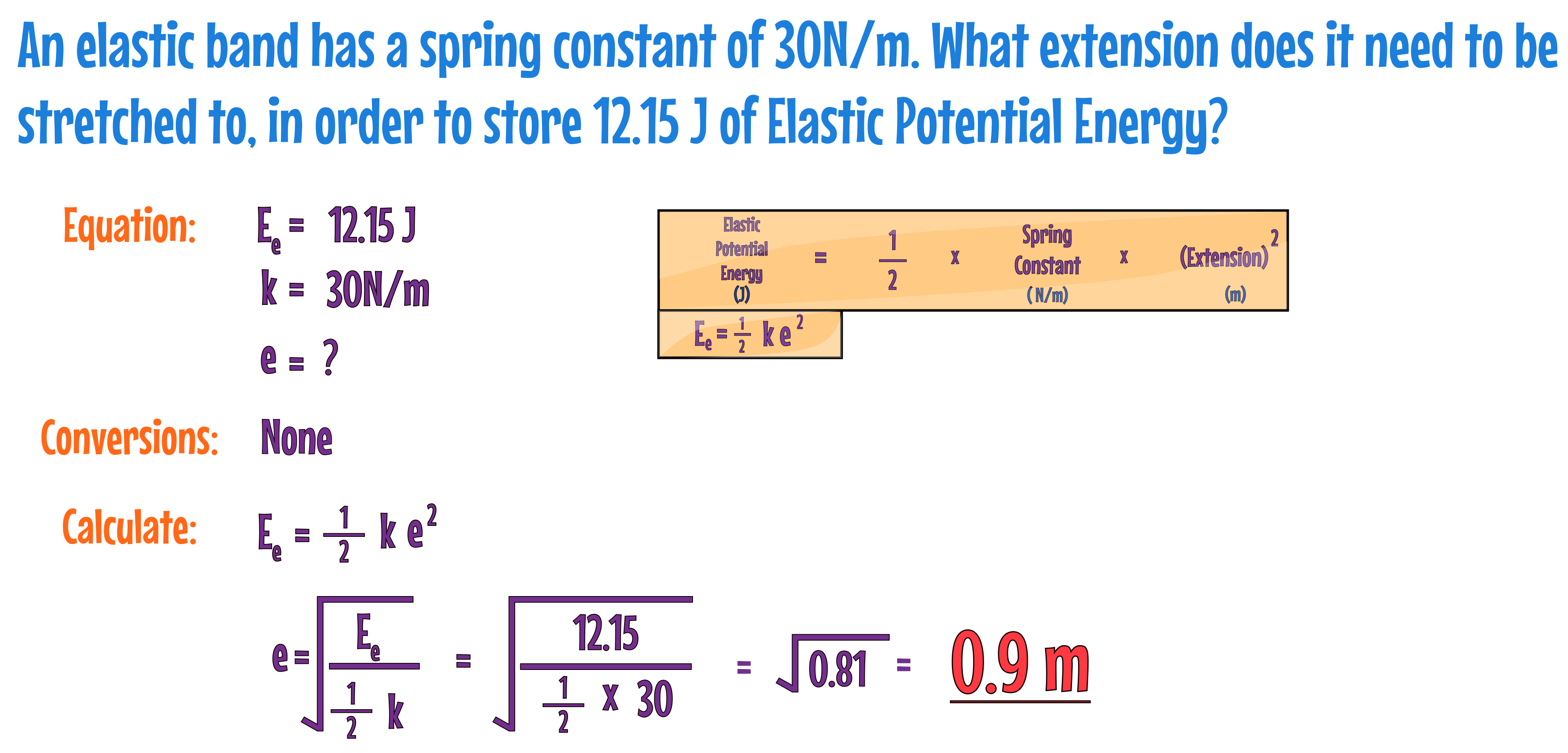
Gravitational Potential Energy (GPE) is the energy held by an object because it is in a gravitational field and above ground level. The HIGHER up the object is, the GREATER the GPE. The formula to find the Gravitational Potential Energy is:

- GPE is in Joules (J).
- Mass is in Kilograms (kg).
- Gravitational Field Strength (g) is the strength of gravity, which on Earth is 9.8 Newtons per Kilogram (N/kg).
- Height is measured in Metres (m).
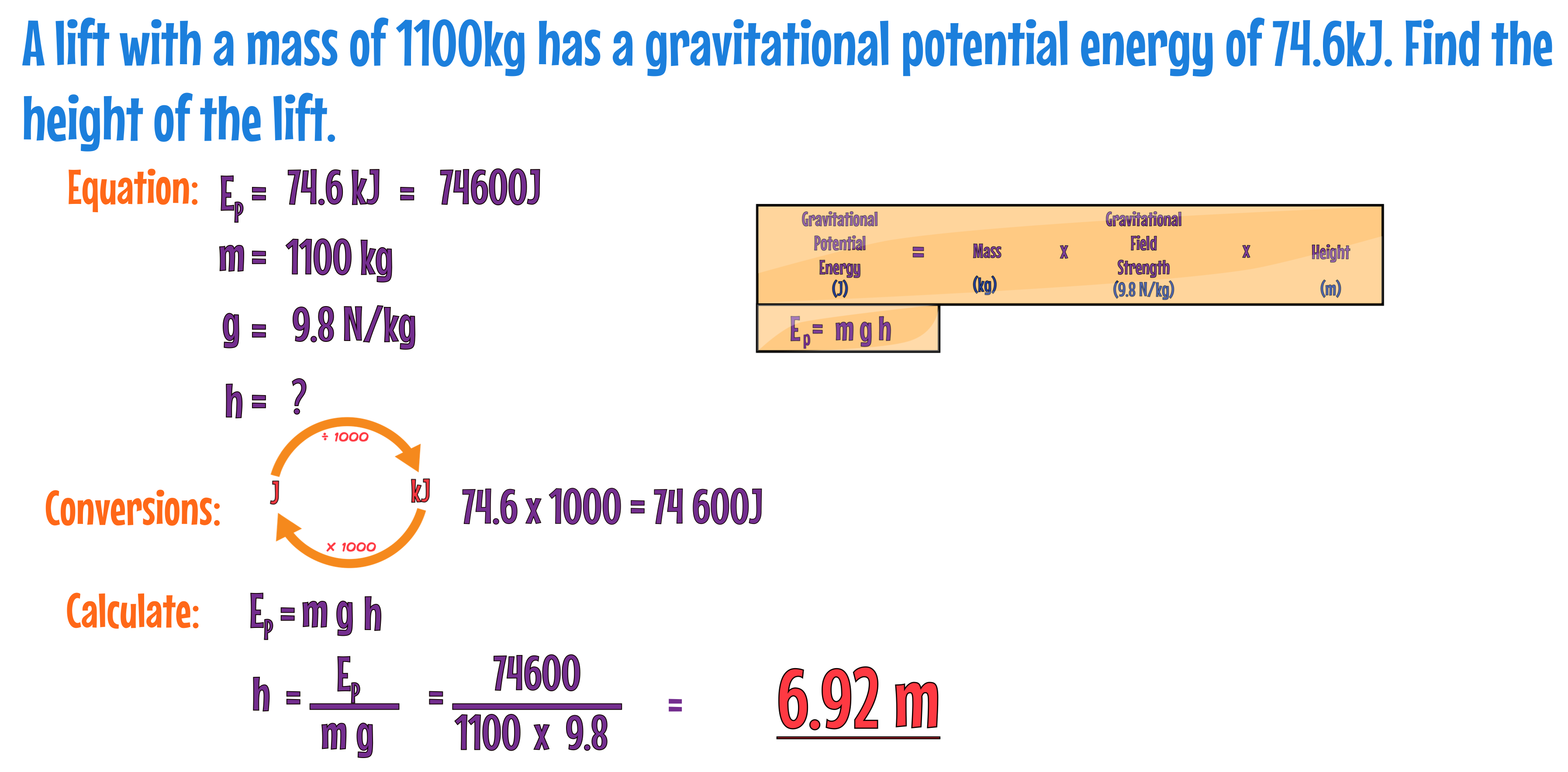
Here is an example combining more than one equation: