Energy Stores and Transfers
Open and Closed Systems
A SYSTEM consists of either a single object or a group of objects.
There are TWO types of system: An OPEN SYSTEM and a CLOSED SYSTEM.
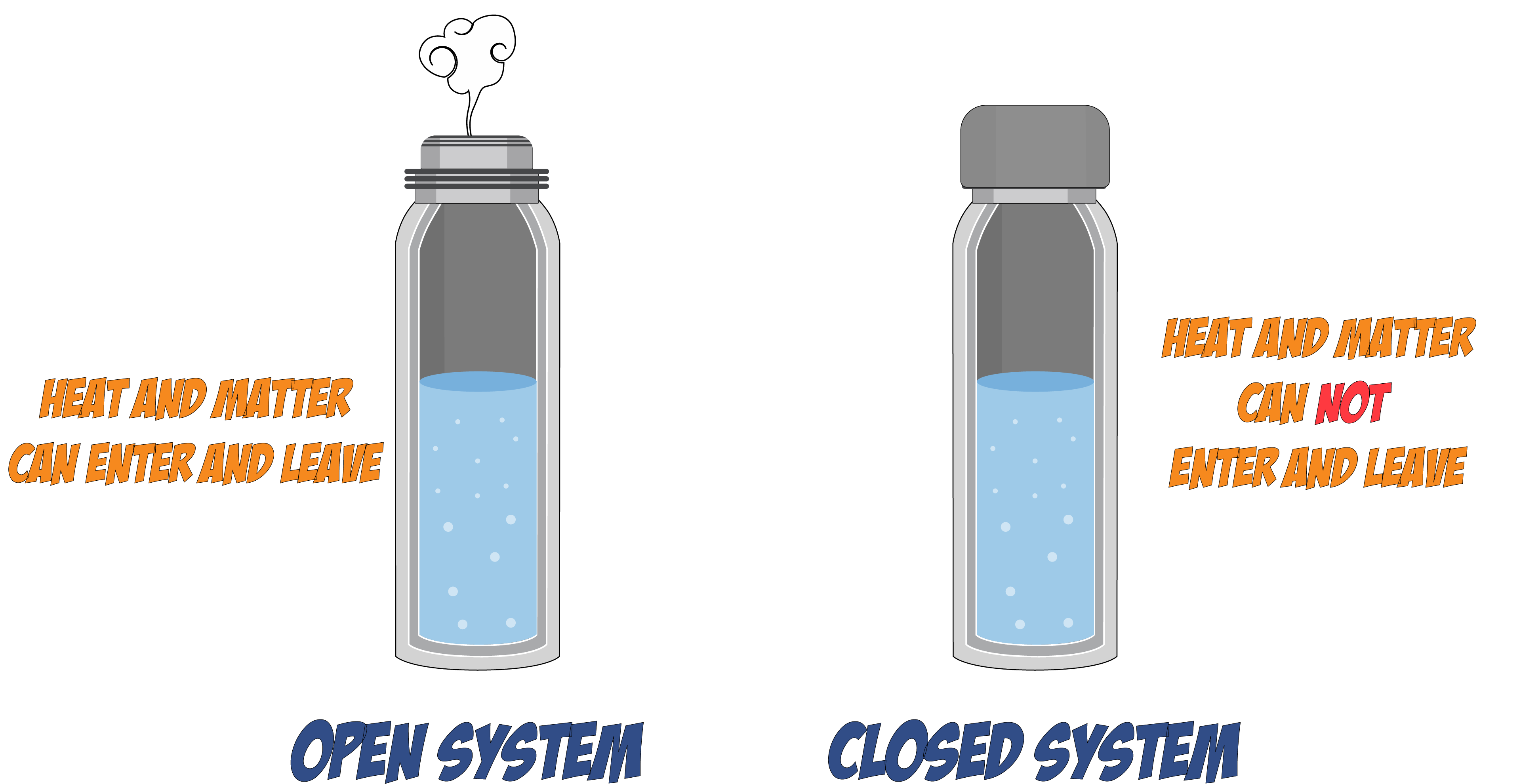
1. OPEN SYSTEMS
These can EXCHANGE energy and matter with their surroundings. Imagine you're making a cup of coffee. If you leave it, it COOLS down because the heat (energy) escapes – that's an open system.
2. CLOSED SYSTEMS
These are the opposite. They DON'T let energy or matter in or out. For example, a thermos flask that keeps your drink hot or cold – it's closed because it doesn't allow heat to escape or enter.
In a CLOSED SYSTEM, the total energy remains the same, even though it might change form inside the system.
Energy Stores
Energy is measured in JOULES. It follows the principle of CONSERVATION OF ENERGY, which tells us energy can NOT be created or destroyed, only transferred from one store to another.
Energy can be stored in different ways:
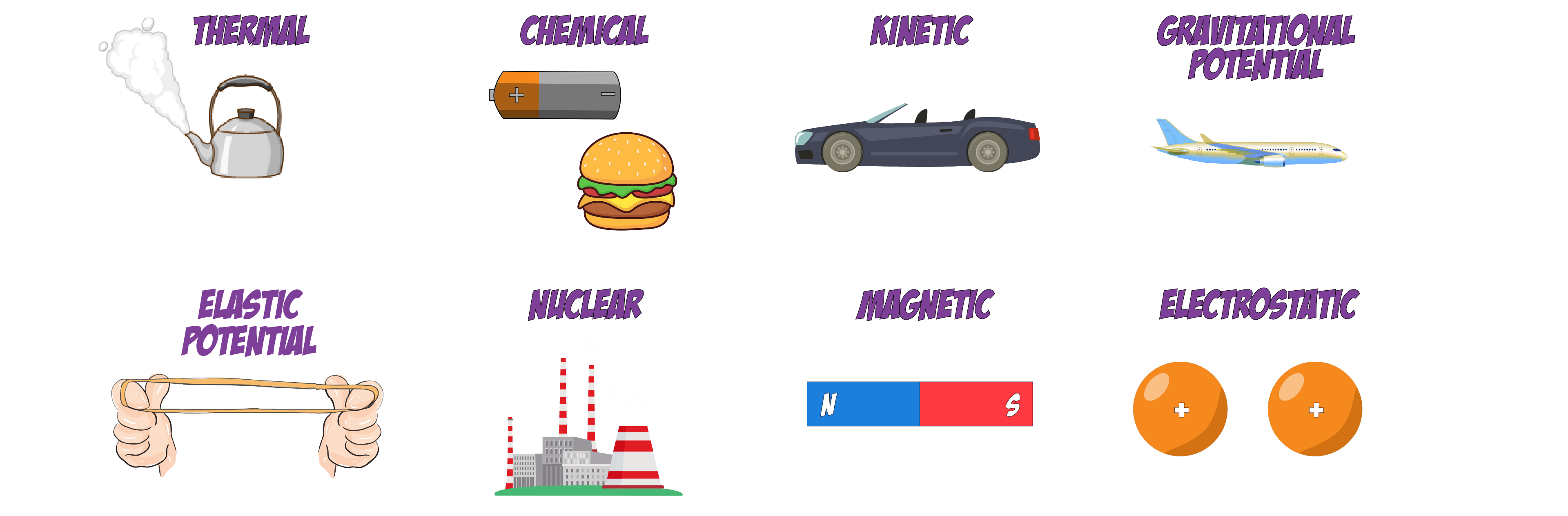
- THERMAL ENERGY: The HOTTER an object, the MORE energy in its thermal energy stores.
- CHEMICAL ENERGY: Releases energy due to a CHEMICAL REACTION. Found in food, batteries, and fuels.
- KINETIC ENERGY: Energy of MOVING objects.
- GRAVITATIONAL POTENTIAL ENERGY: Energy stored due to an object's height in a GRAVITATIONAL FIELD.
- ELASTIC POTENTIAL ENERGY: Stored when objects are STRETCHED or SQUASHED.
- NUCLEAR ENERGY: Released during NUCLEAR reactions.
- MAGNETIC ENERGY: Due to the attraction or repulsion between MAGNETS.
- ELECTROSTATIC ENERGY: Due to the attraction or repulsion between CHARGED PARTICLES.
Energy Transfers
Energy can move between these stores through different pathways.
There are FOUR types of these energy transfer pathways:
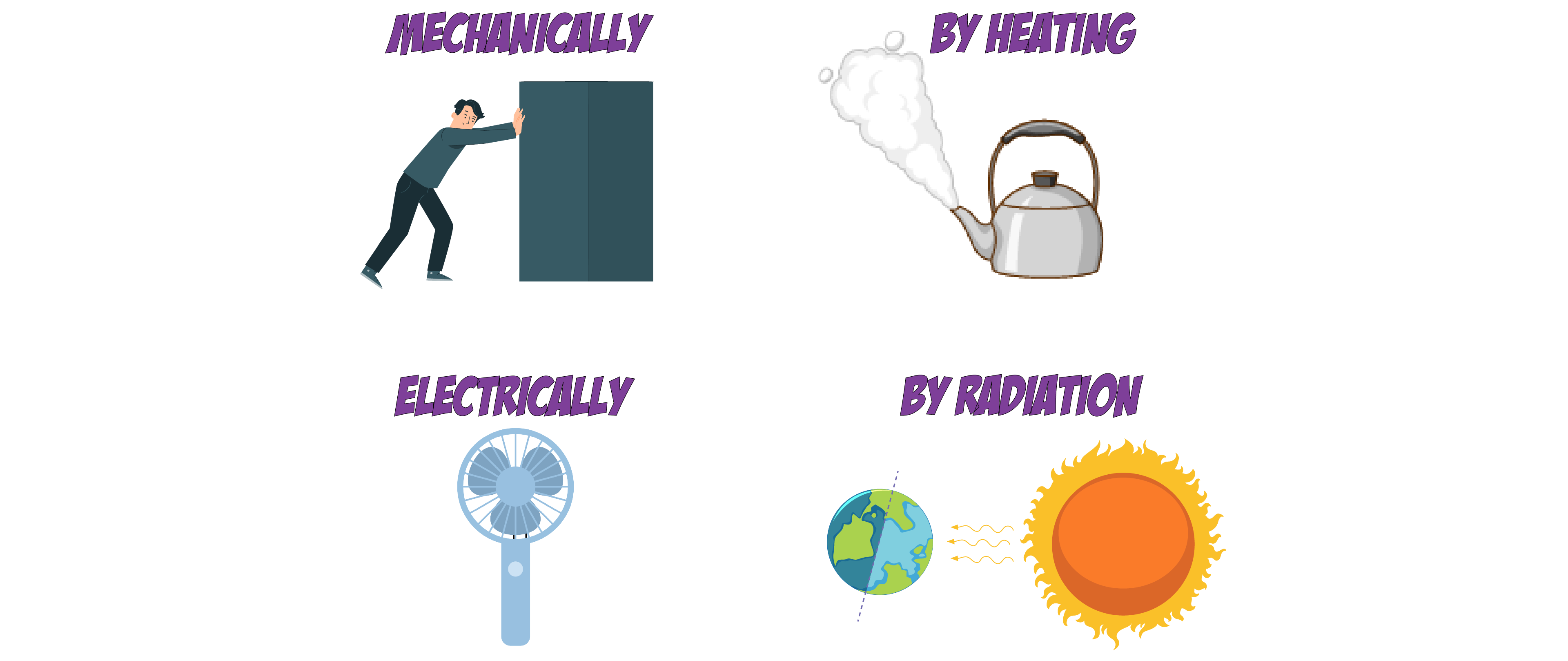
- MECHANICAL WORK: When FORCE is applied, like pushing a box.
- HEATING: Transfer of energy from a HOT object to a COLD object, like a kettle heating water.
- ELECTRIC WORK: When current flows in a circuit and transfers energy, like an electric fan.
- RADIATION: When energy is transferred in the form of a WAVE. Such as the Sun warming the Earth.
Examples of Energy Transfers
Understanding how energy is transferred in different scenarios can help explain everyday events:
1. A Person Throwing a Ball Upwards:
- The energy in the CHEMICAL energy store of the person from their food is transferred MECHANICALLY (because a force is applied to the ball) to the KINETIC energy store of the ball.

- As the ball rises, it slows down because the energy in its KINETIC energy store is being transferred MECHANICALLY to its GRAVITATIONAL POTENTIAL energy store because the object is getting HIGHER.

2. A Kettle Boiling Water:
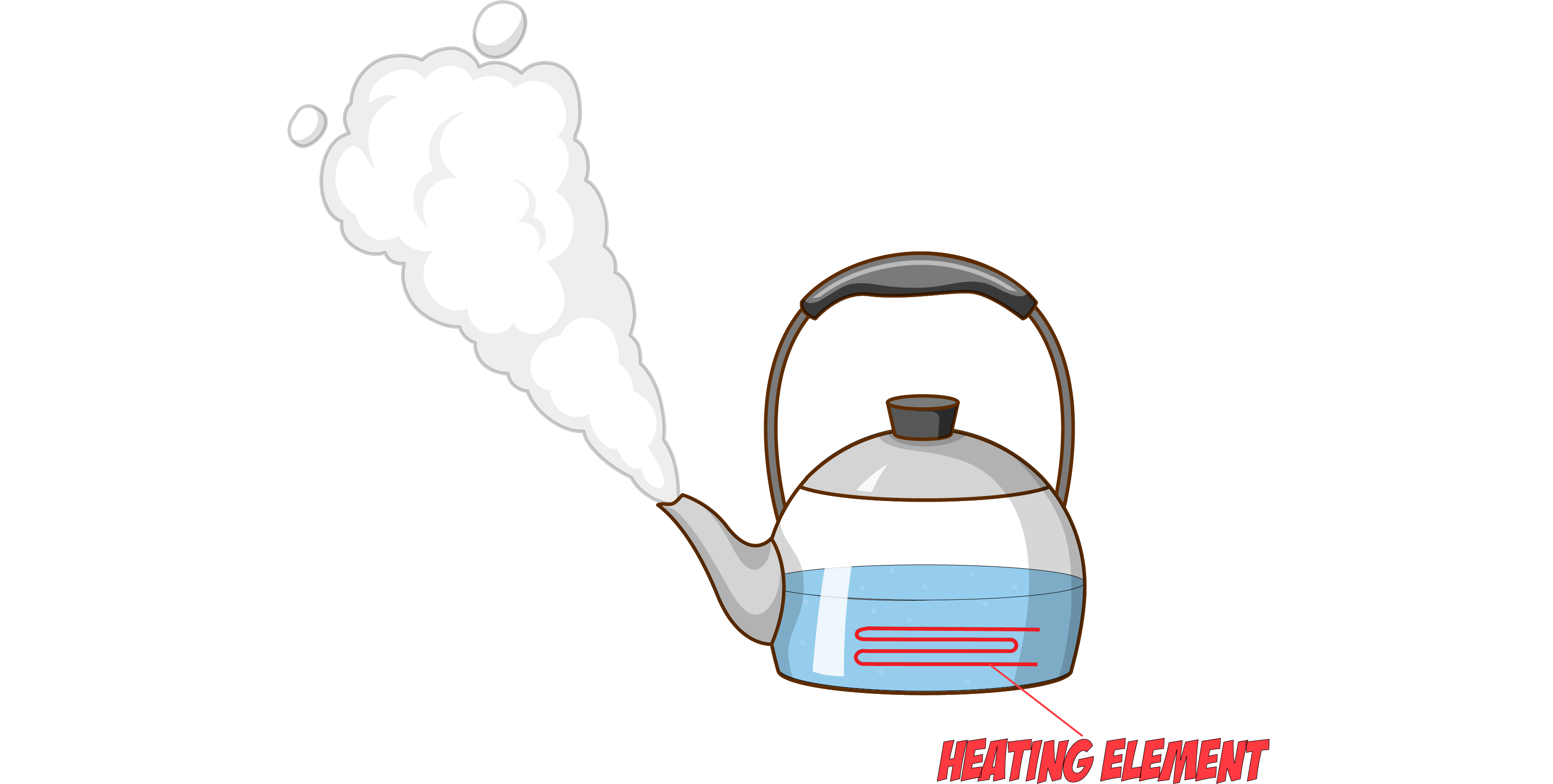
Initially, the heating element in the kettle is HOT and the water is COLD. Energy is transferred from the THERMAL energy store of the heating element by HEATING to the thermal energy store of the water, causing it to get hotter.

3. A Car Accelerating with a Constant Force:
The energy in the CHEMICAL energy store of the car from the petrol in it reacts in the engine and transfers energy MECHANICALLY to the KINETIC energy store of the car.


4. A Car Braking:
Friction between the brakes and wheels causes WORK to be done, which will cause energy in the KINETIC energy store to be transferred MECHANICALLY to the THERMAL energy store of the surroundings such as the road and the air.

5. A Car Crashing:
If a car was to crash into a wall, most of the energy from its KINETIC energy store is transferred MECHANICALLY to the THERMAL energy store of the wall as there is a FORCE acting on it from the car.
