
Required Practical: Rates of Reaction
Measuring TURBIDITY or colour
Turbidity is a measure of how CLEAR a liquid is. Some solutions can react to form a SOLID PRECIPITATE. This can cause the liquid to turn CLOUDY, making it more difficult to see THROUGH the solution.
E.g. A reaction between SODIUM THIOSULFATE and HYDROCHLORIC ACID.
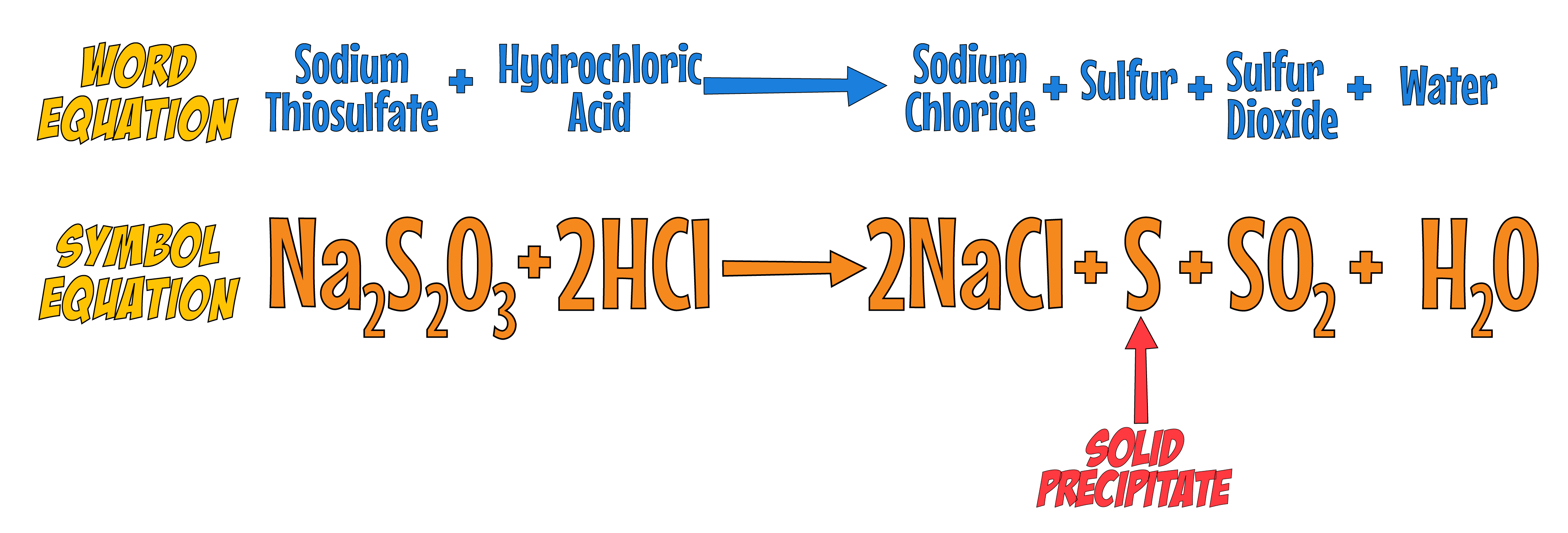
The Sulfur precipitate produced causes the solution to turn CLOUDY.
The FASTER the precipitate forms, the FASTER the RATE.
Equipment:
- SODIUM THIOSULFATE solution
- HYDROCHLORIC ACID
- CONICAL FLASK
- WHITE PAPER with BLACK CROSS on it
- STOPWATCH or timer
Method:
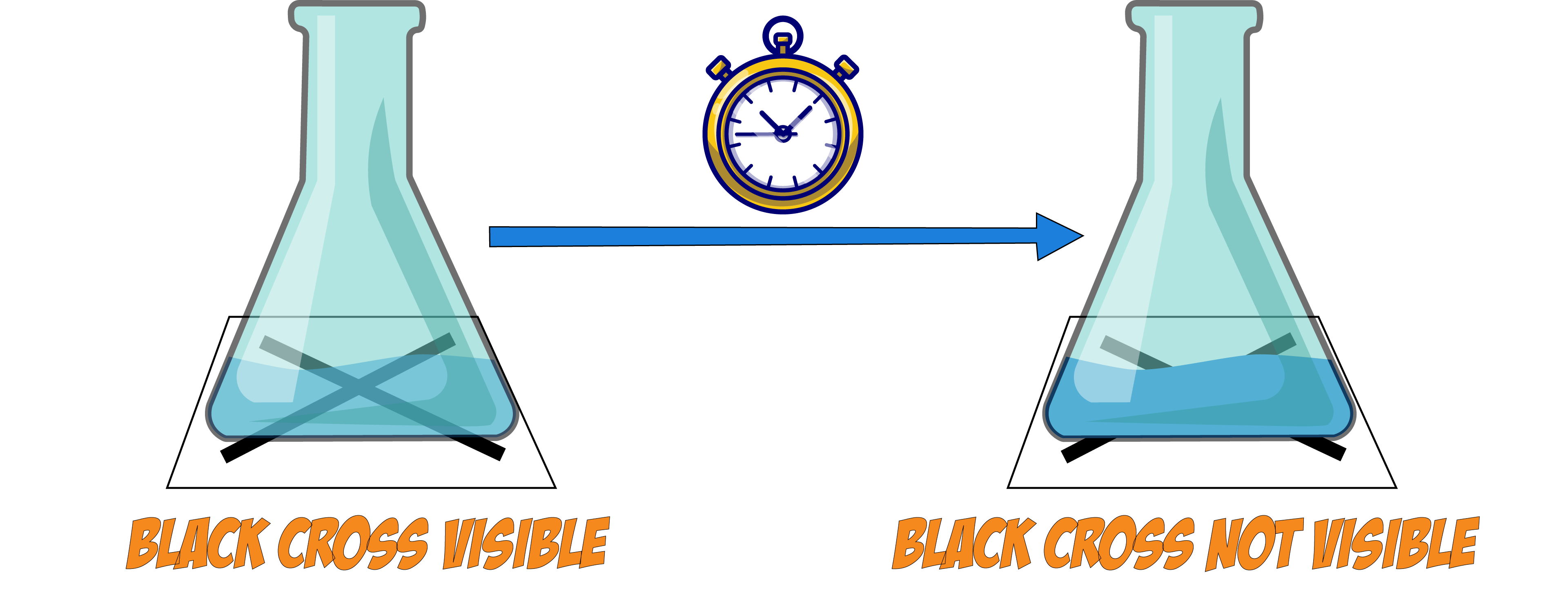
- Measure a specific volume of SODIUM THIOSULFATE solution into a CONICAL FLASK.
- Measure a specific volume of HYDROCHLORIC ACID into a measuring cylinder.
- Place a piece of white paper with a BLACK CROSS under the CONICAL FLASK.
- Pour the acid into the flask and start the STOPWATCH.
- As SOLID SULFUR forms, a CLOUDY PRECIPITATE is observed.
- Stop the stopwatch when the BLACK CROSS is no longer visible through the cloudy mixture.
- Repeat this method for different CONCENTRATIONS of SODIUM THIOSULFATE.
Results:
The SHORTER the time taken for the cross to disappear, the FASTER the rate of reaction.
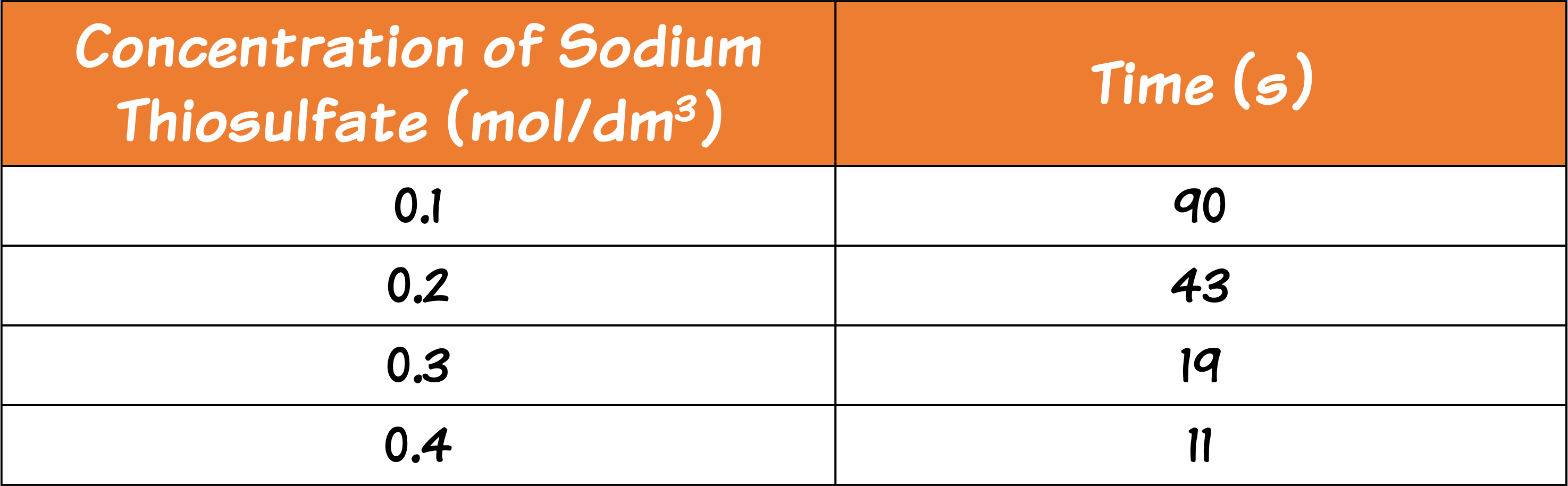
From these results you can see that the MORE CONCENTRATED the solution is, the FASTER the rate of reaction.
These experiments are not accurate as the results are SUBJECTIVE. The point at which the cross disappears would be judged differently by different people.
A similar method can be used for reactions that involve a colour CHANGE. The person measuring the time judges the point at which the colour of the solution changes.
Measuring Gas Volume in Reactions
In reactions where a GAS is given off, the FASTER the gas is produced, the FASTER the RATE of reaction.
E.g. A reaction between MAGNESIUM and HYDROCHLORIC ACID.
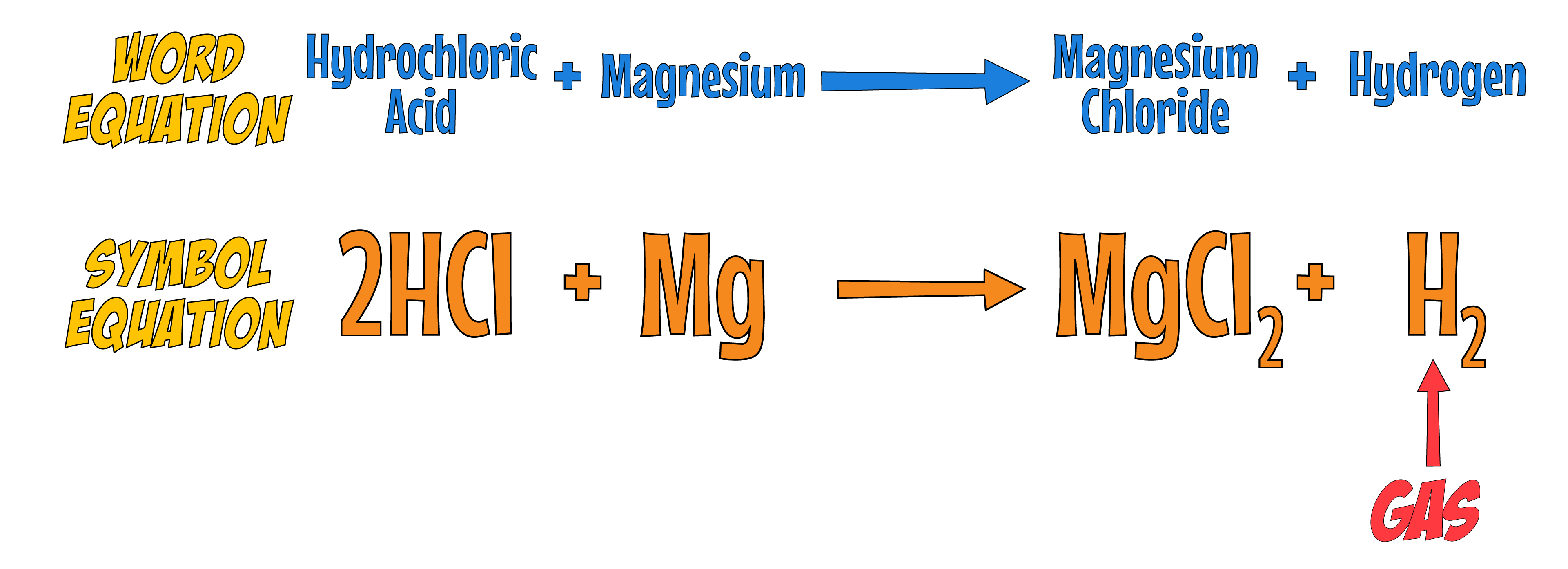
You can use a GAS SYRINGE to monitor the volume of gas collected.

Equipment:
- MAGNESIUM RIBBON
- HYDROCHLORIC ACID
- CONICAL FLASK
- SAFETY GOGGLES
- GAS SYRINGE
- STOPWATCH
Method:
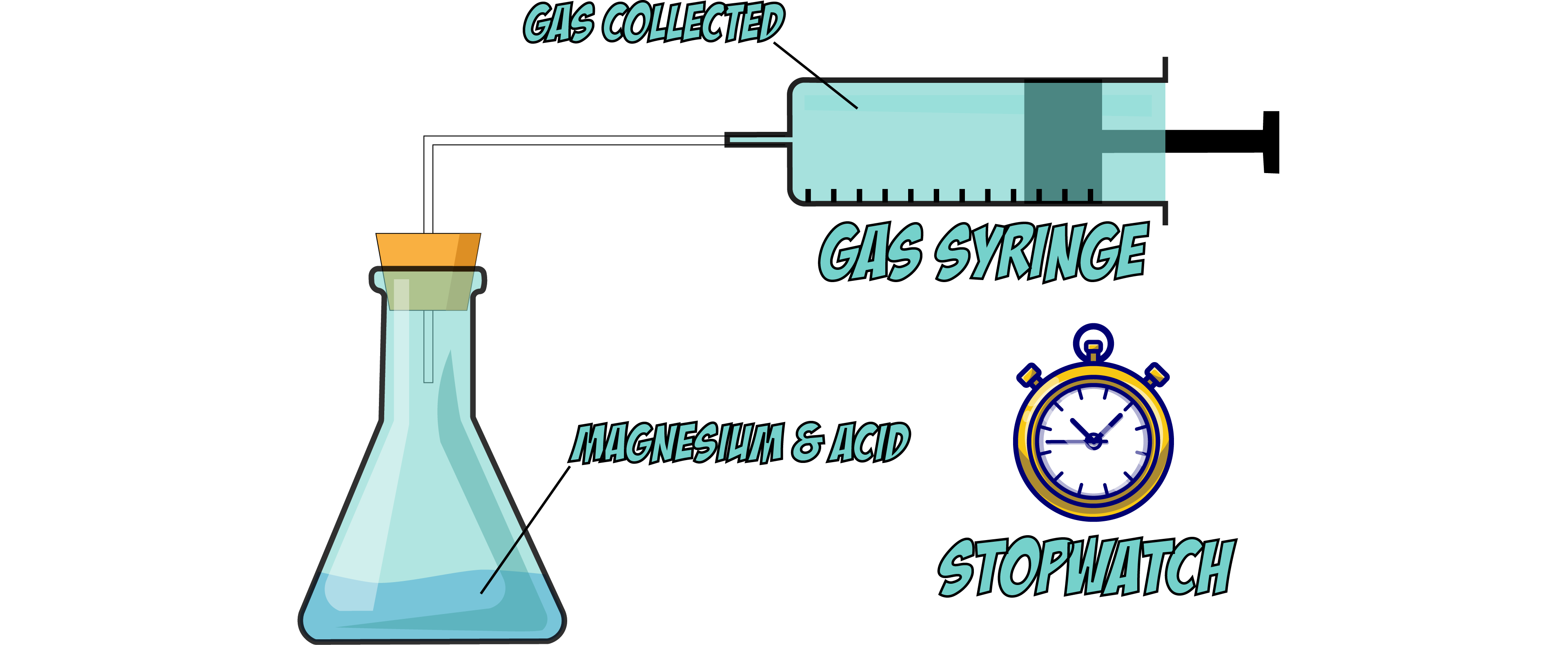
- Pour a known volume of HYDROCHLORIC ACID (HCl) into a CONICAL FLASK.
- Add a piece of MAGNESIUM RIBBON with a known mass to the flask.
- Quickly connect the flask to the GAS SYRINGE setup to capture the gas produced.
- Start the STOPWATCH and record the VOLUME OF GAS produced every 10 SECONDS.
- Once the reaction is complete, repeat the steps with DIFFERENT CONCENTRATIONS.
Results:
Plot a graph with TIME on the x-axis and VOLUME OF GAS on the y-axis to visualise the results.
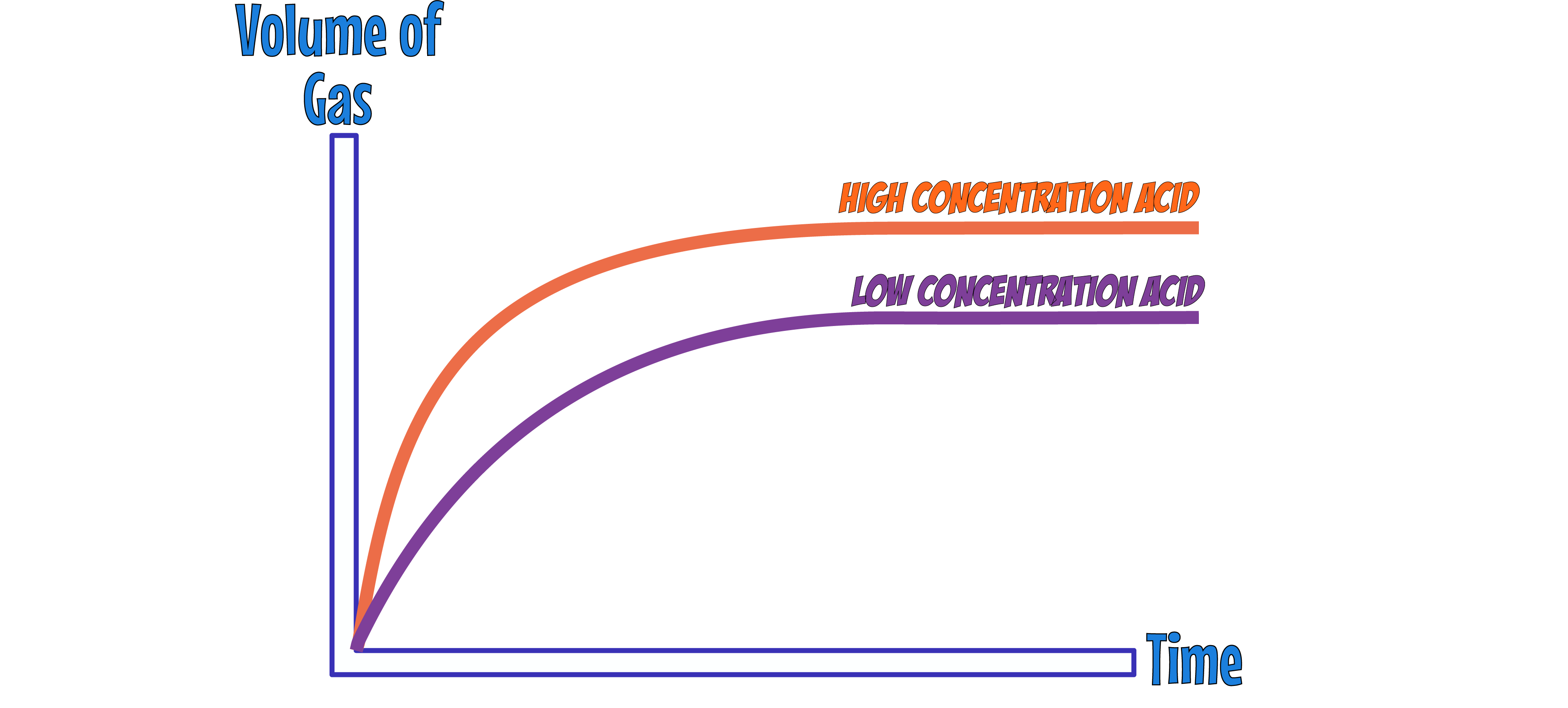
- The reaction with a HIGHER CONCENTRATION will result in a graph with a STEEPER GRADIENT which levels off EARLIER.
- This shows that it has a FASTER RATE of reaction and the reaction is COMPLETED EARLIER.
- The graph with the HIGHER CONCENTRATION also levels off HIGHER which shows that MORE GAS has been given off. This is because a more concentrated acid has MORE REACTANT PARTICLES in the same volume which results in MORE PRODUCT being formed.