
Collision Theory
To understand the factors affecting the RATE of a reaction, you can think of all the reactant and products as PARTICLES.
Let's consider the following reaction:

At the start of the reaction, only REACTANT particles are present. These particles are constantly moving around the container and COLLIDE with each other.
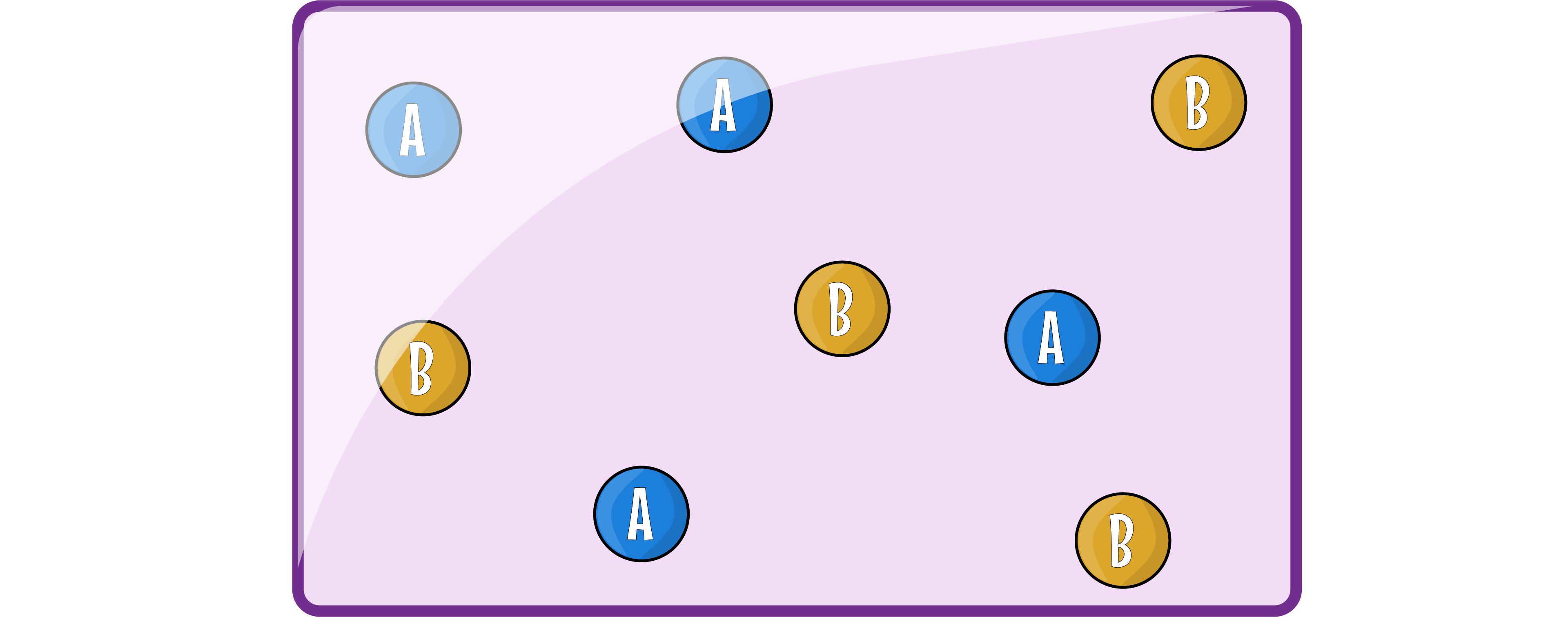
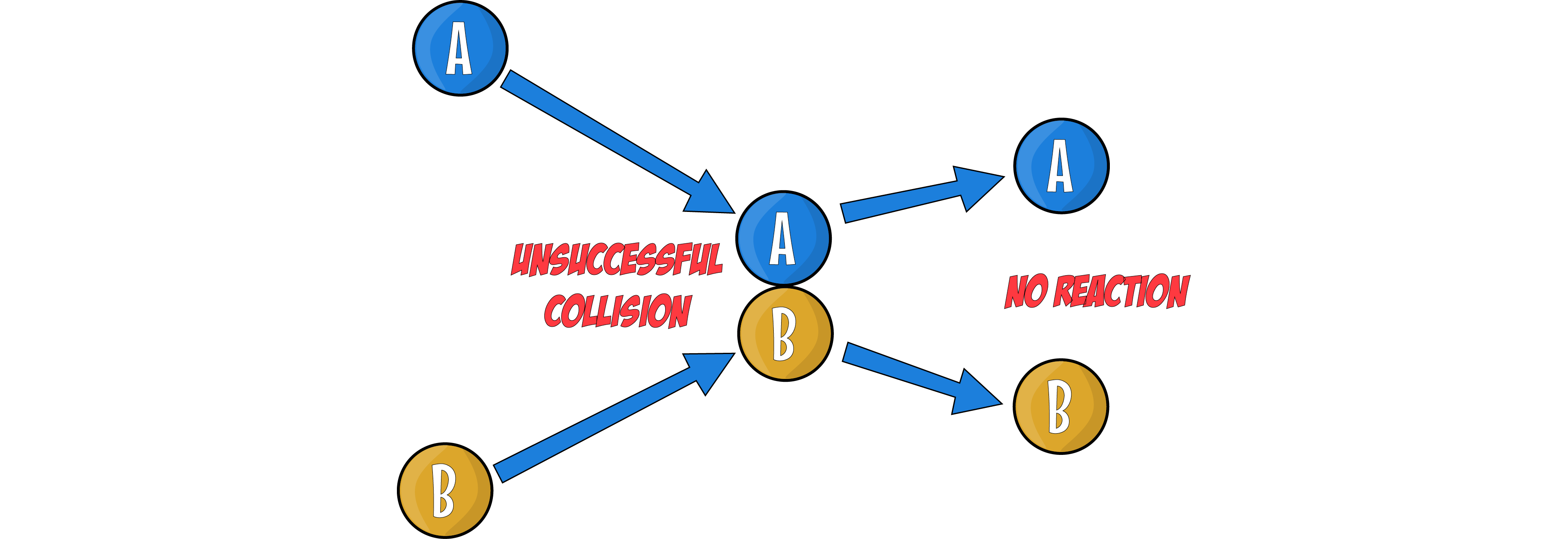
Most of these collisions are UNSUCCESSFUL and do NOT result in a REACTION.
If two particles COLLIDE with an energy GREATER than the ACTIVATION ENERGY, they REACT and form the product particles. This is known as a SUCCESSFUL COLLISION.
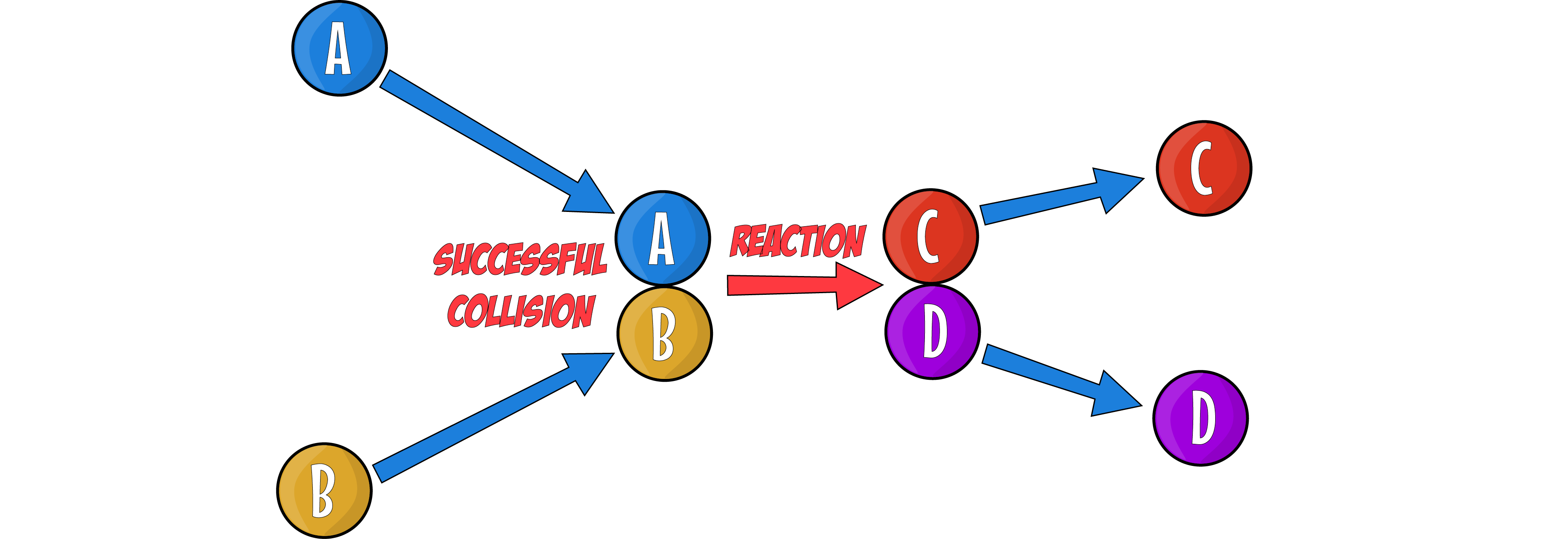
ACTIVATION ENERGY: The minimum amount of energy particles need to collide with in order to react.
The rate of reaction INCREASES when:
- There are MORE FREQUENT COLLISIONS.
- There are MORE ENERGETIC COLLISIONS.