
Equilibrium
Equilibrium occurs when you have a REVERSIBLE REACTION in a CLOSED SYSTEM.
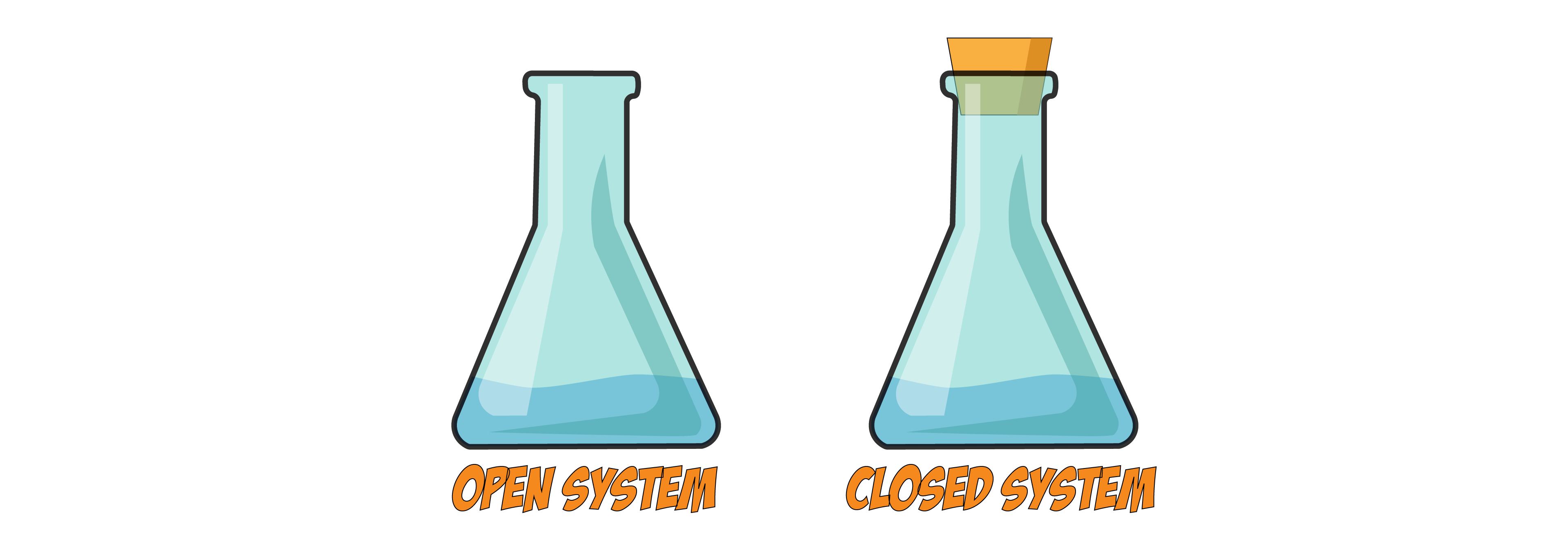
A CLOSED SYSTEM is a system where nothing can ENTER or LEAVE. E.g. a conical flask with a rubber bung closing it.
At the start of any reaction, only REACTANT particles are present. As these collide and REACT, they form PRODUCT particles.
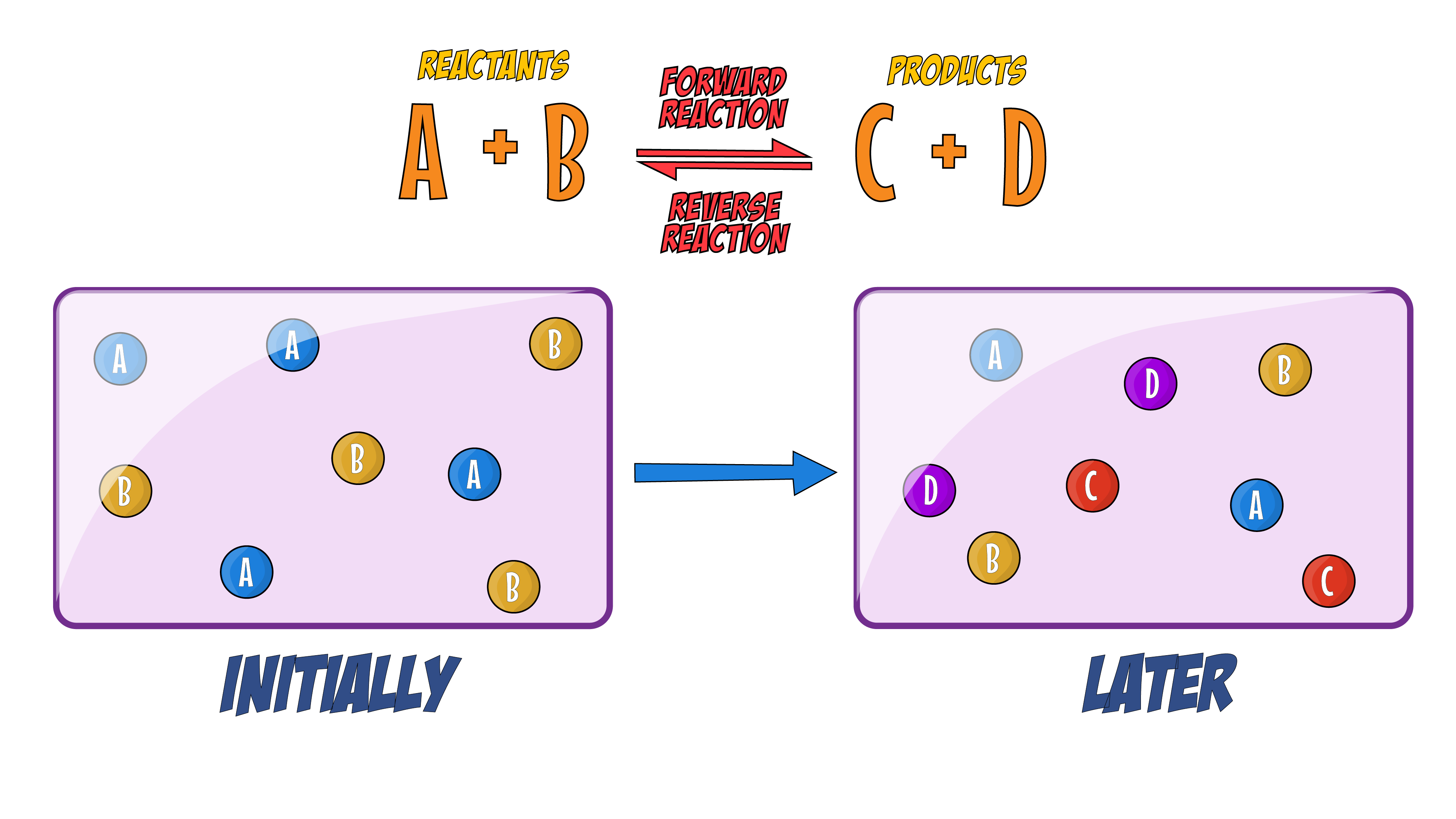
In normal reactions, the amount of reactants would DECREASE to ZERO at the end of the reaction, and the amount of products would INCREASE to a MAXIMUM.
However this does NOT happen in a reversible reaction.
The PRODUCTS can also react to reform the REACTANTS in the REVERSE reaction.
This means there are TWO reactions occurring in the closed system:

When the FORWARD and REVERSE reactions both occur at the SAME RATE, we say the reaction is in EQUILIBRIUM.
At this point, the AMOUNTS of reactants and products STAY THE SAME.