ENERGY CHANGES IN REVERSIBLE REACTIONS
All reactions involve an ENERGY CHANGE. They can either GIVE OUT energy (EXOTHERMIC) or TAKE IN energy (ENDOTHERMIC).
In REVERSIBLE reactions, forward and reverse reactions have OPPOSITE ENERGY CHANGES:

If the forward reaction is EXOTHERMIC, then the reverse reaction must be ENDOTHERMIC and vice versa. The SAME AMOUNT of energy is transferred in each case.
Example:
This can be demonstrated with HYDRATED and ANHYDROUS SALTS.
HYDRATED SALTS are salts that CONTAIN WATER. They have water molecules bonded to their structures. They are represented with a DOT in between the salt and the surrounding water.
For example, HYDRATED COPPER SULFATE can be written as:

It has a BLUE colour.
ANHYDROUS SALTS are salts that have LOST all their water. This would just be written as the salt on its own:

This has a WHITE colour.
The reaction involving HYDRATED and ANHYDROUS copper sulfate is REVERSIBLE and can be written as:
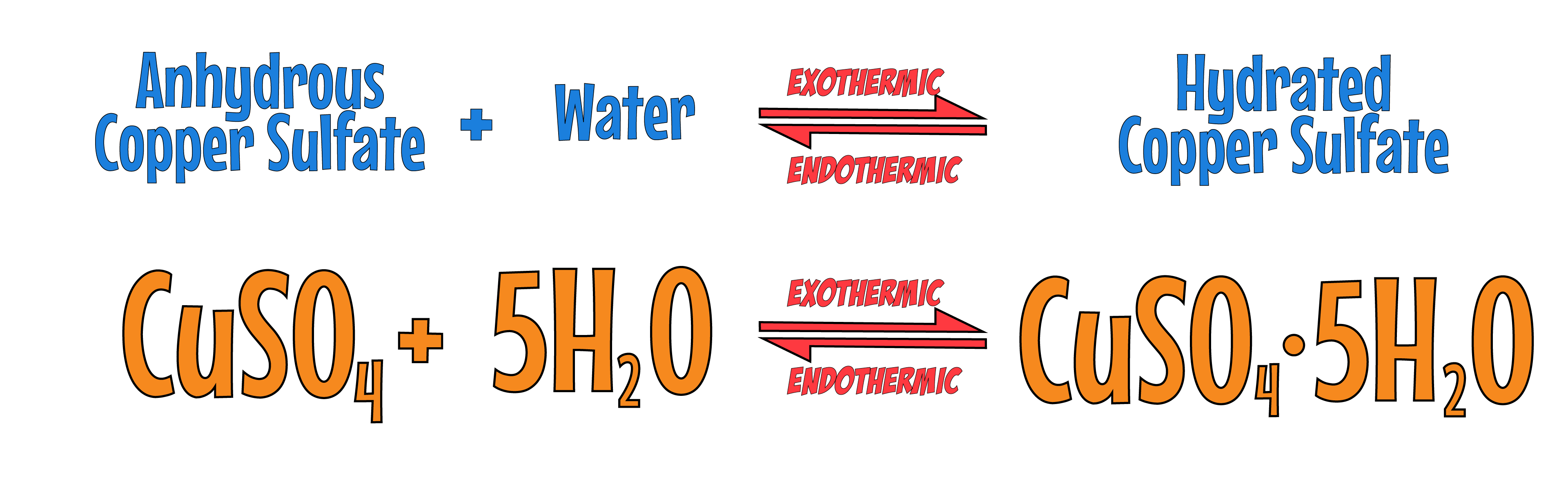
In this reaction, the forward reaction is EXOTHERMIC and the reverse reaction is ENDOTHERMIC.
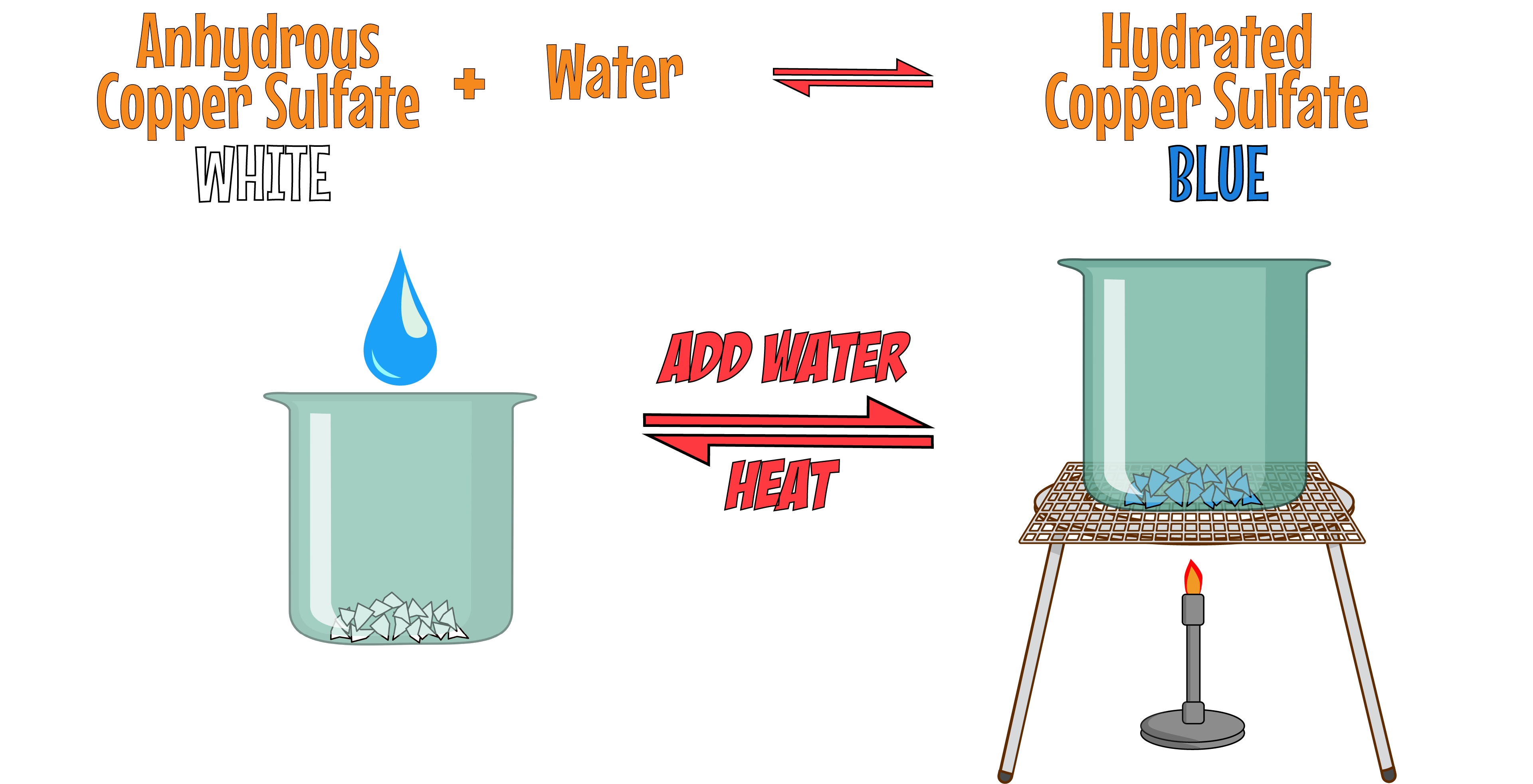
You can turn ANHYDROUS Copper Sulfate into HYDRATED Copper Sulfate by ADDING WATER. This causes it to change colour from WHITE to BLUE.
You can turn HYDRATED Copper Sulfate into ANHYDROUS Copper Sulfate by HEATING IT. This causes it to change colour from BLUE to WHITE.