Shifting the Equilibrium
You can change the RELATIVE AMOUNTS of reactants and products in a reaction at equilibrium by changing the CONDITIONS of the reaction. This is known as SHIFTING the POSITION of equilibrium and you can shift it in TWO WAYS:
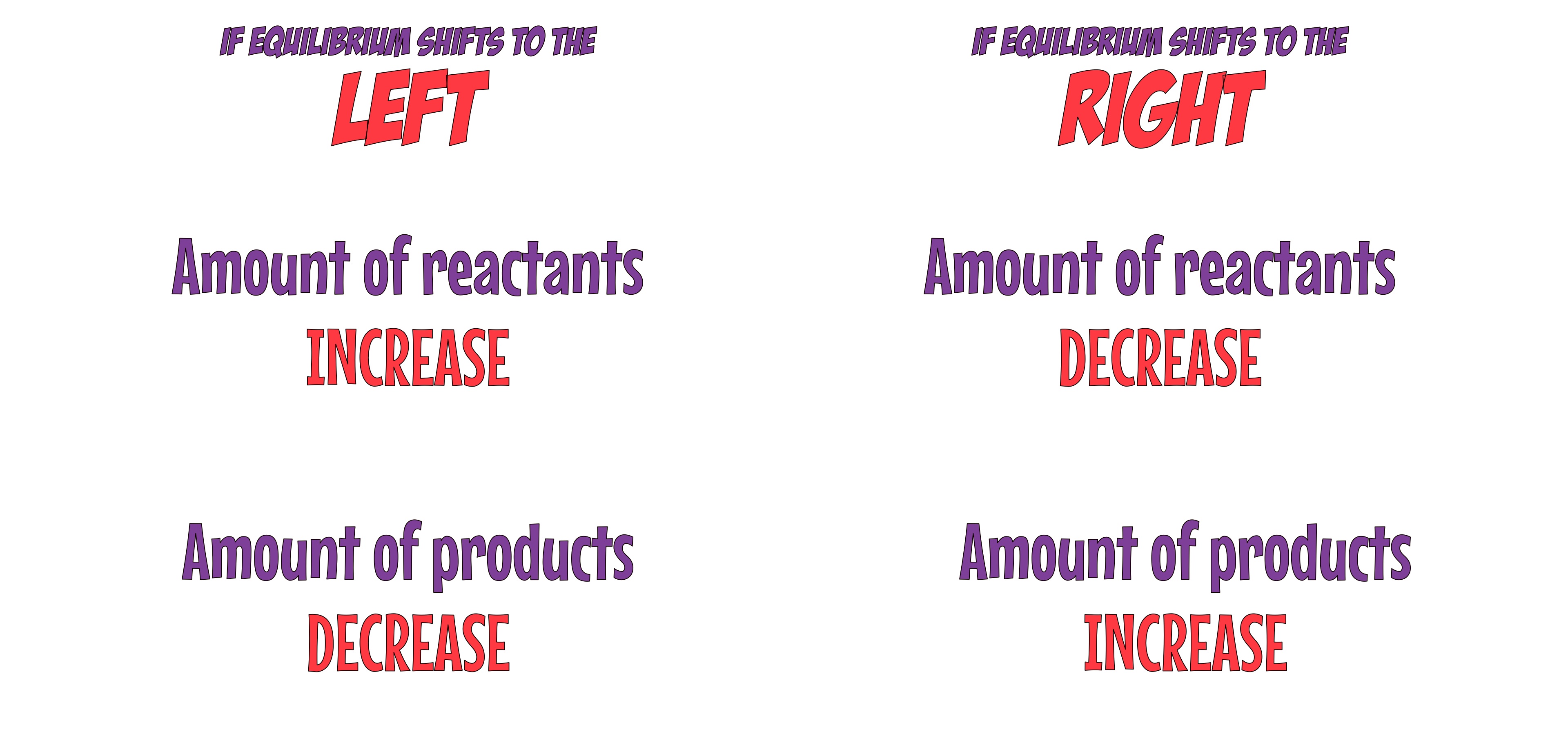
Shifting the equilibrium to the LEFT will cause the relative amounts of the REACTANTS to INCREASE and the PRODUCTS to DECREASE.
Shifting the equilibrium to the RIGHT will cause the relative amounts of the REACTANTS to DECREASE and the PRODUCTS to INCREASE.
FACTORS THAT SHIFT EQUILIBRIUM
There are THREE factors that can shift the equilibrium and affect its POSITION:
1. TEMPERATURE
2. PRESSURE
3. CONCENTRATION
To work out the effect that CHANGING one of these FACTORS has on a system at equilibrium, you can use LE CHATELIER'S PRINCIPLE.
Le Chatelier’s Principle
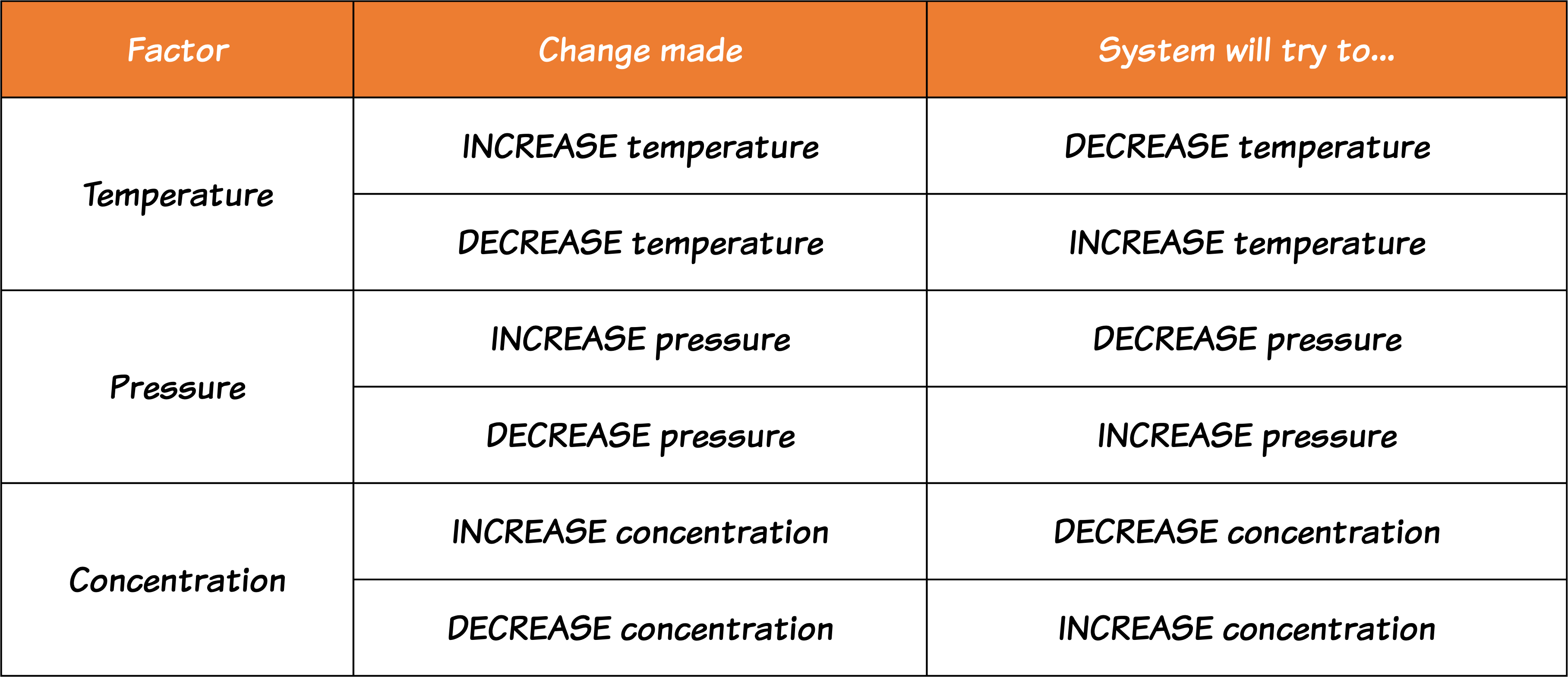
Le Chatelier’s principle states that if a CHANGE is made to the conditions of a system at EQUILIBRIUM, the system will respond and SHIFT to COUNTERACT the change.
For example, if you have a system at equilibrium and you heat it to INCREASE the temperature, the equilibrium will respond in a way to DECREASE the temperature back to normal.
Here are some more examples: