Reversible Reactions
- REVERSIBLE REACTIONS occur when products can react to form the original reactants again.
- You can represent a reversible reaction with a DOUBLE ARROW.

- The FORWARD REACTION represents the REACTANTS turning into PRODUCTS (from left to right).
- The REVERSE REACTION represents the PRODUCTS turning into REACTANTS (from right to left).

You can change the direction of a REVERSIBLE REACTION by changing the CONDITIONS.
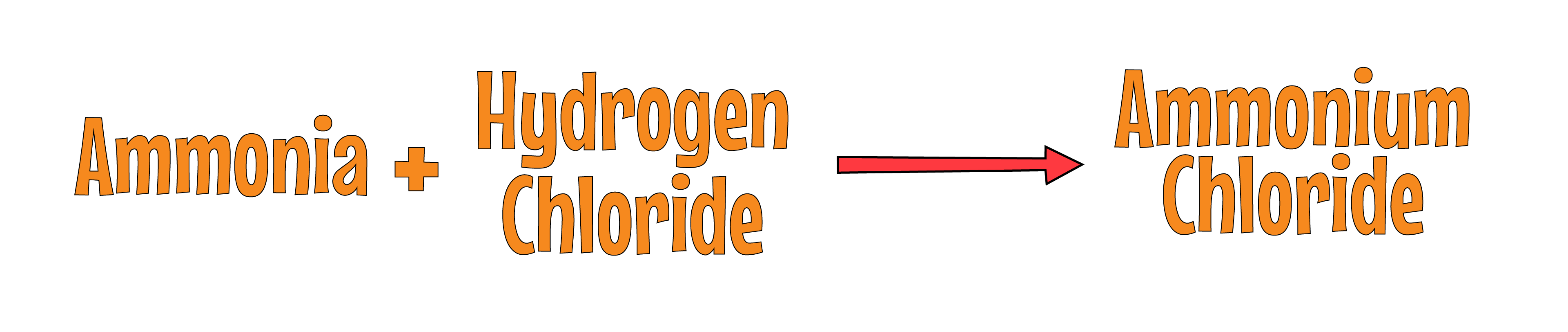
For example, Ammonium Chloride:

If you HEAT the AMMONIUM CHLORIDE, it will decompose to form AMMONIA and HYDROGEN CHLORIDE in the FORWARD REACTION.

If you COOL the products AMMONIA and HYDROGEN CHLORIDE, the REVERSE REACTION would take place and the AMMONIUM CHLORIDE would be formed.