
Catalysts
- CATALYSTS are substances that INCREASE the reaction RATE without being USED UP in the reaction.
- This means they will NOT appear in the chemical equations.
- Catalysts are SPECIFIC, meaning different reactions need different catalysts.
- ENZYMES are examples of CATALYSTS that increase the rate of biological reactions.
- Catalysts work by providing an ALTERNATIVE REACTION PATHWAY with a LOWER ACTIVATION ENERGY.
- You can see activation energies on REACTION PROFILES:
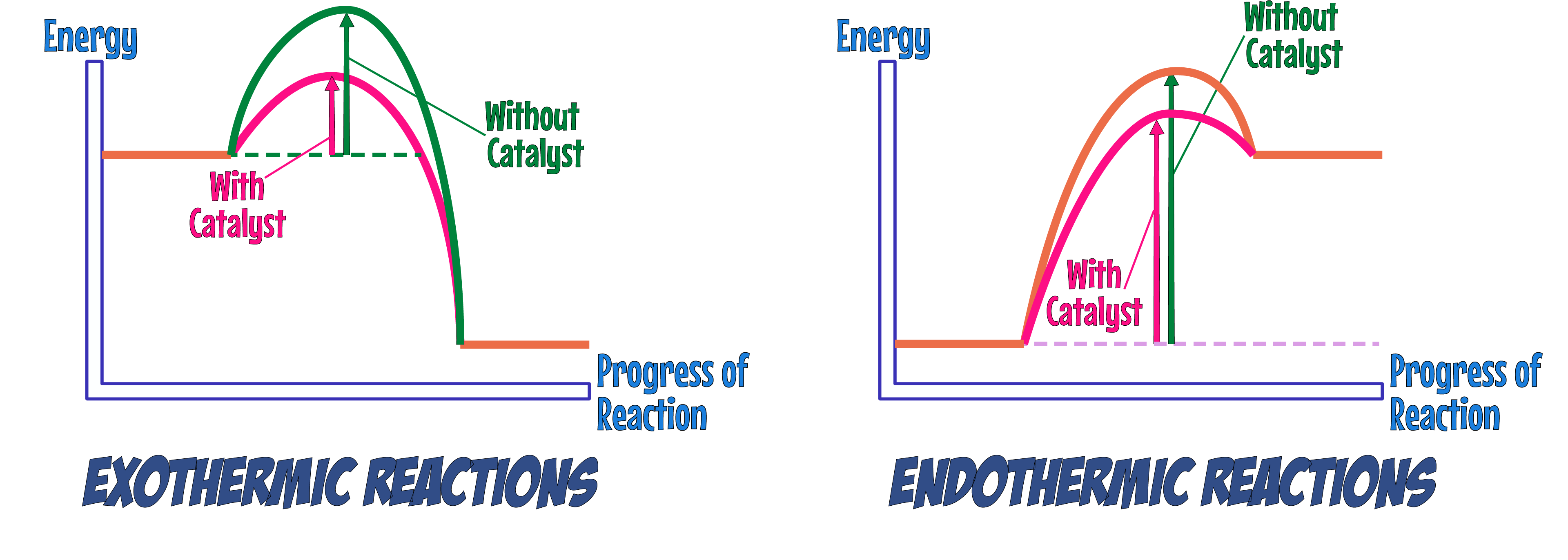
The ACTIVATION ENERGY is represented by the height from the REACTANTS to the PEAK of the graph.
You can see that the activation energy for the reactions WITH a catalyst is LOWER.
This means a greater proportion of the particles will have an energy GREATER than the ACTIVATION ENERGY, meaning there will be MORE FREQUENT COLLISIONS, which will INCREASE the rate of the reaction.