
Electrolysis of Aqueous Solutions
- Ionic compounds in the AQUEOUS state conduct electricity because their IONS are FREE TO MOVE.
- Unlike MOLTEN electrolytes, the products formed in AQUEOUS electrolytes are not always the elements in the compound.
- This is because there are MORE THAN TWO DIFFERENT IONS present in an AQUEOUS SOLUTION.
IONS IN WATER
Just like acids do, water can partially IONISE to release HYDROGEN IONS (H+) and HYDROXIDE IONS (OH-) into the aqueous solution.

This means that the electrolyte can contain the ions from the ionic compound AND the ions from water ionising (H+ and OH-).
Let's use AQUEOUS SODIUM CHLORIDE as an example:
The ions present in this solution are:
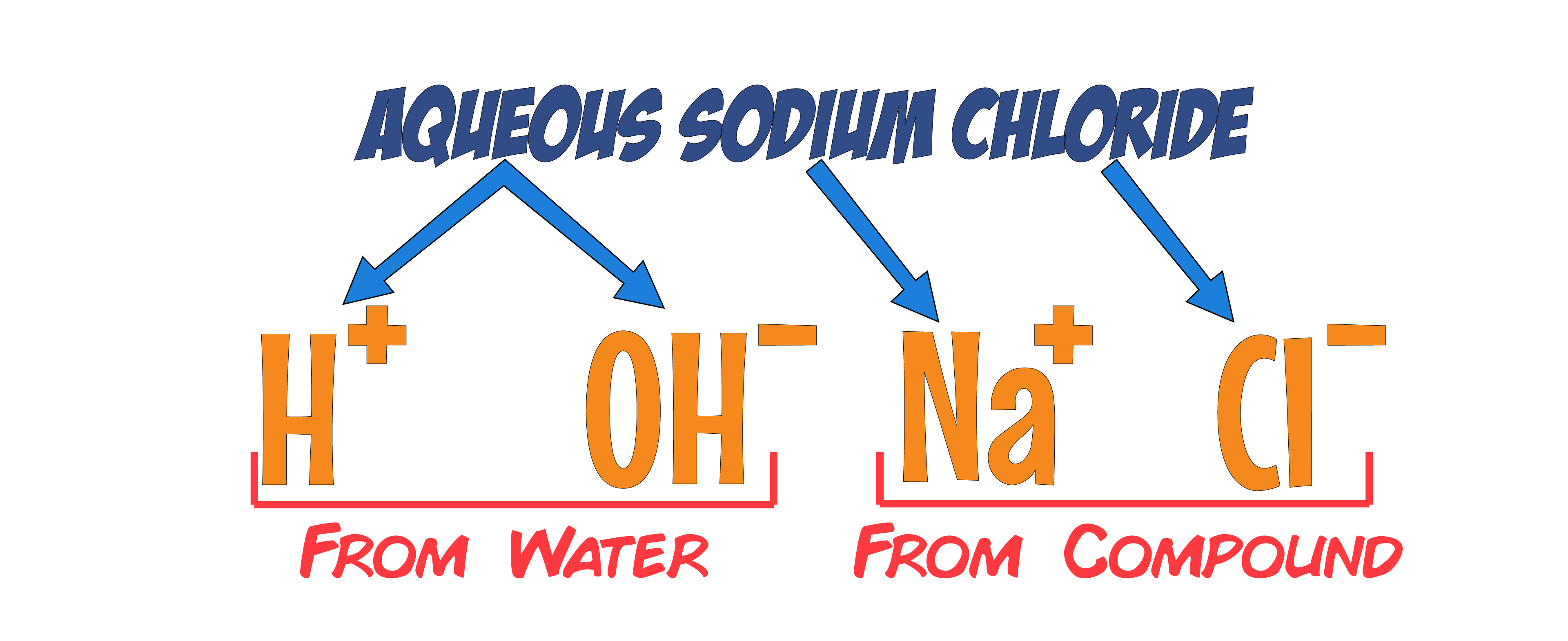
This means that all FOUR of these ions float around in the electrolyte.
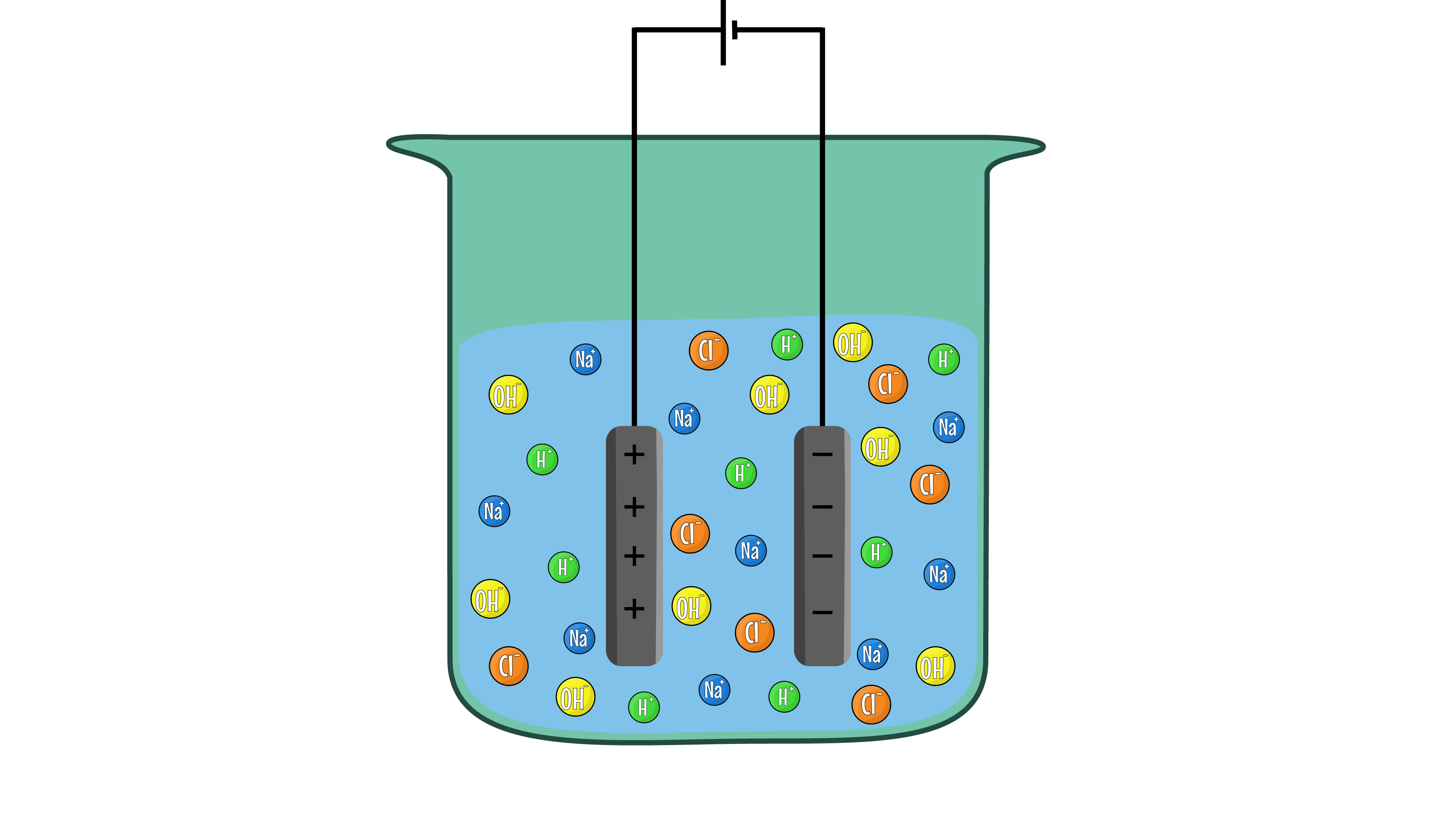
When the electricity flows through this, only ONE positive ion can go to the CATHODE and ONE negative ion can go to the ANODE.
DISCHARGING RULES FOR AQUEOUS ELECTROLYTES
To figure out which ions travel to the electrodes to get discharged in an aqueous solution, you need to follow TWO RULES:
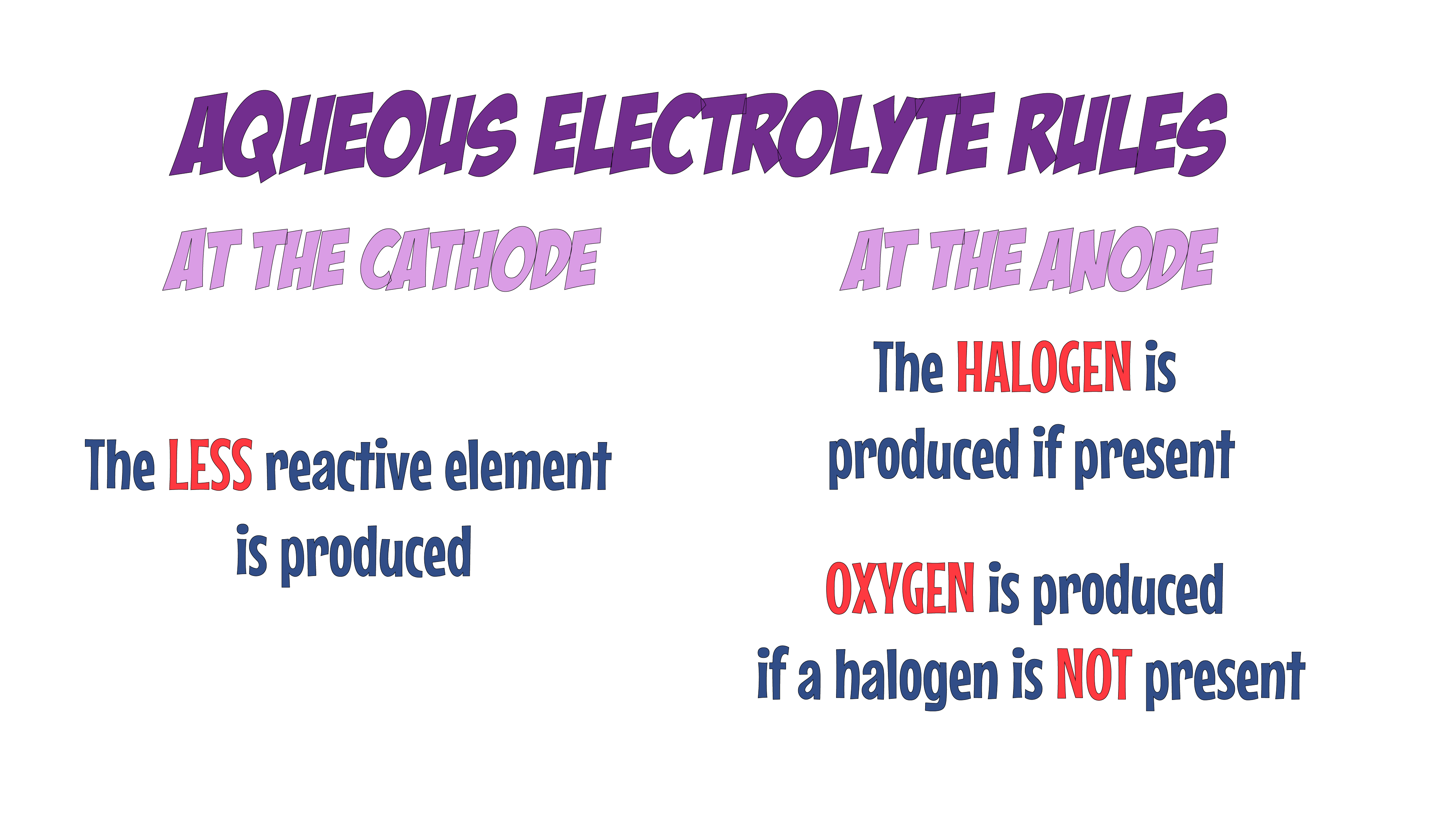
1. Rules for CATHODES
The LESS REACTIVE positive ions will travel to the CATHODE to be discharged, and its element will be formed.
2. Rules for ANODES
If a HALOGEN (Group 7 element) is present, the HALOGEN IONS will travel to the ANODE to be discharged to form its element.
If a halogen is NOT present, the HYDROXIDE IONS will travel to the ANODE to be discharged and to form OXYGEN GAS. If this occurs, the HALF EQUATION for this would be:
4OH−→ O2 + 2H2O + 4e−
You can use these rules in the Sodium Chloride example:
Cathode:
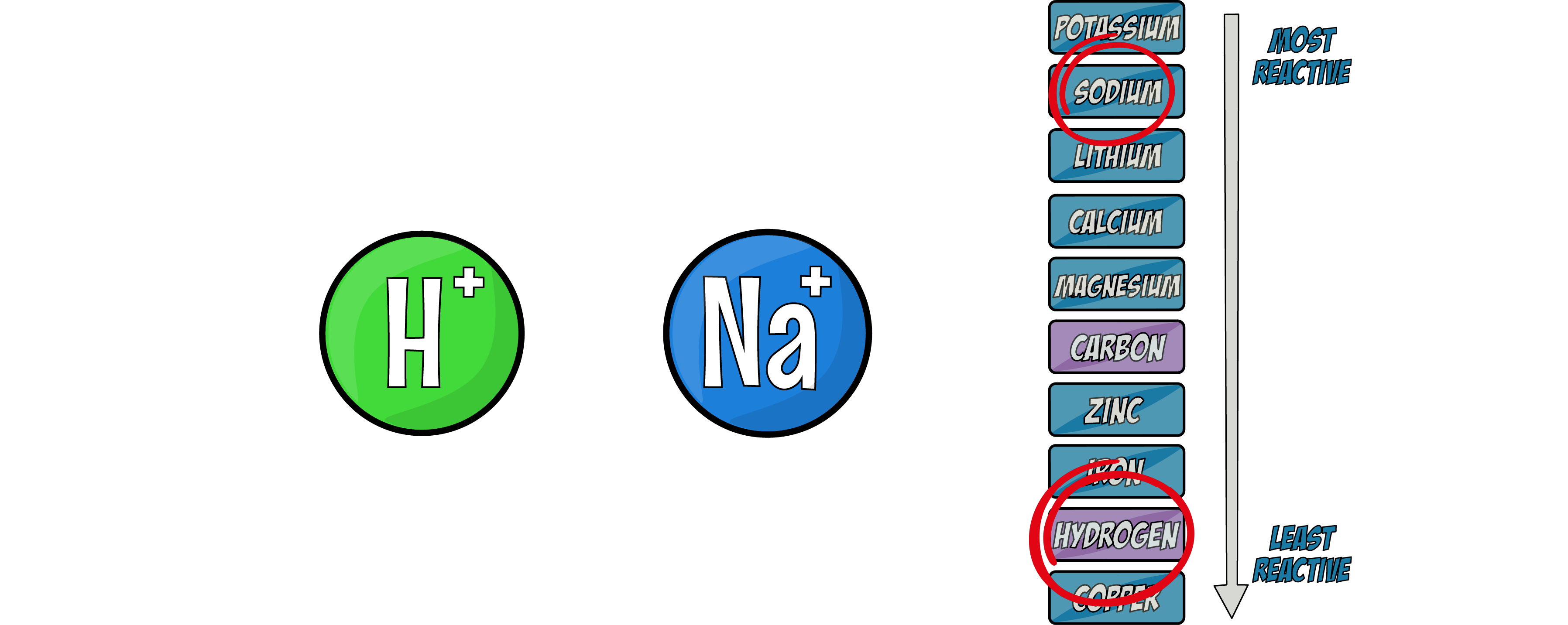
Out of the two positive ions, HYDROGEN is LESS reactive so it will go to the cathode. The HALF EQUATION for this can be worked out:
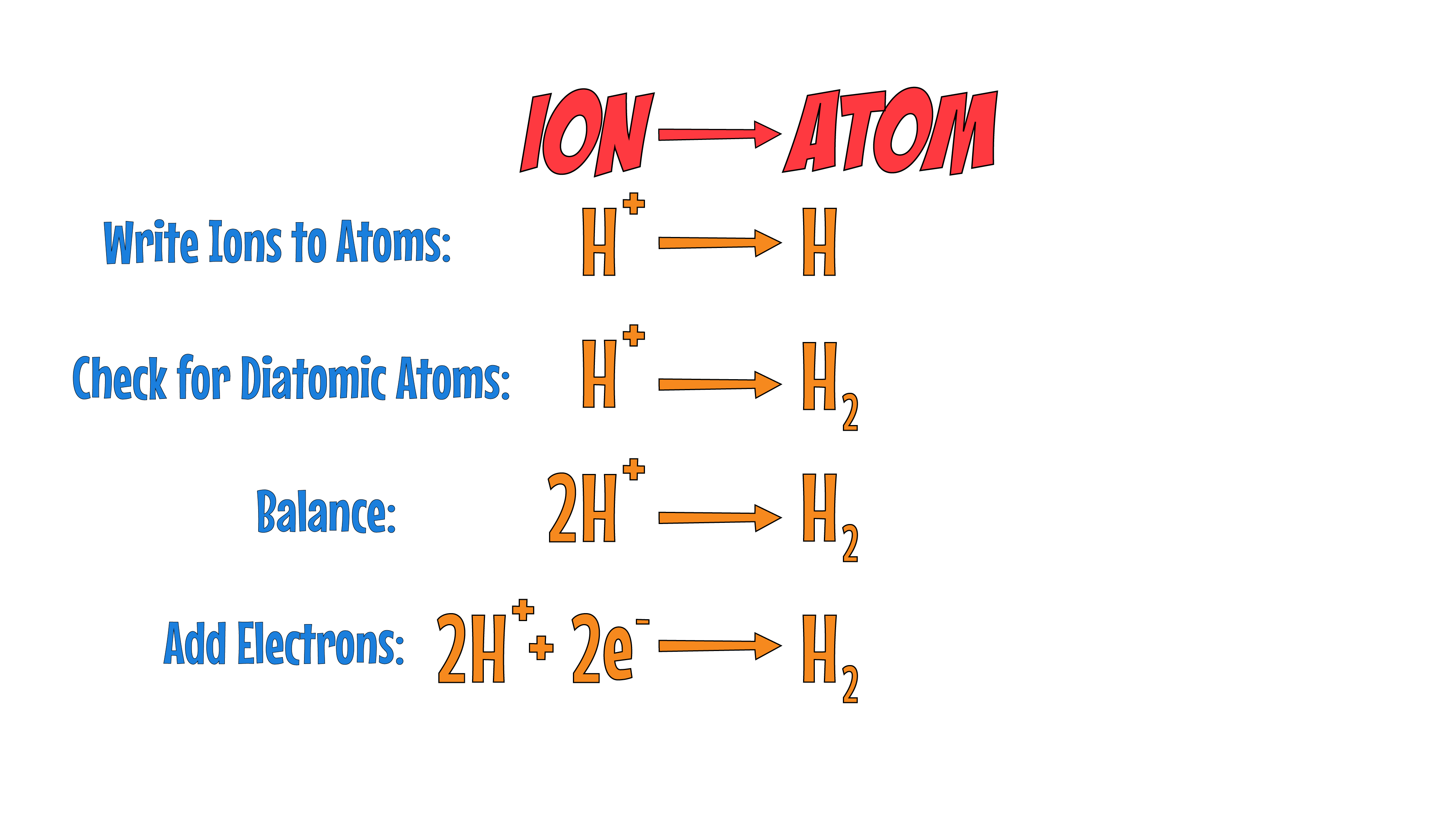
This means HYDROGEN gas will be given off at the cathode.
Anode:
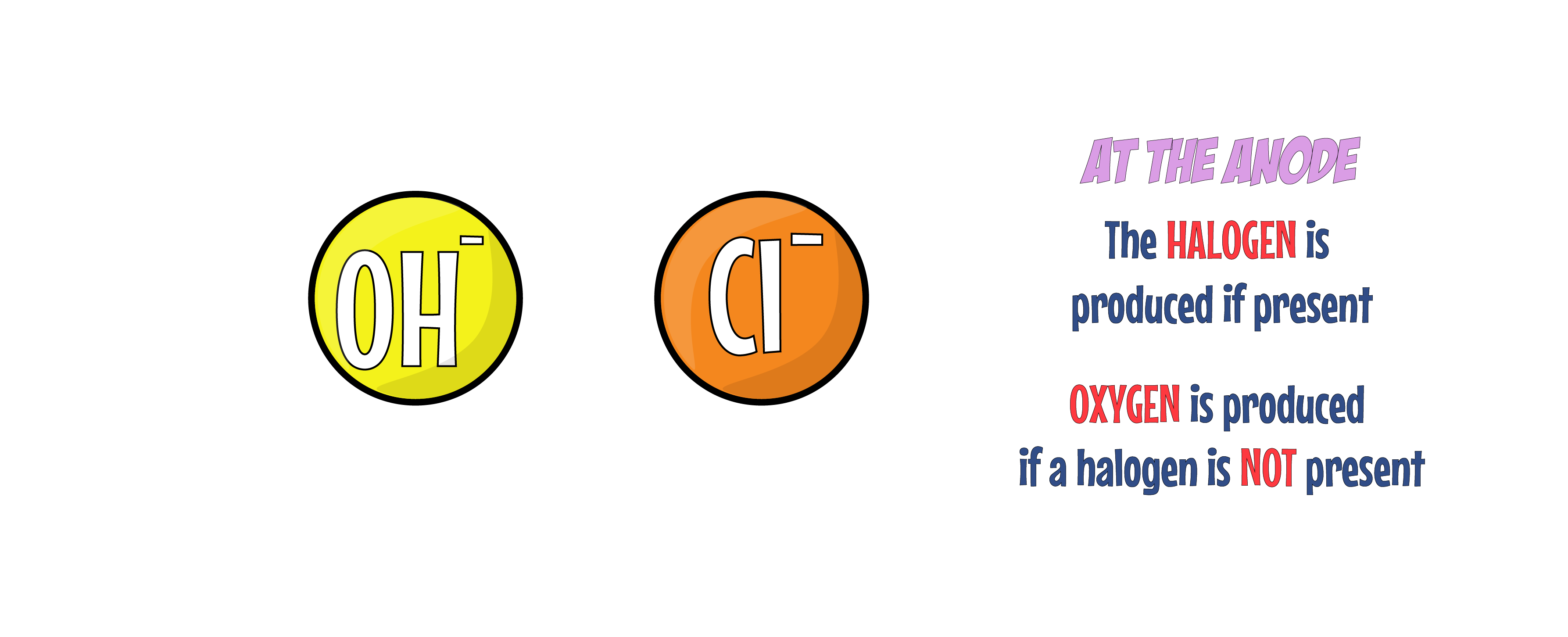
A halogen IS present therefore the CHLORINE will go to the anode. The HALF EQUATION will be:
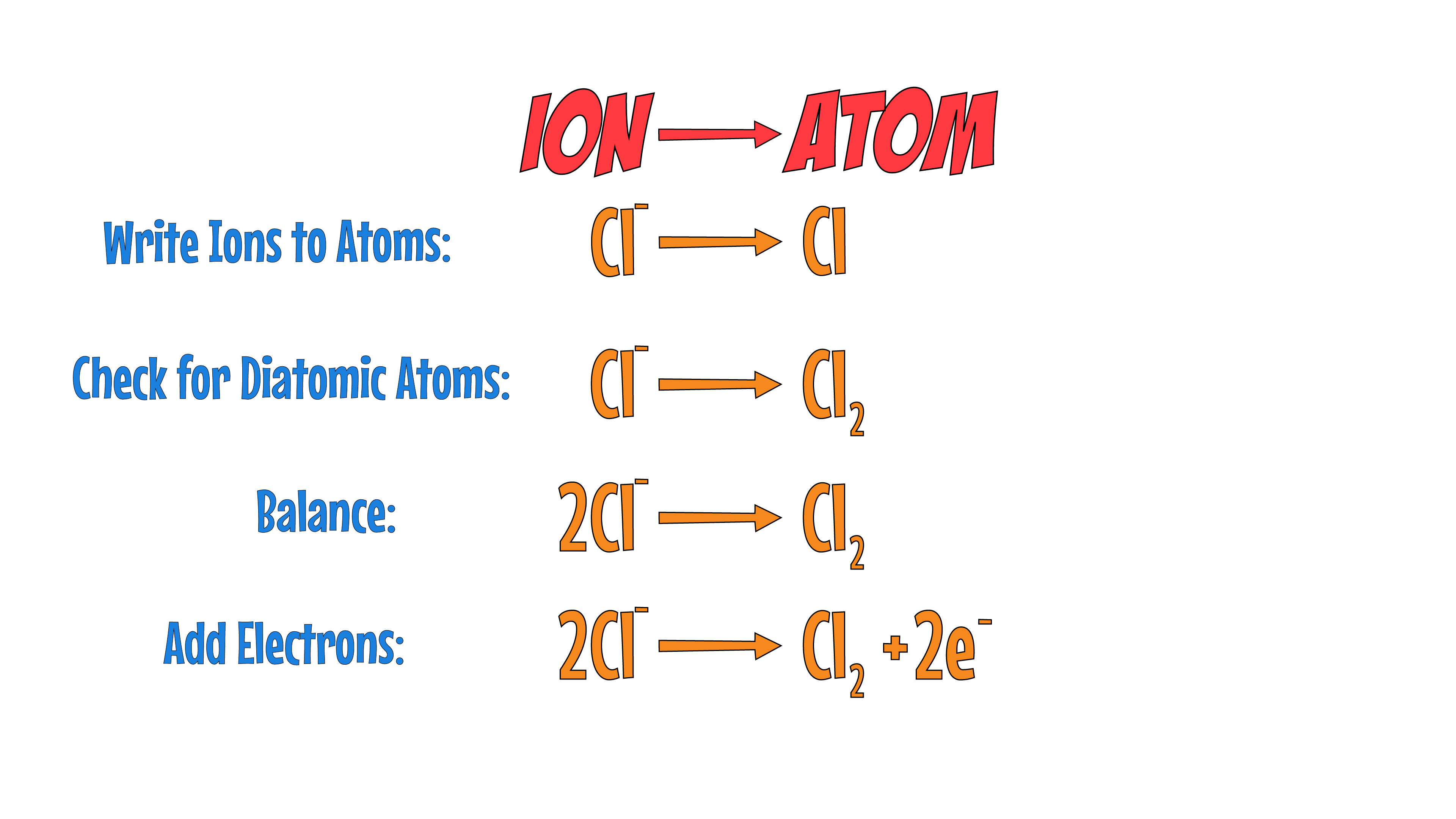
This means CHLORINE gas will be given off at the anode.
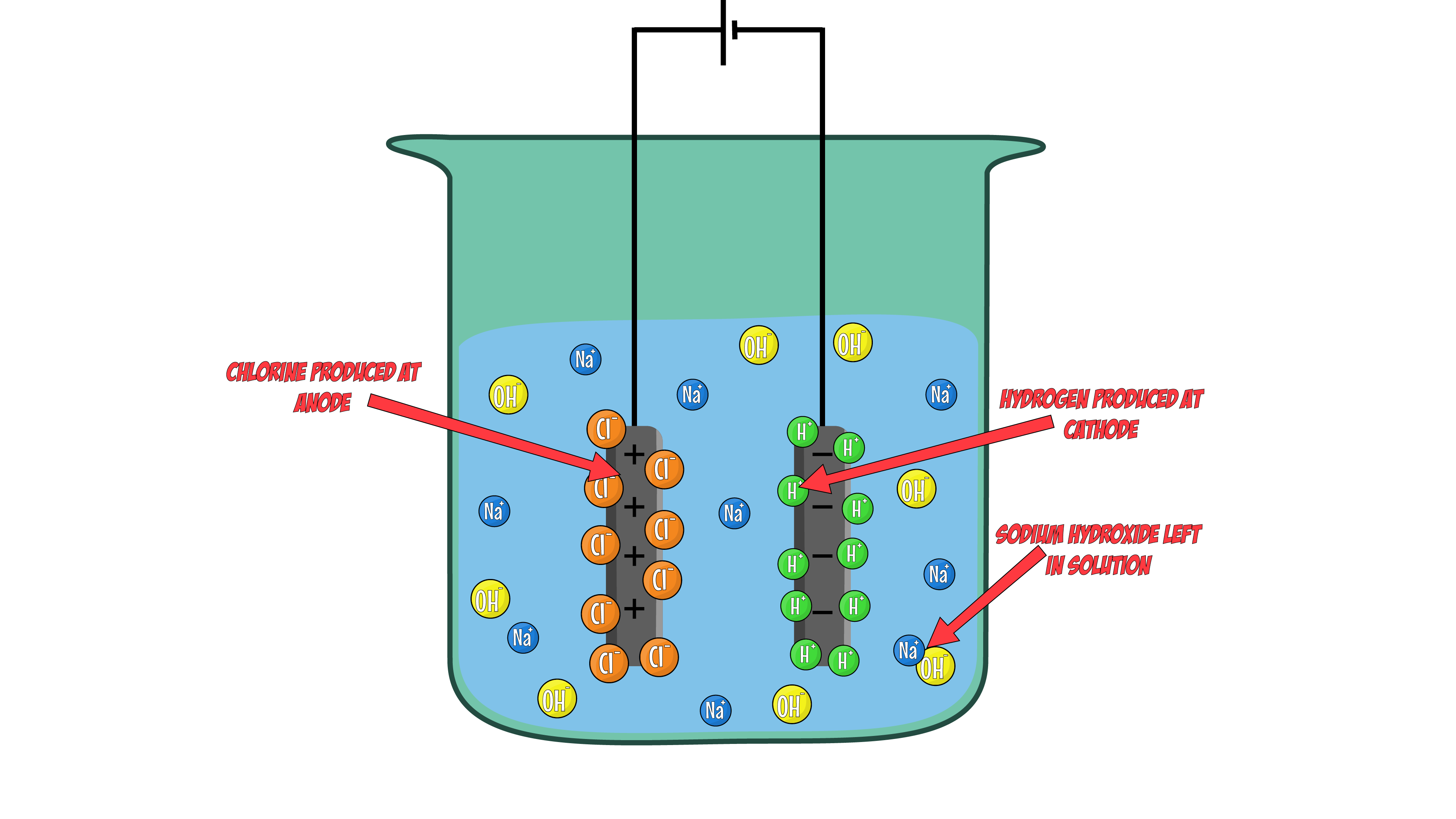
Here are a few more examples of the half equations for different AQUEOUS ELECTROLYTES:
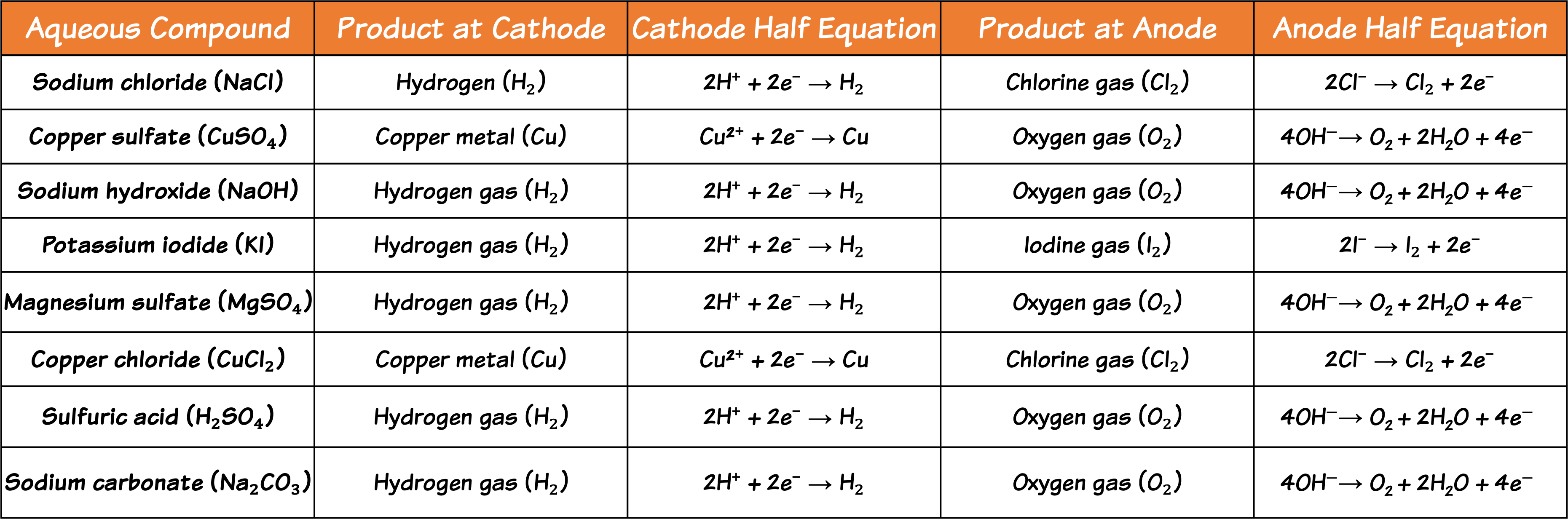
In the examples where METALS are formed in electrolysis with AQUEOUS ELECTROLYTES, you would observe the metal PLATING the surface of the electrode.