
Metal Extraction using Electrolysis
- Metals MORE reactive than CARBON can NOT be extracted by REDUCTION (See notes before).
- These metals need ELECTROLYSIS for extraction.
- A large amount of energy is required as the metal ore needs to be MELTED to become MOLTEN and ELECTRICITY is needed for the electrolysis. This makes the process EXPENSIVE.
EXTRACTION OF ALUMINIUM
- Aluminium is found as ALUMINIUM OXIDE ORE on Earth, and can be extracted using electrolysis.
- Before the ALUMINIUM OXIDE is MELTED, it is mixed with CRYOLITE, which LOWERS its MELTING POINT. This is useful as it means, LESS ENERGY is needed to melt it, making the process CHEAPER.
The set up for Aluminium extraction is slightly different to the normal classroom set up:
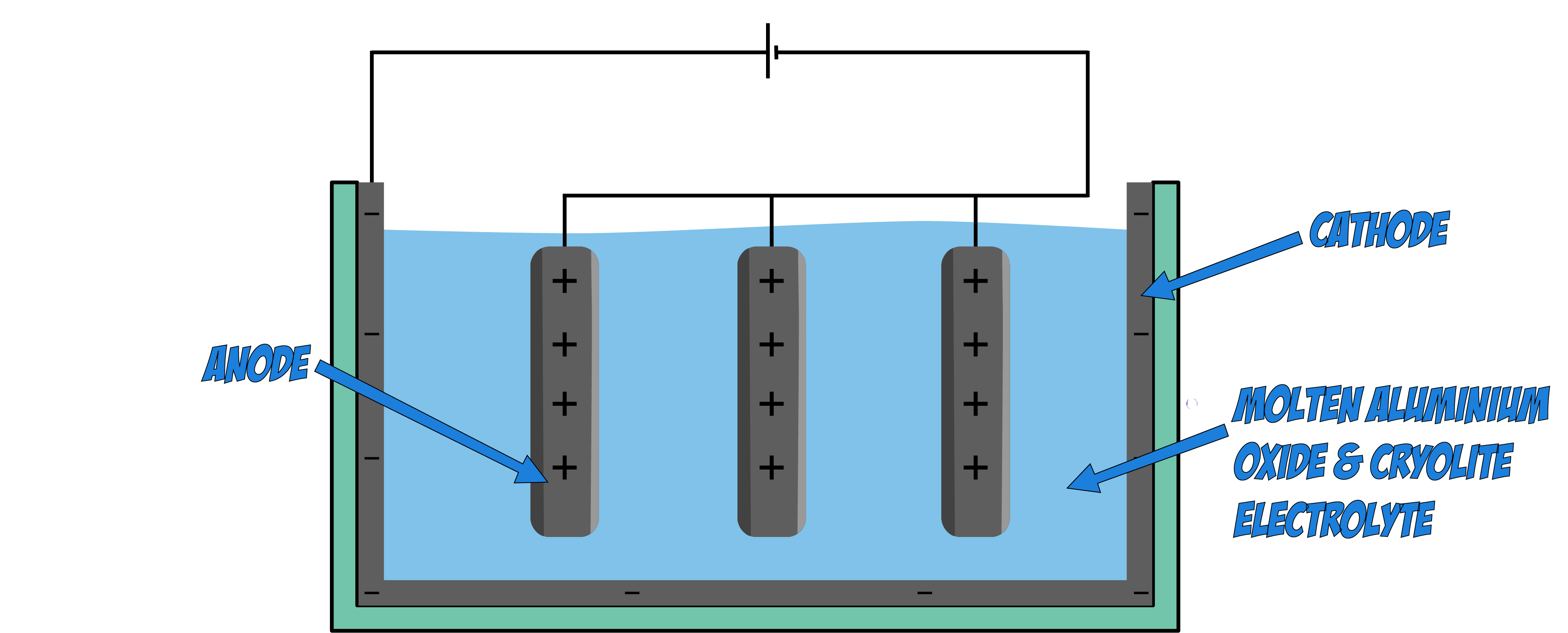
There is usually more than one anode submerged in the electrolyte, and the cathode lines the INSIDE of the container. Both electrodes are made of GRAPHITE.
The ions present in the liquid include POSITIVE ALUMINIUM IONS (Al3+) and NEGATIVE OXYGEN IONS (O2-).
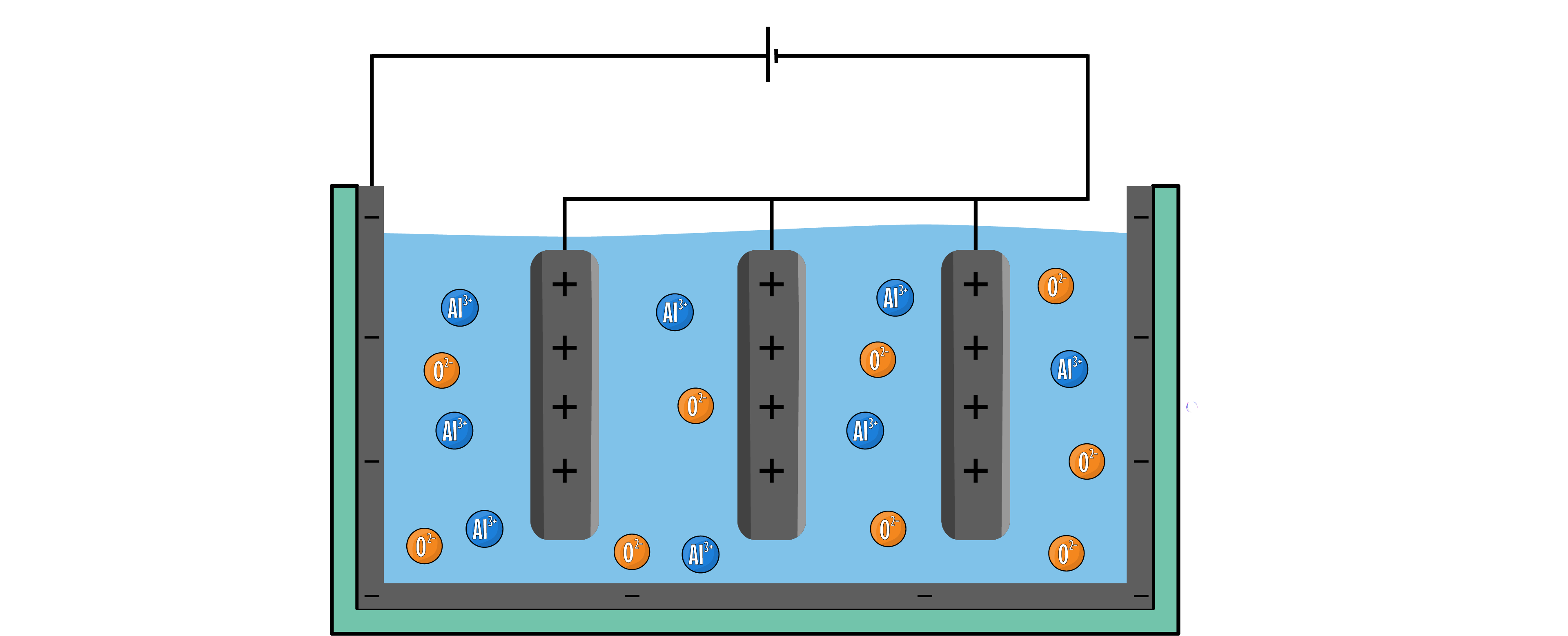
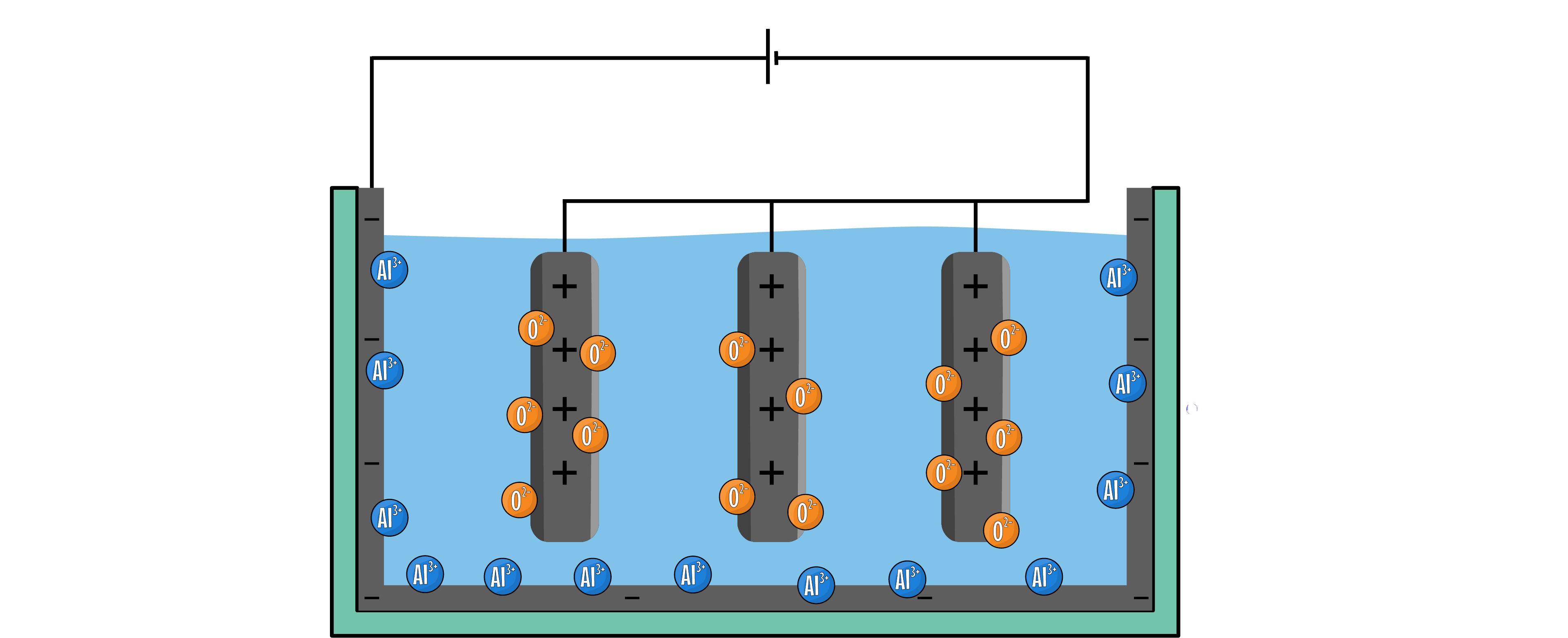
When current flows through the set up, the ALUMINIUM ions are attracted to the CATHODE, and the OXYGEN ions are attracted to the ANODE.
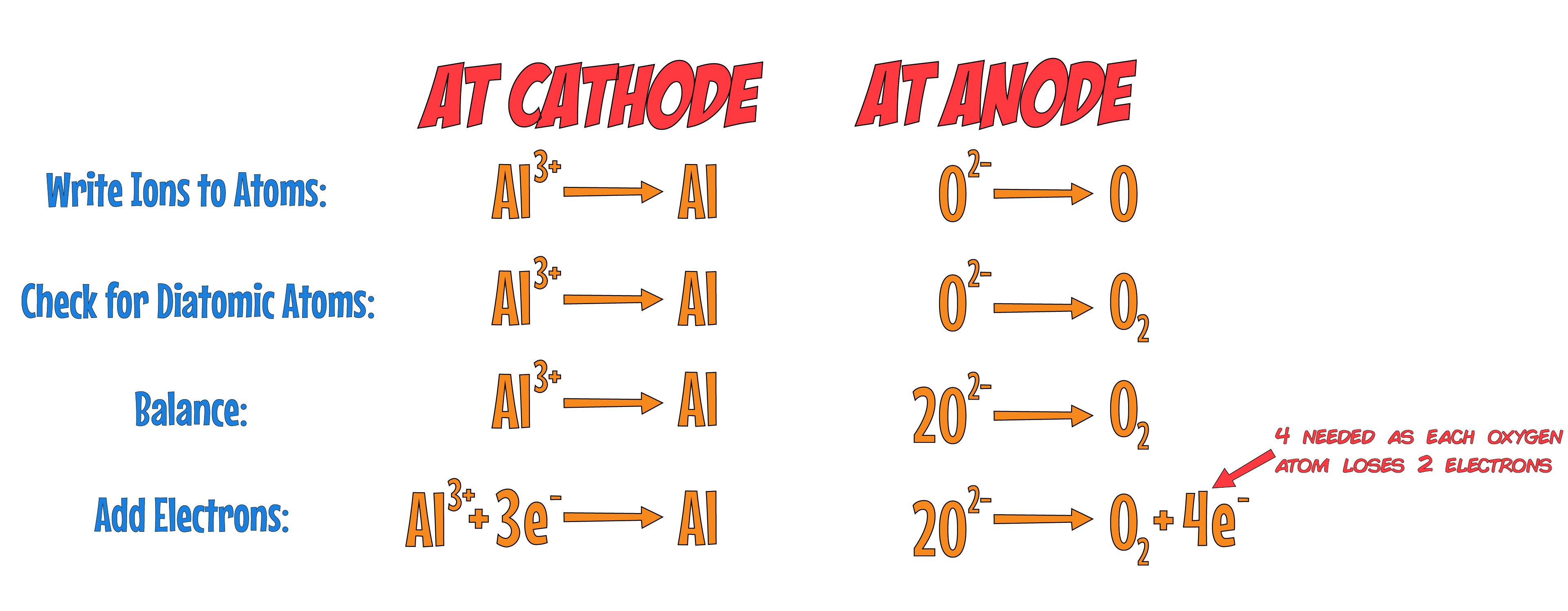
To find the HALF EQUATION for this process, you can follow the normal steps:
The final products in this electrolysis are ALUMINIUM metal and OXYGEN gas.
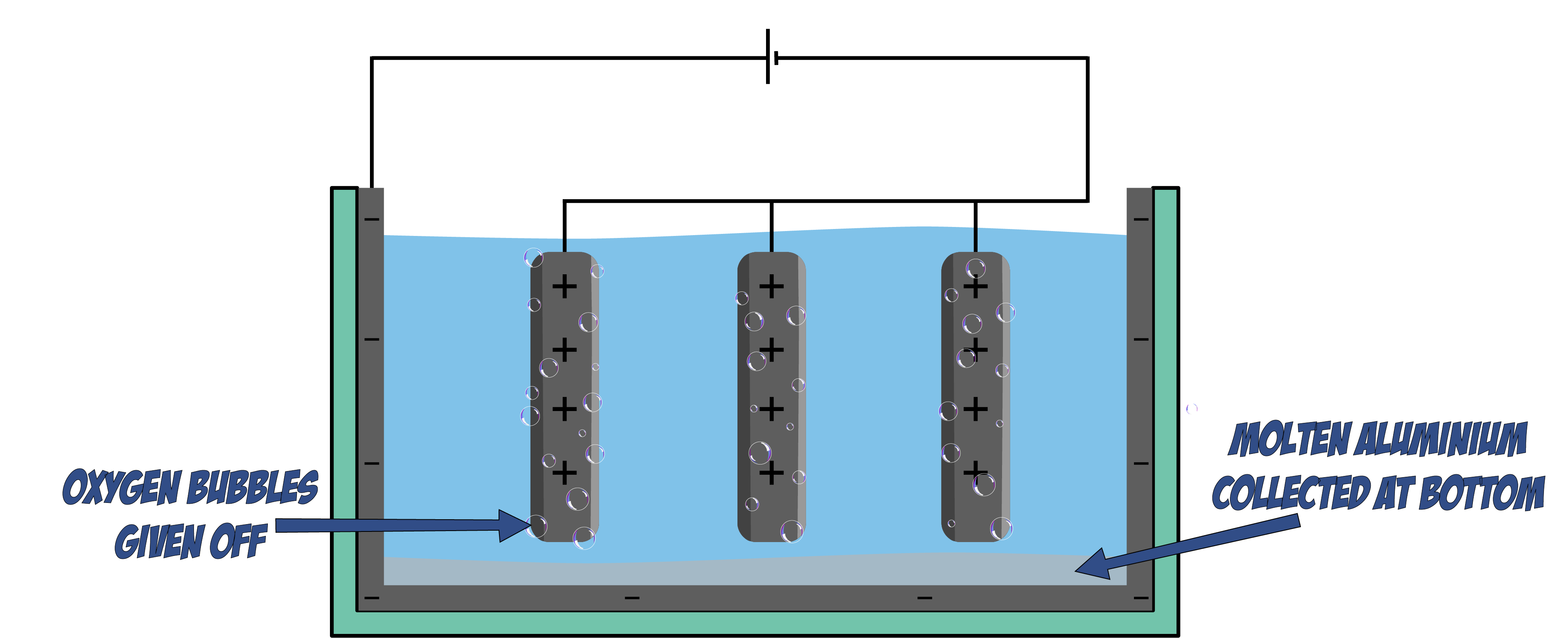
The Aluminium is produced as a MOLTEN LIQUID which flows to the bottom of the container due to the HIGH TEMPERATURE.
The Oxygen is produced as BUBBLES which float to the top of the liquid.
During this process the GRAPHITE ANODES need to be REPLACED REGULARLY. This is because they WEAR AWAY as the OXYGEN formed at the ANODES react with the CARBON in the graphite to form CARBON DIOXIDE.