
Electrolysis of Molten Ionic Compounds
- Ionic compounds in the molten state conduct electricity because their IONS are FREE TO MOVE.
- The PRODUCTS formed from MOLTEN electrolytes are ALWAYS the elements present in the ELECTROLYTE.
e.g. Electrolysis on MOLTEN Sodium Chloride will always form SODIUM and CHLORINE whereas AQUEOUS Sodium Chloride does not (see later notes).
Let’s look at the process for the example of MOLTEN SODIUM CHLORIDE electrolyte:
The IONS involve in this example are Na+ and Cl-. This means that the electrolyte has these ions floating around in it.
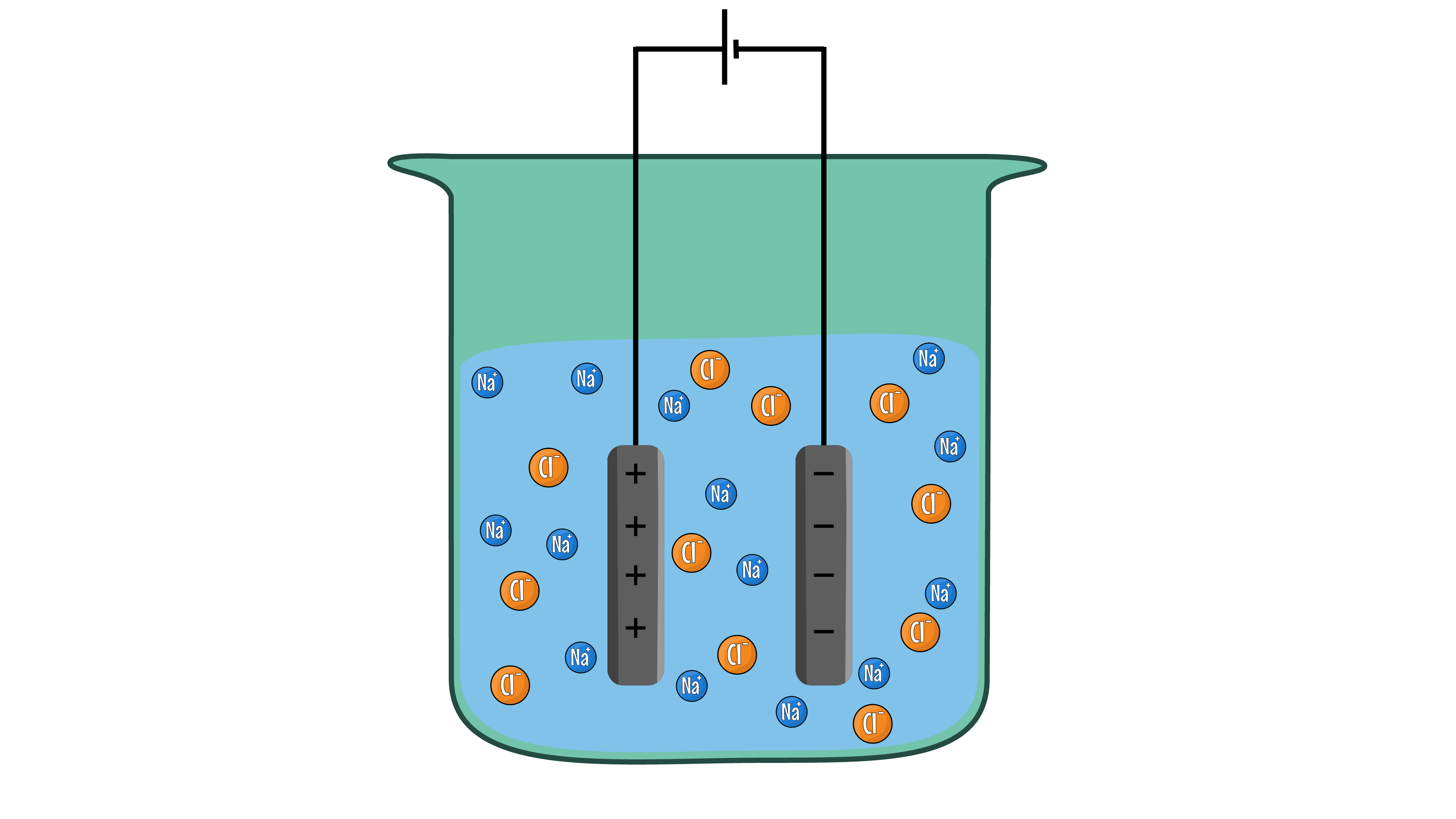
When the circuit is turned on, and electricity flows, the Na+ ions get attracted to the CATHODE and the Cl- ions get attracted to the ANODE.
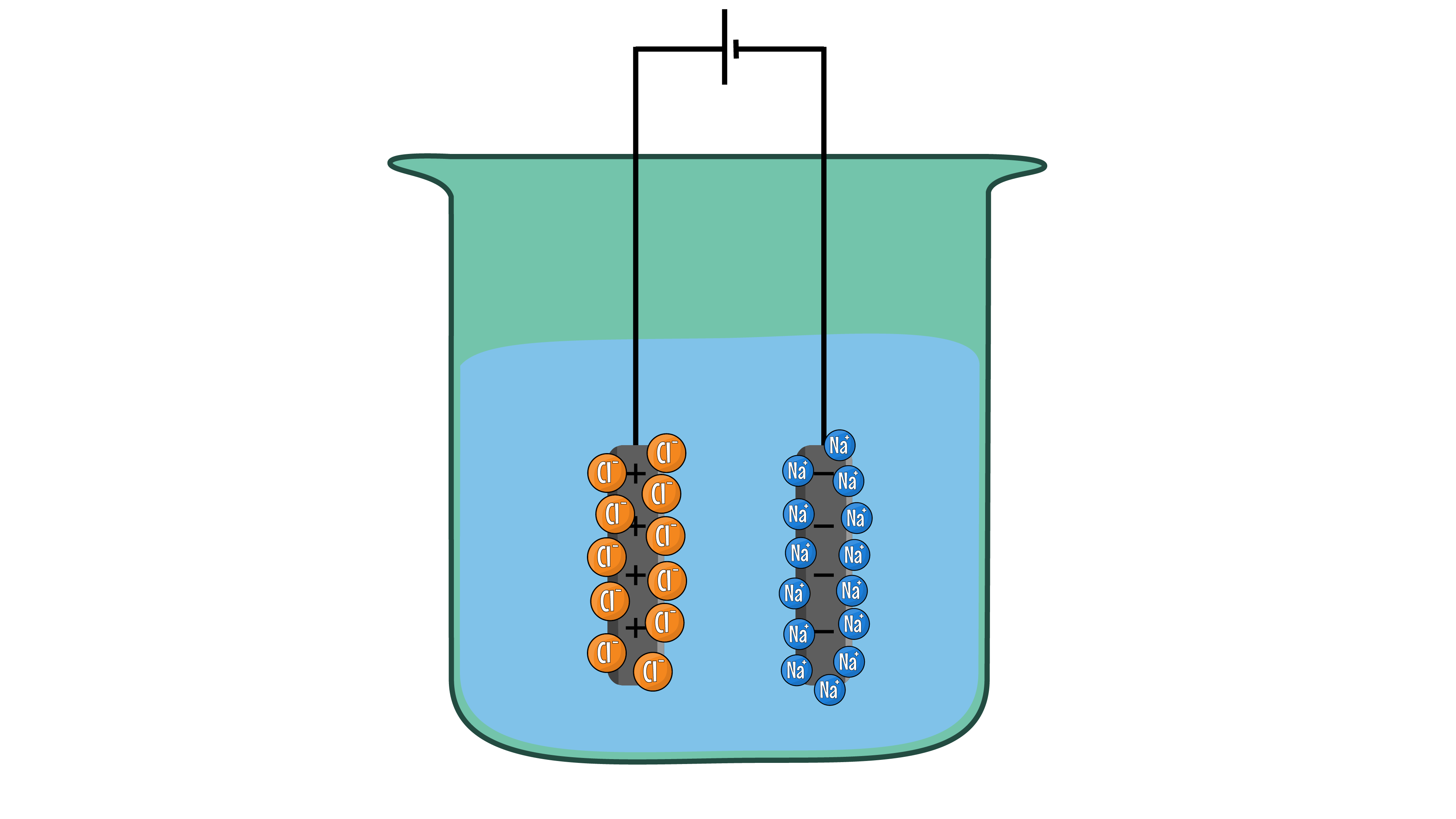
When they reach the anodes, both sets of ions TRANSFER ELECTRONS and turn into ATOMS of ELEMENTS.
Na+ IONS turn into Na ATOMS, while Cl- ions turn into Cl ATOMS.