The Process of Electrolysis
ELECTROLYSIS is a chemical process where an ELECTRIC CURRENT is used to break up an IONIC COMPOUND.
The set up for electrolysis looks like this:
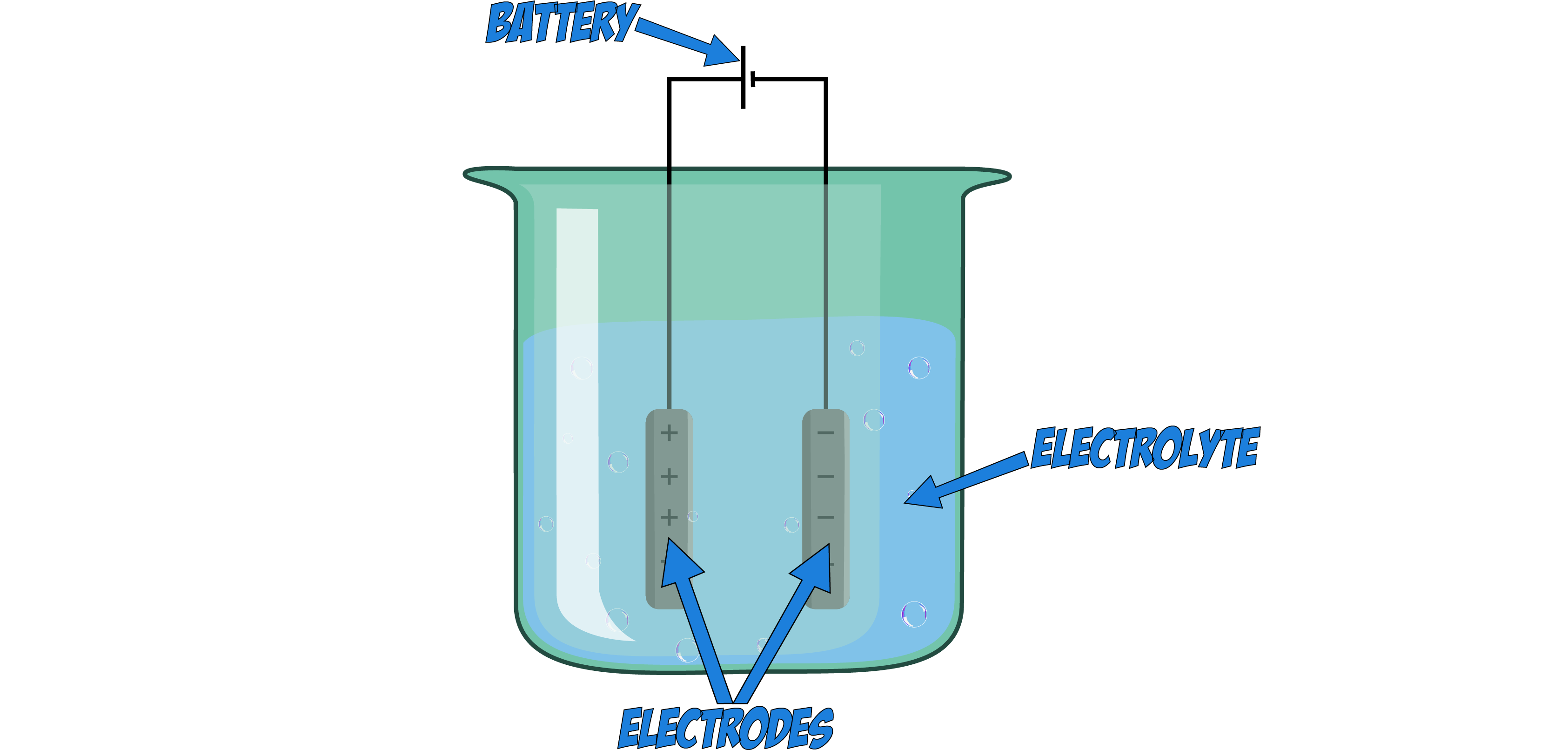
ELECTROLYTE:
This is the IONIC COMPOUND that is being separated.
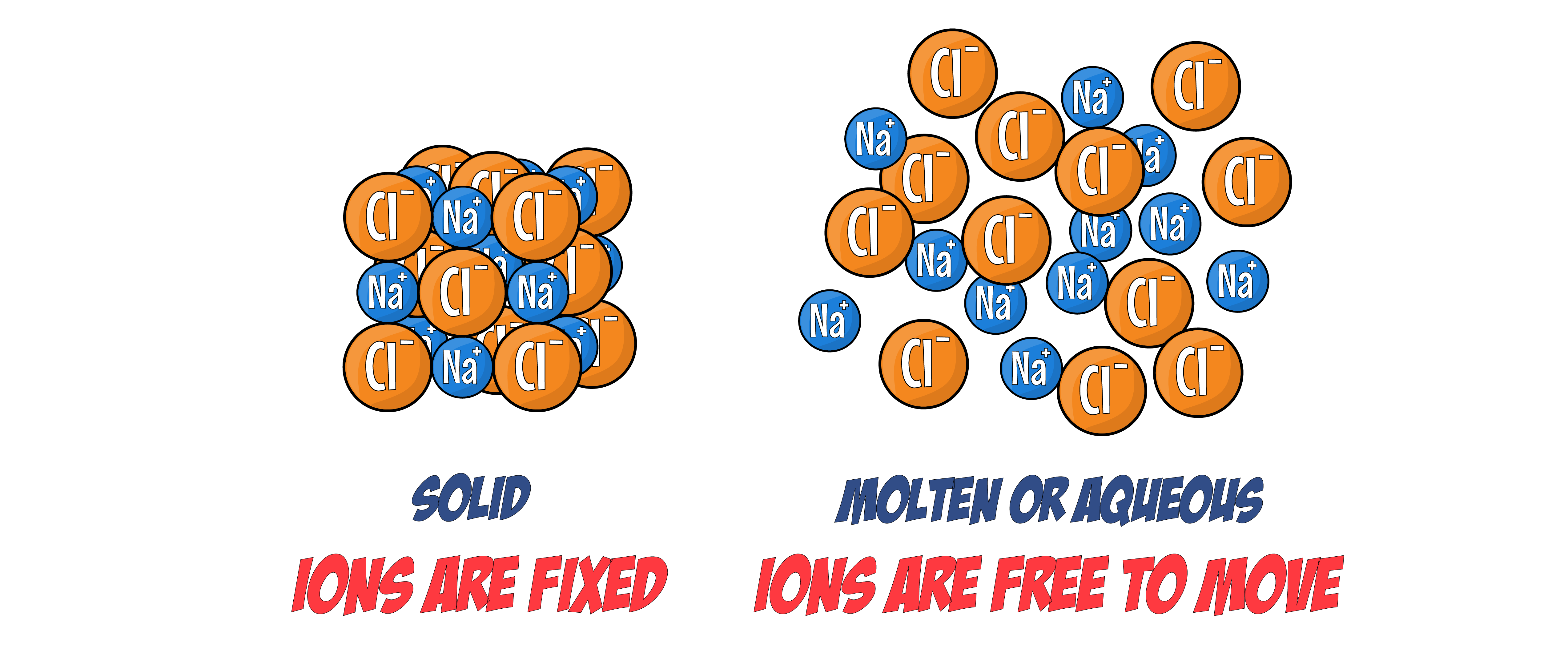
The ionic compound needs to be either MOLTEN (melted to liquid) or AQUEOUS (dissolved in water) so that it can CONDUCT ELECTRICITY. This is because when ionic compounds are SOLID, the ions are NOT free to move, but when they are molten or aqueous, they ARE free to move.
ELECTRODES:
To pass electricity through the electrolyte, a circuit with a battery is connected to Carbon electrodes which are submerged within the electrolyte.
There are TWO types of electrodes:
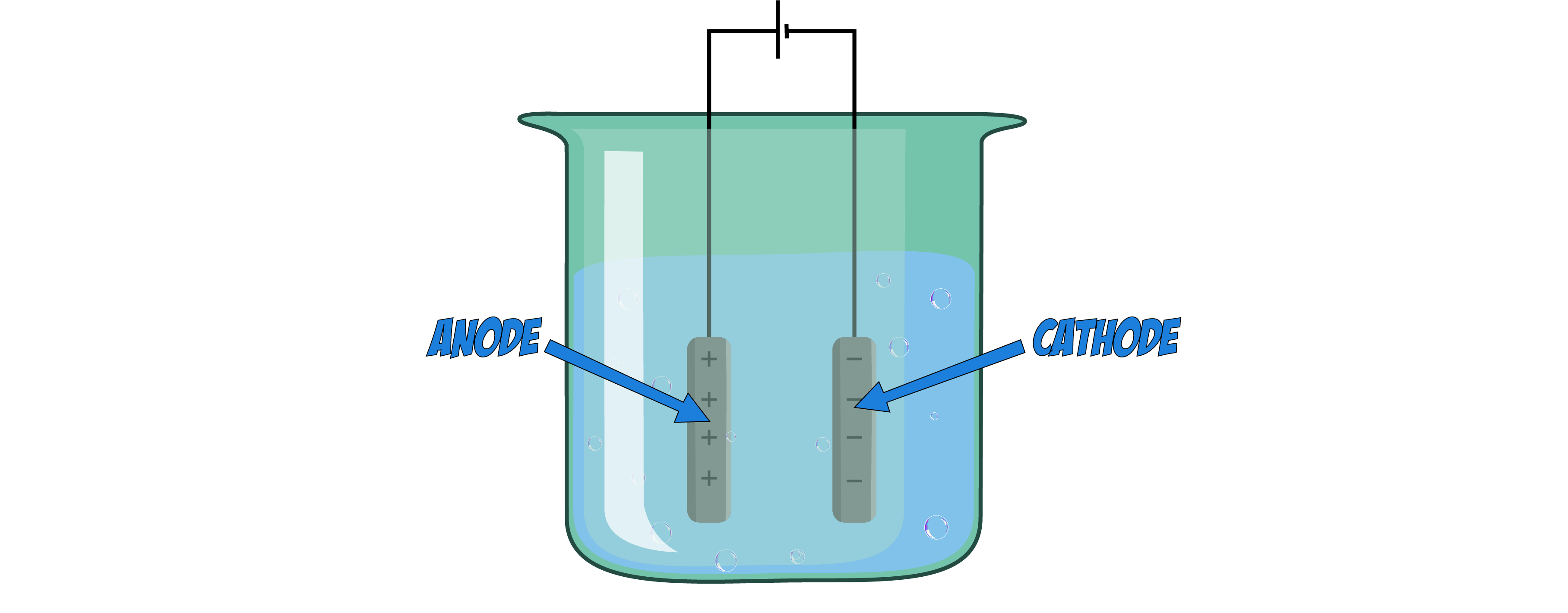
1. Anode: The POSITIVE electrode
2. Cathode: The NEGATIVE electrode
THE ELECTROLYSIS PROCESS
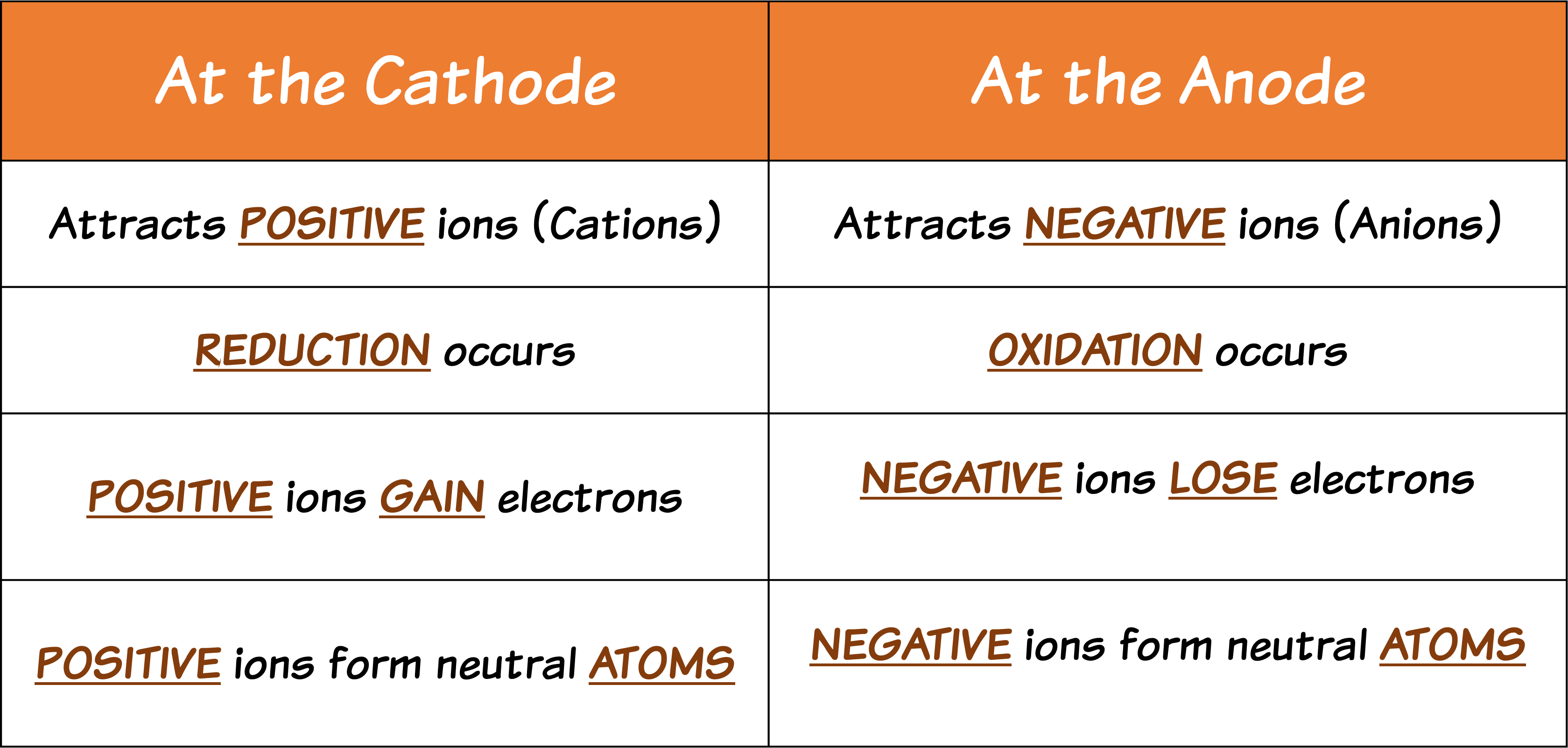
- When electricity passes through the electrolyte, the free moving IONS MOVE to the electrodes.
- POSITIVELY charged ions move to the CATHODE (negative) due to ATTRACTION of the OPPOSITE charges.
- Similarly, NEGATIVELY charged ions are attracted to the ANODE (positive).
- When the ions make contact with the electrodes, they DISCHARGE and turn into ATOMS of ELEMENTS.
- Different types of reactions occur at each electrode: