Ionic Compounds
Metals and Non-Metals that combine with IONIC BONDING form IONIC COMPOUNDS.
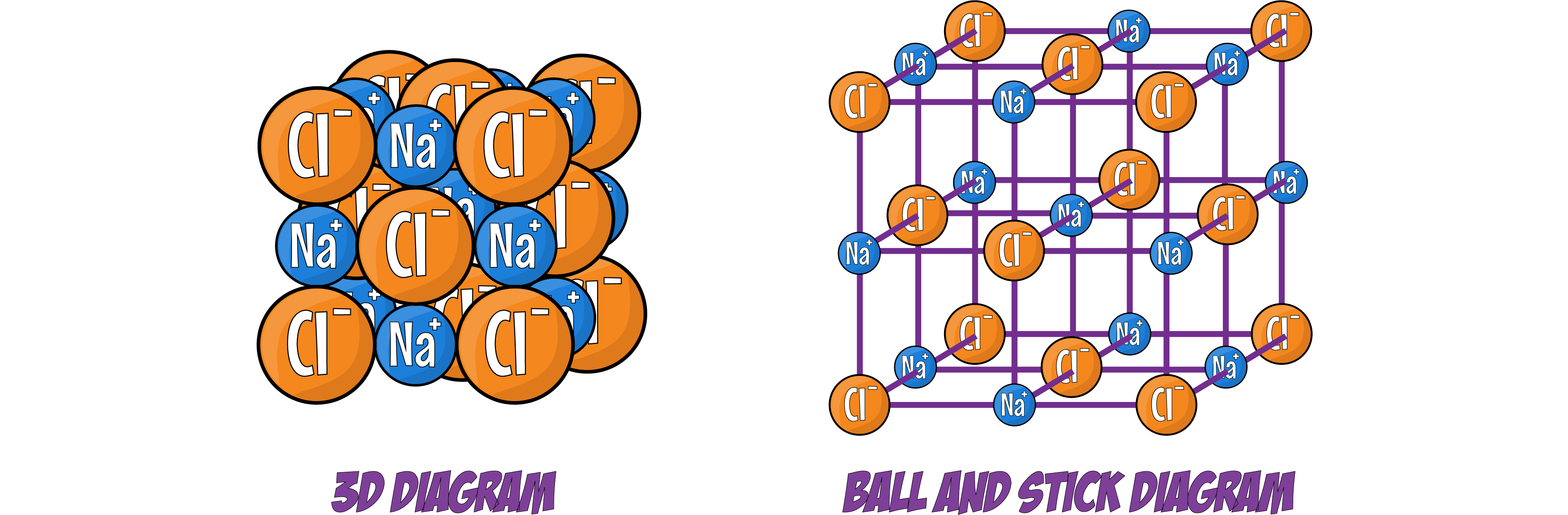
Ionic compounds are known for their GIANT IONIC LATTICE structure. This regular lattice consists of a 3D arrangement where ions are held together by strong ELECTROSTATIC FORCES of attraction in ALL DIRECTIONS.
Diagrams for Ionic Compounds
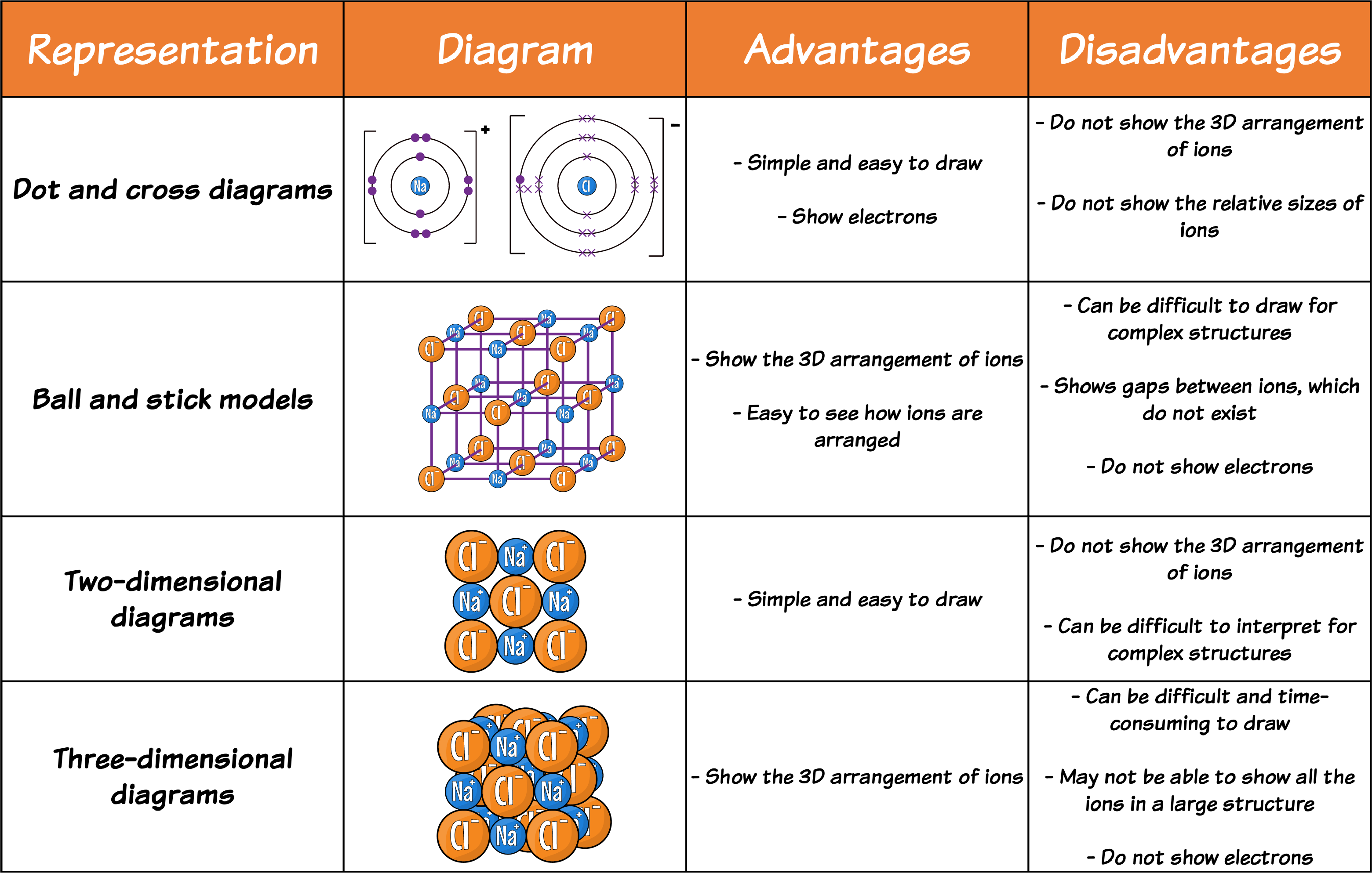
There are many different ways to represent the structure of IONIC COMPOUNDS, each type of diagram has their own advantages and disadvantages:
Determining the Formula of an Ionic Compound
You can figure out the formula of an ionic compound by using its DIAGRAM or by looking at the CHARGES of the elements.
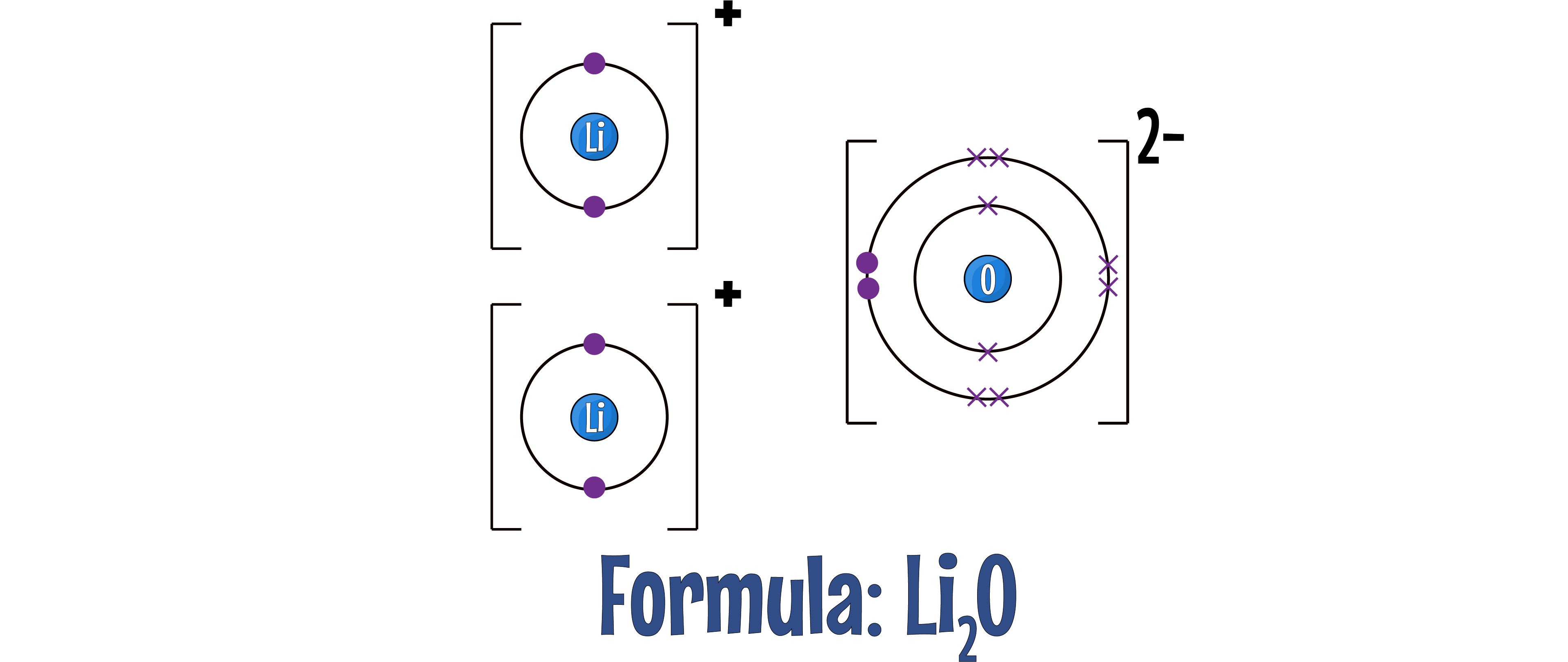
1. Use DOT AND CROSS DIAGRAMS or 3D diagrams to identify the ratio of ions in a compound.
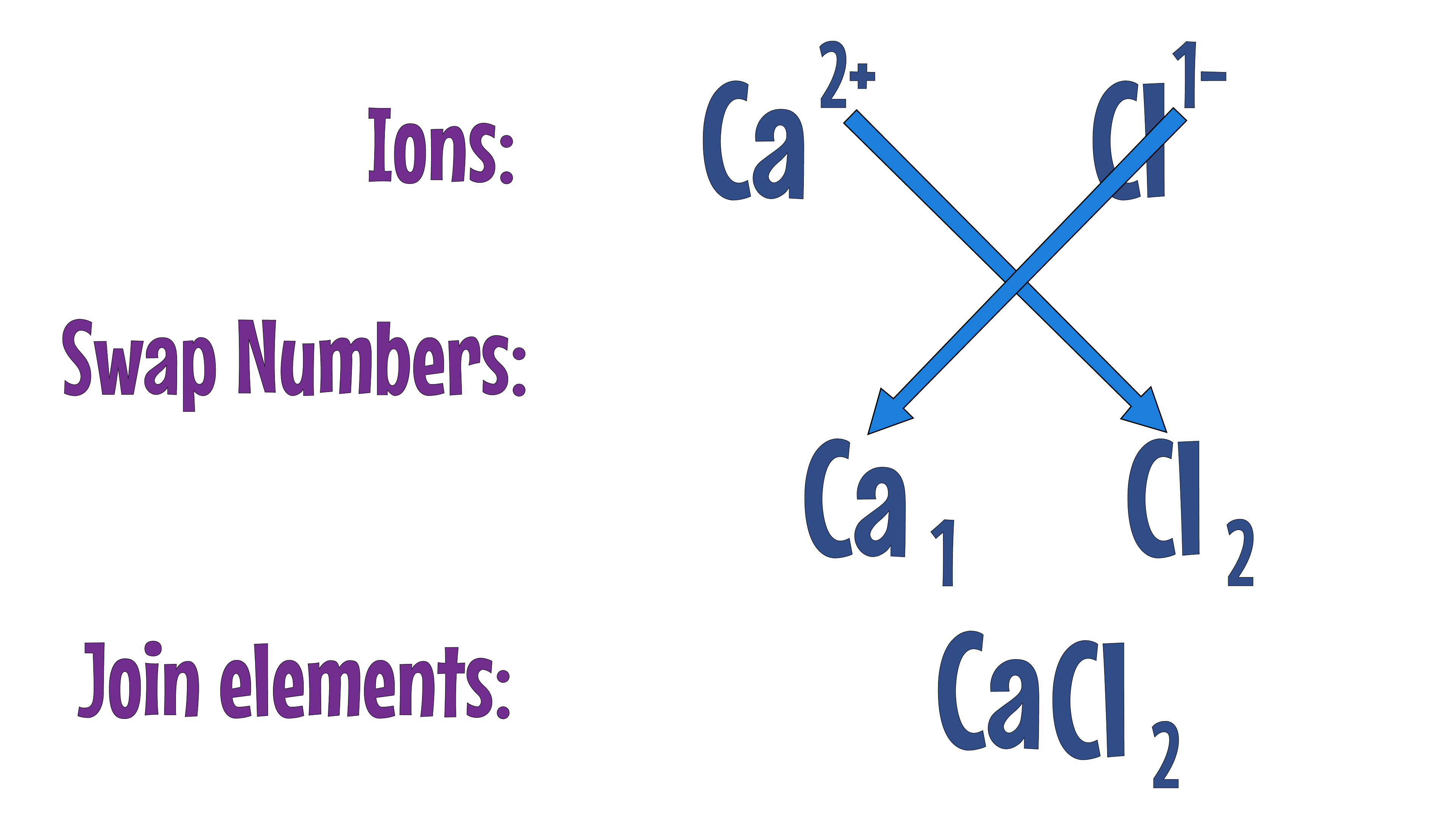
2. BALANCE THE CHARGES of ions to ensure the overall charge of the compound is zero.
- You can do this by SWAPPING the numbers of their charges.
- Let’s look at Calcium Chloride as an example:
Calcium has a charge of +2 because it is in group 2.
Chlorine has a charge of -1 because it is in group 7.