
Covalent Bonding
- This type of bonding occurs between NON-METALS.
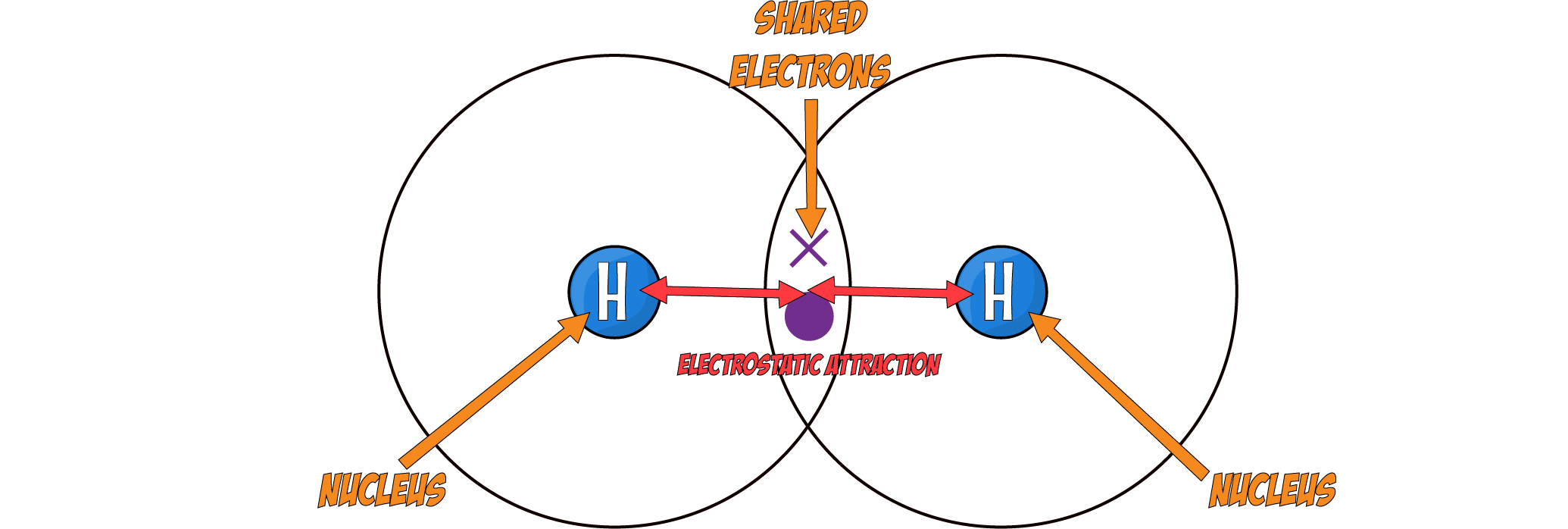
- COVALENT BONDING involves atoms SHARING pairs of electrons, so that the atoms can achieve a FULL OUTER SHELL and become STABLE.
- These bonds form because the positively charged NUCLEI are attracted to the shared pairs of ELECTRONS by ELECTROSTATIC FORCES.
DOT AND CROSS DIAGRAMS
- In these diagrams you only need to show the OUTER SHELL.
- To represent atoms SHARING ELECTRONS, the dot and cross diagrams have OVERLAPPING SHELLS where the shared electrons are drawn.
DISPLAYED FORMULA:
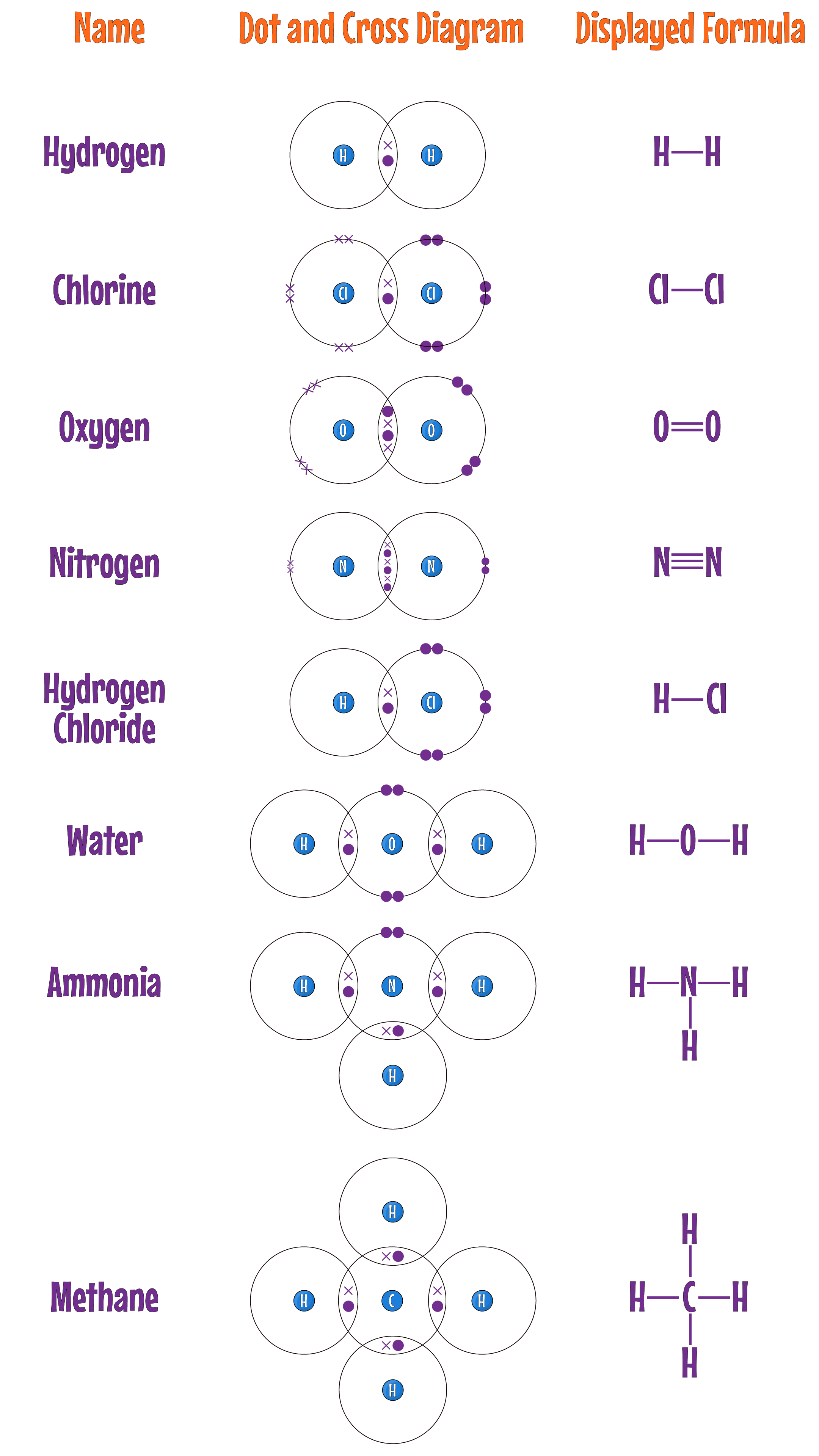
These are simplified diagrams that use LINES to represent COVALENT BONDS.

Here are ALL the covalent diagrams you need to know:
3D MODELS:
These can help visualise the spatial arrangement of atoms and bonds in a molecule, offering insight into its structure.

To determine the MOLECULAR FORMULA of a compound, count the number of each type of atom present in the molecule using any representation.
As there are 3 HYDROGEN atoms and 1 NITROGEN atom, this molecule has a formula of NH3.
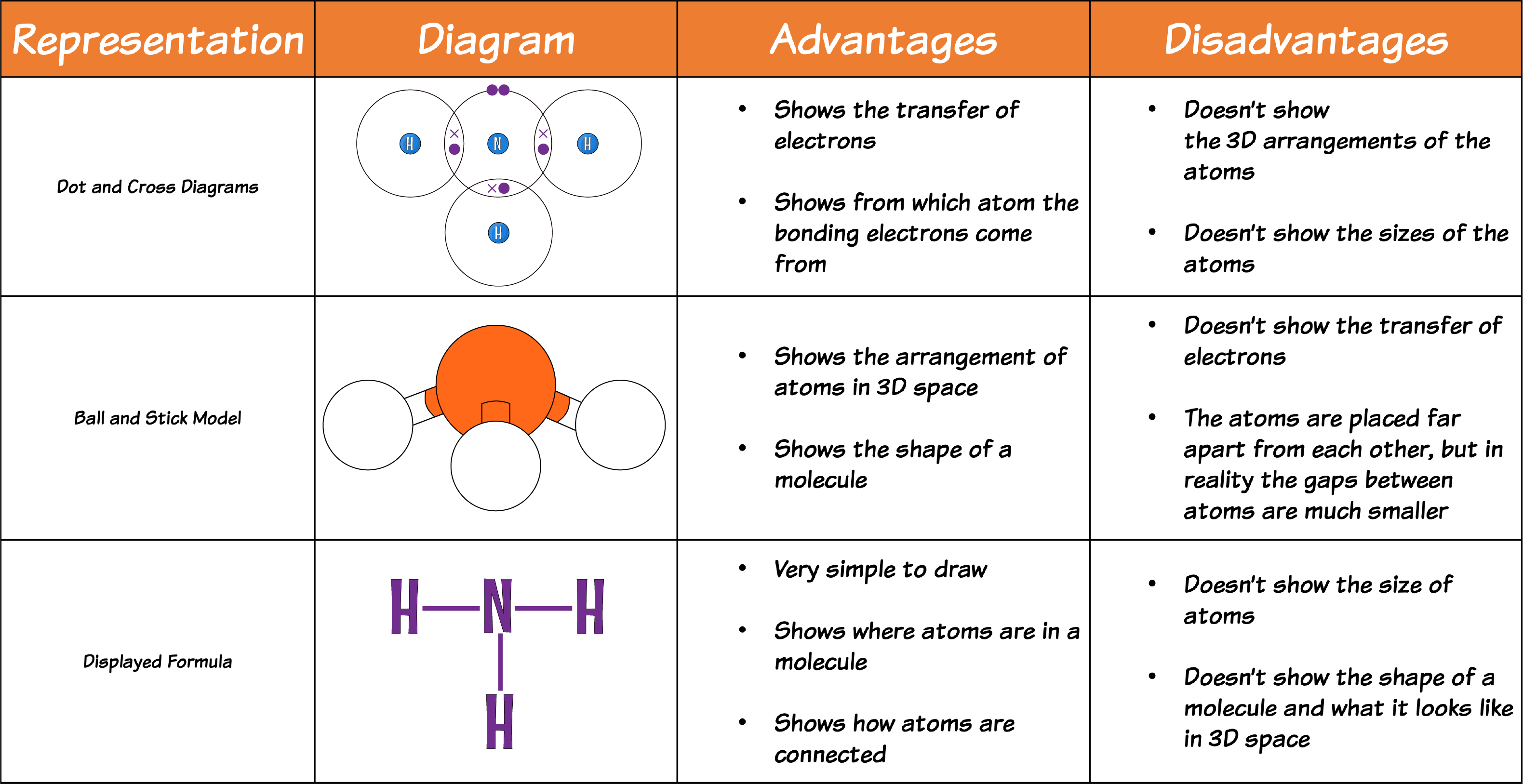
Here is a comparison of the advantages and disadvantages of using these diagrams to represent covalent substances:
Covalent Compounds
There are THREE types of substance made out of COVALENT bonds:
1. SIMPLE MOLECULAR SUBSTANCES
2. GIANT COVALENT SUBSTANCES
3. POLYMERS
Simple Molecular Substances (Small Molecules)
Simple molecular substances consist of SMALL MOLECULES formed by COVALENT BONDS.
These are NOT large networks but SMALL GROUPS of atoms bonded together.
Familiar examples include, Hydrogen (H₂), Oxygen (O₂), Water (H₂O) and Chlorine (Cl₂).
Properties of Simple Molecular Substances
There are TWO bonds involved in simple molecular substances:
1. COVALENT BONDS
These are the bonds BETWEEN ATOMS which are STRONG and need A LOT of energy to overcome.
2. INTERMOLECULAR FORCES:
These are the forces BETWEEN MOLECULES which are WEAK and do NOT need a lot of energy to overcome.

Melting and Boiling Points:
When simple molecular substances MELT or BOIL, it is the INTERMOLECULAR FORCES that need to be broken, NOT the covalent bonds.
These intermolecular forces are WEAK, meaning only a SMALL amount of energy is needed to overcome them.
This gives simple molecular substances LOW MELTING and BOILING points.
This is why they are usually found as LIQUIDS or GASES at room temperature.
Strength of Intermolecular Forces:
Intermolecular forces are always WEAK when compared to COVALENT bonds, but some intermolecular forces are weaker than others.
The LARGER the molecule, the STRONGER the intermolecular forces. This is because the molecule has MORE ELECTRONS.
Let’s compare the boiling points of Chlorine and Iodine:
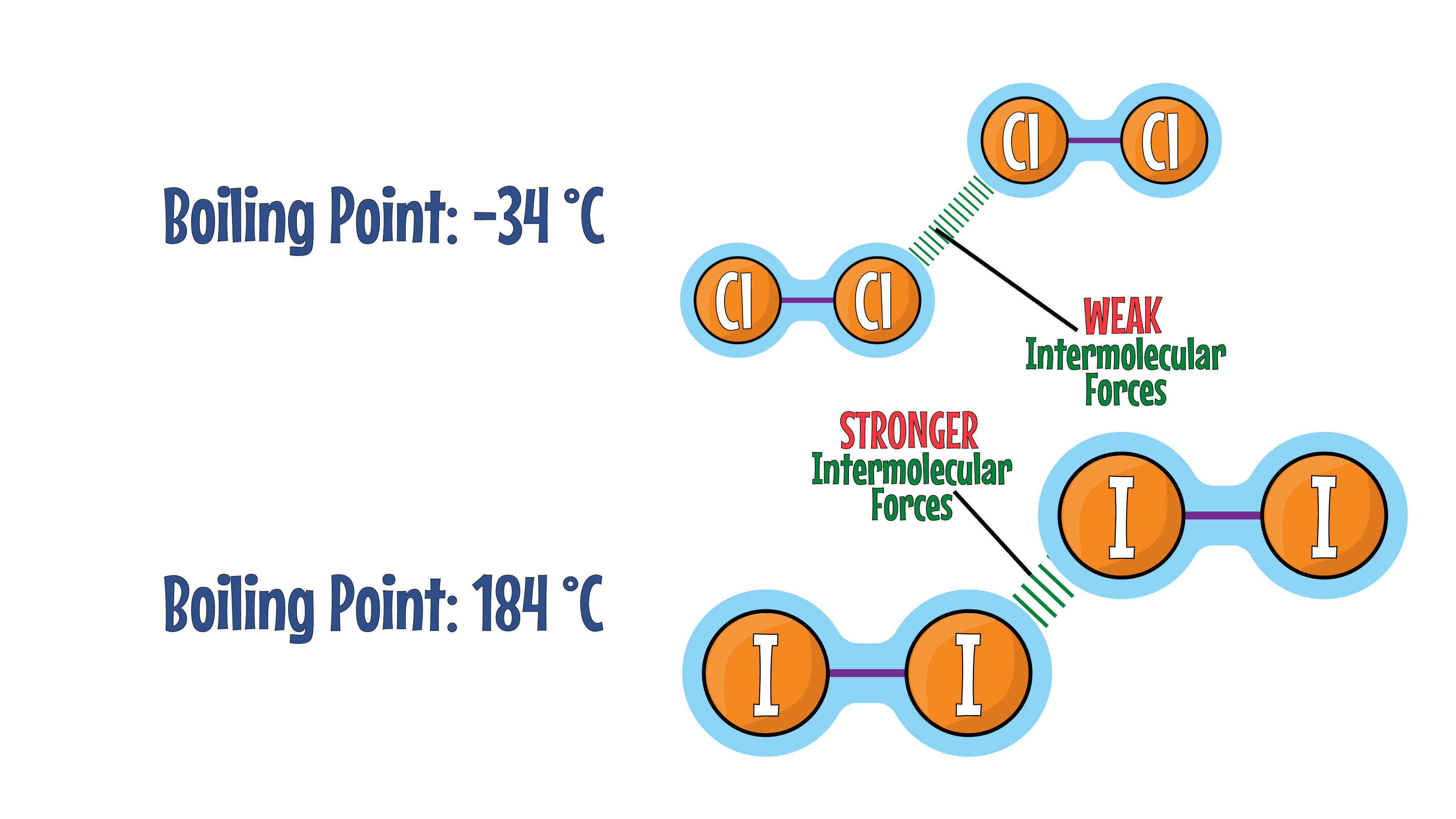
Iodine atoms are LARGER as they are further down the periodic table.
This means Iodine molecules have MORE ELECTRONS, meaning there are STRONGER INTERMOLECULAR forces between the molecules.
MORE ENERGY is required to OVERCOME these forces which means Iodine has a HIGHER melting and boiling point than Chlorine.
Electrical Conductivity:
For a substance to conduct electricity, it needs to contain CHARGED PARTICLES that are free to move (usually electrons or ions).
Simple molecular substances do NOT have an overall electric charge, therefore these substances generally do not conduct electricity because they do not contain FREE MOVING ELECTRONS OR IONS.
Polymers
Polymers are long chains of REPEATING UNITS known as monomers.
These atoms within the chains are held together by COVALENT BONDS, creating LARGE MOLECULES with unique properties.
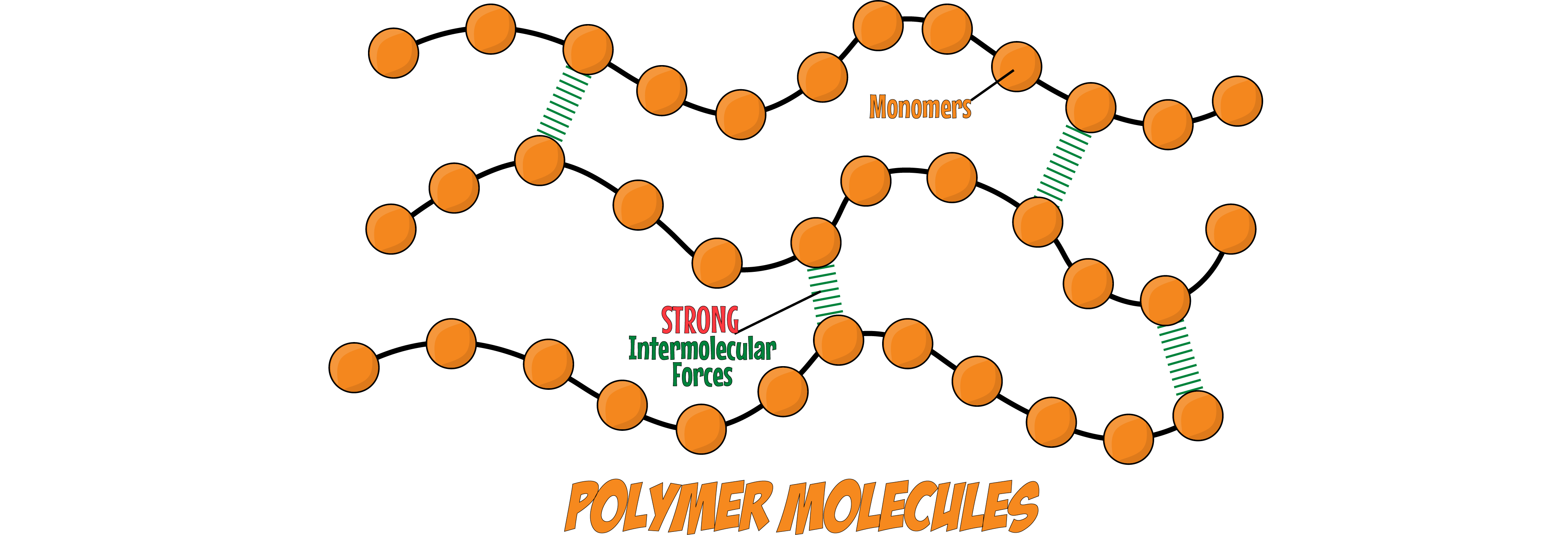
These LONG CHAINED MOLECULES are very LARGE so have very STRONG INTERMOLECULAR FORCES which require A LOT of energy to overcome.
This results in polymers having HIGH melting and boiling points which means they are usually SOLIDS at room temperature.
Polymers can be represented as molecular formulas using the following format:
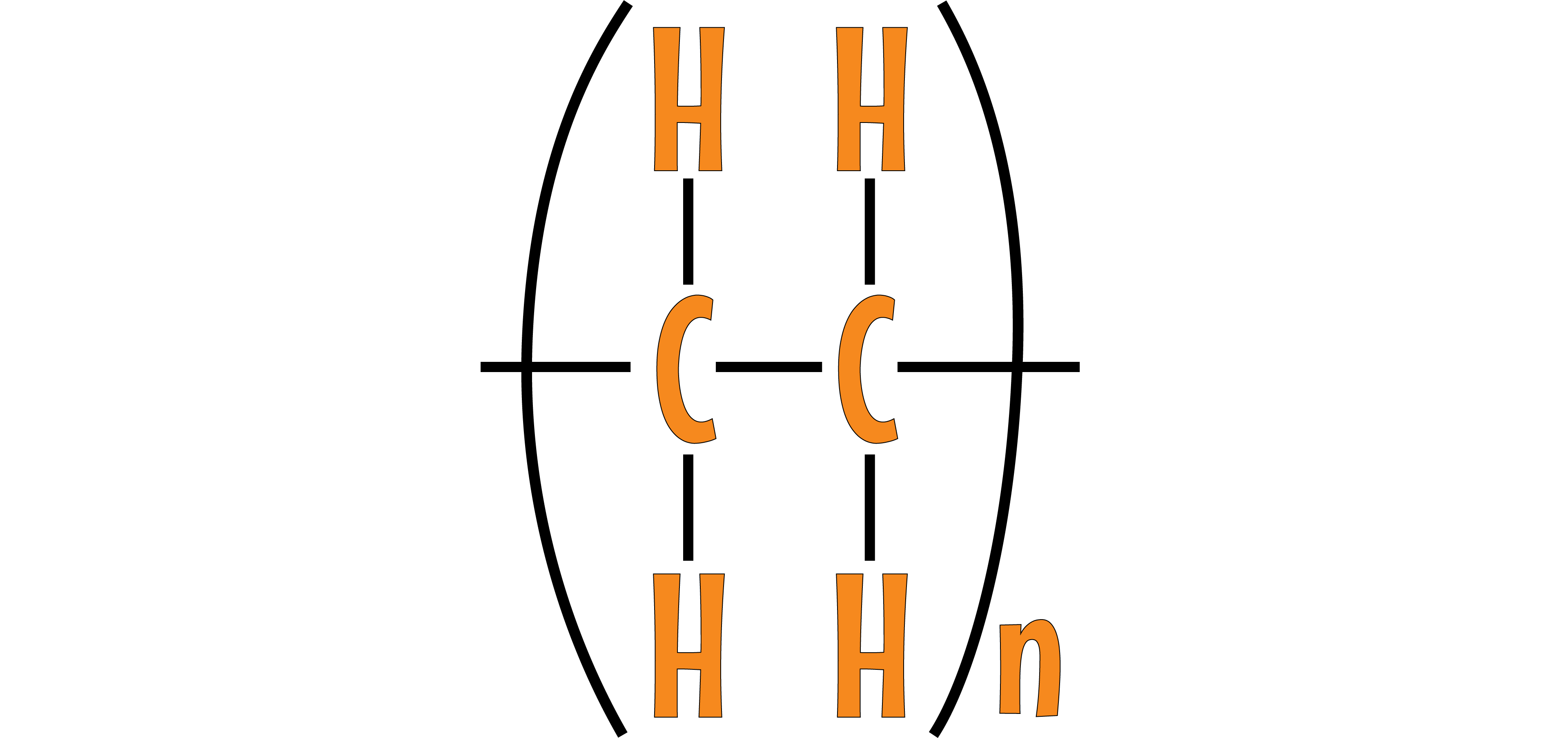
This shows the REPEATING UNIT of the polymer poly(ethene). The structure within the brackets is repeated several times to give the structure of the polymer.
The molecular formula of poly(ethene) is (C₂H₄)n.
Giant Covalent Structures
These are structures where atoms are bonded in a LARGE NETWORK OF COVALENT BONDS.
Every single atom in these substances is bonded to another with STRONG COVALENT BONDS.
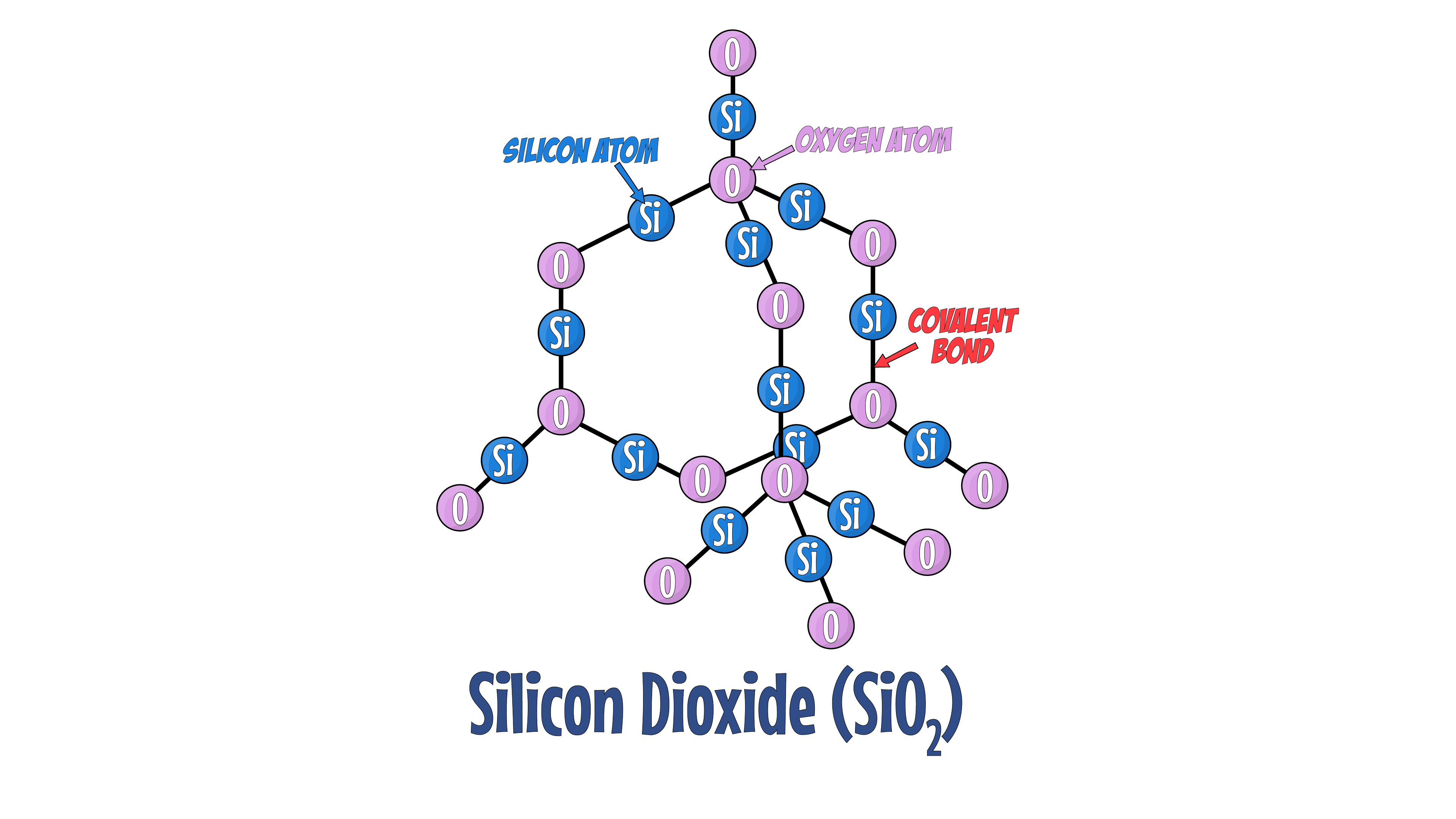
They have HIGH MELTING AND BOILING POINTS because a LARGE AMOUNT OF ENERGY is required to break the strong covalent bonds in the network.
Examples: Diamond, Graphite, and Silicon Dioxide (Silica) are prime examples of giant covalent structures.