
Genetic Inheritance
KEY CONCEPTS IN GENETIC DIAGRAMS
GAMETES:
These are SEX CELLS, and in humans can be a SPERM or EGG cell

CHROMOSOMES:
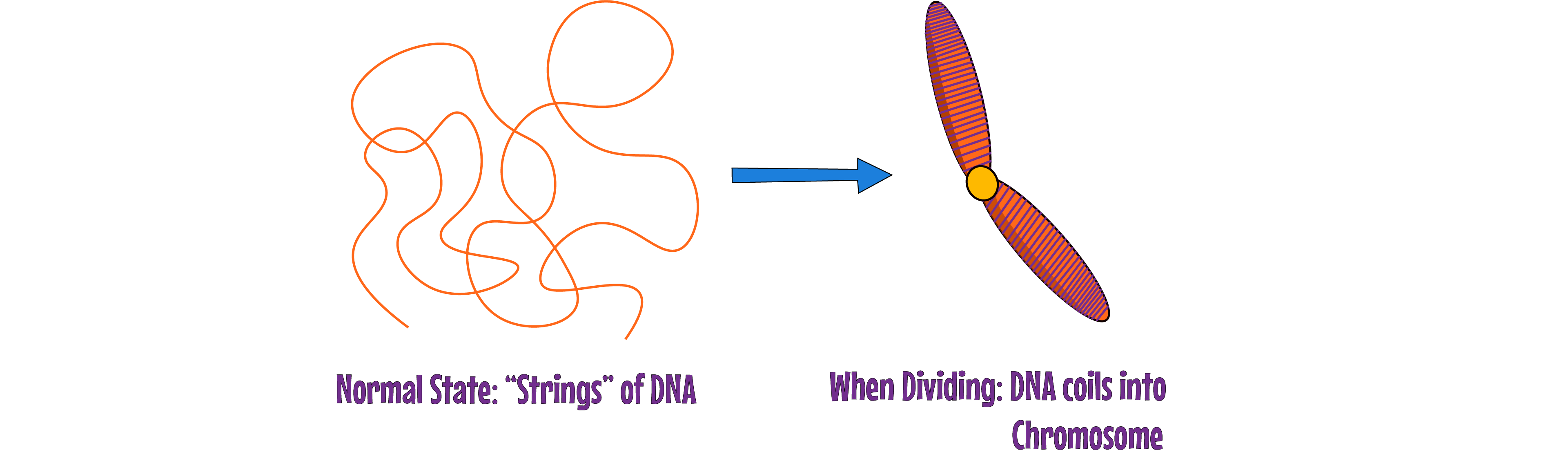
Chromosome are COILED UP structures of DNA strands and humans have 46 in total (23 Pairs)
GENES:
- A GENE is a small section of DNA which codes for a SPECIFIC PROTEIN and is responsible for different traits.
- Some characteristics are controlled by a SINGLE gene, such as: fur colour in mice; and red-green colour blindness in humans. However MOST characteristics are a result of MULTIPLE genes interacting, rather than a single gene.
ALLELES:
- Alleles are DIFFERENT forms of a particular gene. E.g. The “eye colour” gene can have two alleles – the brown eyed allele and the blue eye allele.
- Alleles exist as PAIRS where each individual inherits one allele from EACH PARENT.
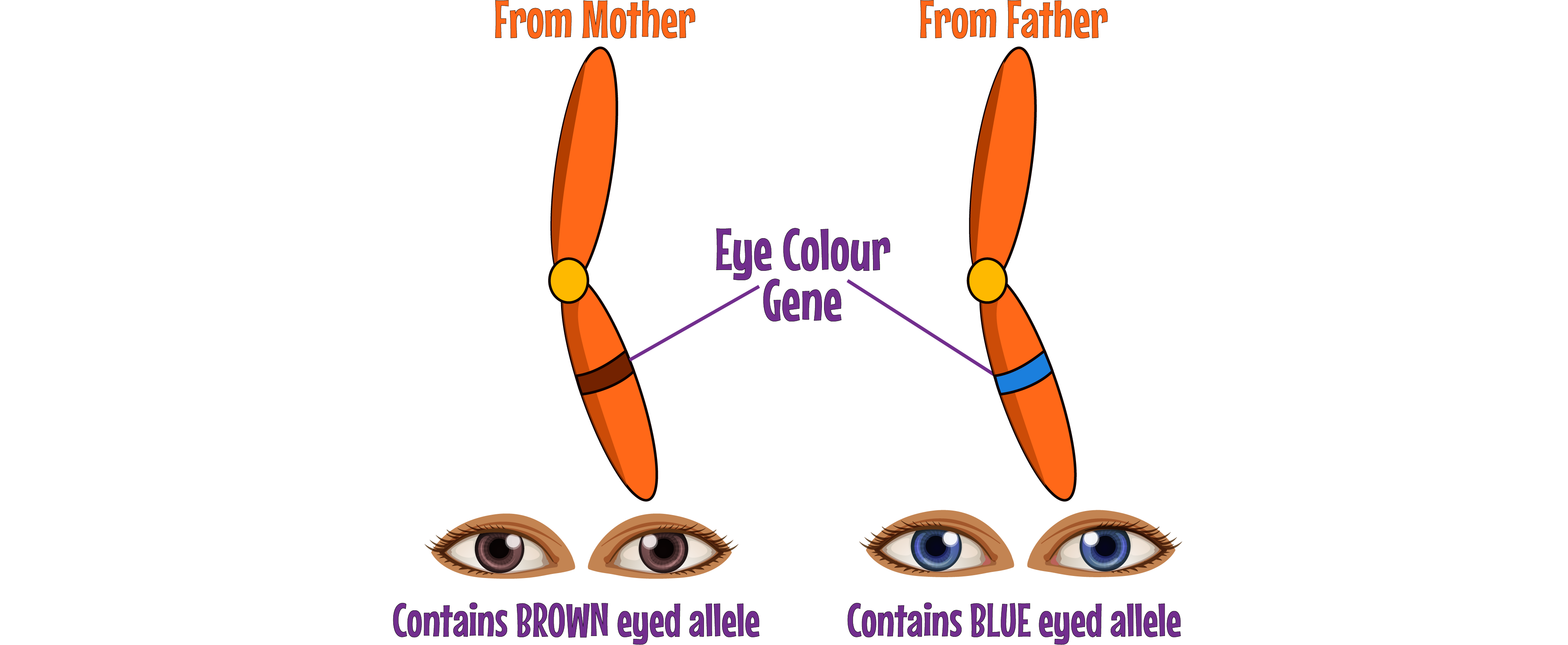
However, the alleles in a pair can’t both express their traits in an individual (e.g. A person either has brown eyes OR blue eyes- NOT both)
This means that some alleles are “more dominant” than others and are more likely to express themselves over others.
E.g. The brown eyed gene is MORE DOMINANT than the blue eyed gene, so if a person had both alleles present in their DNA, they would end up with BROWN EYES.
DOMINANT ALLELE:
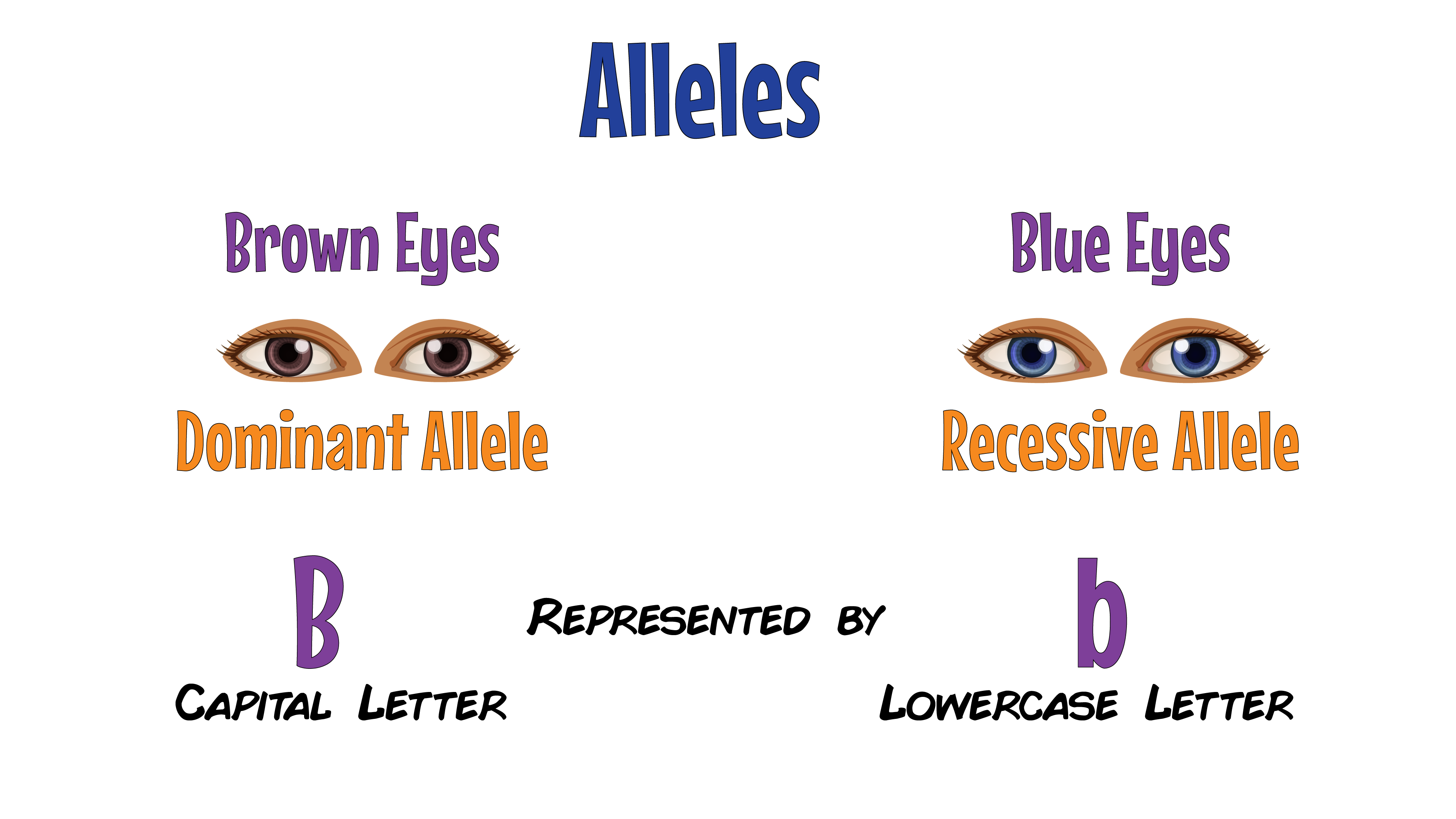
A DOMINANT ALLELE is an allele that ALWAYS expresses itself even if only one is present
These are denoted with CAPITAL LETTERS.
E.g. B could represent BROWN EYES as it is DOMINANT.
RECESSIVE ALLELE:
These are only expressed when BOTH ALLELES in the pair are RECESSIVE. That’s because they are “less dominant”
These are denoted with SMALL LOWERCASE LETTERS.
E.g. b could represent BLUE EYES as it is reccessive.
HETEROZYGOUS:
When both alleles in the pair are DIFFERENT.
Eg. Bb or bB
They always result in the DOMINANT gene being expressed

GENOTYPE:
These are the COMBINATION of alleles present in an organism.
PHENOTYPE:
These are the PHYSICAL CHARACTERISTICS expressed by an individual due to their genes.
The genotypes, operate at a molecular level to develop these characteristics.

PUNNETT SQUARES AND GENETIC CROSS
GENETIC CROSSES involve finding out the genotypes and phenotype probabilities of OFFSPRING by knowing the parents’ genotypes.
PUNNETT SQUARES are tools used to predict the outcome of genetic crosses.
As an example, let’s use the brown and blue eyed alleles from before.
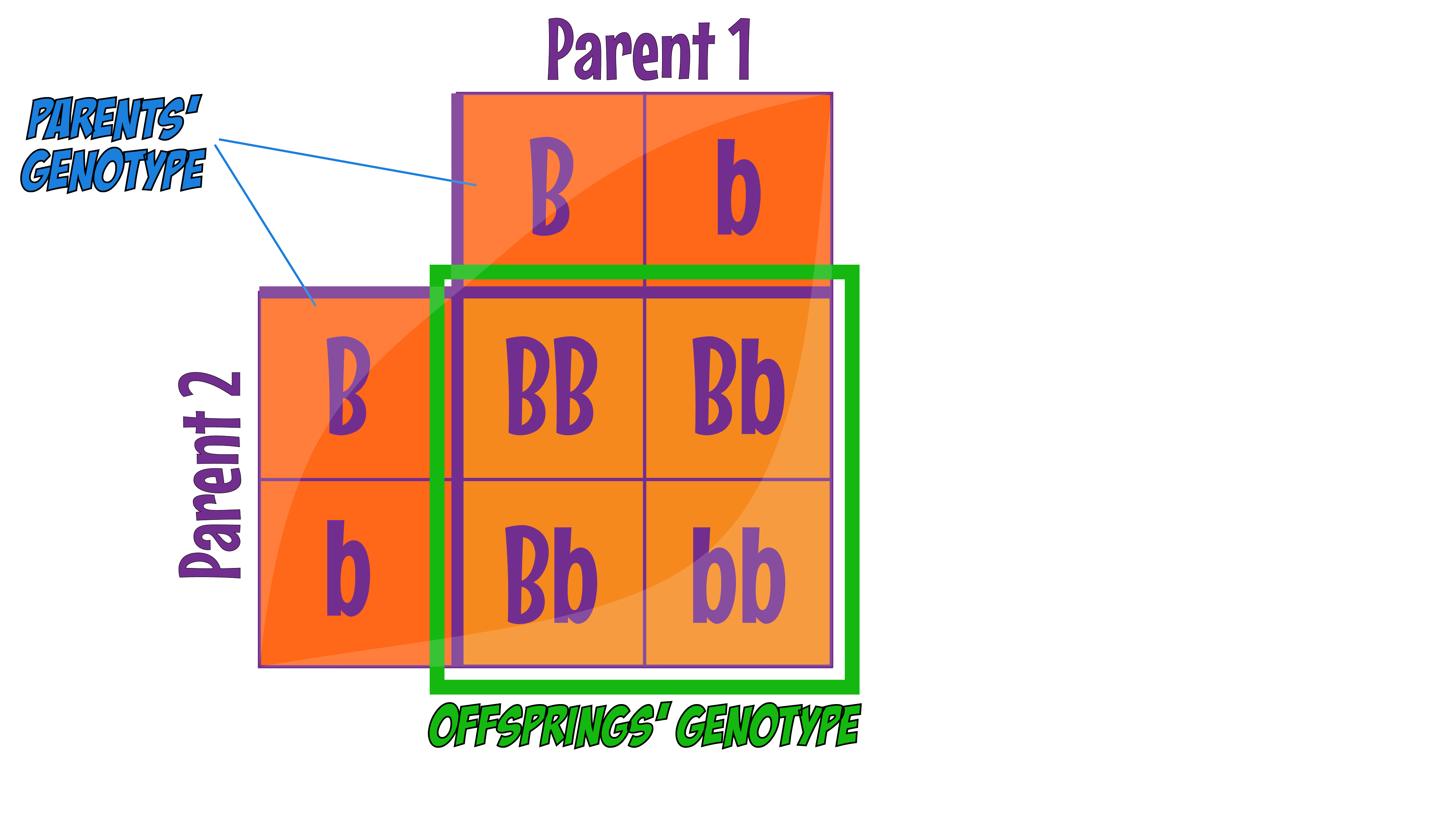
Let's say we have 2 HETEROZYGOUS PARENTS (Bb).
What is the probability that these parents will have a BLUE-EYED child?
We can start off by labelling the PARENTS’ phenotypes on the SIDES of a Punnett square.
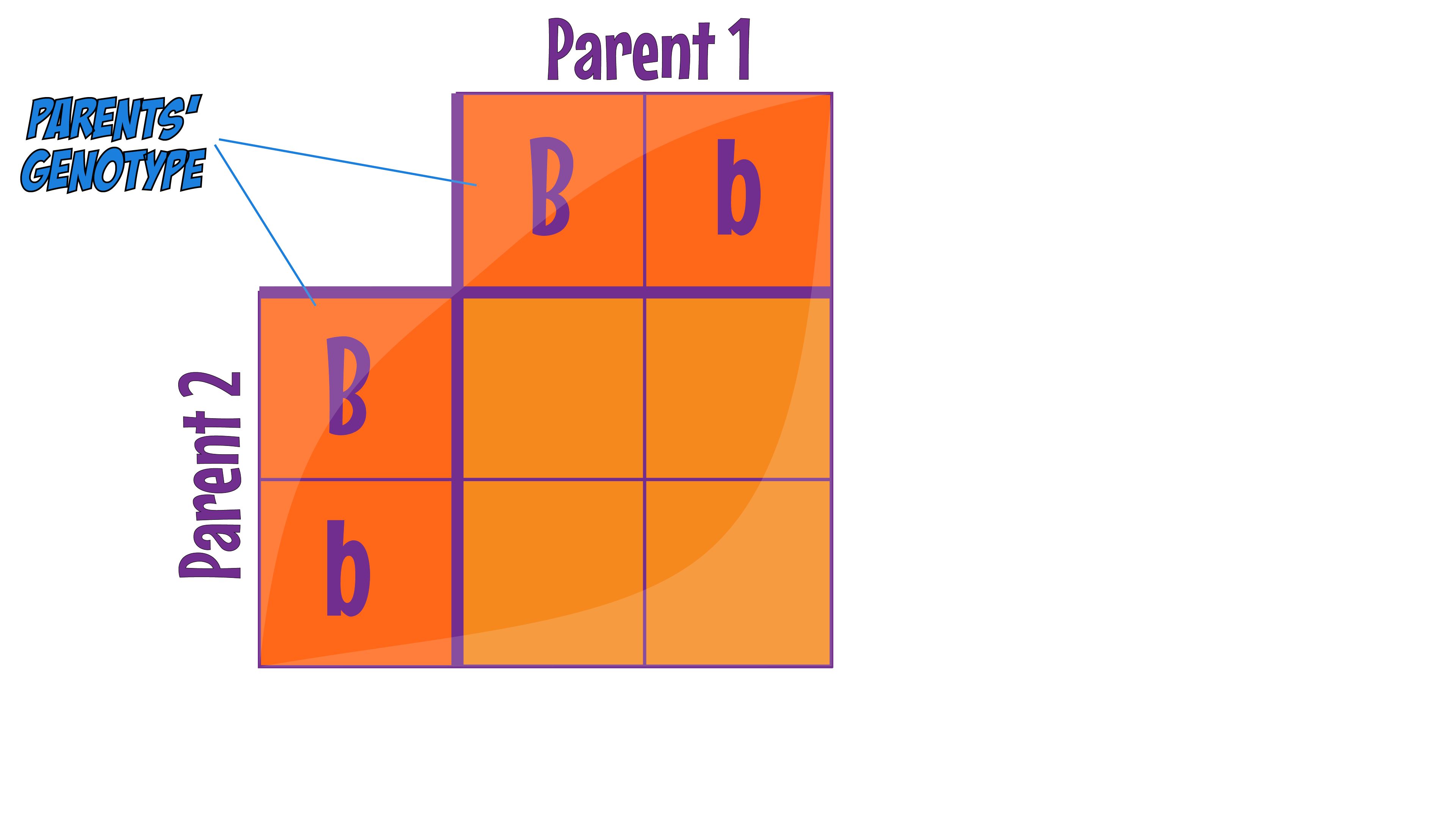
Both parents are HETEROZYGOUS, so we can label these as Bb.
Now we can label the 4 squares in the middle for the OFFSPRING. Just combine the alleles from the parents to get the GENOTYPE for each offspring.
You can now work out the probability by looking at the PHENOTYPES of each offspring.
The genotypes BB and Bb both show BROWN EYES as a dominant allele is present in both, and bb shows BLUE EYES as BOTH alleles are recessive.
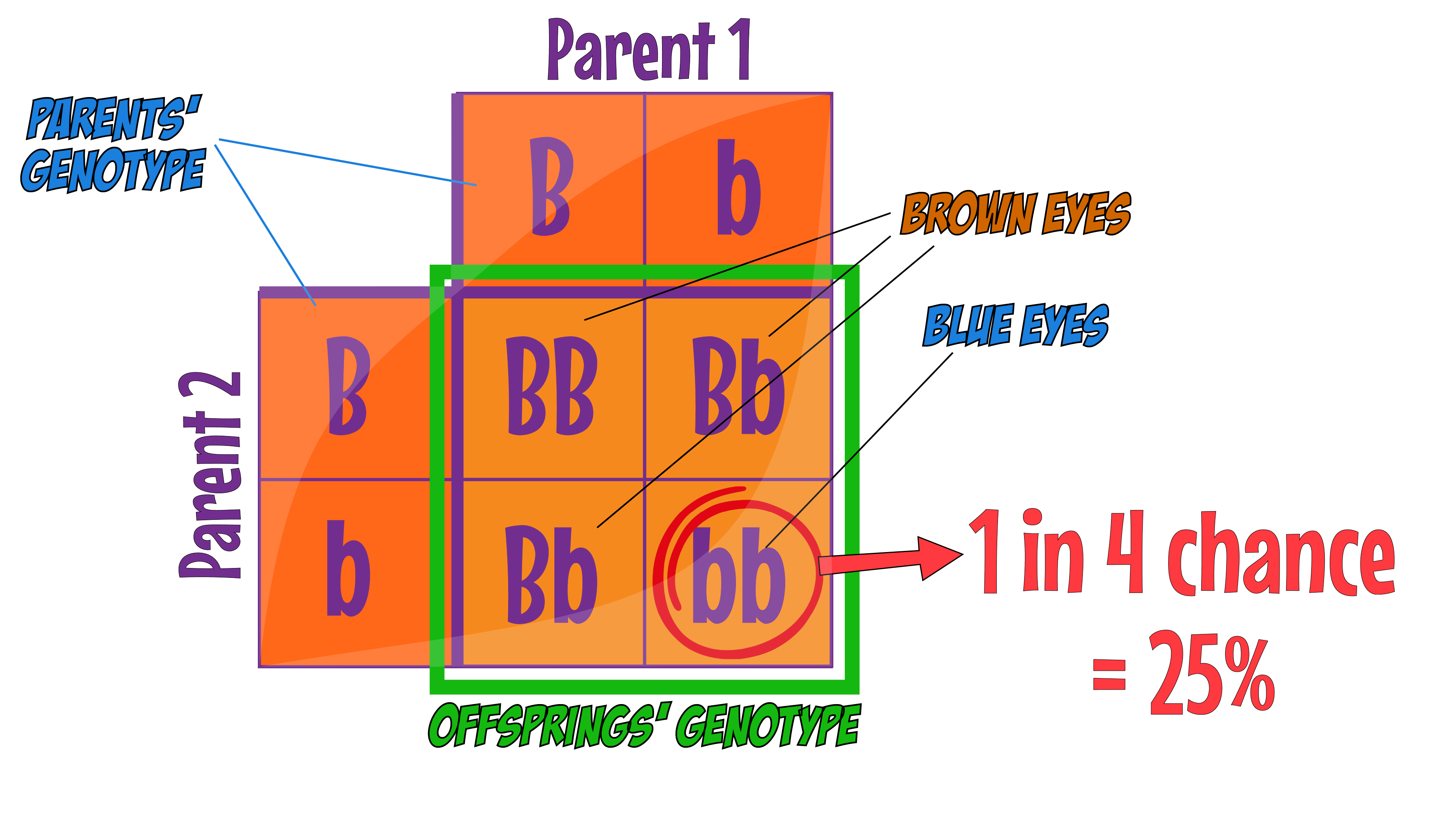
You have ONE blue-eyed offspring and THREE brown-eyed offspring which gives a ratio of 1:3.
This also equates to a percentage of 25%.
This means that if the parents have a child, there is a 25% that the child will have BLUE EYES and a 75% that they will have BROWN EYES.