
DNA Structure and Protein Synthesis
DNA STRUCTURE
DNA is a POLYMER composed of many repeating units (Monomers).
These monomers are known as NUCLEOTIDES.
Each nucleotide consists of a SUGAR, a PHOSPHATE group, and a BASE.
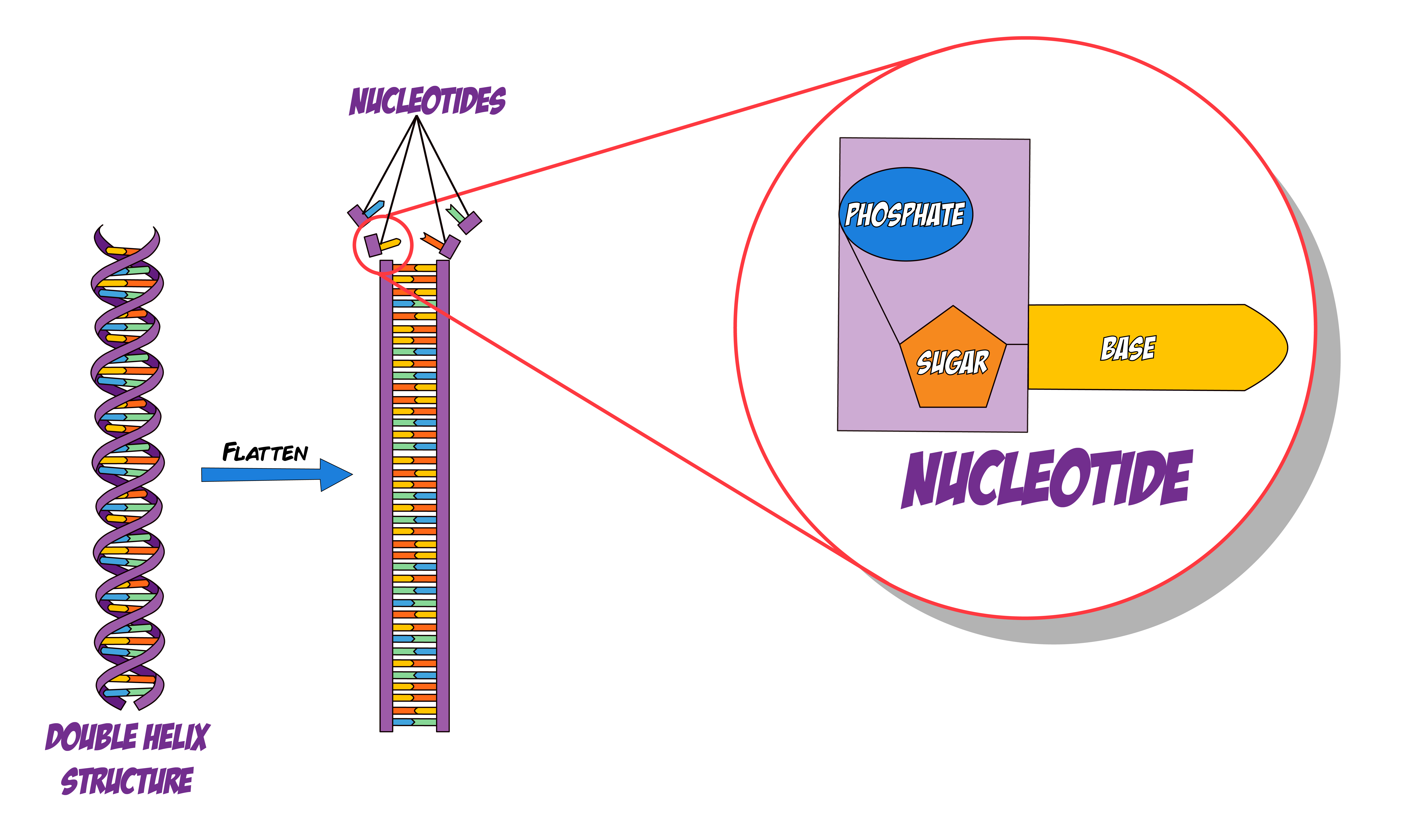
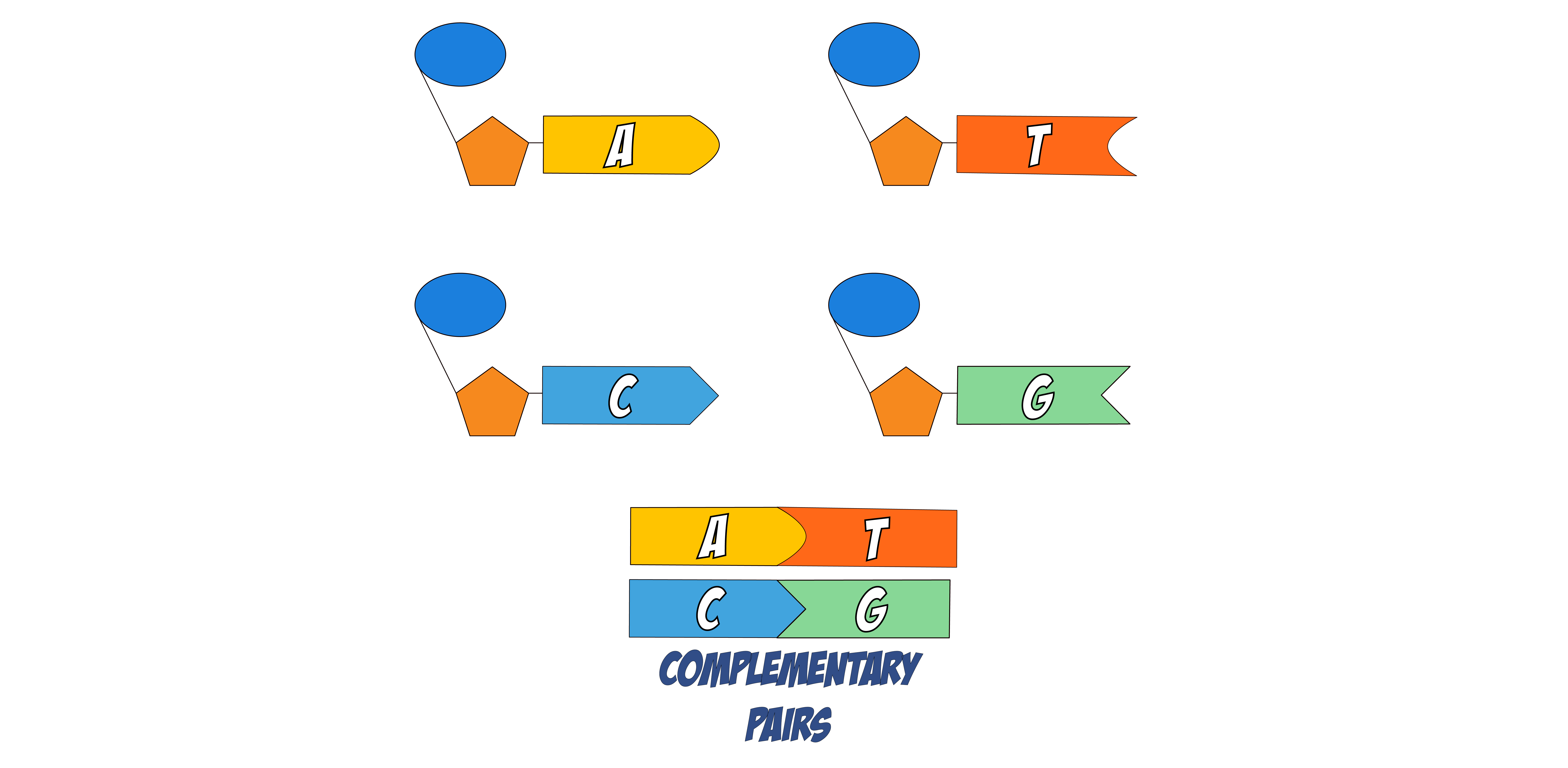
There are FOUR types of NUCLEOTIDES, each type consists of a different BASE, which are called A, T, C and G.
The four bases exist as two COMPLEMENTARY PAIRS where:
- A is ALWAYS LINKED to T
- C is ALWAYS LINKED to G
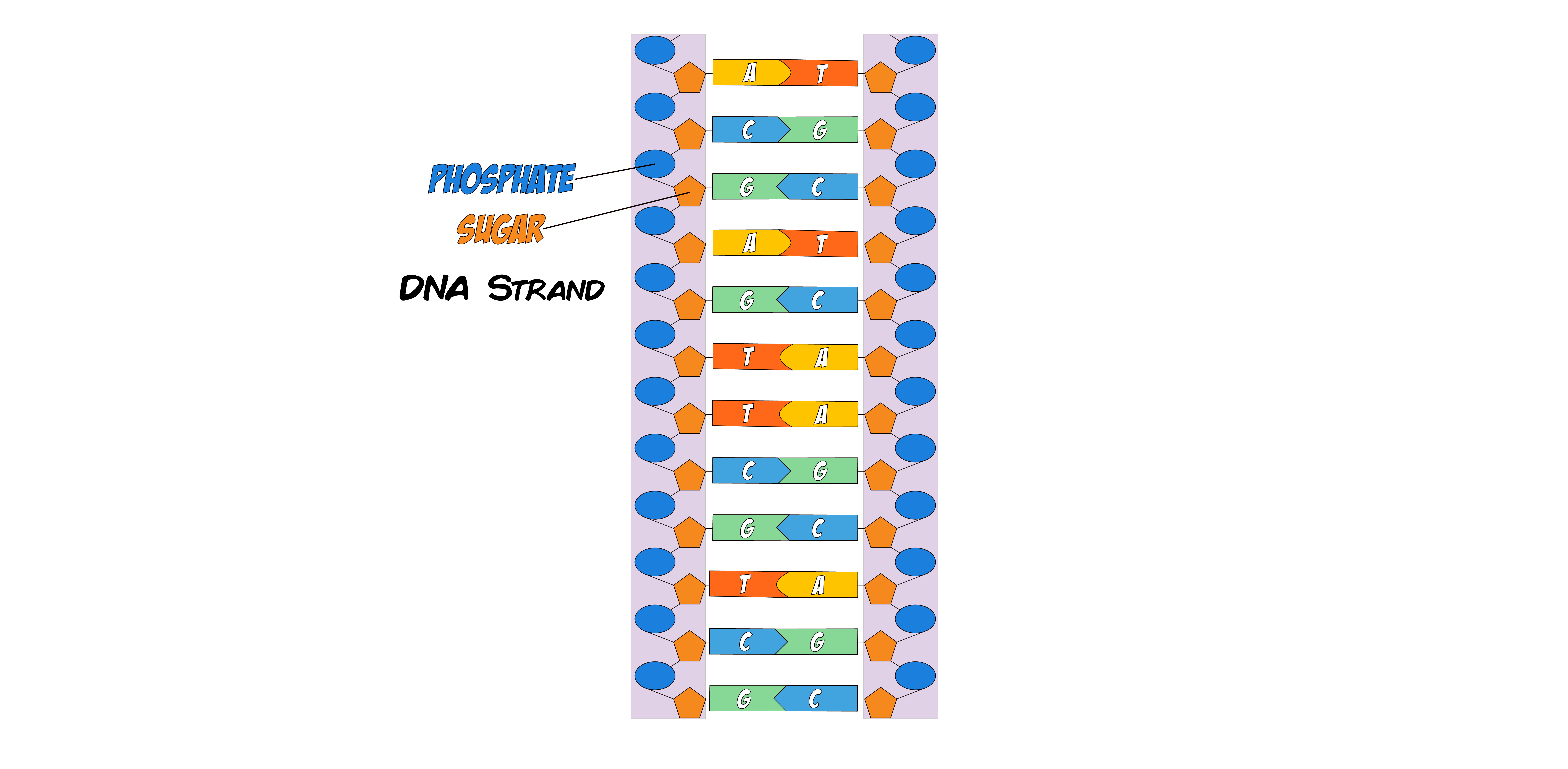
DNA STRANDS are long chains that consist of alternating sugar and phosphate sections, where each sugar is attached to a base.
The SEQUENCE of these bases along the DNA strand creates a code of genetic information, used for PROTEIN SYNTHESIS.
A sequence of THREE BASES, is a code that corresponds to ONE specific AMINO ACID- which are the building blocks of proteins.
The order of amino acids in a protein is determined by the sequence of nucleotide bases in DNA.
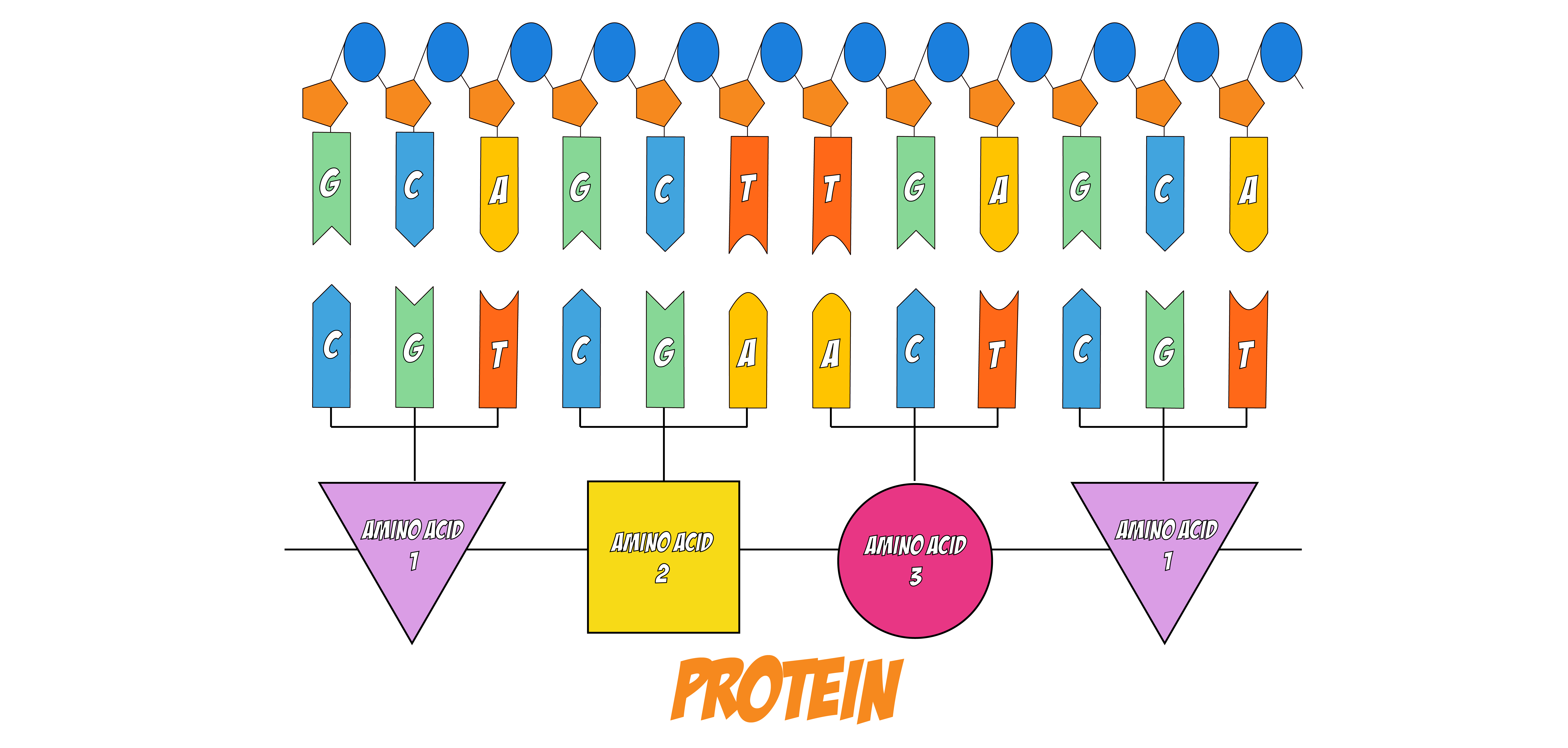
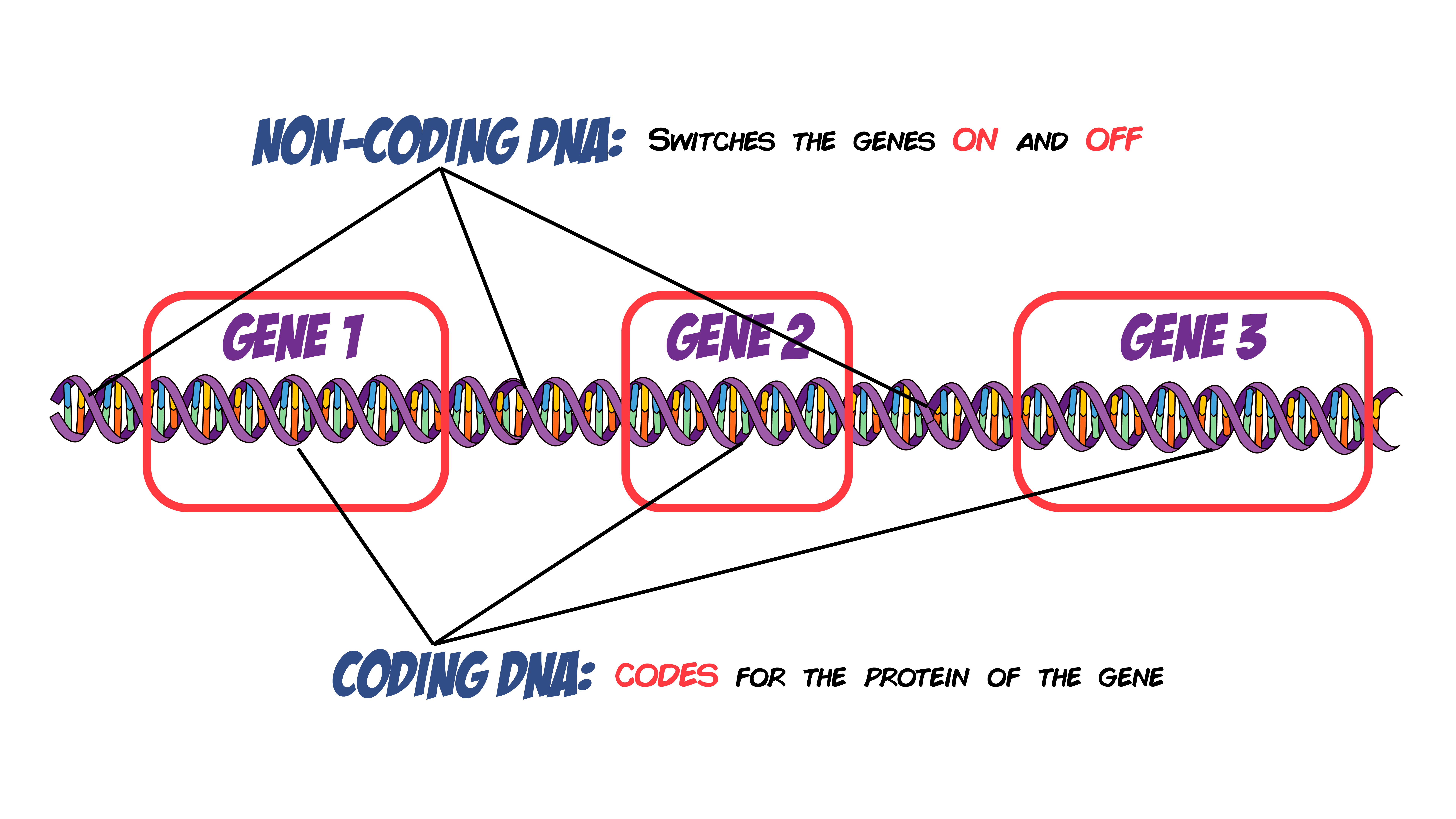
A GENE is a small section of DNA which codes for a PARTICULAR PROTEIN.
PROTEIN SYNTHESIS
PROTEIN SYNTHESIS occurs in RIBOSOMES in the cell, where the DNA’s code is used to make proteins. The code needs to be transferred from the NUCLEUS of the cell to the RIBOSOME in the cytoplasm.
DNA molecules are far too LARGE to leave the nucleus, so REPLICATION occurs where a COPY of the GENE is made in the nucleus (called mRNA).
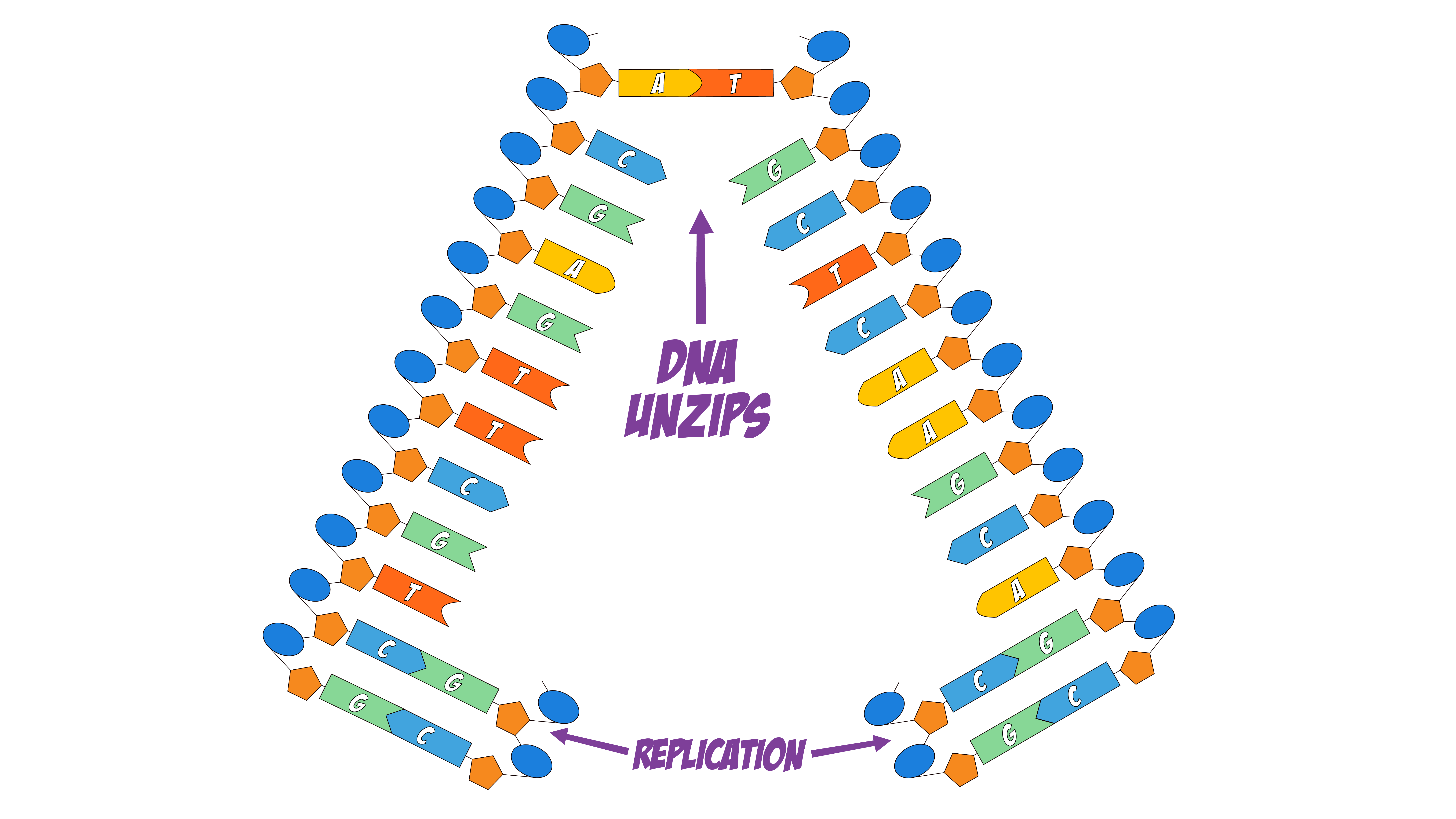
This copy is much SMALLER and can leave the nucleus.
The mRNA travels to the RIBOSOMES where the proteins are made according to the code template.
CARRIER MOLECULES (called tRNA) bring SPECIFIC AMINO ACIDS together in the CORRECT ORDER to build the protein chain.
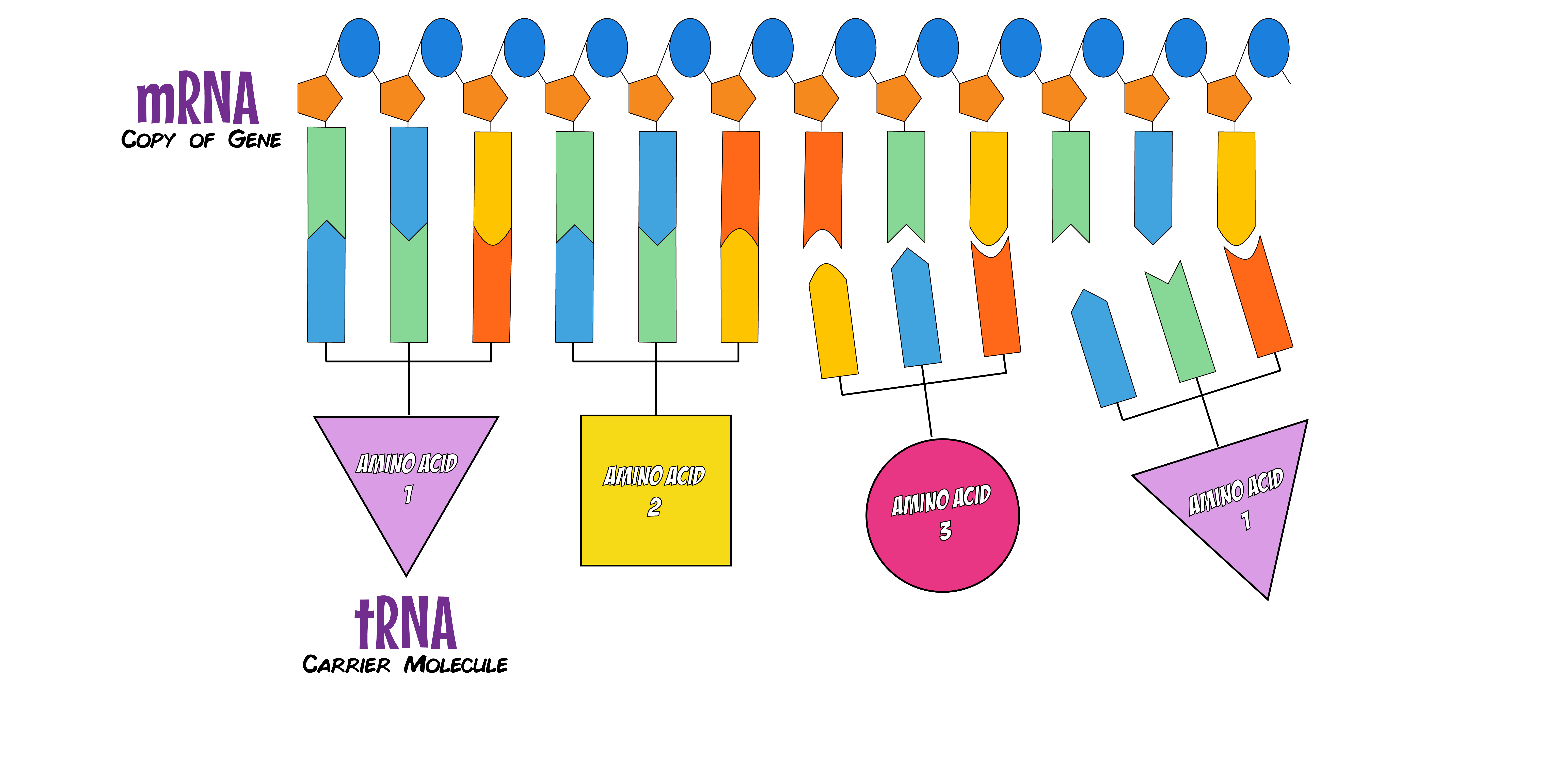
When the protein chain is complete, it FOLDS UP to form a UNIQUE SHAPE.
The unique shape allows the protein to do their jobs. Examples of proteins include:
- ENZYMES which speed up reactions in the body.
- HORMONES which carry messages around the body in the blood.
- STRUCTURAL PROTEINS which are physically STRONG such as COLLAGEN.
But not all DNA sequences code for proteins; NON-CODING REGIONS of DNA can regulate gene expression by turning genes ON OR OFF, affecting how cells function and respond to environmental changes.
MUTATIONS
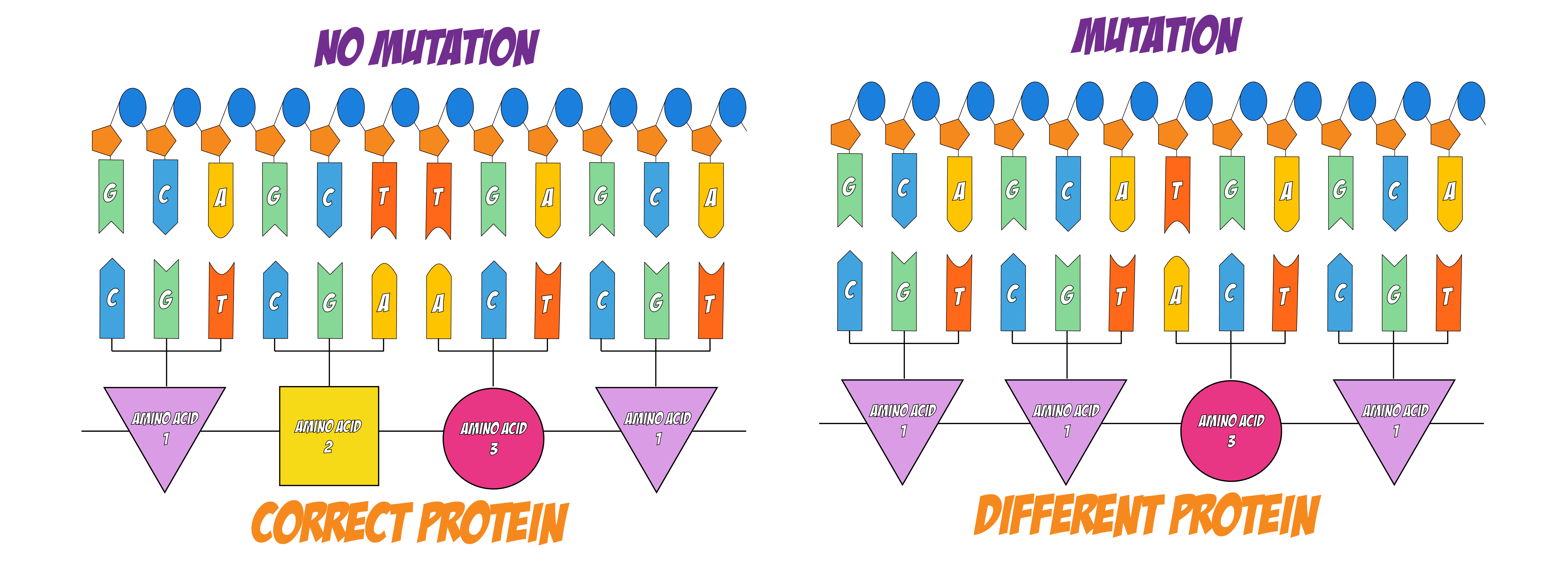
MUTATIONS are random CHANGES in the base sequence of DNA, and these occur in the body all time.
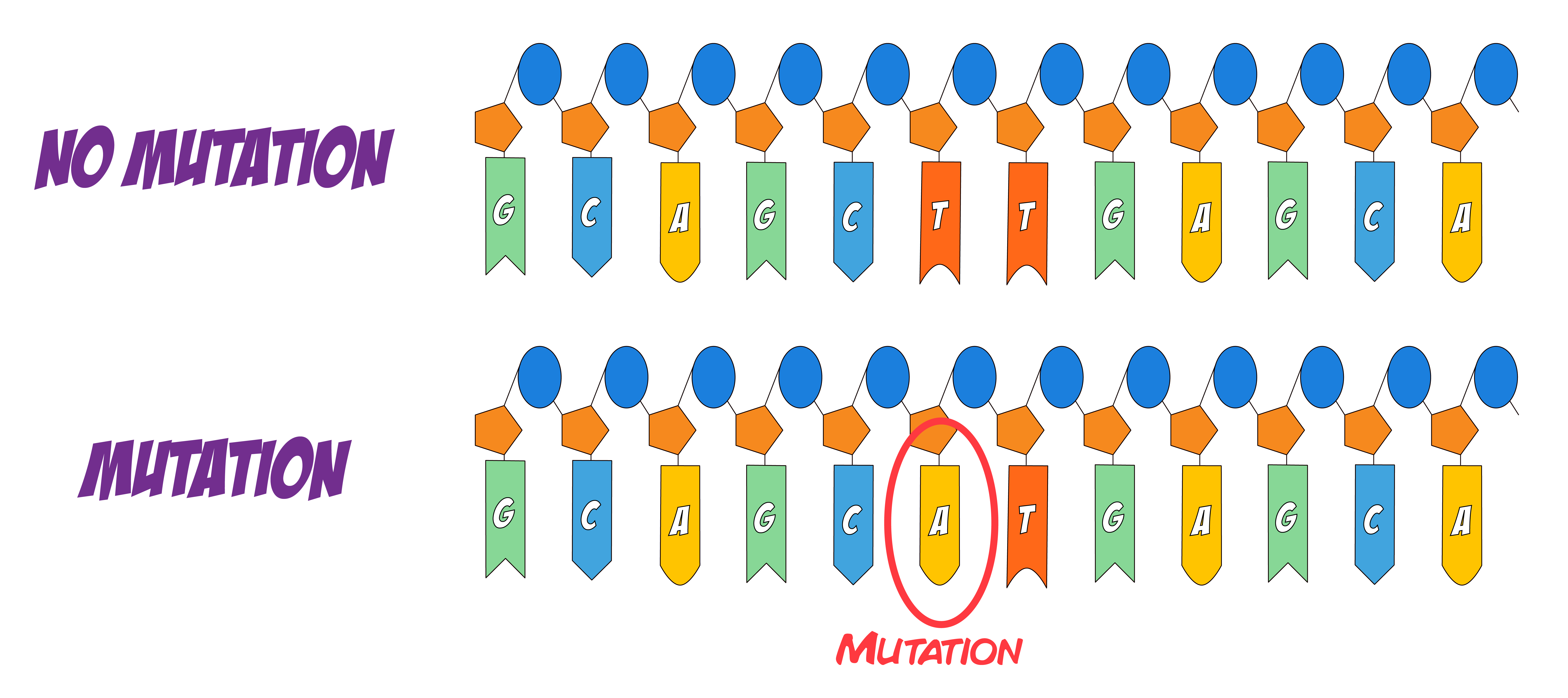
Most mutations do not alter the protein being synthesised. Some alter it slightly but its appearance or function is not changed.
A very small number of mutations can alter how a protein functions by coding for a protein with a different shape. Different amino acids are brought together in an incorrect order which forms a DIFFERENT PROTEIN. This could change the PHENOTYPE (Physical Characteristic) that the gene shows.
If an ENZYME has a mutation, it may change the shape of its ACTIVE SITE meaning the SUBSTRATE will NOT fit inside.
If a STRUCTURAL PROTEIN has a mutation, it may lose its STRENGTH.
Mutations in the NON-CODING parts of DNA do not change the PROTEIN FORMED, instead they may affect how genes are EXPRESSED.