Inherited Disorders
INHERITED DISORDERS are diseases that are passed down from PARENTS through their GENES.
You can use PUNNETT SQUARES to predict the probabilities that an OFFSPRING will get an inherited disease, just like with other traits.
Here are two examples of INHERITED DISEASES:
1. CYSTIC FIBROSIS
- CYSTIC FIBROSIS is a genetic condition affecting the cell membranes, leading to the production of THICK AND STICKY MUCUS in the airways and pancreas.
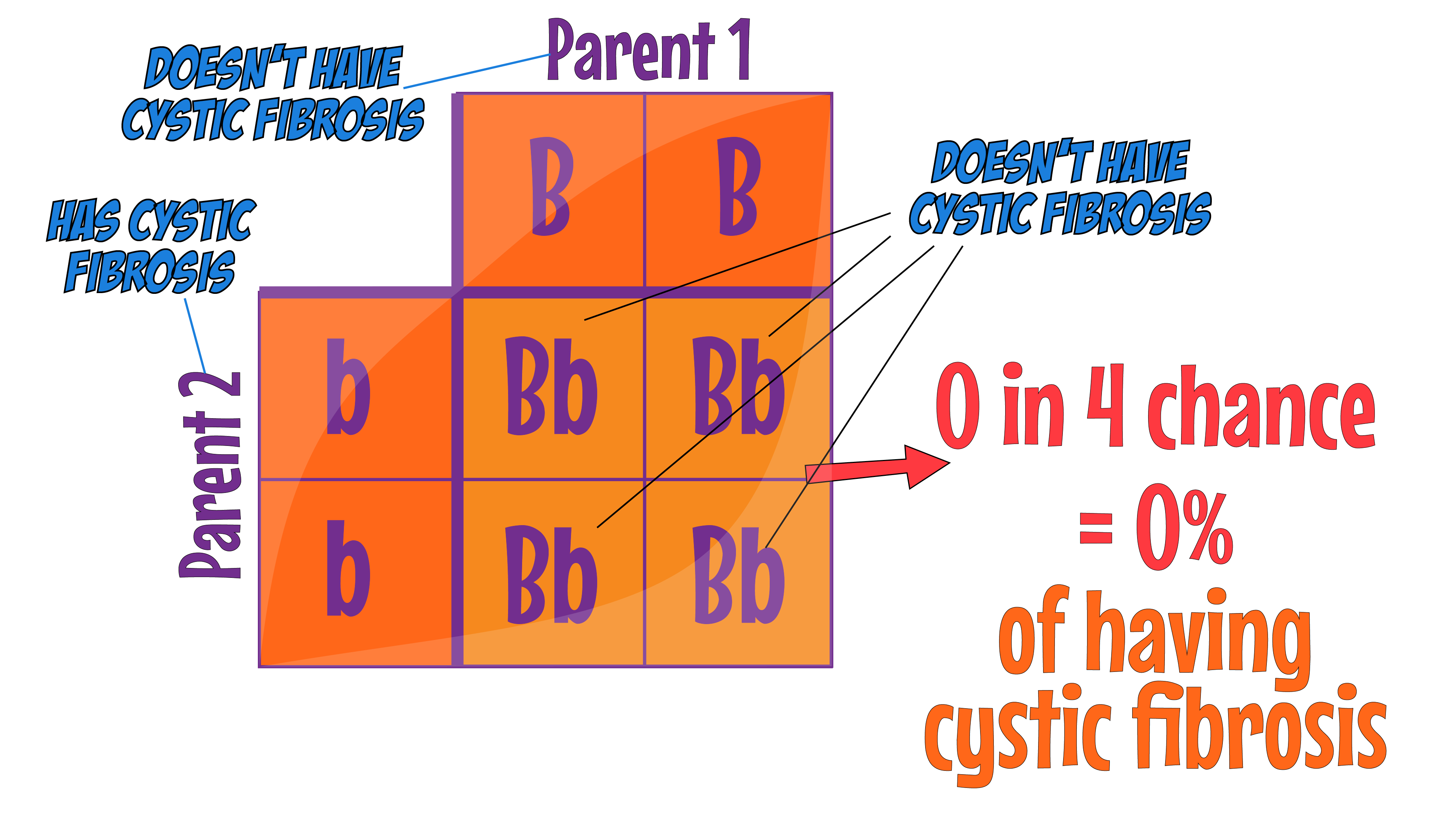
- CYSTIC FIBROSIS is caused by a RECESSIVE ALLELE (f). This means the allele for NOT having cystic fibrosis is DOMINANT.
- CARRIERS: Individuals carrying ONE copy of a recessive allele of a DISEASES ('Ff') are known as CARRIERS.
- Because the disease is recessive, if a child only has ONE copy of the gene, they will NOT have cystic fibrosis. The DOMINANT gene will express itself instead.
- For a child to be affected by cystic fibrosis, they must inherit TWO recessive alleles ('ff'), making it necessary for both parents to be carriers or affected themselves.
Eg. One HOMOZYGOUS DOMINANT parent and one that HAS cystic fibrosis.
2. POLYDACTYLY
- POLYDACTYLY is a genetic condition where a child is born with EXTRA FINGERS OR TOES.
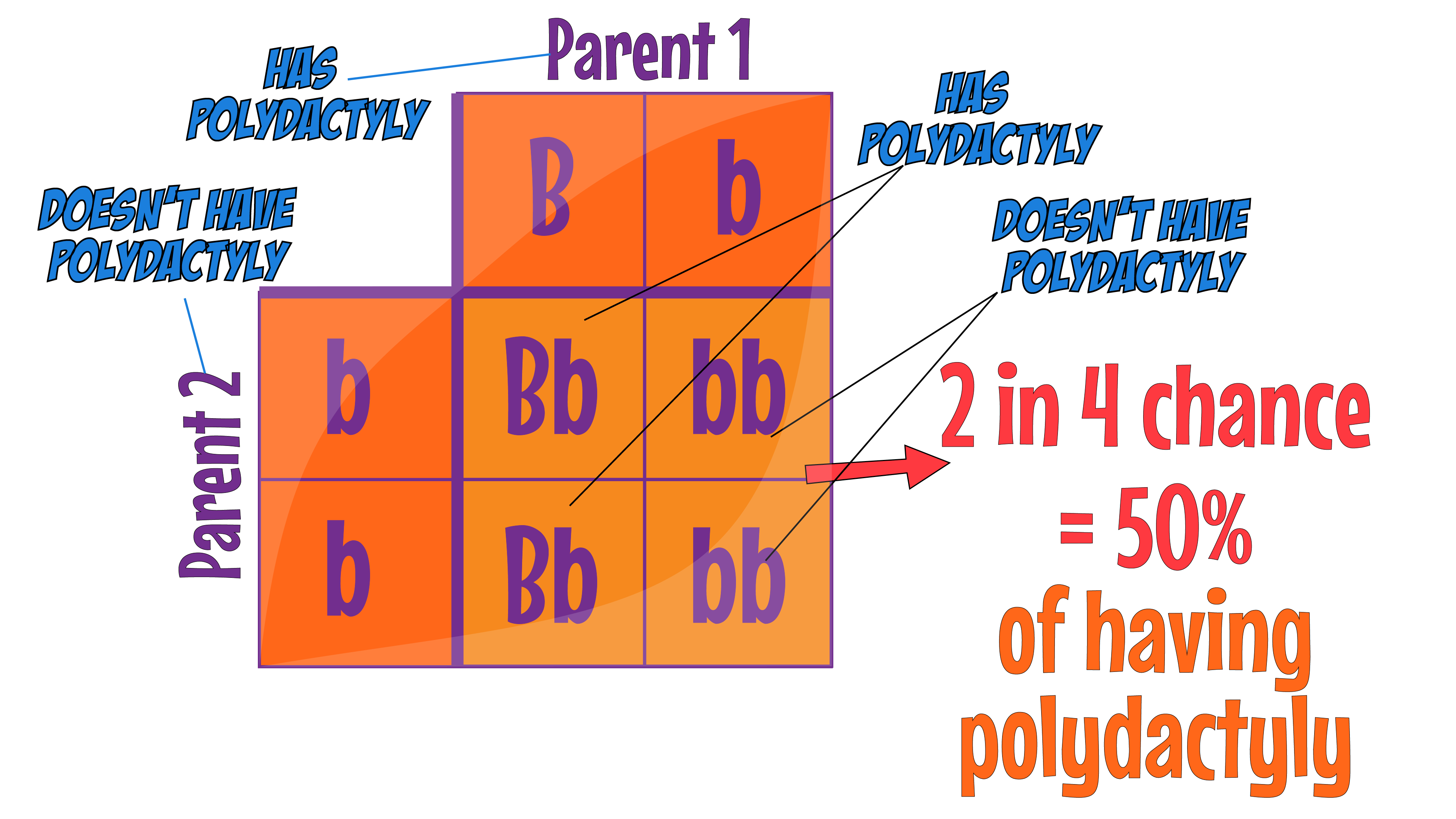
- POLYDACTYLY is caused by a DOMINANT ALLELE (D).
- Unlike recessive disorders, just one copy of the dominant allele ('Dd' or 'DD') will result in the phenotype being expressed.
- This means that it is NOT possible to be a CARRIER of a disease caused by a DOMINANT allele.
Eg. One HETEROZYGOUS parent WITH polydactyly and one WITHOUT POLYDACTYLY.
FAMILY TREES
Family trees can help TRACE inherited traits and diseases through generations and predict the likelihood of different family members inheriting certain alleles.
Different shapes and shading patterns are used to represent the gender and phenotypes of individuals.
Two lines JOINING together represent parents producing an offspring together.
Here is an example of a family tree showing cystic fibrosis (a RECESSIVE ALLELE):
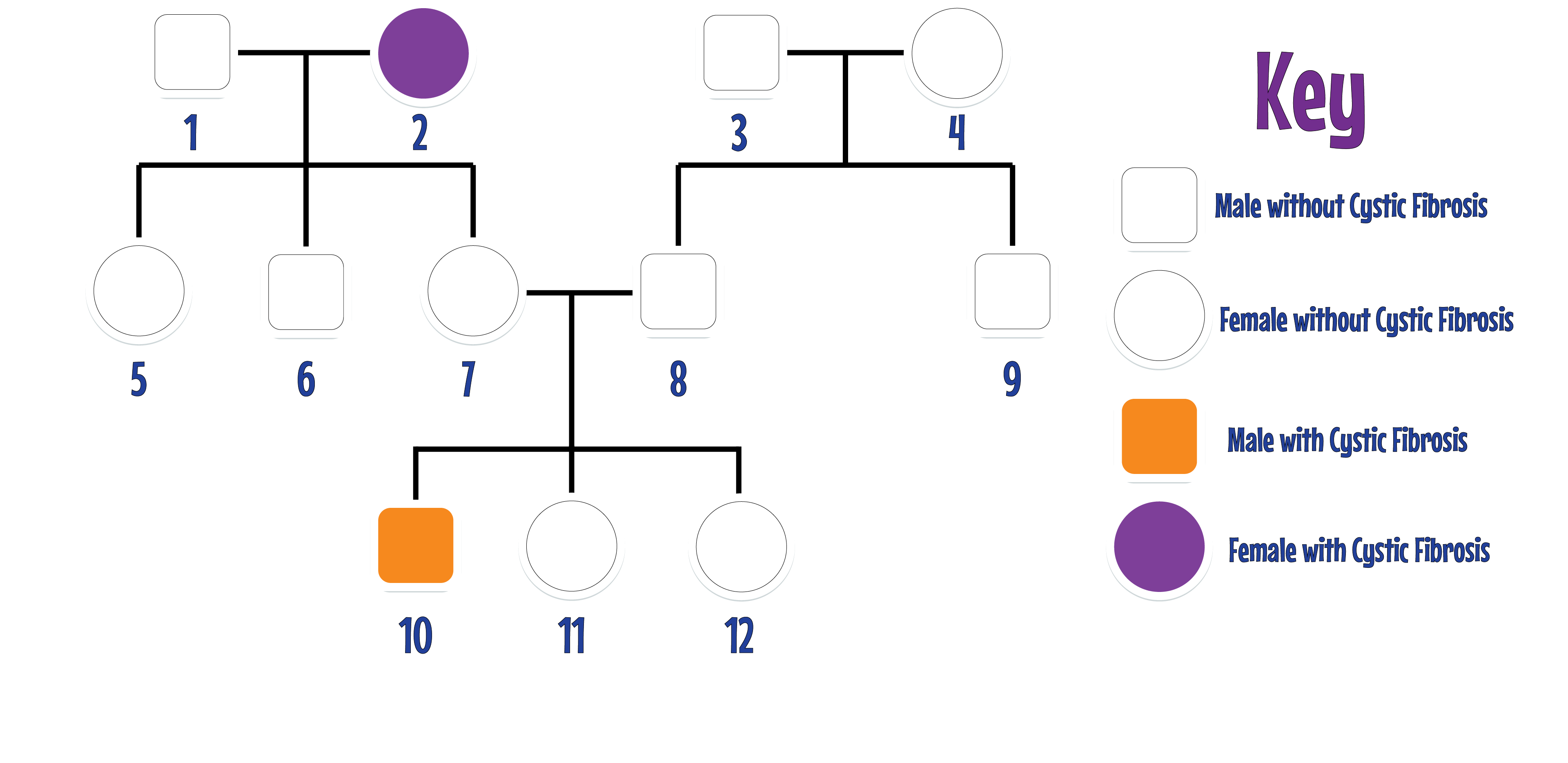
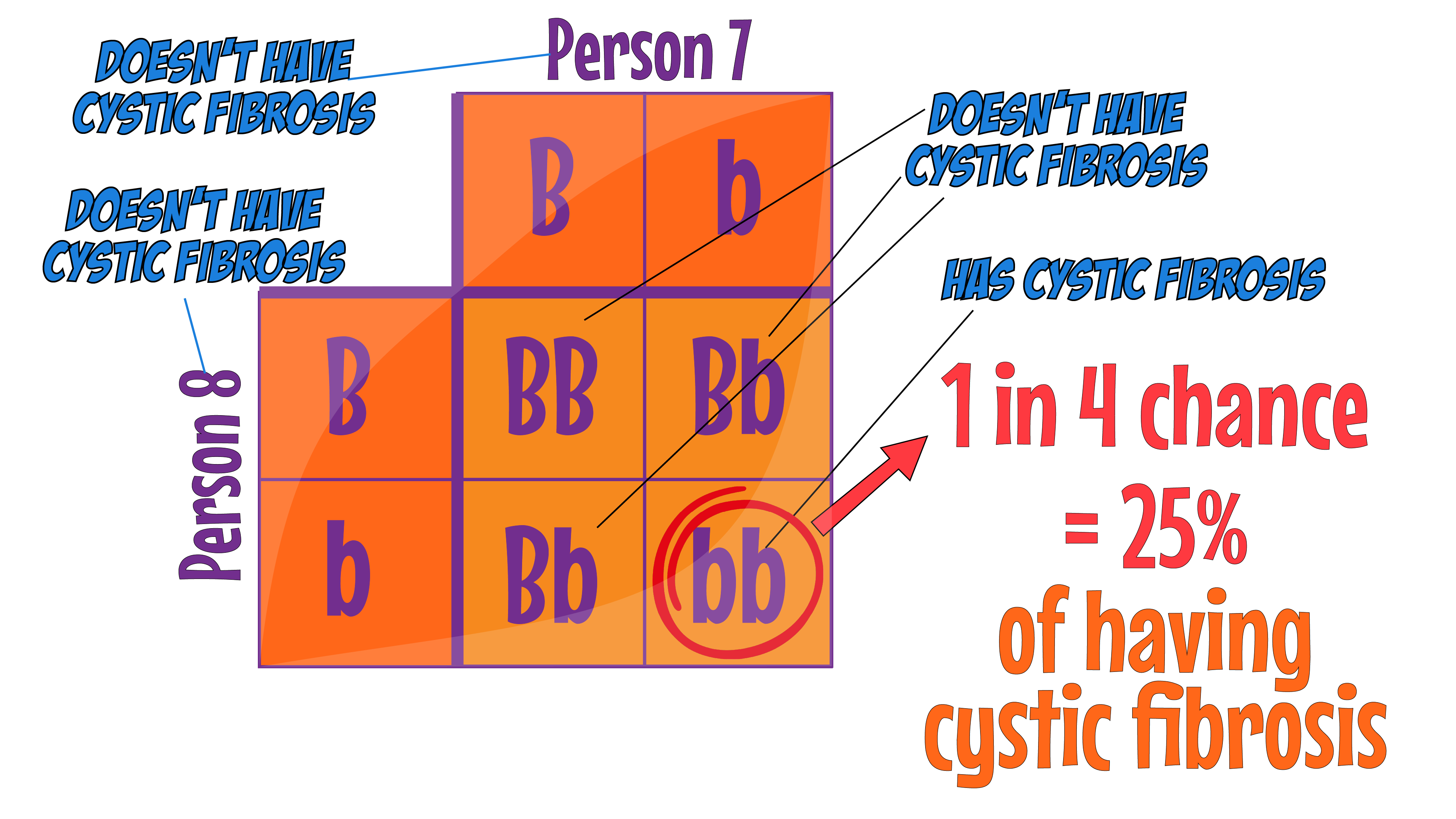
You can use this diagram to work out the GENOTYPES of person 7 and 8.
Both 7 and 8 do NOT have cystic fibrosis however one of their children (person 10) has it.
This means that person 10 has the genotype ‘ff’ as that is the only way to get the recessive disease.
This means that both ‘f’ genes must have come from EACH parent.
Therefore each parent must have an ‘f’ in their genotype.
As both mother and father do NOT have the disease, they must both be heterozygous.
A Punnett square to show person 7 and 8 can be drawn as follows:
GENETIC SCREENING PROCESSES AND DEBATES
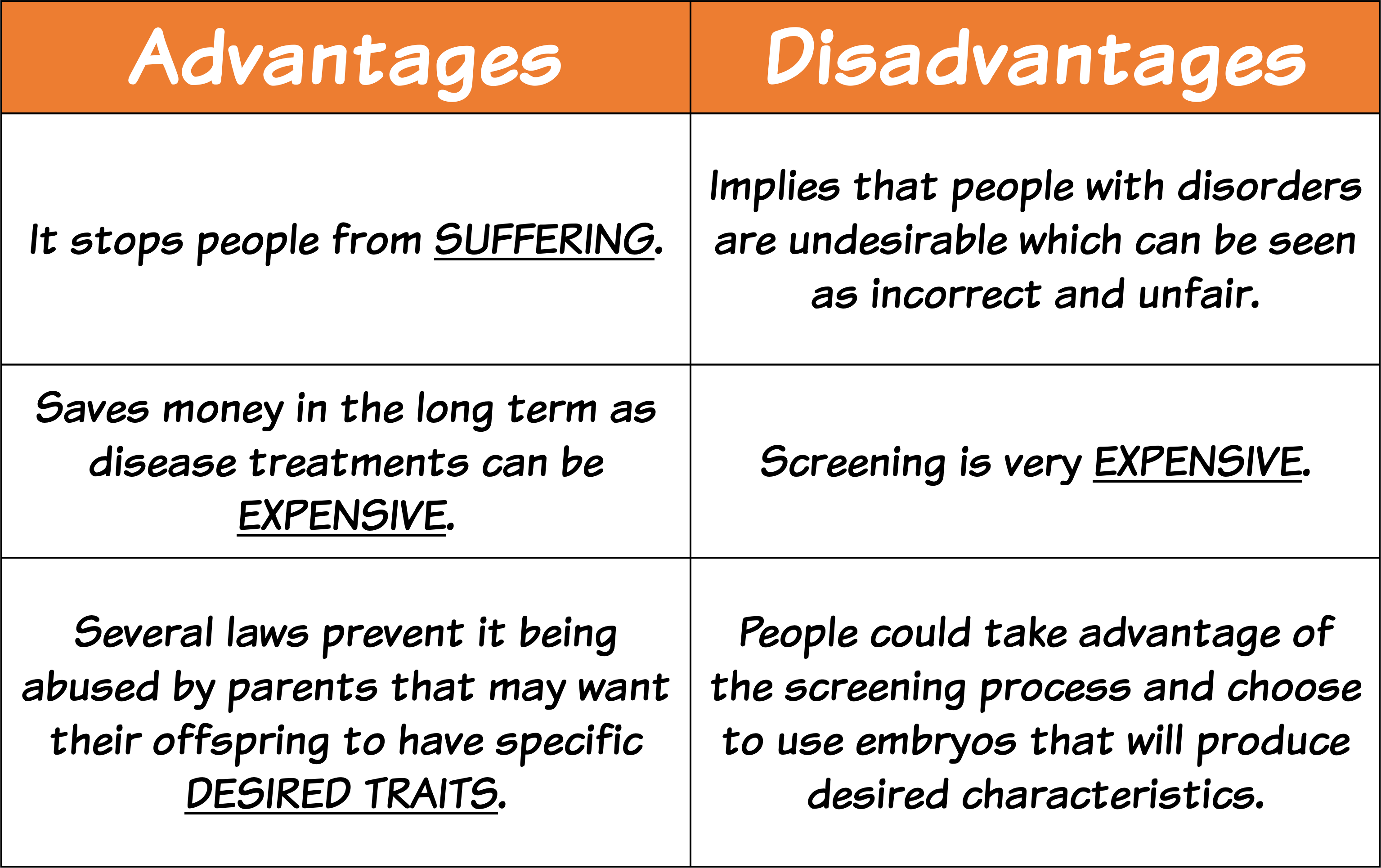
- When parents have a baby with IVF, they have the chance of carrying out GENETIC SCREENING on their embryos before they are implanted into the uterus.
- This provides them an early opportunity to DETECT GENETIC DISORDERS such as cystic fibrosis.
- This screening has come with ethical concerns on people having the decision to terminate embryos based on genetic findings.
- Here are the arguments people may have FOR and AGAINST embryo screening.