
INCREASING FERTILITY
These are methods used to increase the chances of women with fertility issues to have babies.
1. FERTILITY DRUG
Some women may find it difficult to get pregnant due to having LOW levels of FSH which means that eggs do NOT get released from the ovaries.
This can be treated with a FERTILITY DRUG, containing the hormones FSH and LH which can help to STIMULATE OVULATION.
This helps women to become pregnant in the normal way, however it can require multiple attempts to become successful. This can become expensive.
It can also result in unexpected MULTIPLE PREGNANCIES (twins and triplets) due to too many eggs being stimulated.
2. IN VITRO FERTILISATION (IVF):
A process where eggs are collected from a woman's ovaries and fertilised with sperm in a LAB.
The process starts with HORMONE TREATMENT where drugs containing FSH and LH are given to the woman to stimulate the maturation of SEVERAL EGGS.
The eggs are COLLECTED from the mother and a single sperm is injected directly into an egg using an INTRACYTOPLASMIC SPERM INJECTION (ICSI) in a lab.
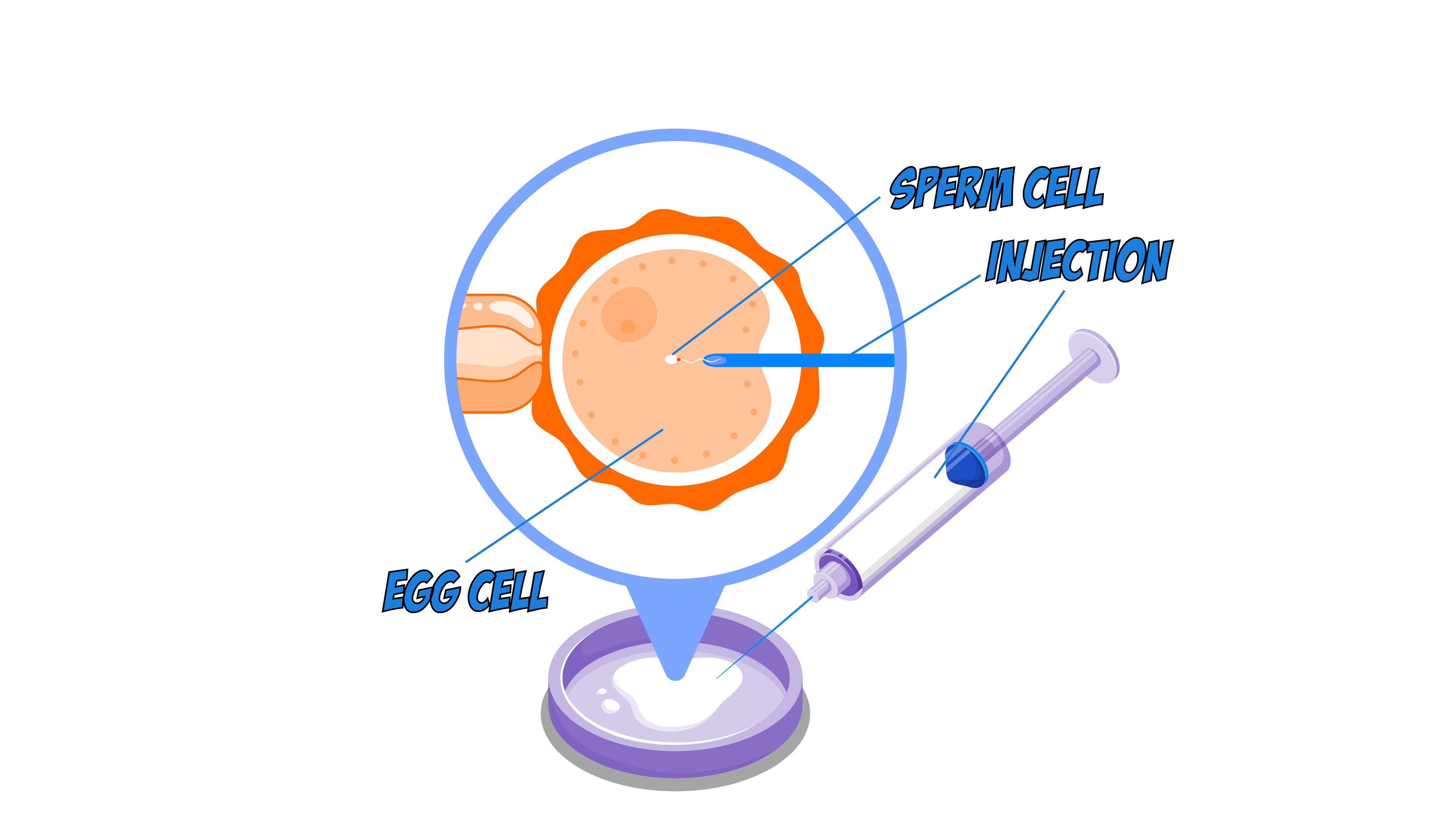
The fertilised eggs then DEVELOP into EMBRYOS and when they are tiny balls of cells, one or two embryos are inserted into the mother’s uterus to increase the chances of pregnancy.

CONSIDERATIONS for IVF
Although fertility treatment gives a woman the chance to have a baby of her own, it can come with some disadvantages:
- The process is very EMOTIONALLY and PHYSICALLY STRESSFUL.
- These are complex procedures with LOW SUCCESS RATES.
- There is a potential for MULTIPLE BIRTHS, which have their own risks to both the mother and the babies (such as miscarriage).