
Contraception
Contraception methods are ways to reduce fertility and PREVENT PREGNANCY.

1. HORMONAL METHODS TO REDUCE FERTILITY
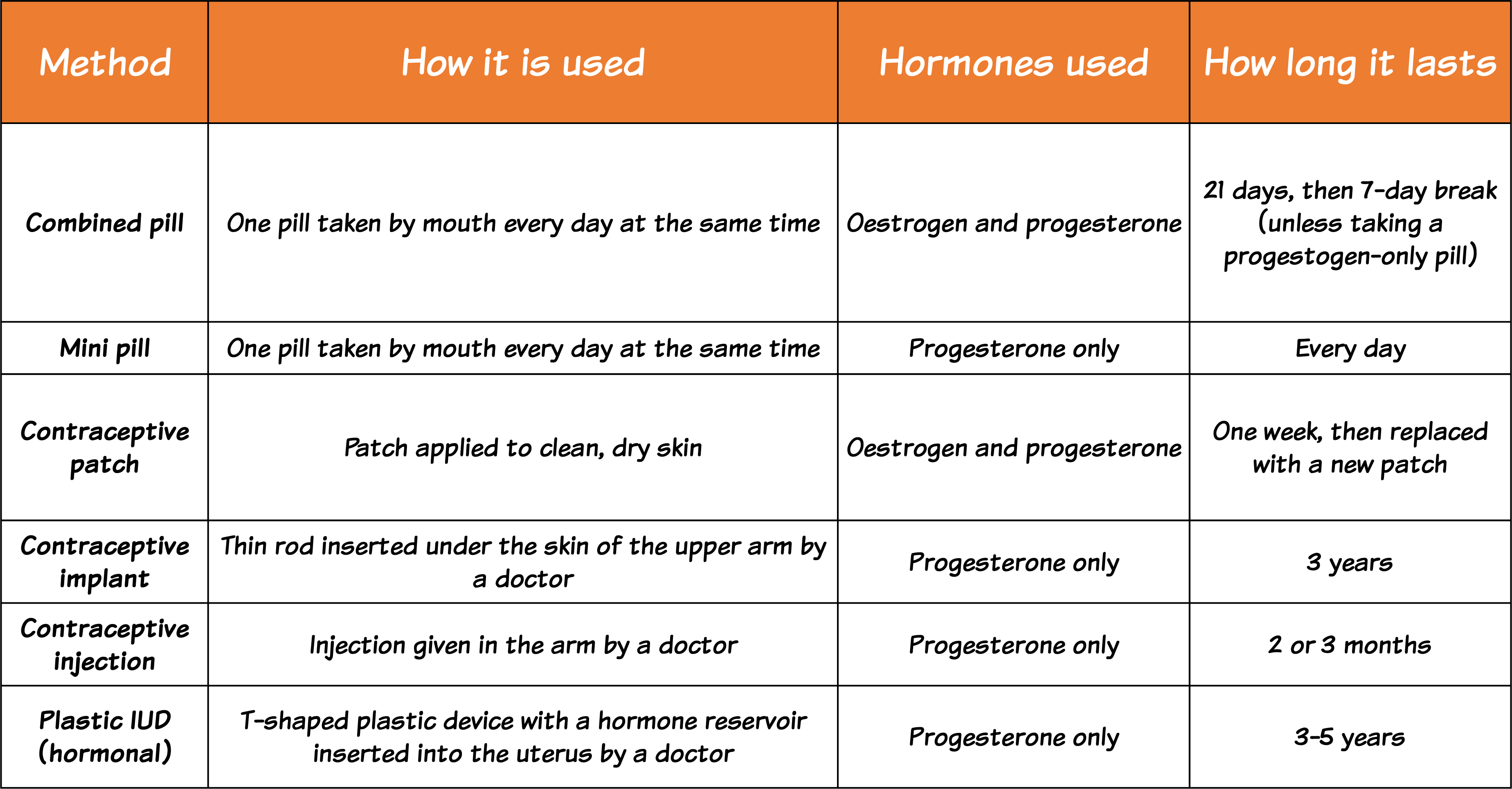
These methods use the hormones OESTROGEN AND PROGESTERONE to REDUCE fertility.
If OESTROGEN levels REMAIN HIGH in a woman all the time, it INHIBITS the release of FSH, which will stop the egg from developing and releasing.
If PROGESTERONE levels stay HIGH, it causes the cervix (the opening of the uterus) to produce THICK MUCUS, which stops any sperm from passing through into the uterus.
Here are examples of HORMONAL contraception methods:
2. NON-HORMONAL METHODS TO PREVENT PREGNANCY
These work by preventing the sperm from reaching the egg and avoiding fertilisation.
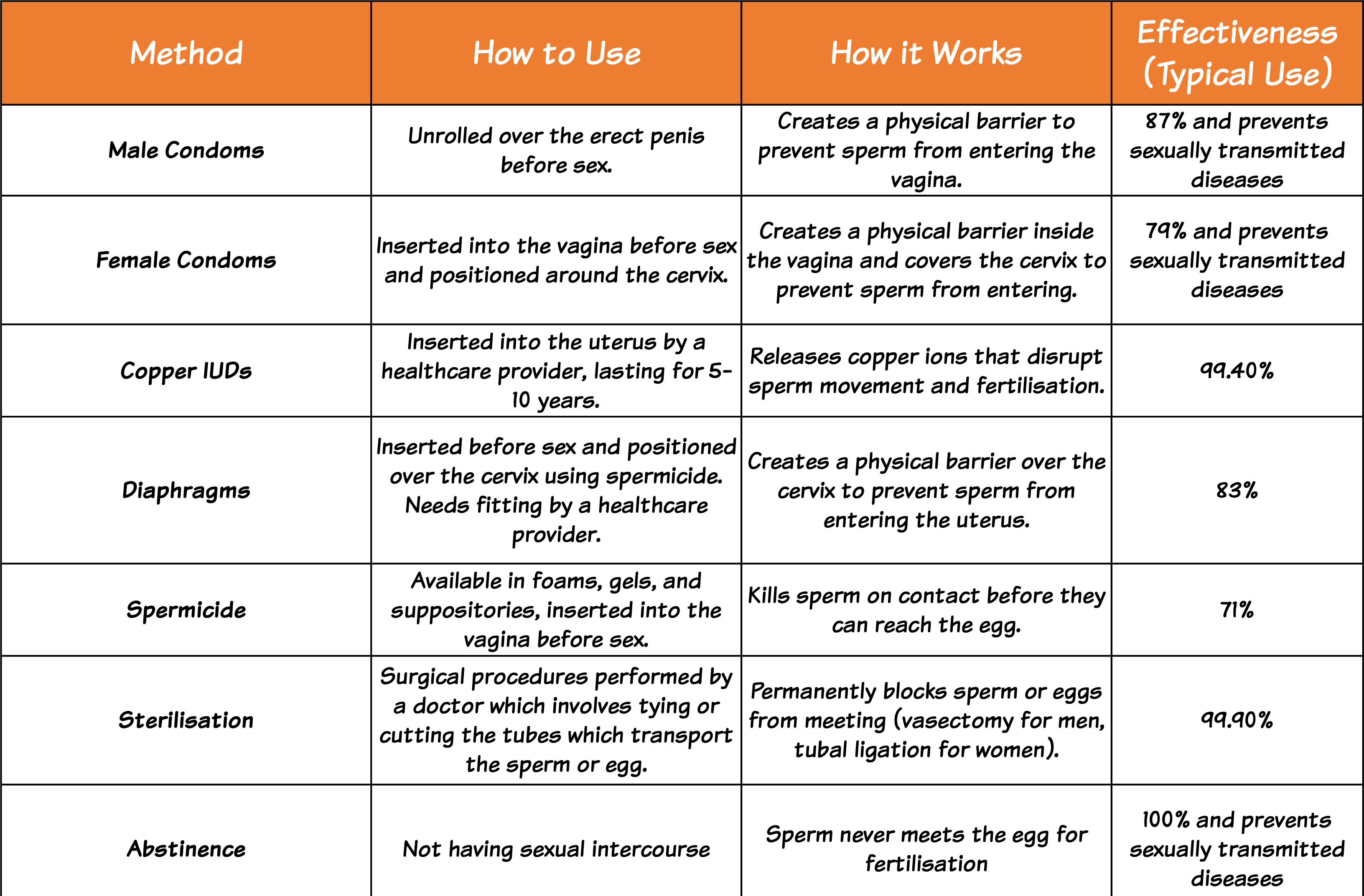
** You don’t need to memorise these percentages, they are there to give a comparison of the effectiveness of each.