
Adrenaline and Thyroxine
ADRENALINE:
ADRENALINE is a hormone released by the ADRENAL GLANDS, which sit on top the KIDNEYS.
Triggered by stress, fear, or a threat, ADRENALINE gets the body ready for quick action by using the 'FIGHT OR FLIGHT' response.
ADRENALINE causes:
- INCREASES HEART RATE: To supply muscles and organs with more OXYGEN.
- BOOSTS ENERGY SUPPLY: By increasing GLUCOSE LEVELS in the blood, providing immediate energy for the BRAIN and MUSCLES.
THYROXINE:
THYROXINE, secreted by the THYROID GLAND located in the NECK, is essential for normal growth, development, and metabolism.
It specifically influences:
- BASAL METABOLIC RATE (BMR): Determines how fast the body uses energy at rest.
It is regulated by THYROID-STIMULATING HORMONE (TSH) which is released by the PITUITARY GLAND.
- When TSH is RELEASED, the thyroid gland RELEASES thyroxine.
- When TSH is INHIBITED (stopped), the thyroid gland STOPS RELEASING thyroxine.
Negative Feedback
- TSH itself is regulated by a NEGATIVE FEEDBACK mechanism, ensuring thyroxine levels remain balanced.
- The NEGATIVE FEEDBACK system in the body works similarly to a thermostat, adjusting hormone levels to keep them within a healthy range.
- This system prevents the overproduction or underproduction of hormones, maintaining HOMEOSTASIS.
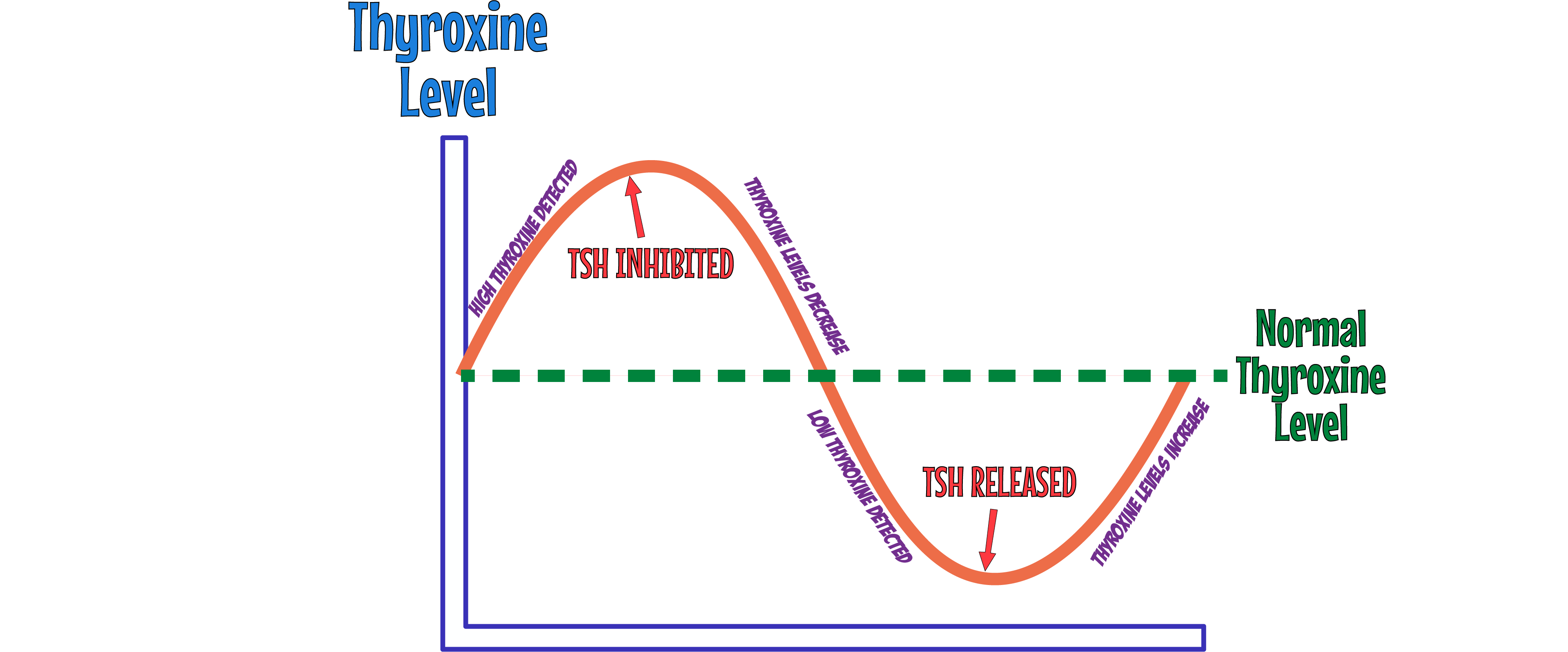
- When THYROXINE levels are too HIGH, TSH release is REDUCED to lower production.
- Conversely, if THYROXINE levels are too LOW, TSH production is INCREASED to stimulate more thyroxine release.