
Controlling Blood Glucose
- After eating CARBOHYDRATES, the digestive system converts them into glucose, which enters the bloodstream.
- Normal metabolism reactions in cells then USE this glucose, which REDUCES blood glucose levels.
- Any excess glucose that is not immediately used, is stored as GLYCOGEN in the LIVER and MUSCLE.
- These glycogen stores can then be converted BACK into glucose when ever the body requires extra energy.
- The COORDINATION CENTRE for blood glucose concentration is the PANCREAS as it MONITORS and CONTROLS its levels.
There are TWO HORMONES responsible for controlling blood glucose concentration:
1. INSULIN
Insulin causes blood glucose level to DECREASE.
It causes GLUCOSE in the blood to convert into GLYCOGEN which is stored in the LIVER and MUSCLES.
2. GLUCAGON
Glucagon causes blood glucose levels to INCREASE.
Does the opposite; It causes GLYCOGEN in the LIVER and MUSCLES to be converted back into GLUCOSE and releases it into the blood stream.
INSULIN and GLUCAGON are both used in the body's energy management system. They maintain STABLE levels of GLUCOSE in the BLOODSTREAM, to achieve HOMEOSTASIS.
MAINTAINING BLOOD GLUCOSE LEVELS
- The body's ability to keep blood glucose levels in check involves a NEGATIVE FEEDBACK mechanism:
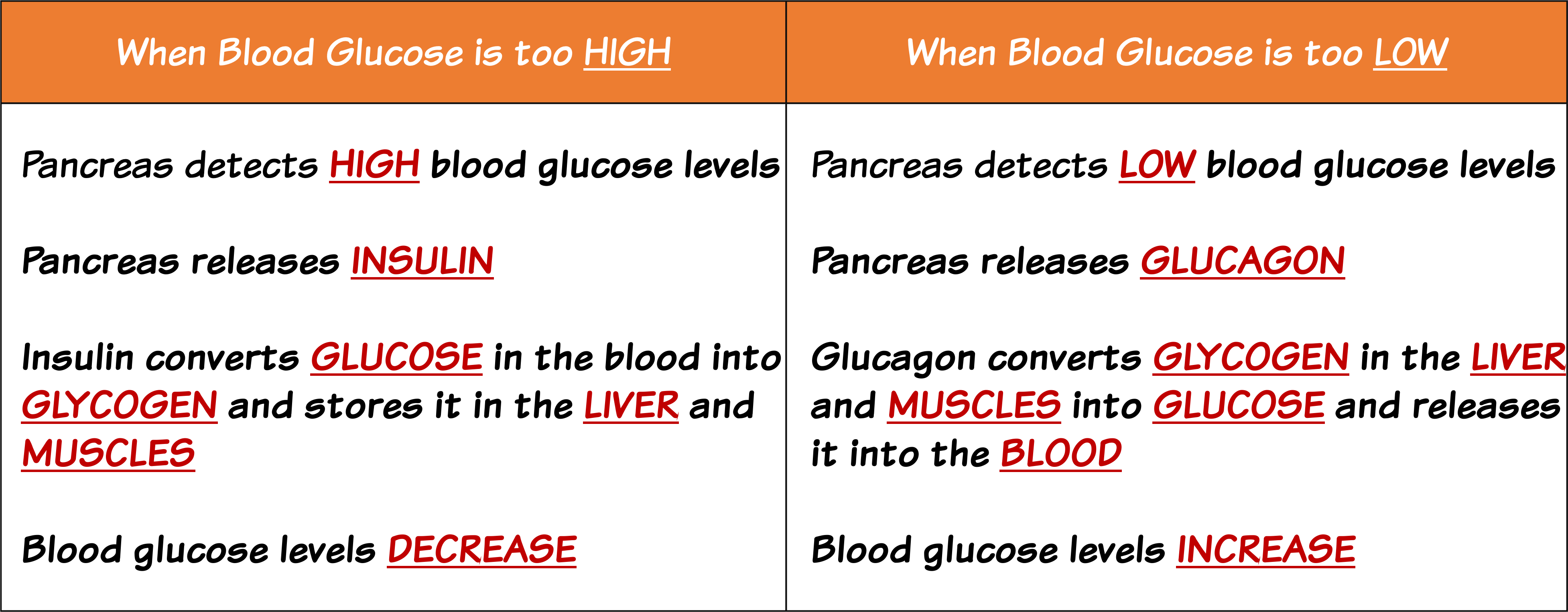
- If glucose levels rise too high, more INSULIN is produced.
- If levels fall too low, more GLUCAGON is released.
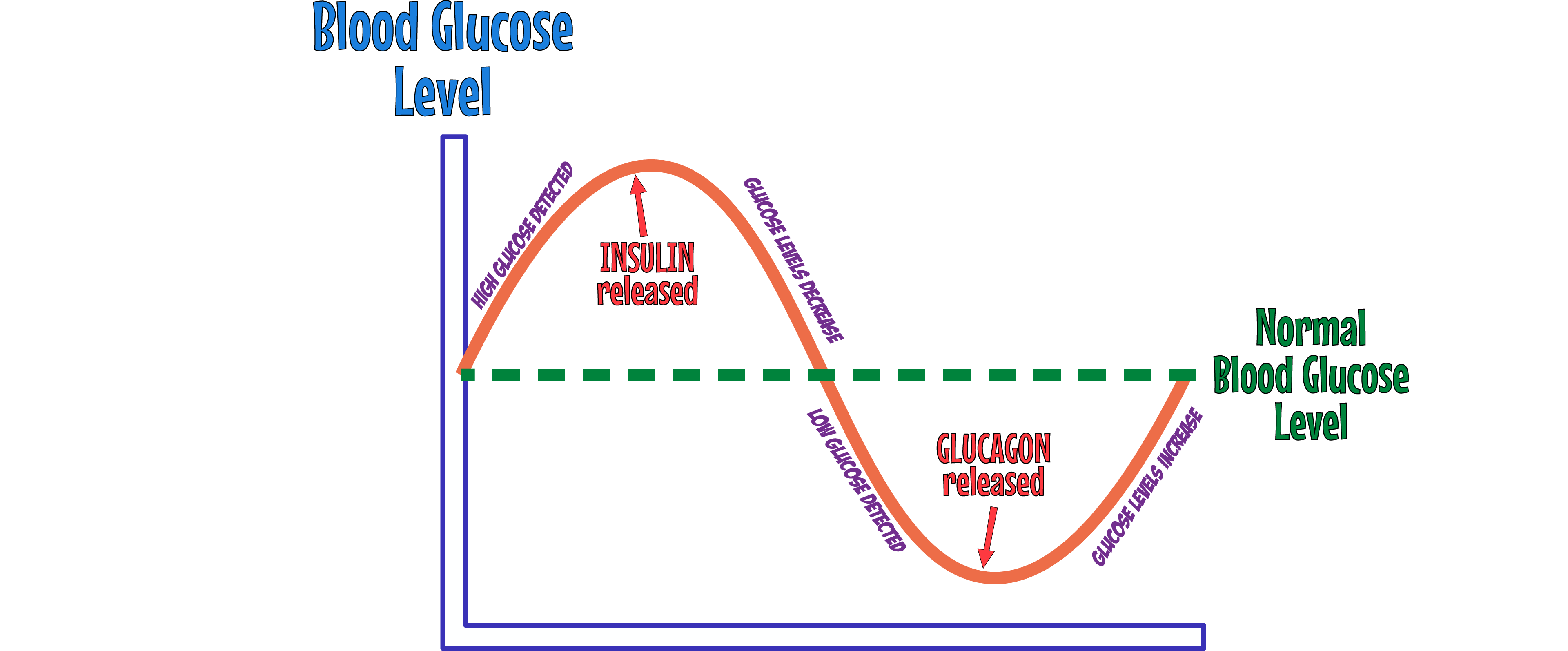
- AFTER EATING, blood glucose levels rise, causing the PANCREAS to secrete INSULIN, prompting cells in the liver and muscles, to absorb glucose and store it as glycogen.
- During periods of FASTING or HEAVY EXERCISE, when glucose levels start to drop, the pancreas releases GLUCAGON. This hormone signals the liver to convert glycogen back into glucose and release it into the bloodstream.
DIABETES
DIABETES is a condition that disrupts normal blood glucose regulation.
TYPE 1 DIABETES
- This occurs when the pancrease produces LITTLE or NO INSULIN.
- It is INHERITED which means it gets passed down from your parents.
- A person with Type 1 diabetes can manage it with regular INSULIN INJECTIONS, specifically around meal times.
- They can reduce the amount of insulin they need to inject by having a CARBOHYDRATE-CONTROLLED DIET and engaging in regular EXERCISE.
TYPE 2 DIABETES
- This arises from the body's cells becoming RESISTANT to INSULIN.
- Insulin still gets released by the pancreas, but it does NOT lower blood glucose as much as it should, resulting in high levels.
- Obesity is a RISK FACTOR for type 2 diabetes, meaning it can increase your chances of getting it.
- Type 2 diabetes can often be managed through lifestyle changes such as adopting a CARBOHYDRATE-CONTROLLED DIET and engaging in regular EXERCISE.