
The Endocrine System
This system uses HORMONES as CHEMICAL MESSENGERS to communicate within the body.
- HORMONES are chemical molecules which are produced by ENDOCRINE GLANDS and released into the BLOODSTREAM.
- The blood CARRIES the hormone to TARGET ORGANS where it produces an EFFECT.
- HORMONAL responses are generally SLOWER but have LONGER LASTING effects when compared to NERVOUS responses (by the nervous system).
ENDOCRINE GLANDS AND THEIR FUNCTIONS:
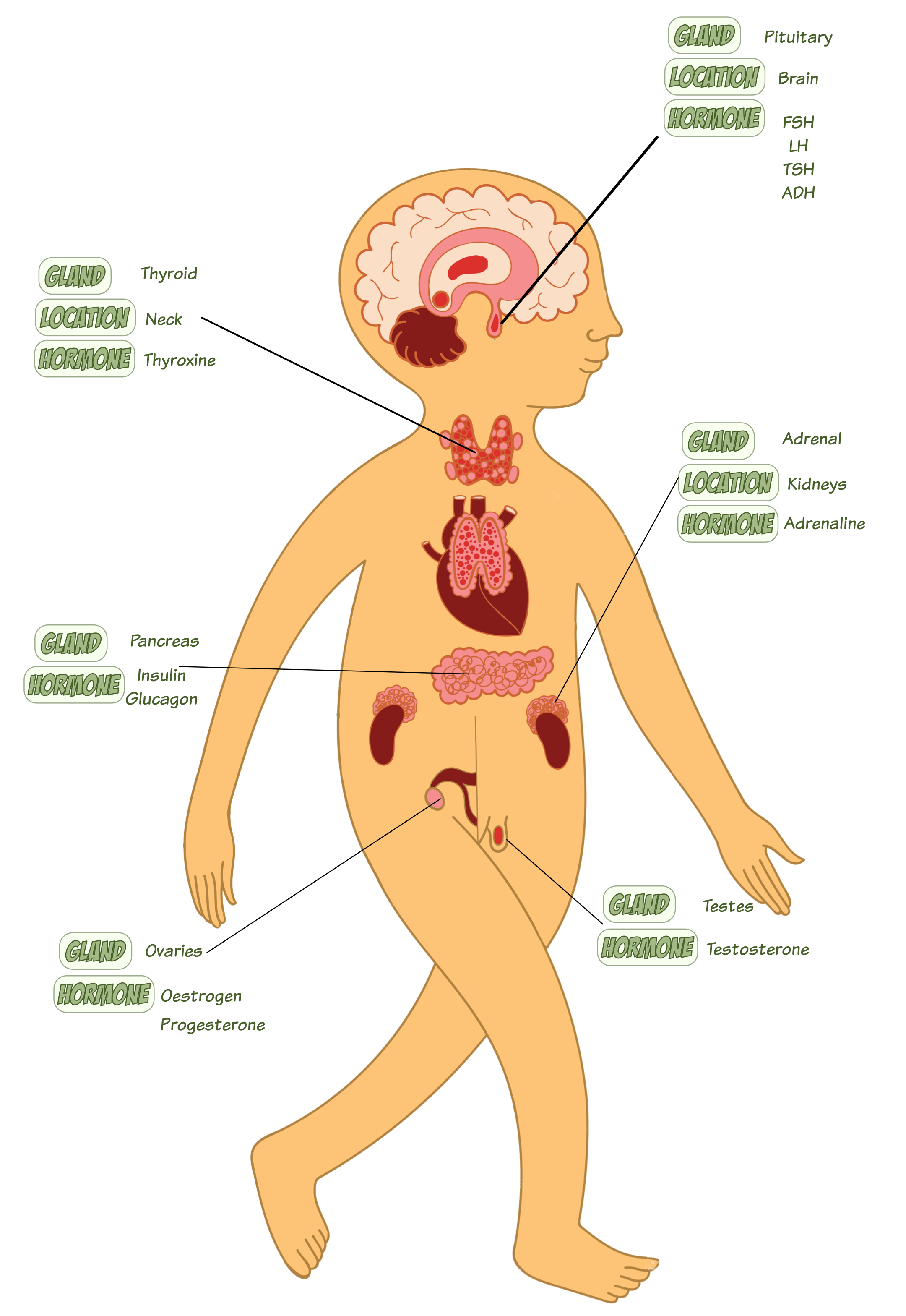
- PITUITARY GLAND: Known as the 'MASTER GLAND,' it produces SEVERAL hormones that regulate body conditions. These hormones influences OTHER GLANDS to stimulate OTHER HORMONES to be released to bring about effects.
- THYROID: Produces THYROXINE, which is crucial for regulating metabolism, heart rate, and temperature.
- ADRENAL GLAND: Produces ADRENALINE, for the 'fight or flight' response in times of danger or stress.
- PANCREAS: Produces INSULIN and GLUCAGON which regulate blood glucose levels.
- OVARIES (Females only): Produce OESTROGEN, important for the menstrual cycle.
- TESTES (Males only): Produce TESTOSTERONE, which controls puberty and sperm production.