
Required Practical: Investigating Insulation
This experiment explores the insulating properties of various types and thicknesses of insulation.
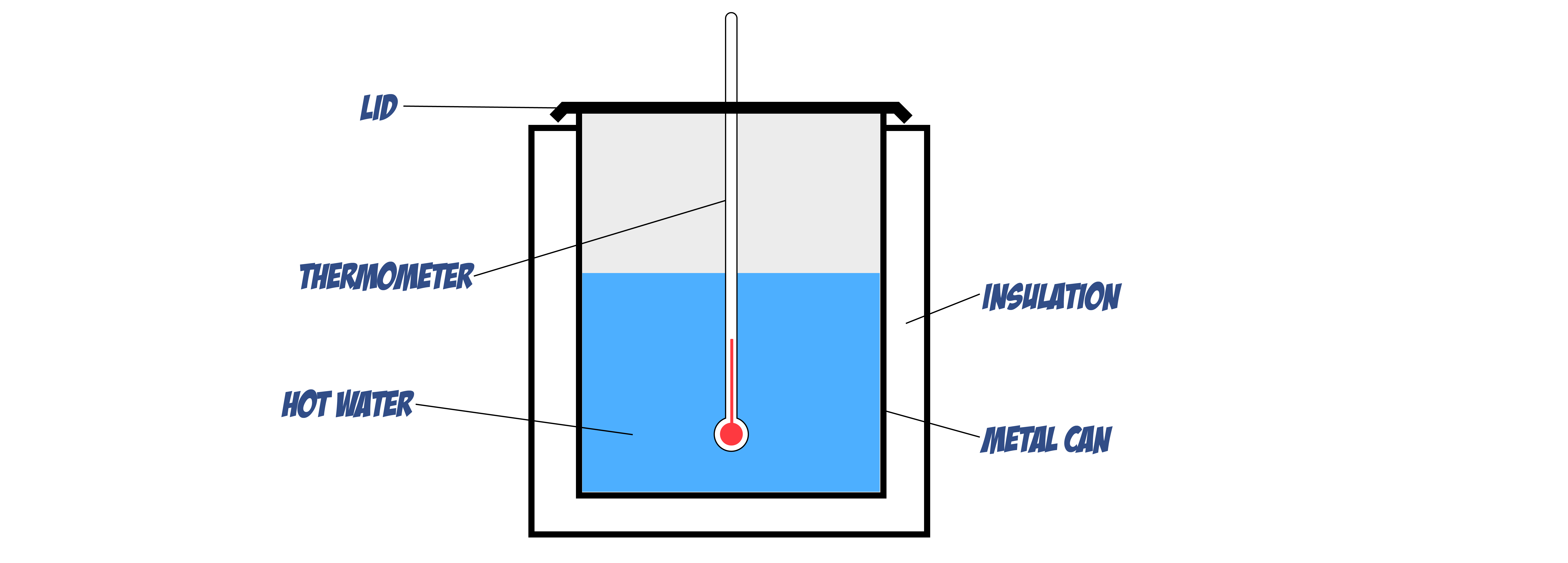
- HEAT water using a kettle. Transfer a set volume of the heated water into a SEALABLE CONTAINER, using a measuring cylinder and funnel.
- RECORD the INITIAL TEMPERATURE of the water using a THERMOMETER.
- SEAL the container with a lid and let it sit for FIVE MINUTES, timing the interval with a STOPWATCH.
- Open the container, measure the FINAL TEMPERATURE.
- REPEAT the procedure several times, wrapping the container in different THICKNESSES of INSULATING MATERIAL after sealing it. Ensure the SAME VOLUME of water is used at the same initial temperature for each trial.
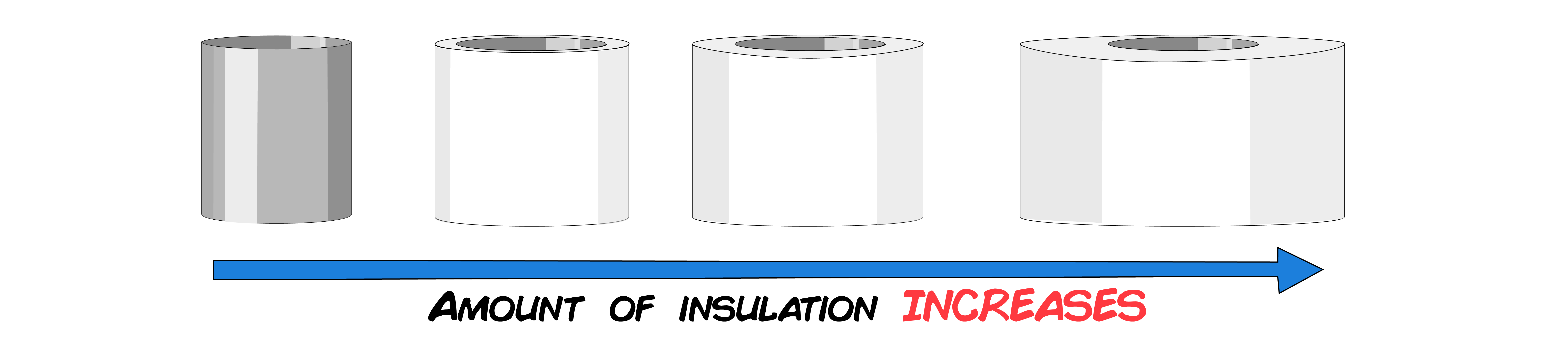
The results will show that the THICKER the insulation, the SMALLER the TEMPERATURE DIFFERENCE.
The smaller the TEMPERATURE DIFFERENCE, the MORE EFFECTIVE the material is as a THERMAL INSULATOR.
This is because the RATE of THERMAL energy being transferred to the SURROUNDINGS (rate of cooling) DECREASES when there is MORE INSULATION.
This experiment can also be carried out with different TYPES of insulation to investigate which TYPES of insulation are the most effective.