
Fleming’s Left Hand Rule
FLEMING’S LEFT HAND RULE is used to work out the DIRECTION of the FORCE created by the MOTOR EFFECT.
To use FLEMING’S LEFT HAND RULE, you need to hold your LEFT HAND with your THUMB, FIRST FINGER, and SECOND FINGER all PERPENDICULAR to each other:
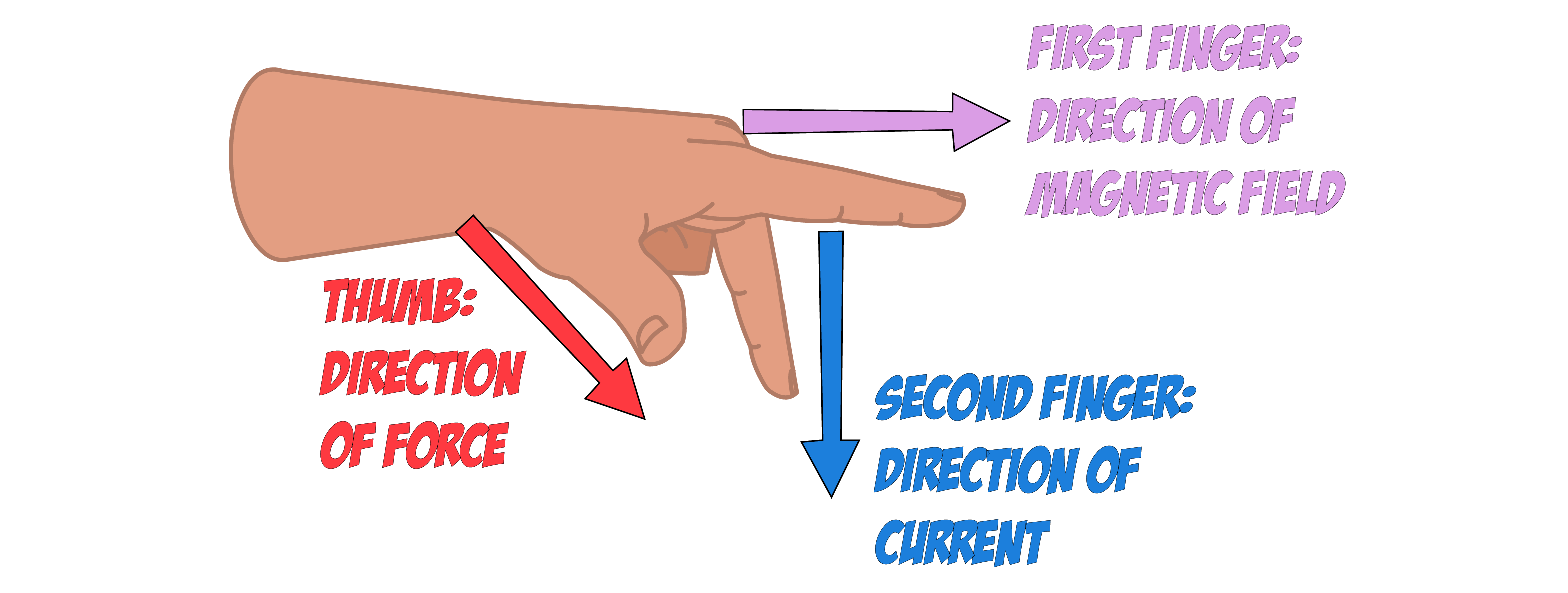
- The direction the FIRST FINGER points in represents the direction of the MAGNETIC FIELD (from the NORTH POLE to the SOUTH POLE).
- The direction the SECOND FINGER points in represents the direction the CURRENT flows in.
- The direction the THUMB points in represents the direction of the FORCE.
Keeping all three of these PERPENDICULAR, you need to first line up the FIRST and SECOND finger with the FIELD and CURRENT in a diagram.
Then whatever direction your THUMB points in, tells you the direction the FORCE acts in. This usually means the wire will MOVE in that direction.
Let’s look at an example:
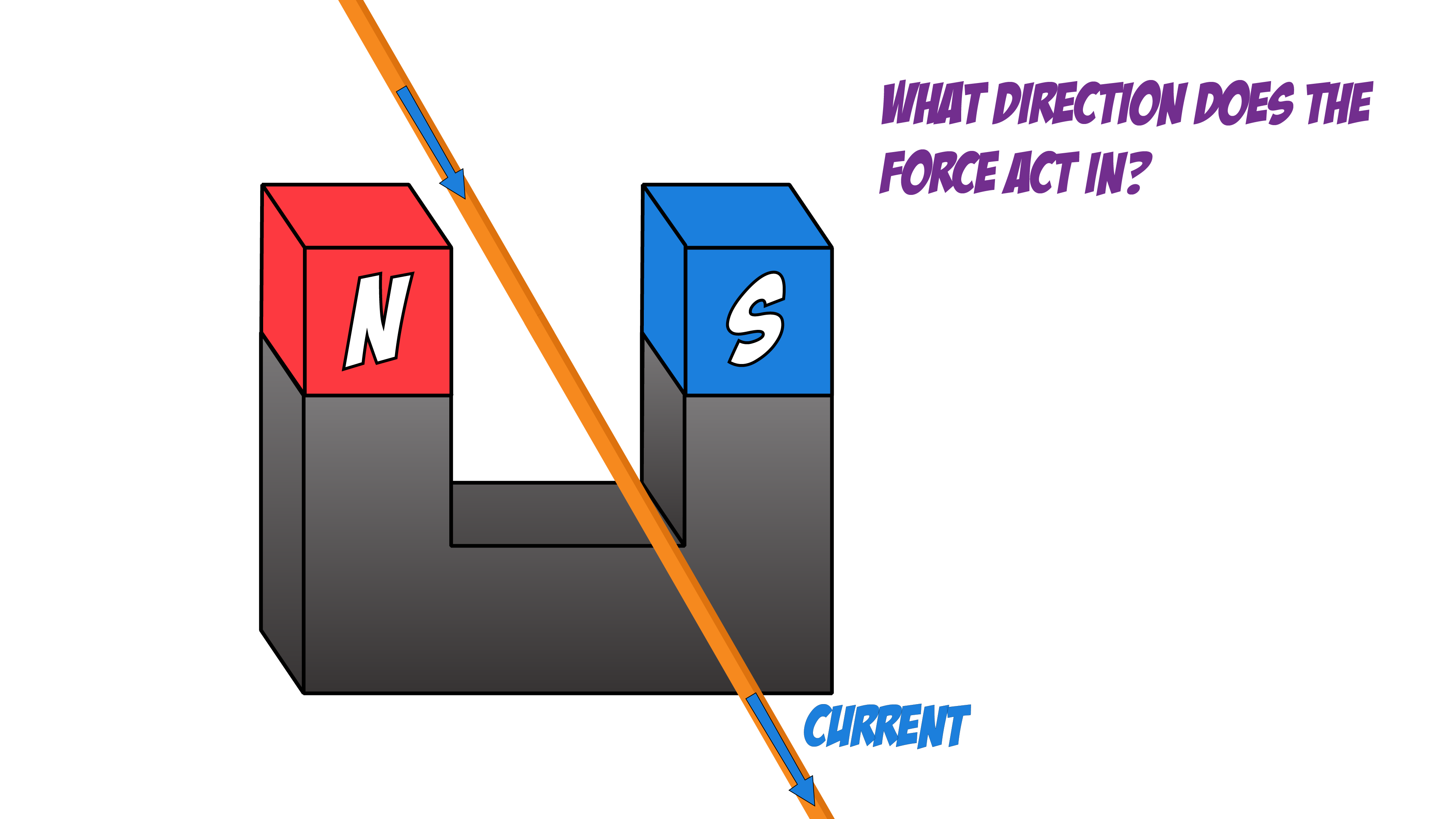
To find the direction the FORCE acts in, you need to first use FLEMING’S LEFT HAND RULE, and ROTATE your hand so it lines up with the field in the diagram.
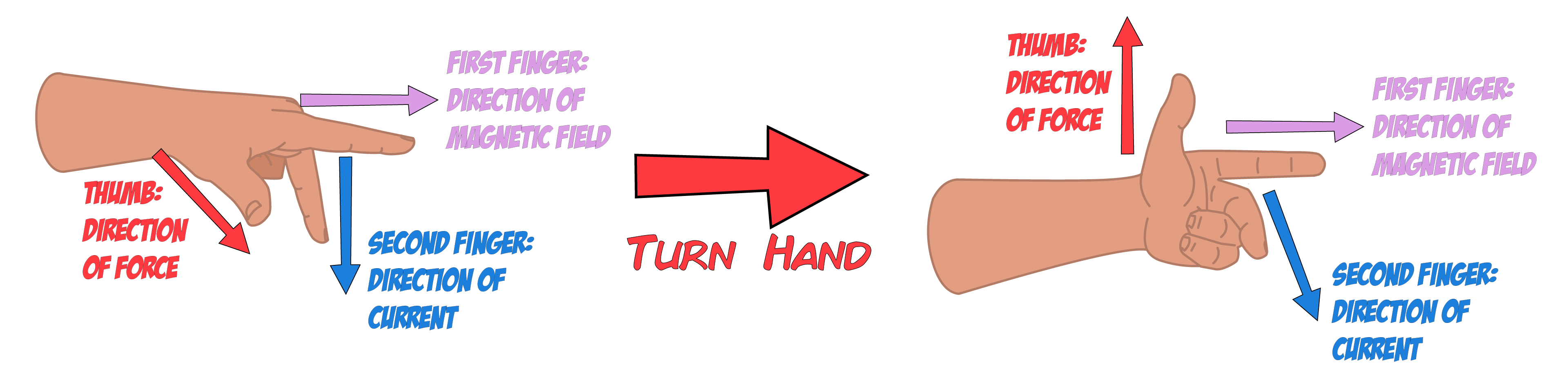
The field points to the RIGHT as field lines always point AWAY from NORTH POLES and TOWARDS SOUTH POLES.
Now you can line up your FIRST finger with the FIELD and your SECOND FINGER with the CURRENT which is coming OUT of the page in this diagram.
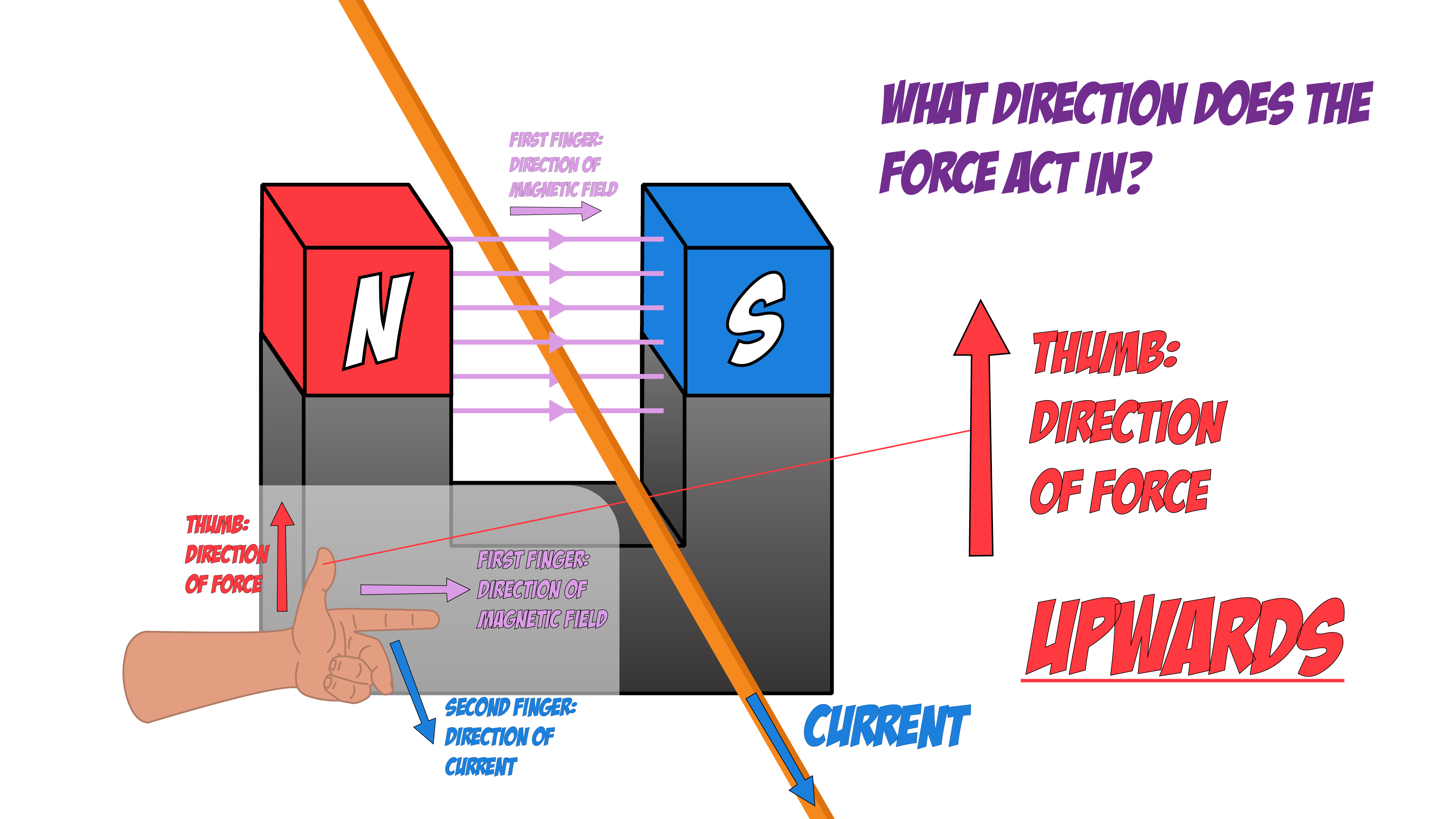
After lining these two up, you can see that the thumb points UPWARDS, which means the force acts UPWARDS.