Electromagnetism
When current flows through a conducting wire, a MAGNETIC FIELD is produced around the wire.
This field is in the shape of CONCENTRIC CIRCLES that are PERPENDICULAR to the wire.
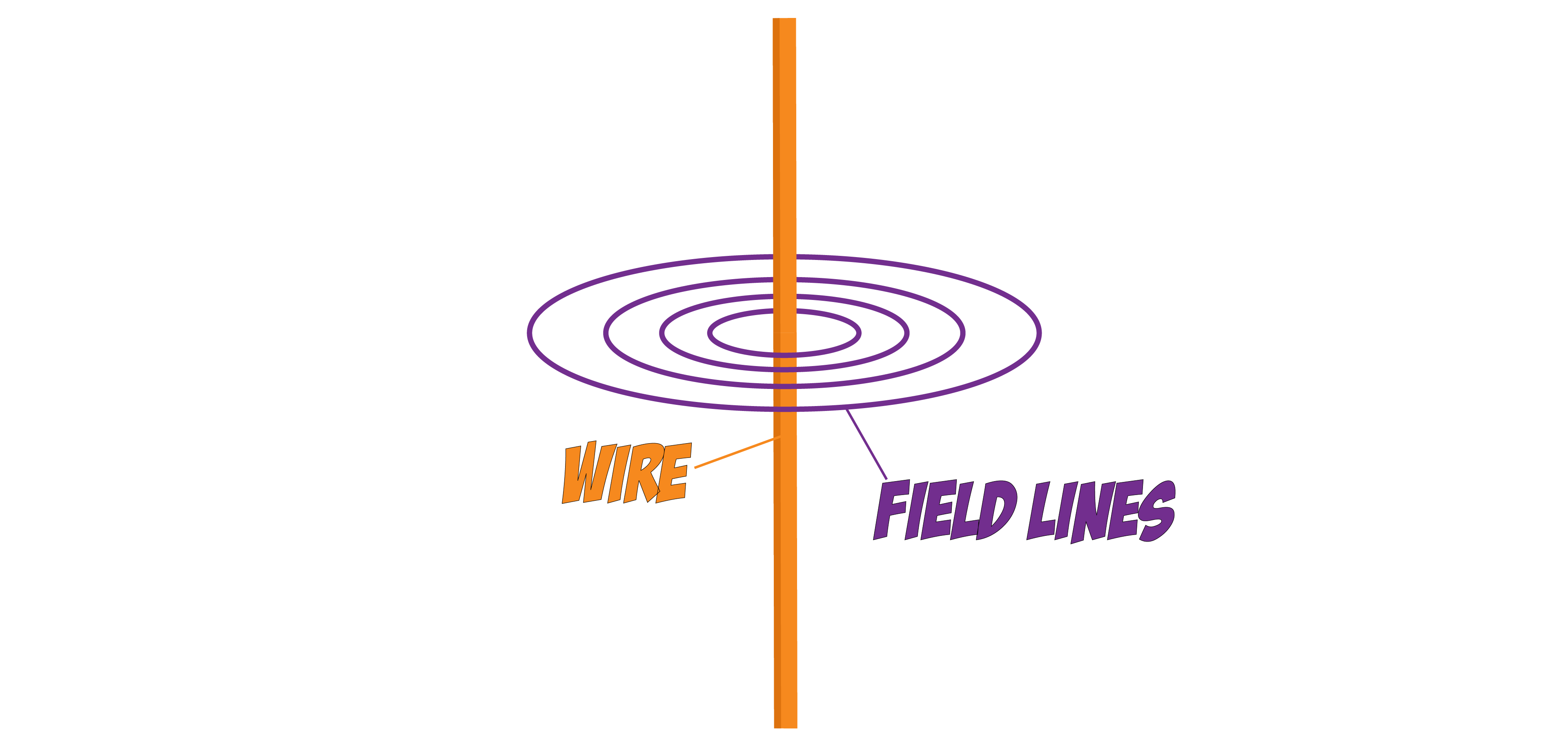
You can increase the STRENGTH of this field by INCREASING the CURRENT flowing through the wire.
The STRENGTH of the field DECREASES as you get FURTHER from the wire.
The Right Hand Grip Rule
Wires do NOT have NORTH and SOUTH poles, so to work out the DIRECTION of the FIELD, you need to use the RIGHT HAND GRIP RULE.
To use this rule, you need to hold your RIGHT HAND like a ‘thumbs up’:
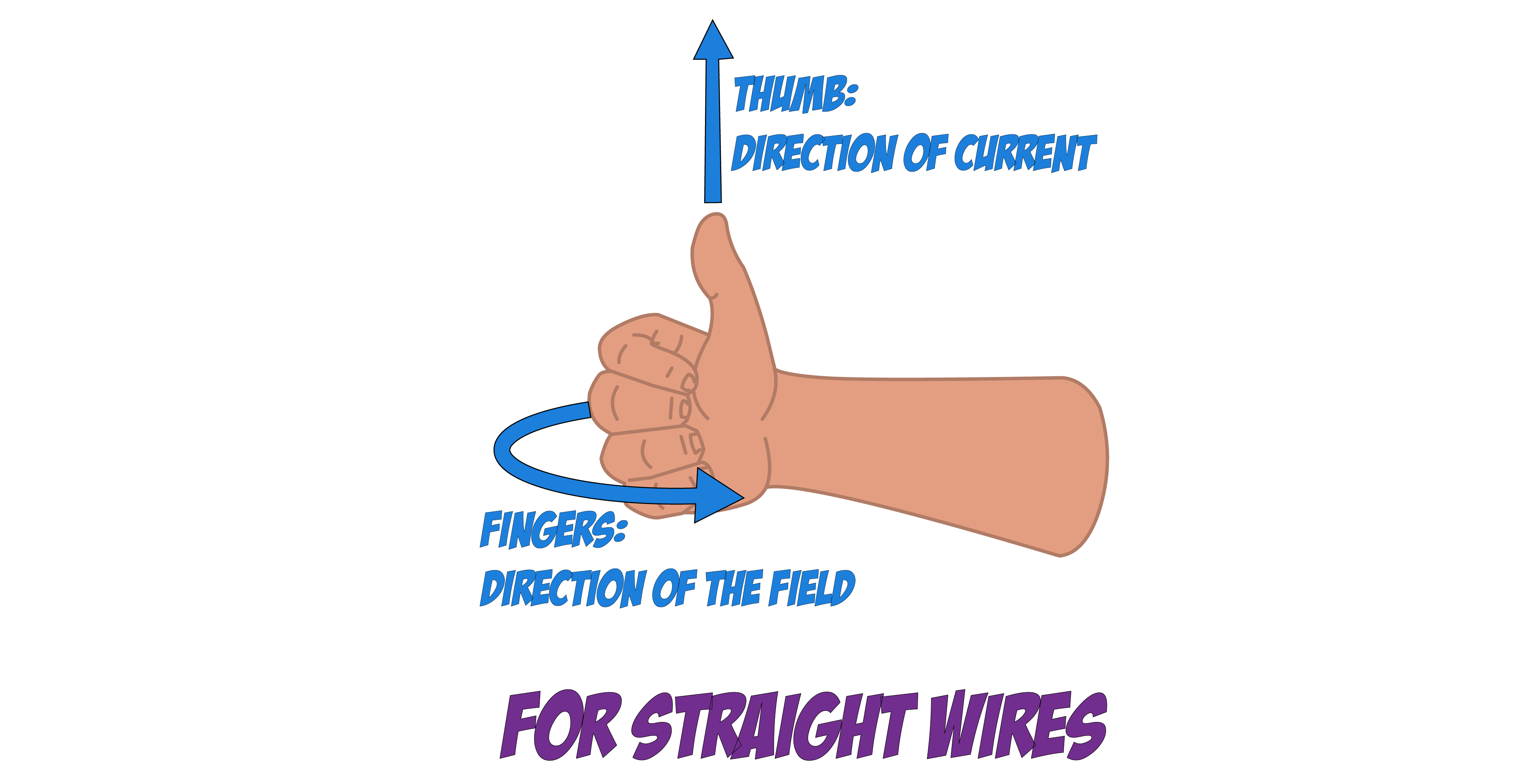
The direction the THUMB points in represents the direction the CURRENT flows in.
The direction the FINGERS point in represents the direction of the FIELD.
Let's look at the following example where we’re given the DIRECTION of the CURRENT as UP the page.
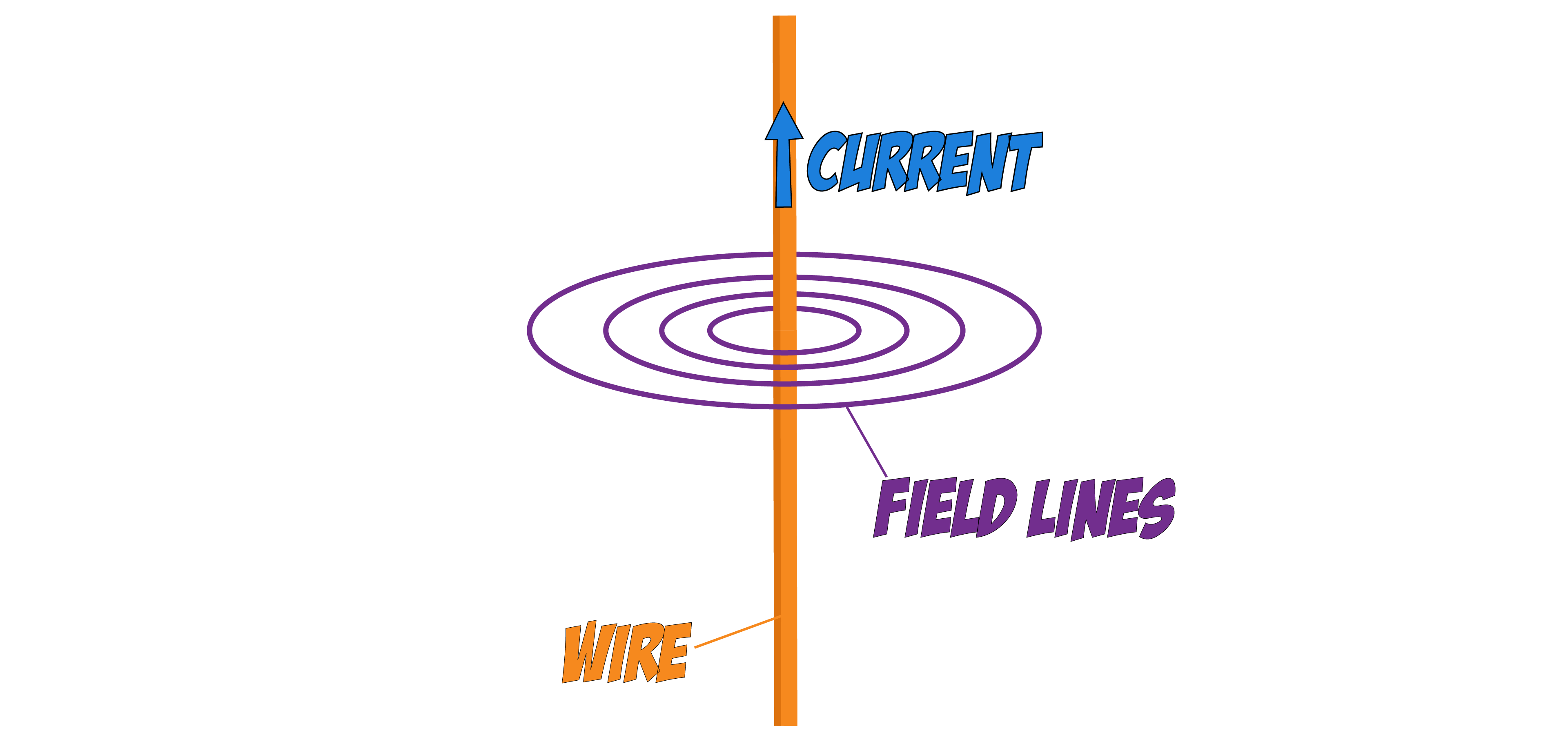
You get your RIGHT HAND in the ‘thumbs up’ pose and LINE UP your THUMB with the direction of the CURRENT, which is UP THE PAGE in this case.
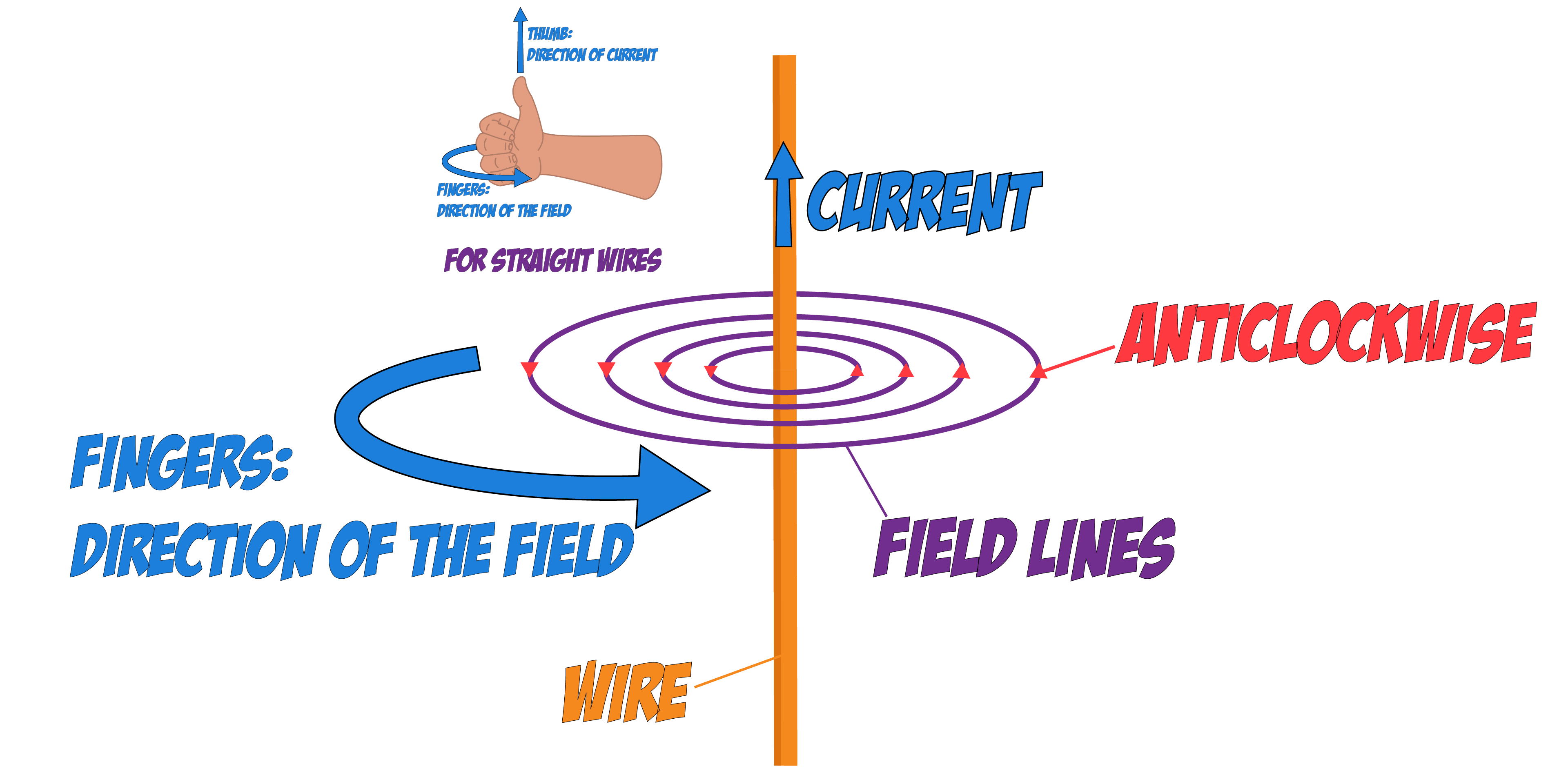
From this, you can look at your fingers and see that the field is pointing ANTICLOCKWISE in the diagram.
Solenoids
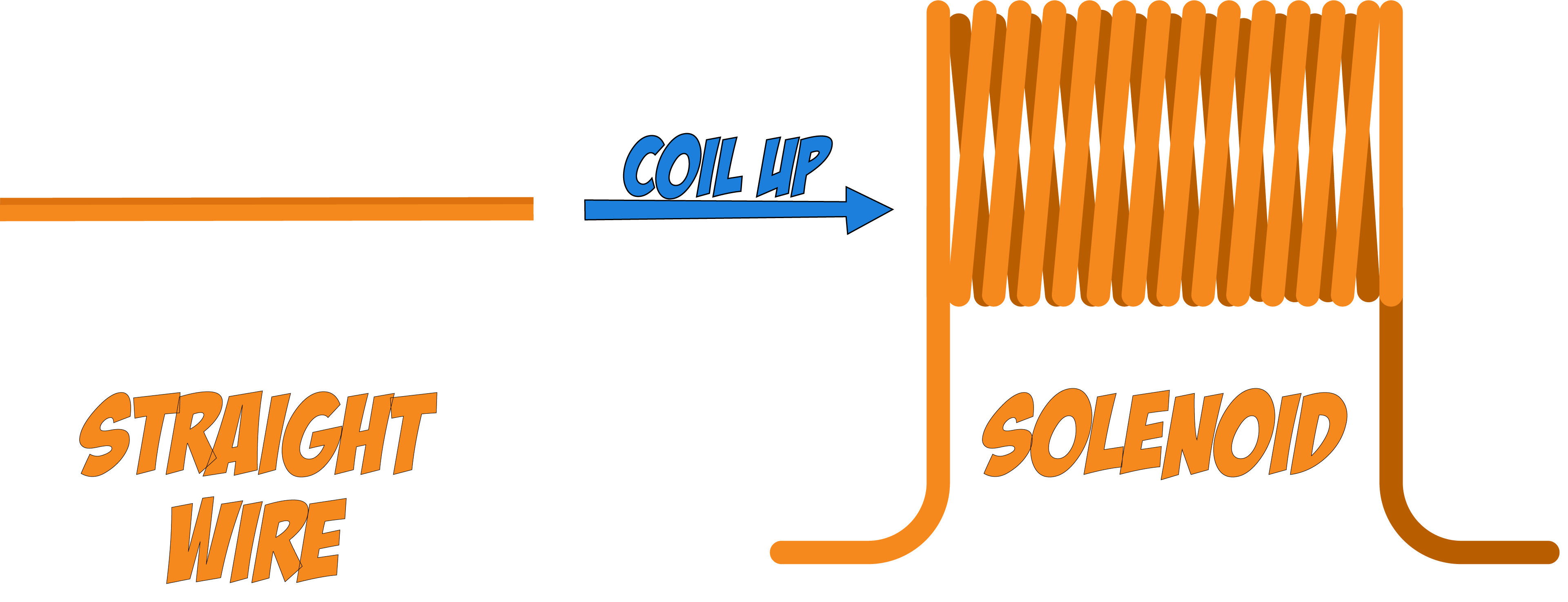
Another way to INCREASE the STRENGTH of the FIELD in a CURRENT-CARRYING WIRE, is to turn the STRAIGHT wire into a COILED wire.
A coiled wire is known as a SOLENOID.
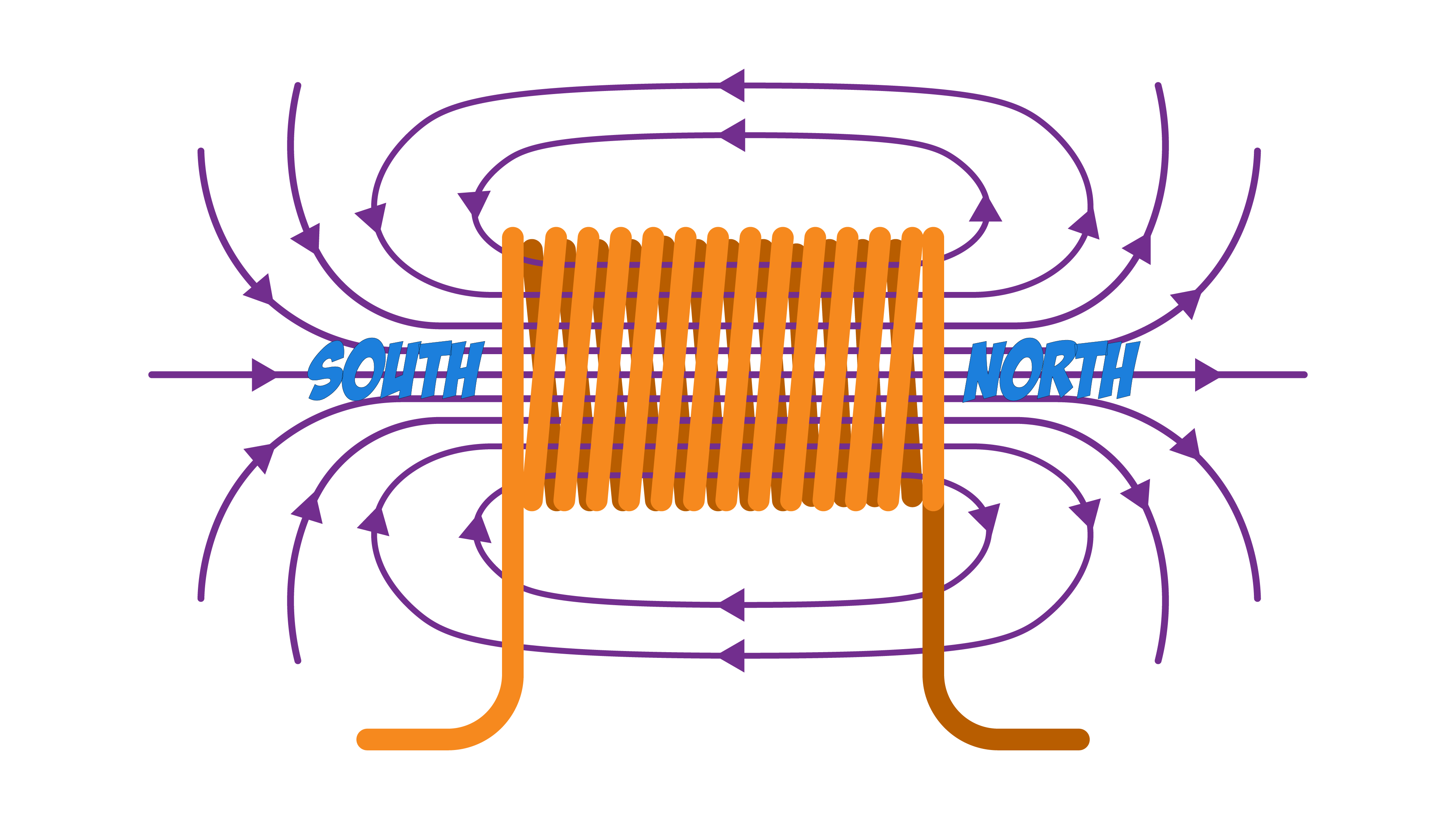
The FIELD of a solenoid looks very similar to that of a BAR MAGNET on the OUTSIDE of the coil.
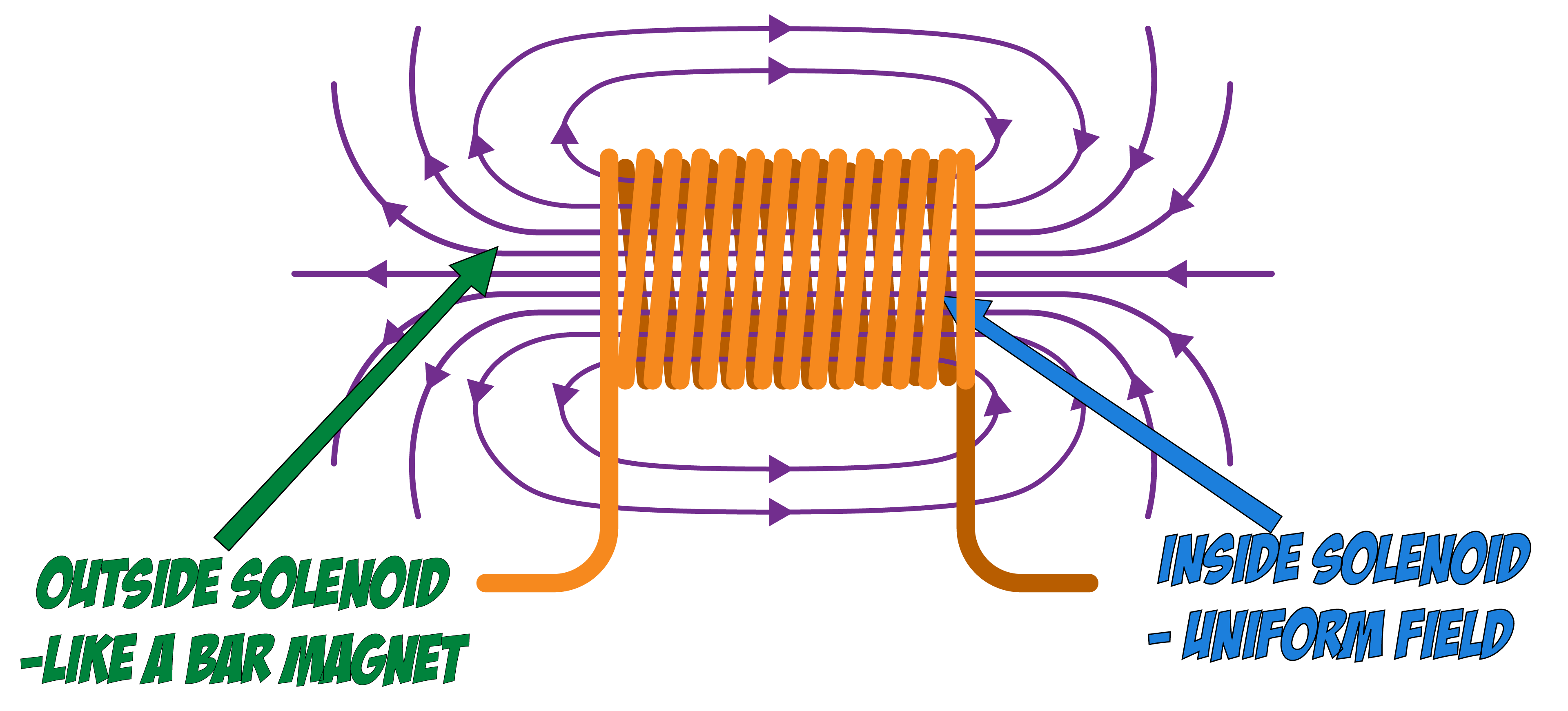
The field INSIDE the coil consists of STRAIGHT FIELD LINES spaced EQUALLY apart which is known as a UNIFORM FIELD. In a UNIFORM FIELD, the strength of the field is the SAME everywhere.
You can use the RIGHT HAND GRIP RULE again to find the DIRECTION of the field.
This time:
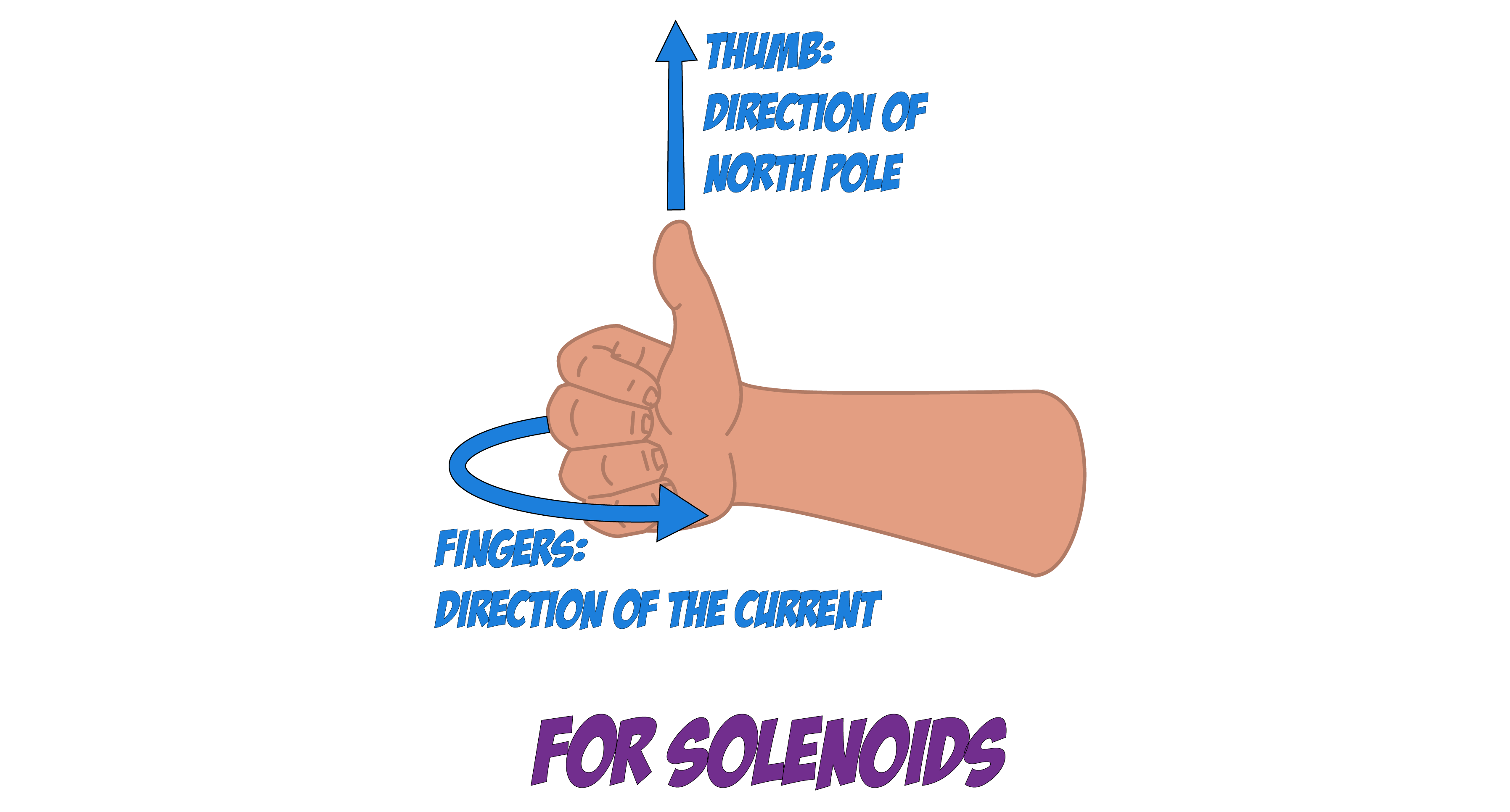
The direction the FINGERS point in represents the direction of the CURRENT.
The direction the THUMB points in represents the direction of the NORTH POLE.
Let's look at an example where we know the direction of a solenoid's CURRENT and we need to find the direction of the FIELD:
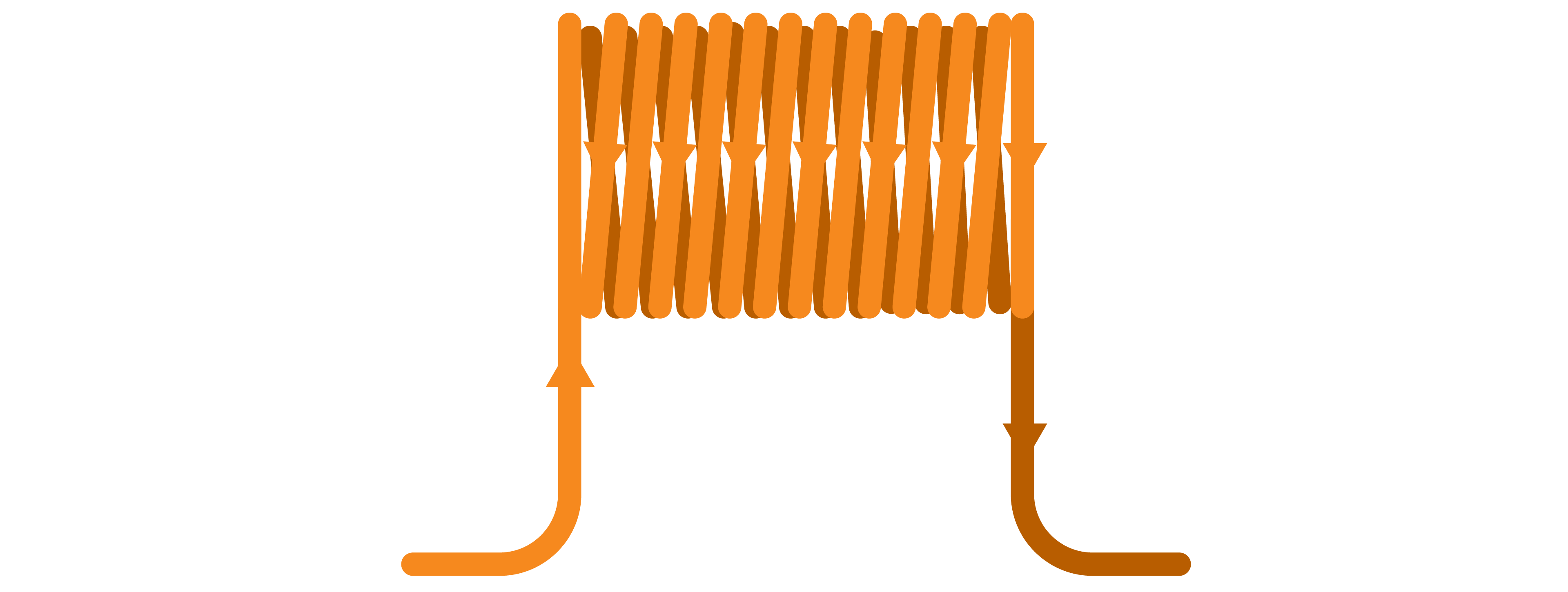
You line up your fingers in the same direction that the CURRENT in the solenoid flows in and see which way your thumb points.
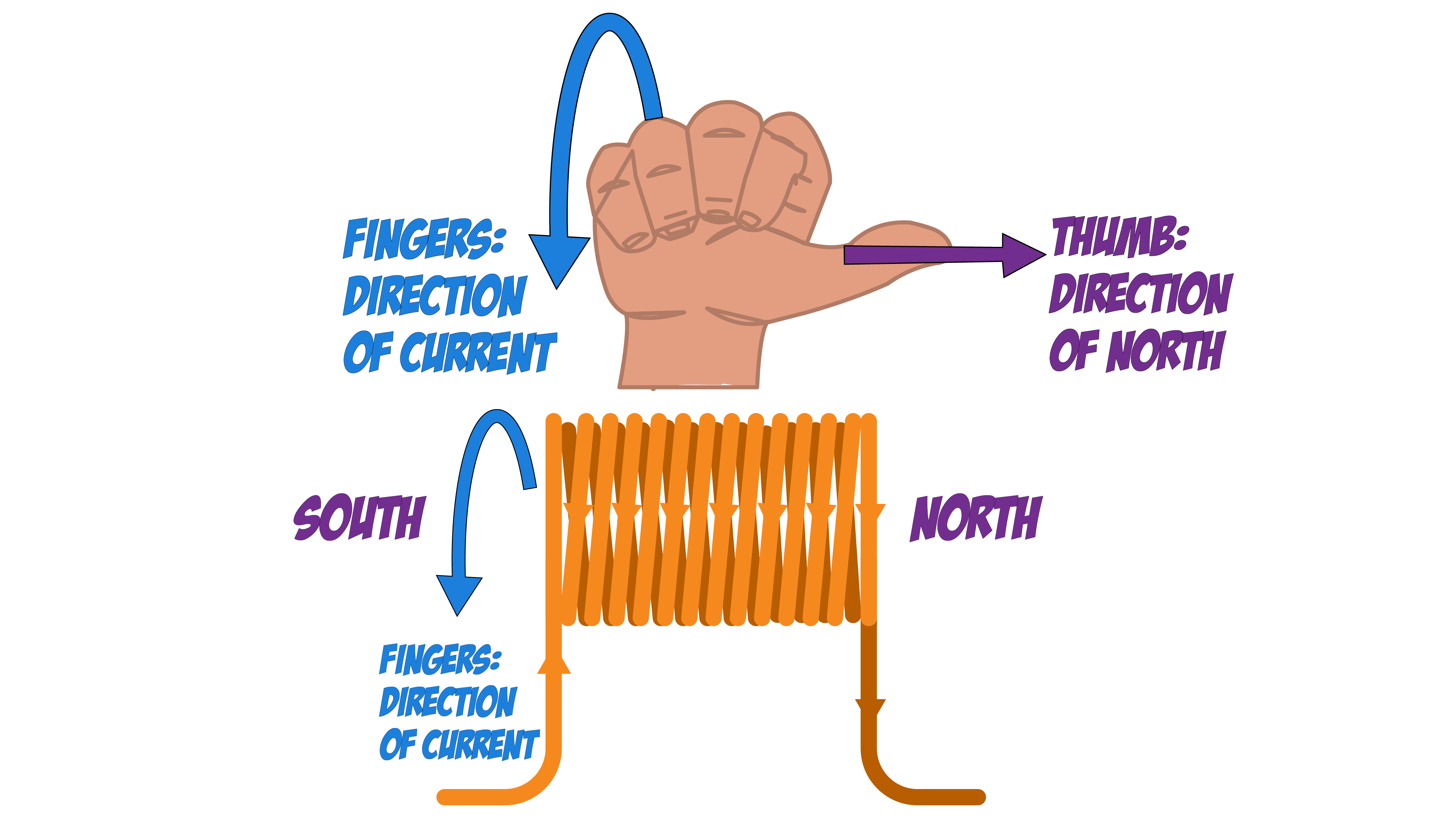
The direction your THUMB points in acts as the NORTH POLE of the solenoid, meaning all field lines point AWAY from it, and the other end acts as a SOUTH POLE and all field lines point TOWARDS it.
Electromagnets
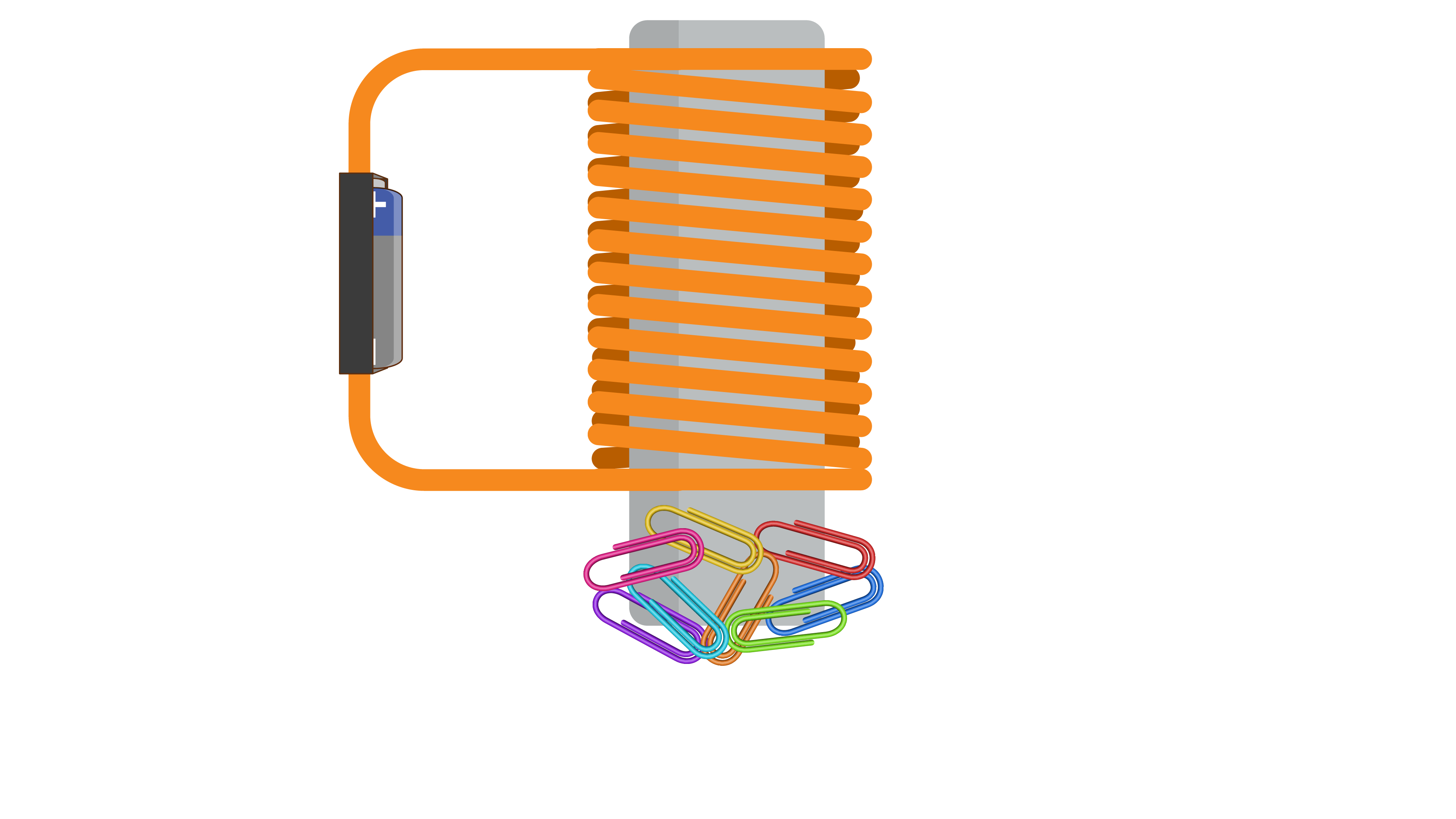
You can increase the STRENGTH of a solenoid by adding an IRON CORE in the middle of it. This turns the iron core into an ELECTROMAGNET.
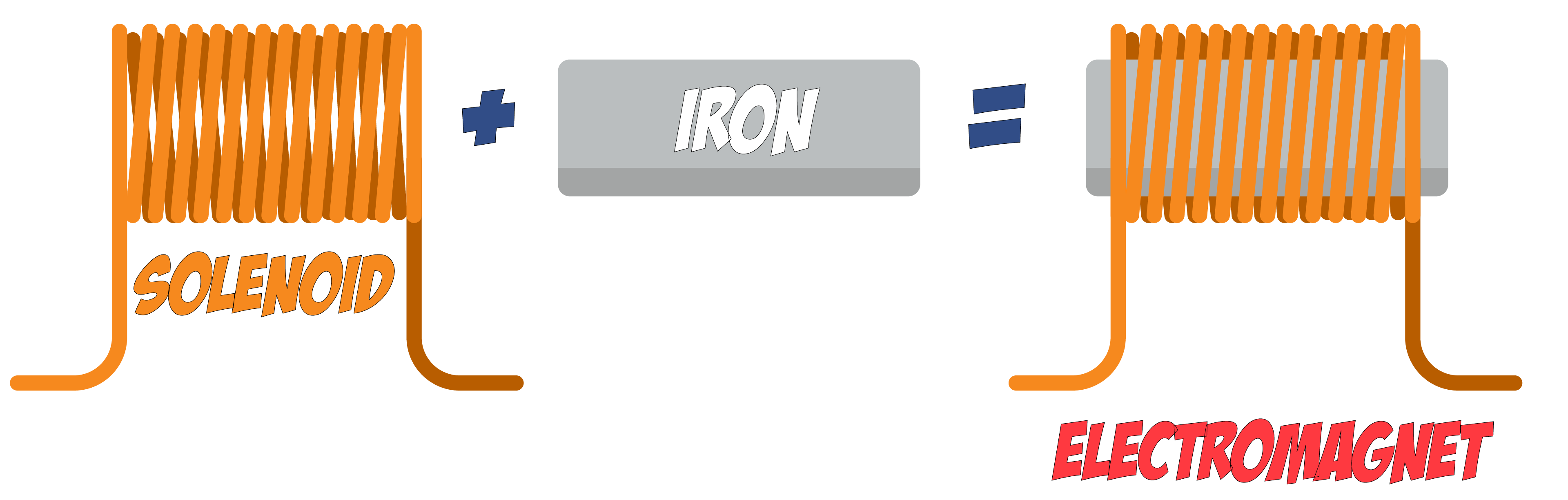
An ELECTROMAGNET is a MAGNET that can be turned ON and OFF.
When current flows through the solenoid, it MAGNETISES the IRON CORE, causing it to produce a MAGNETIC FIELD. As soon as this current is STOPPED, the iron core becomes DEMAGNETISED.
As an example, let’s look at an electromagnet with NO current flowing through it near a few paper clips.
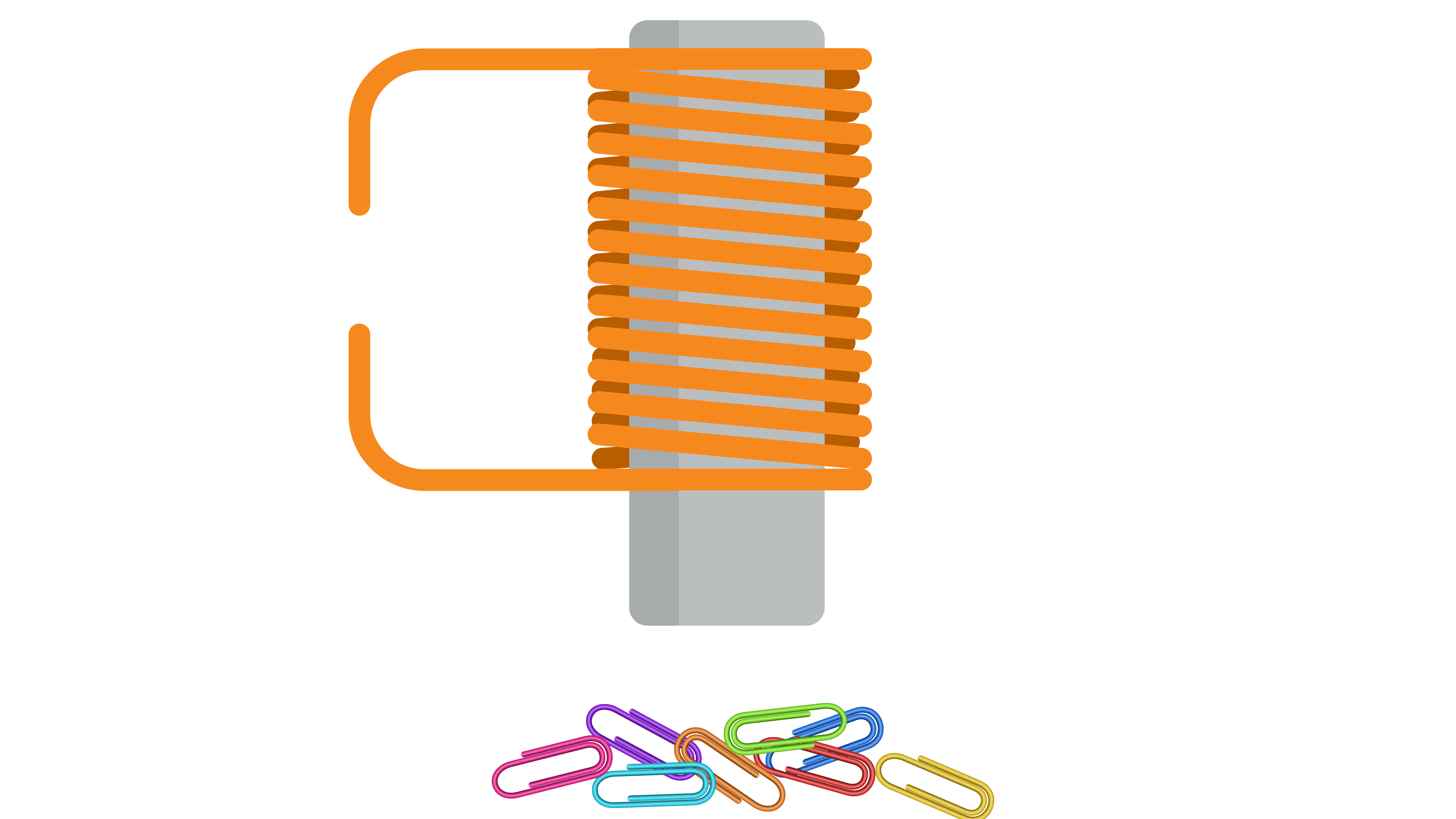
Nothing will occur as NO magnetic field is present, however when a power source is connected to the solenoid and CURRENT flows through it, the iron core becomes MAGNETISED and creates a force of ATTRACTION which picks up the paper clips.