How Radio Waves Are Transmitted and Received:
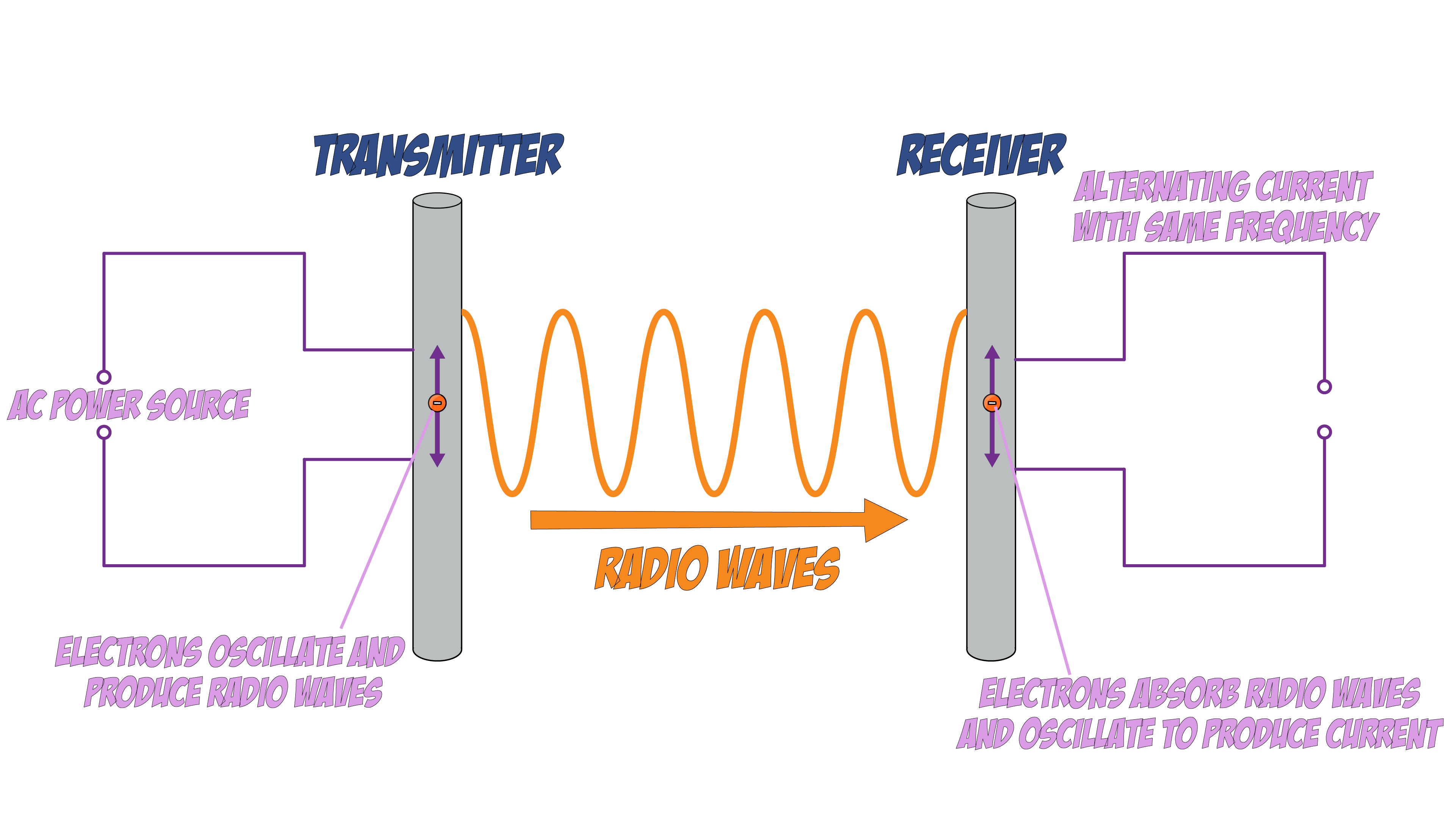
In a TRANSMITTING ANTENNA:
- The ELECTRONS move up and down due to the AC, creating radio waves that radiate away from the antenna.
- These radio waves can travel long distances and be RECEIVED by another antenna (receiver) tuned to the same frequency.
In a RECEIVING ANTENNA:
- The metal aerial ABSORBS the incoming radio waves.
- As the radio waves pass through the receiving antenna, they cause ELECTRONS to VIBRATE and create an ALTERNATING CURRENT in the circuit connected to it.
- This AC has the SAME FREQUENCY as the radio waves.
- This induced current can then be converted back into sound or other forms of data by the receiver's electronics.
Atomic and Nuclear Changes:
- At the atomic level, changes in atoms and their nuclei can lead to the EMISSION or ABSORPTION of electromagnetic waves across a broad frequency range.
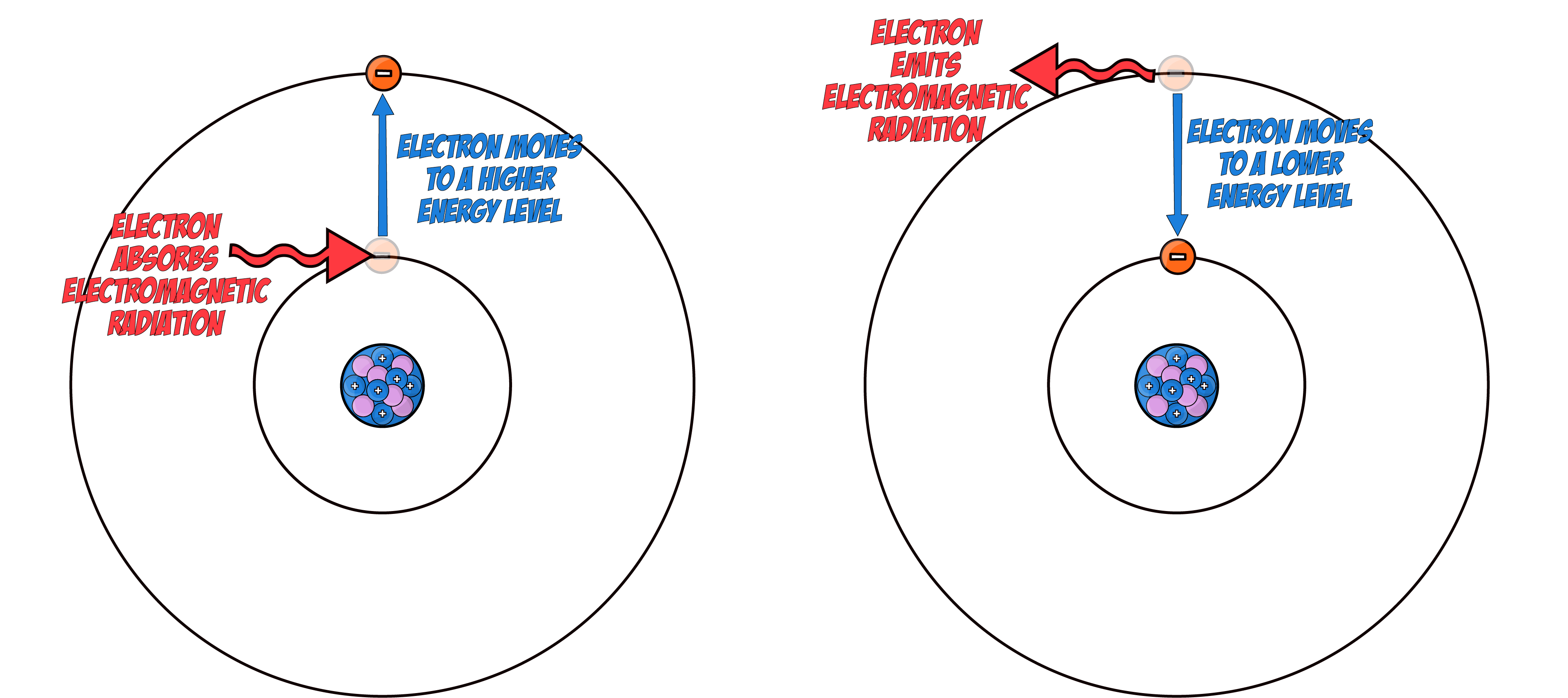
- When an electron ABSORBS ELECTROMAGNETIC RADIATION, it MOVES to a HIGHER energy level FURTHER from the nucleus.
- When an electron EMITS ELECTROMAGNETIC RADIATION, it MOVES to a LOWER energy level CLOSER to the nucleus.
- This is how GAMMA RAYS are produced from changes in the nucleus of an atom.
Health Effects of High-Frequency Waves:
- The higher-frequency electromagnetic waves, like ULTRAVIOLET (UV) rays, X-RAYS, and GAMMA RAYS, can be hazardous to human tissues.
- The impact of these waves on the body depends on the type of radiation and the dosage, which is measured in SIEVERTS (Sv).
- SIEVERTS, assesses the risk of HARM from RADIATION exposure.

- 1,000 milliSieverts (mSv) is equivalent to 1 Sievert (Sv).
- ULTRAVIOLET RAYS can cause skin to age prematurely and increase the risk of skin cancer due to their ability to damage the genetic material in skin cells.
- X-RAYS and GAMMA RAYS are ionising radiation, which means they have enough energy to remove tightly bound electrons from atoms, causing the atoms to become charged ions. This ionisation process can lead to cellular and DNA damage, increasing the risk of CANCER.