
Waves for Detection and Exploration
SOUND WAVES travel through solids and liquids, interacting differently based on the medium’s properties. These interactions include changes in VELOCITY, ABSORPTION, and REFLECTION, which are crucial for detection and exploration applications.
Ultrasound in Medical and Industrial Imaging
ULTRASOUND WAVES are sound waves with frequencies HIGHER THAN 20 kHZ, beyond the upper limit of human hearing. These waves are particularly useful for imaging because:
- When ultrasound waves encounter a boundary between two different media, they are PARTIALLY REFLECTED.
- The time it takes for these reflections to return to a detector helps determine the distance to the object and the size of an object, making ultrasound useful in both MEDICAL and INDUSTRIAL IMAGING.

Echo Sounding for Depth Measurement
ECHO SOUNDING uses ULTRASOUND WAVES to measure the DEPTH of water bodies and detect submerged objects.
It works by sending the wave DOWN to the seabed where it is REFLECTED off the sea bed.
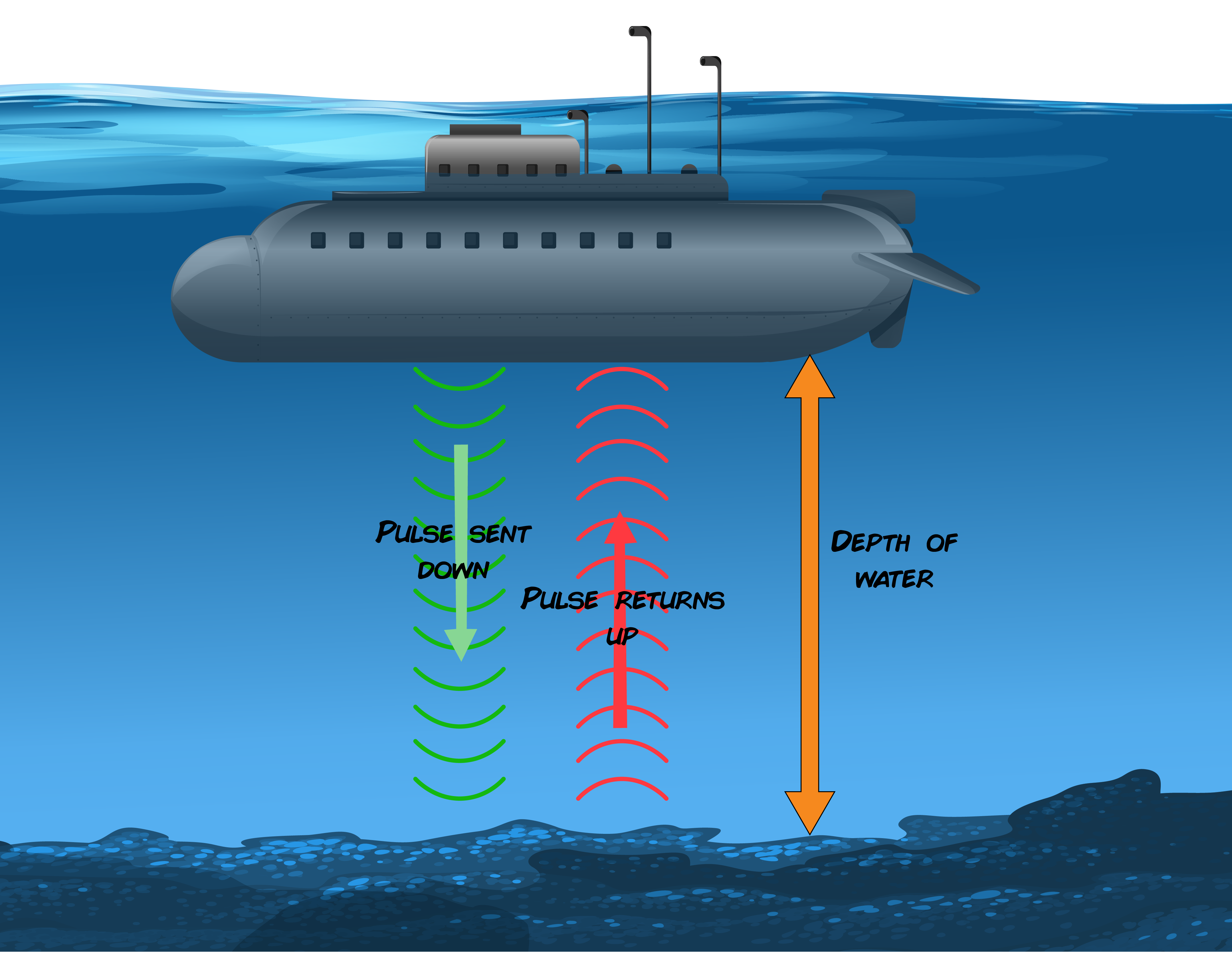
The TIME TAKEN for the sound to RETURN back to the submarine can be used to find the DEPTH by using the SPEED of the ULTRASOUND.
So for example if the wave took 0.2s to return back and the speed of the ultrasound was 1500m/s, you can use the following formula to find the DISTANCE travelled by the wave.
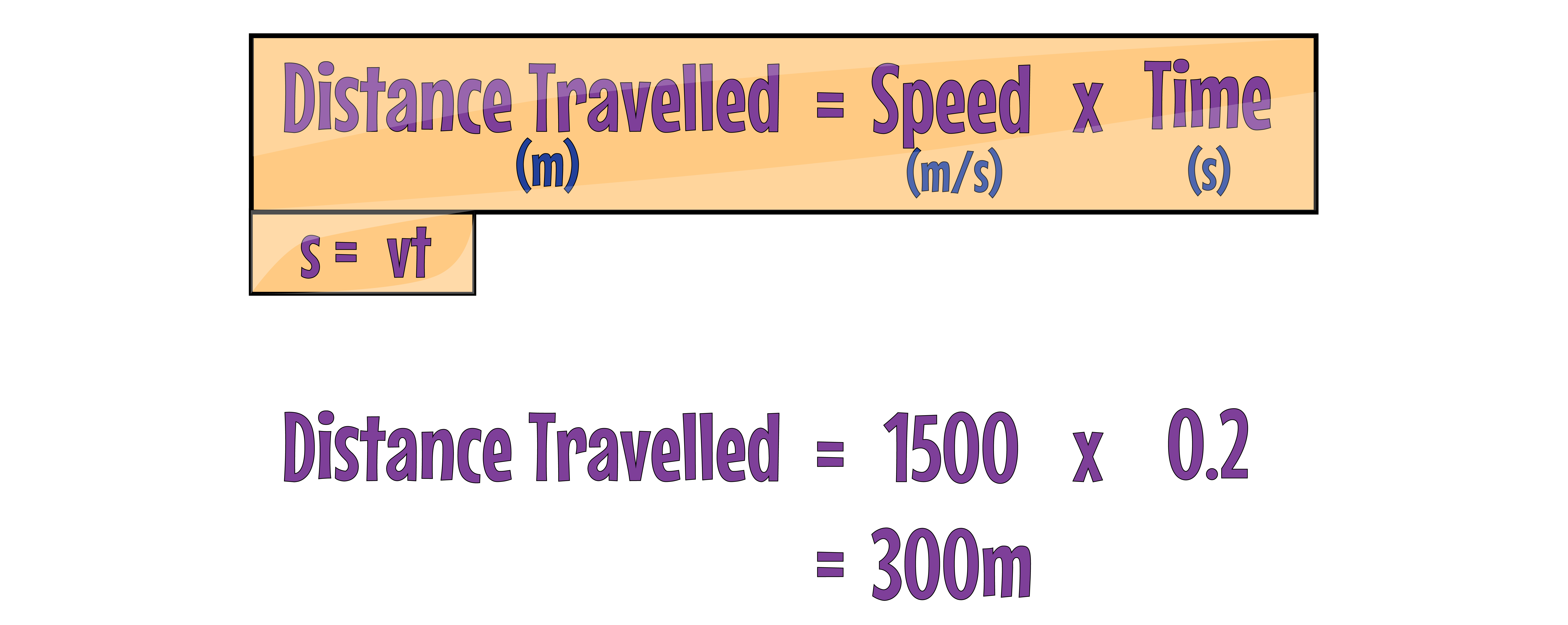
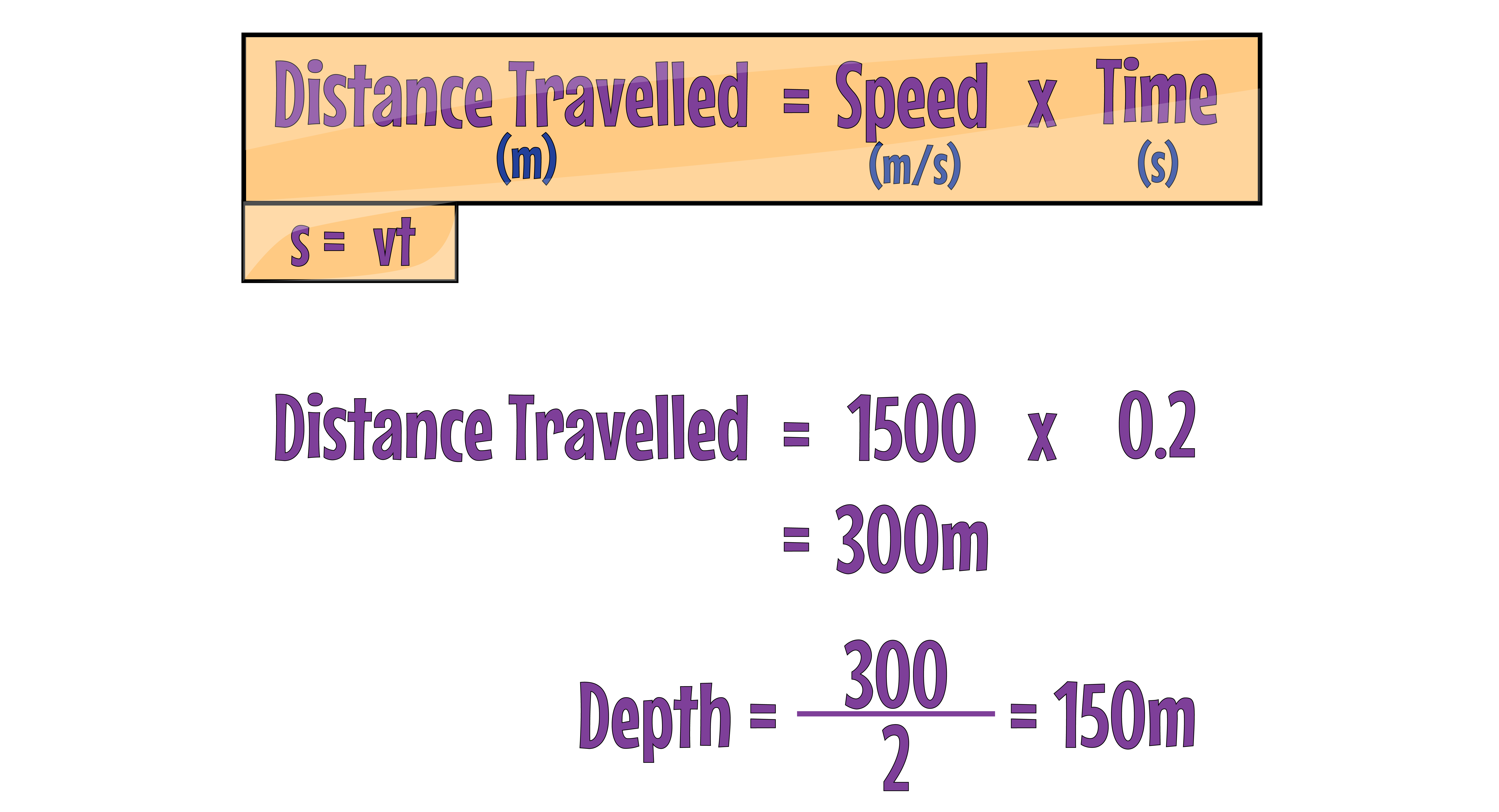
You should note that the DISTANCE travelled by the wave is DOUBLE the DEPTH because the wave goes DOWN to the seabed and BACK up the seabed (so it travels the depth TWICE).
This means the distance needs to be HALVED.
Seismic Waves for Earth Exploration
SEISMIC WAVES are produced by EARTHQUAKES and there are TWO types:
- P-WAVES: Theses are LONGITUDINAL WAVES which travel through BOTH SOLIDS and LIQUIDS at different speeds.
- S-WAVES: These are TRANSVERSE WAVES which travel through SOLIDS ONLY and are blocked by liquids.
The behaviour of P-waves and S-waves through different LAYERS of the Earth provides EVIDENCE into the STRUCTURE and SIZE of Earth’s core.
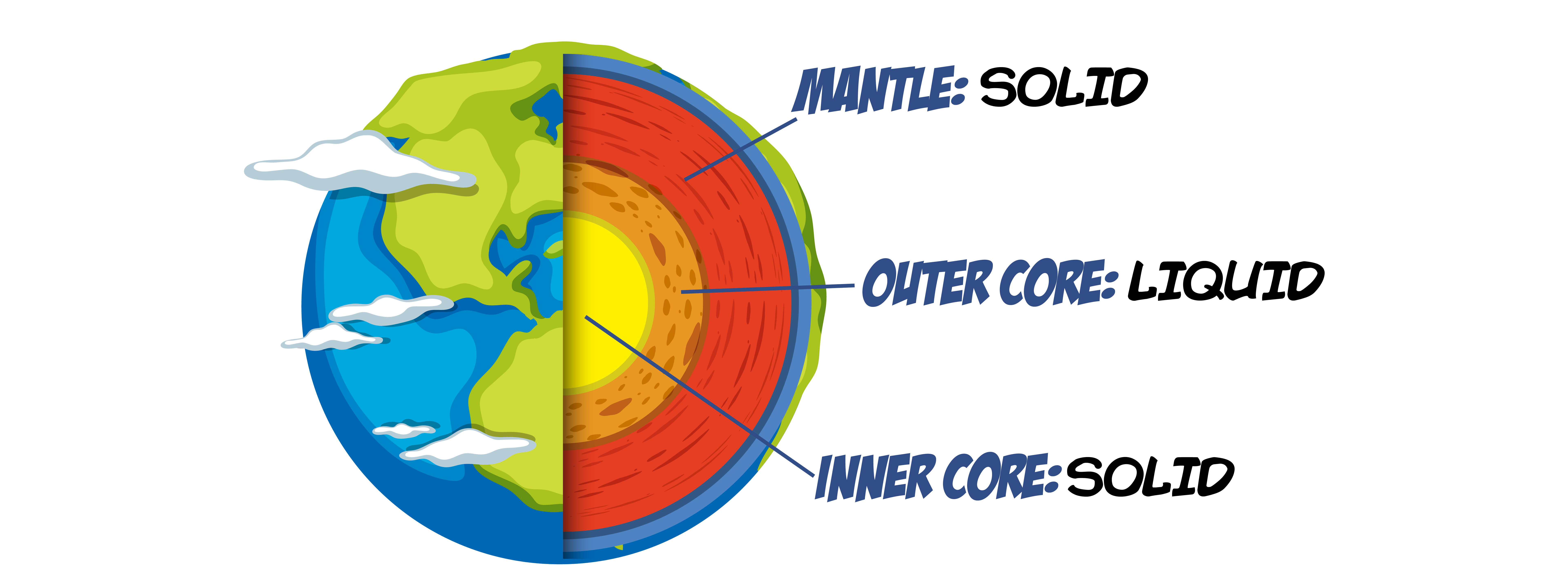
The study of seismic waves has provided new evidence that has led to discoveries about parts of the Earth which are not directly observable.
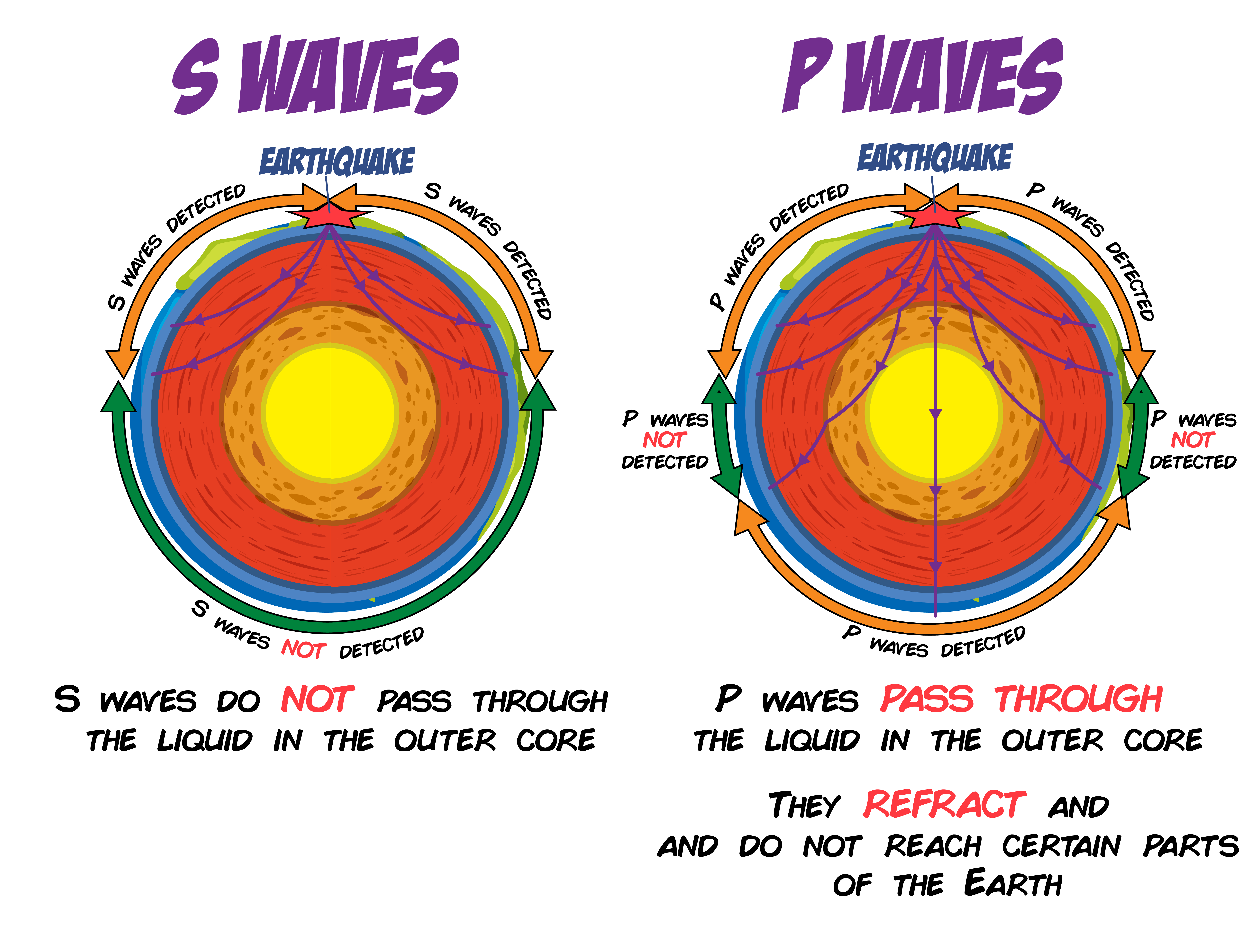
On the opposite side of the Earth to an earthquake, ONLY P-WAVES are detected, not S-WAVES so this suggests:
- The MANTLE is SOLID because BOTH types of waves can pass through it.
- The OUTER CORE of the Earth is LIQUID which explains why no S-waves can penetrate it.
Refractions between layers cause two "shadow zones", where NO P-WAVES are detected, this suggests:
- The INNER CORE is SOLID due to the SIZE and POSITIONS of these shadow zones which indicate REFRACTION is taking place.