Pressure in Fluids
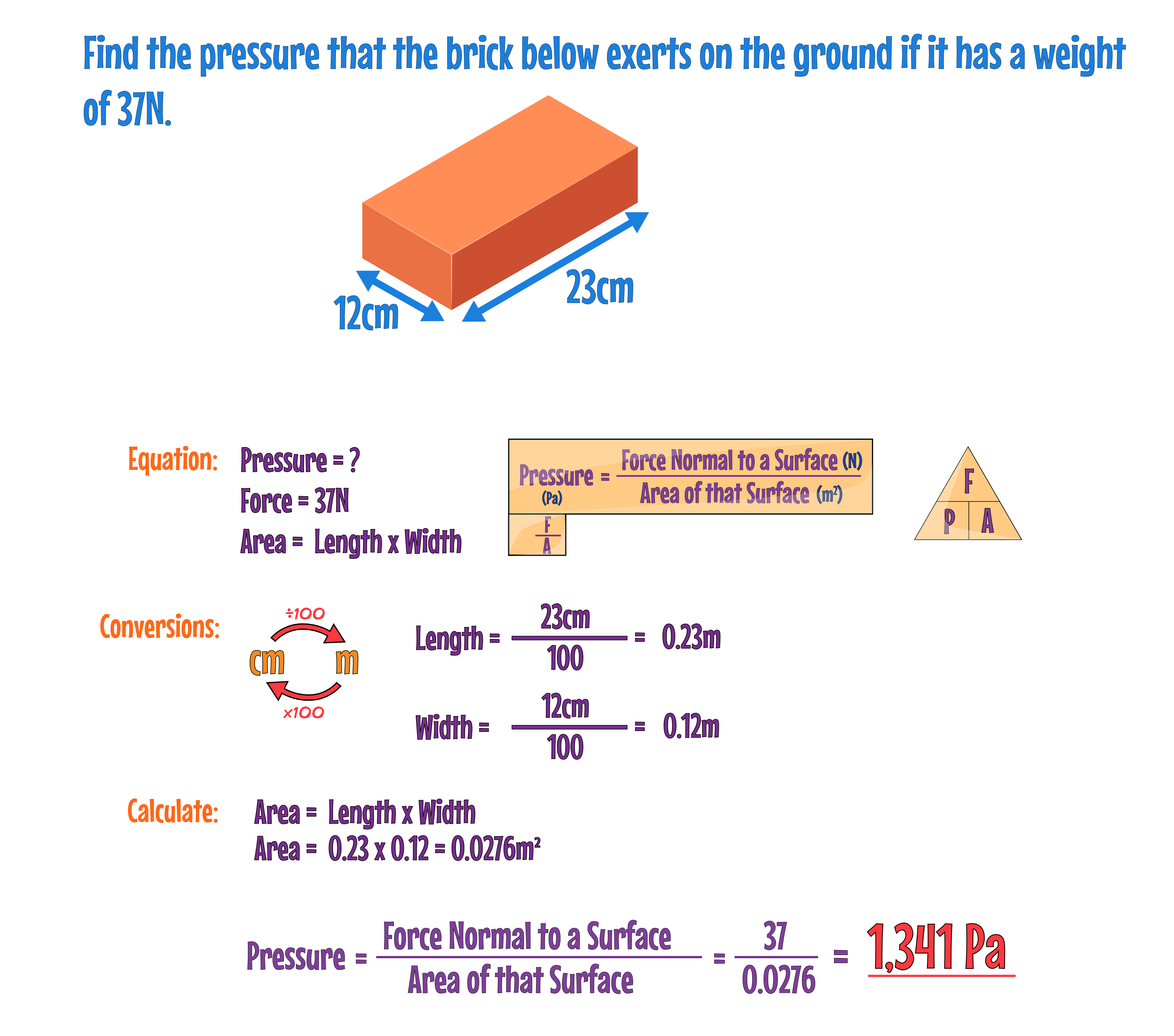
PRESSURE is defined as the FORCE PER UNIT AREA applied in a direction perpendicular to the surface of an object.
In the context of fluids (liquids and gases), it refers to the force exerted by the fluid on any surface in contact with it.
The formula for pressure is:

where P is the pressure in pascals (Pa), F is the force normal (perpendicular) to the surface in newtons (N), and A is the area of the surface in square metres (m²).
Pressure in Fluids
PRESSURE IN A LIQUID at a particular point is determined by the HEIGHT OF THE COLUMN OF LIQUID above that point.
The HEIGHT of the column of liquid is just the DEPTH of the water.
The greater the height, the more the liquid above that point, thus, higher the pressure.
The pressure exerted by a liquid on any given point is caused by the WEIGHT of the liquid above that point.
This weight creates a force that pushes against objects immersed in the liquid in ALL DIRECTIONS.
As the liquid becomes DEEPER, the volume and WEIGHT of the liquid above the point of measurement INCREASES. This results in an INCREASE in PRESSURE exerted at that depth.
In a column of water, the HIGHEST PRESSURE would be at the BOTTOM:
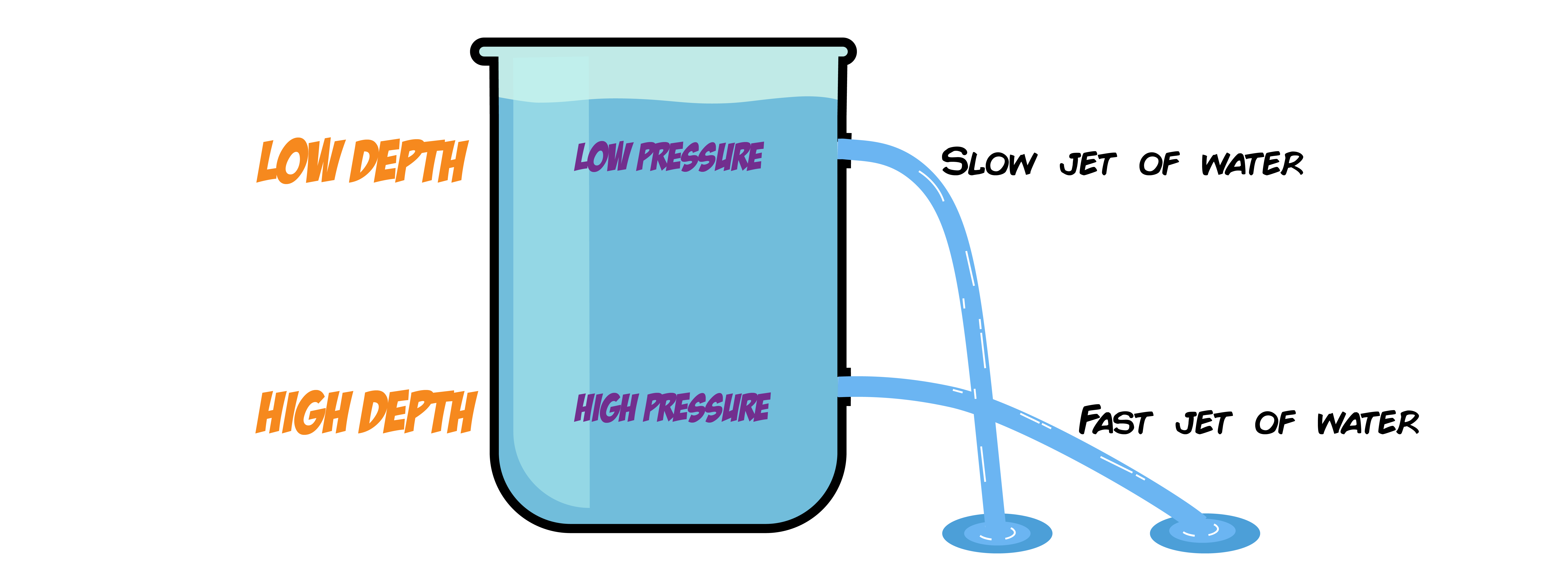
- If a hole is made at the BOTTOM of the column, the water will pour out with a LARGE force, resulting in a FAST jet of water.
- If a hole was made at the TOP of the column, the water will pour out with a SMALL force, resulting in a SLOW jet of water.
The weight of the liquid, and consequently the pressure, also depends on its DENSITY.
A MORE DENSE liquid will have a GREATER WEIGHT for the same volume, thereby exerting a HIGHER PRESSURE at the same depth compared to a less dense liquid.
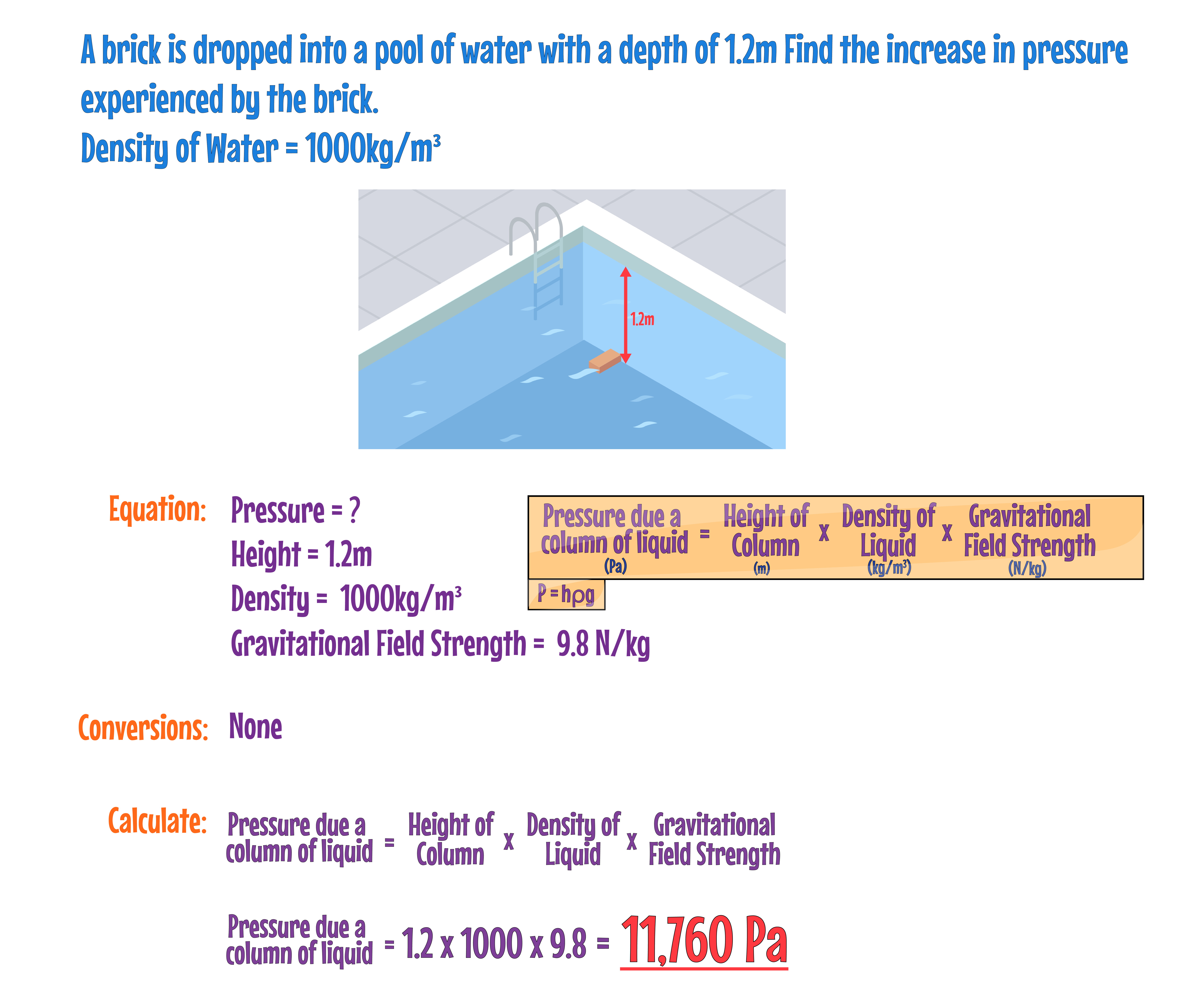
You can find the pressure of a fluid at a particular depth using the following equation:
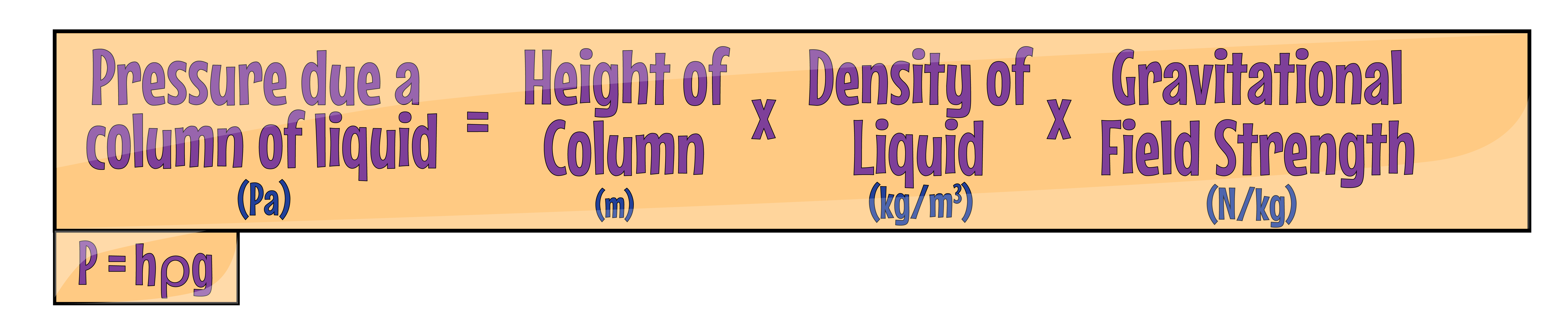
where ρ is the density of the liquid (kg/m³), g is the gravitational field strength (N/kg), and h is the height or depth of the liquid column above the point (m).
Upthrust
UPTHRUST is a force exerted in an upward direction by a fluid on any object that is partially or completely submerged in it.
A partially (or totally) submerged object experiences a GREATER PRESSURE on the BOTTOM surface than on the TOP surface. This creates a resultant force UPWARDS which is the UPTHRUST.

If the upthrust is EQUAL or GREATER to the object's WEIGHT, it will FLOAT.
If the upthrust is SMALLER than the object's WEIGHT, it will SINK.
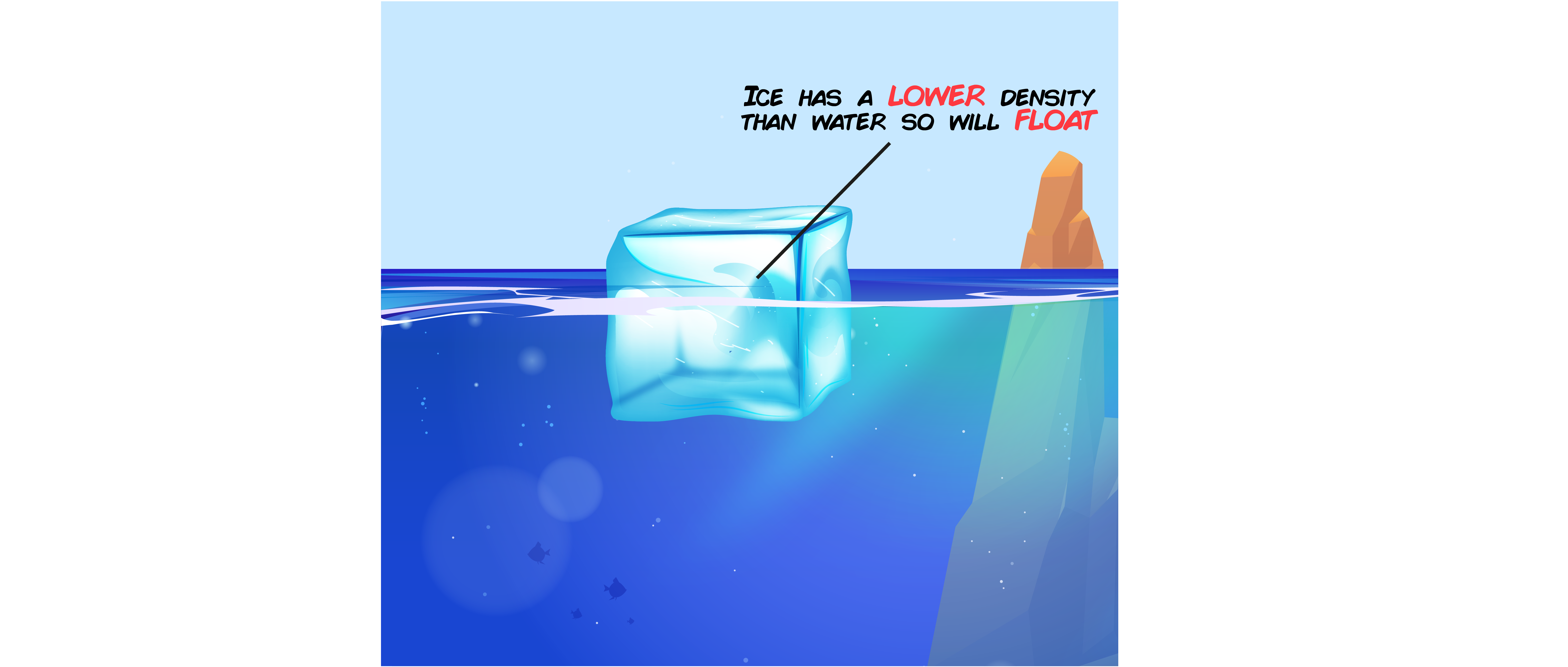
Whether an object floats or sinks ultimately depends on its DENSITY:
An object LESS DENSE than the liquid will FLOAT.
An object MORE DENSE than the liquid will SINK.