
Resultant Forces and Free Body Diagrams
Free Body Diagrams
FREE BODY DIAGRAMS help visualise all the forces acting upon a single object or system. These diagrams simplify complex situations by showing the magnitude and direction of forces.
Resultant force
The RESULTANT FORCE is the OVERALL FORCE resulting from the combination of all forces acting on an object.
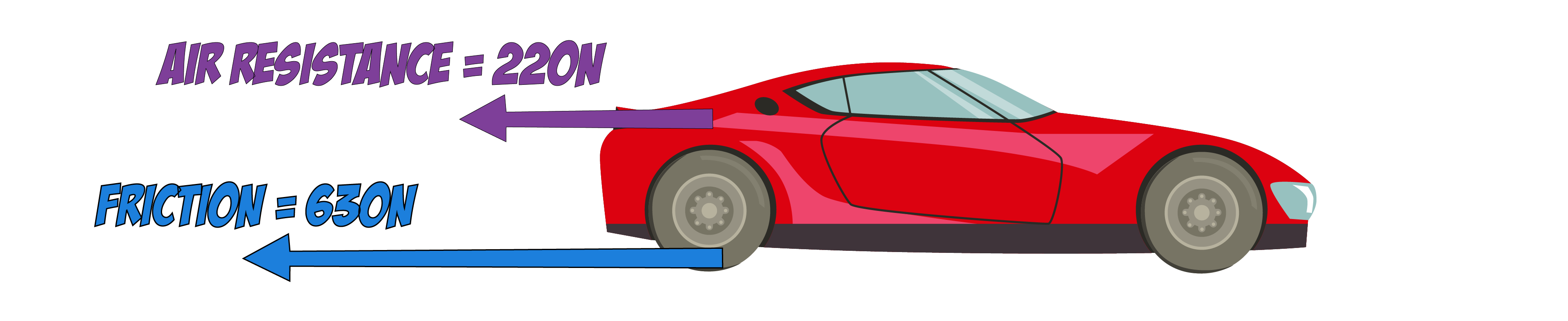
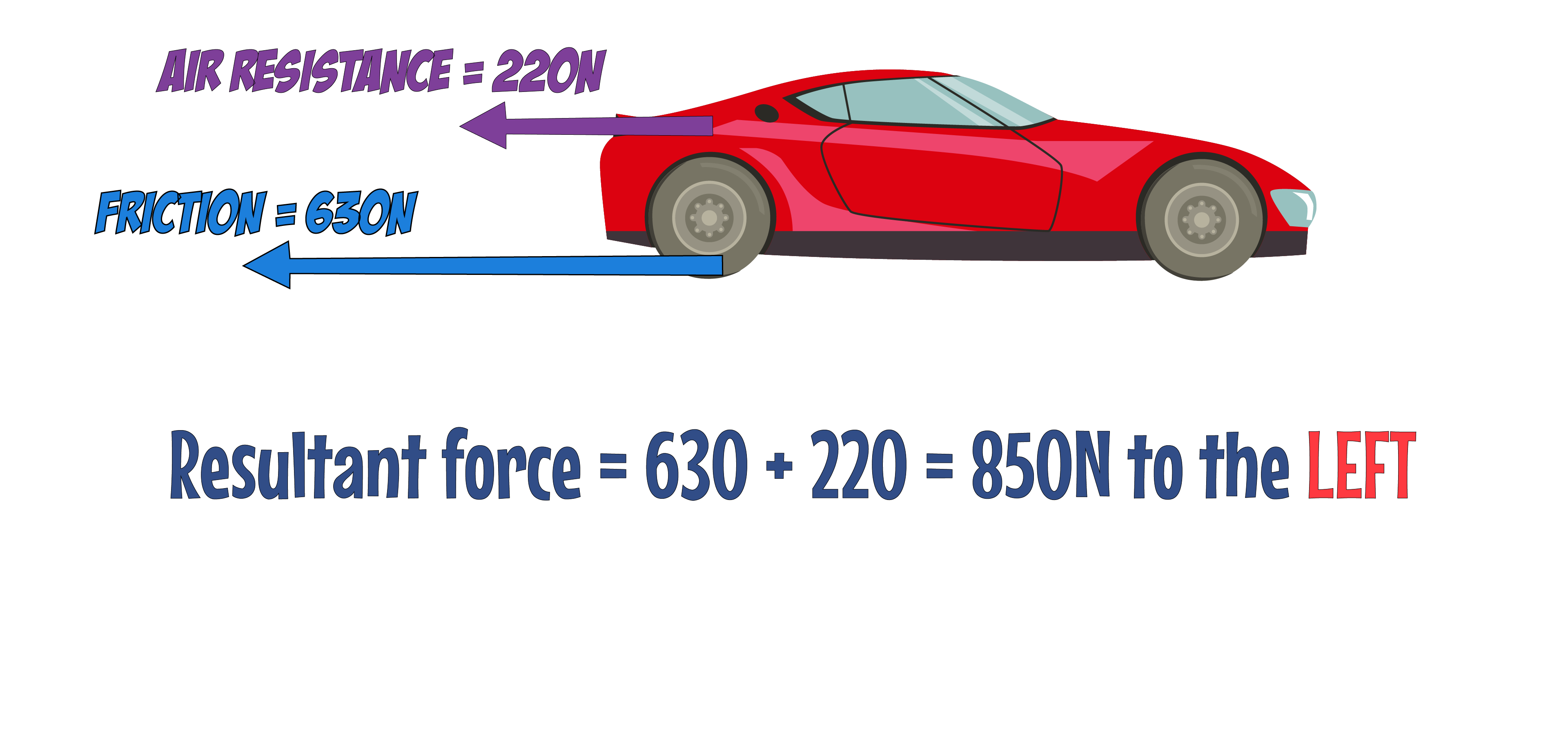
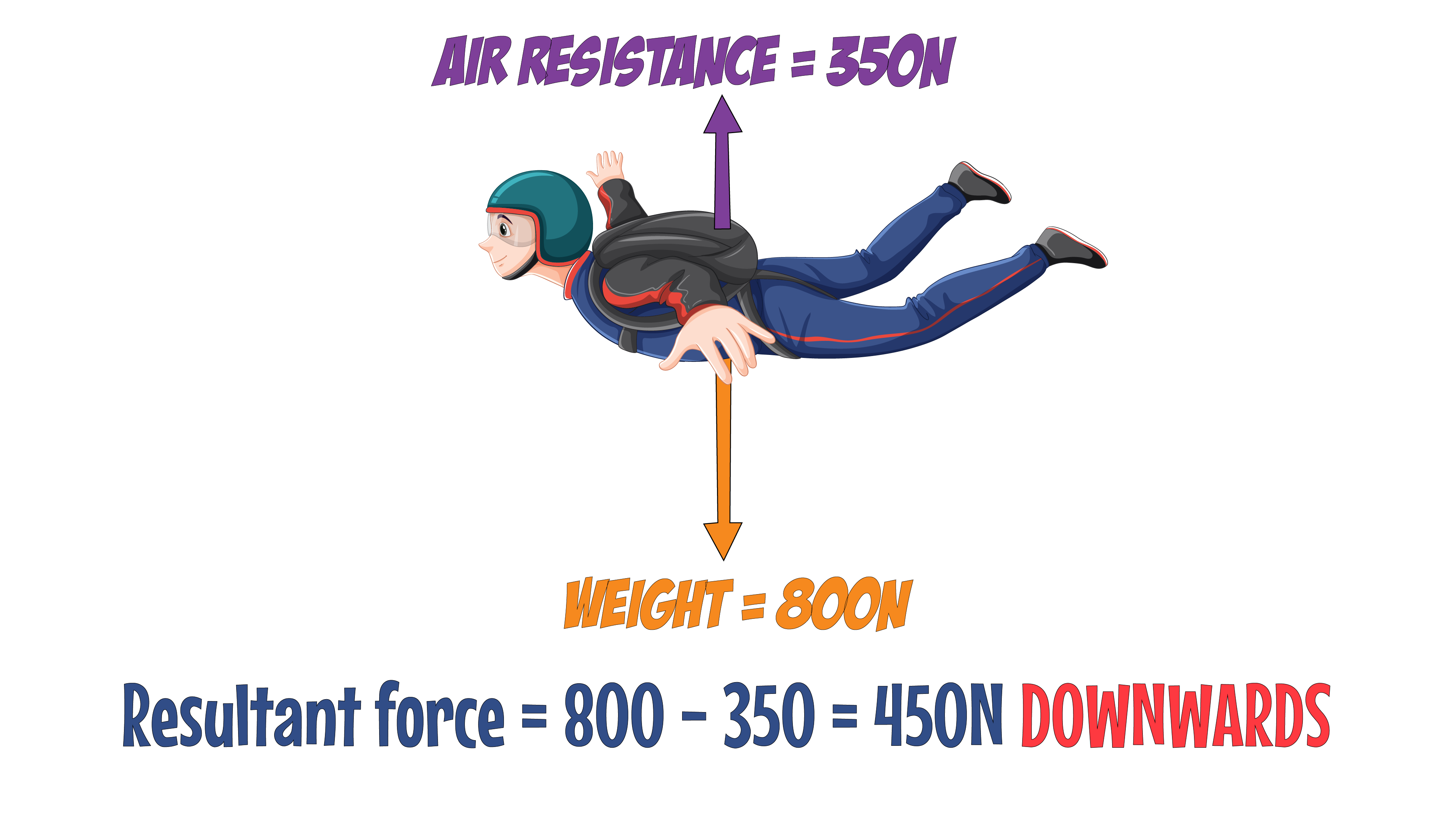
To find the RESULTANT FORCE when multiple forces act along the same line:
- ADD the forces moving in the SAME direction
- SUBTRACT those in the OPPOSITE direction.
Scale Drawings
To find the resultant of forces NOT on the same line, you can use SCALE DRAWINGS:
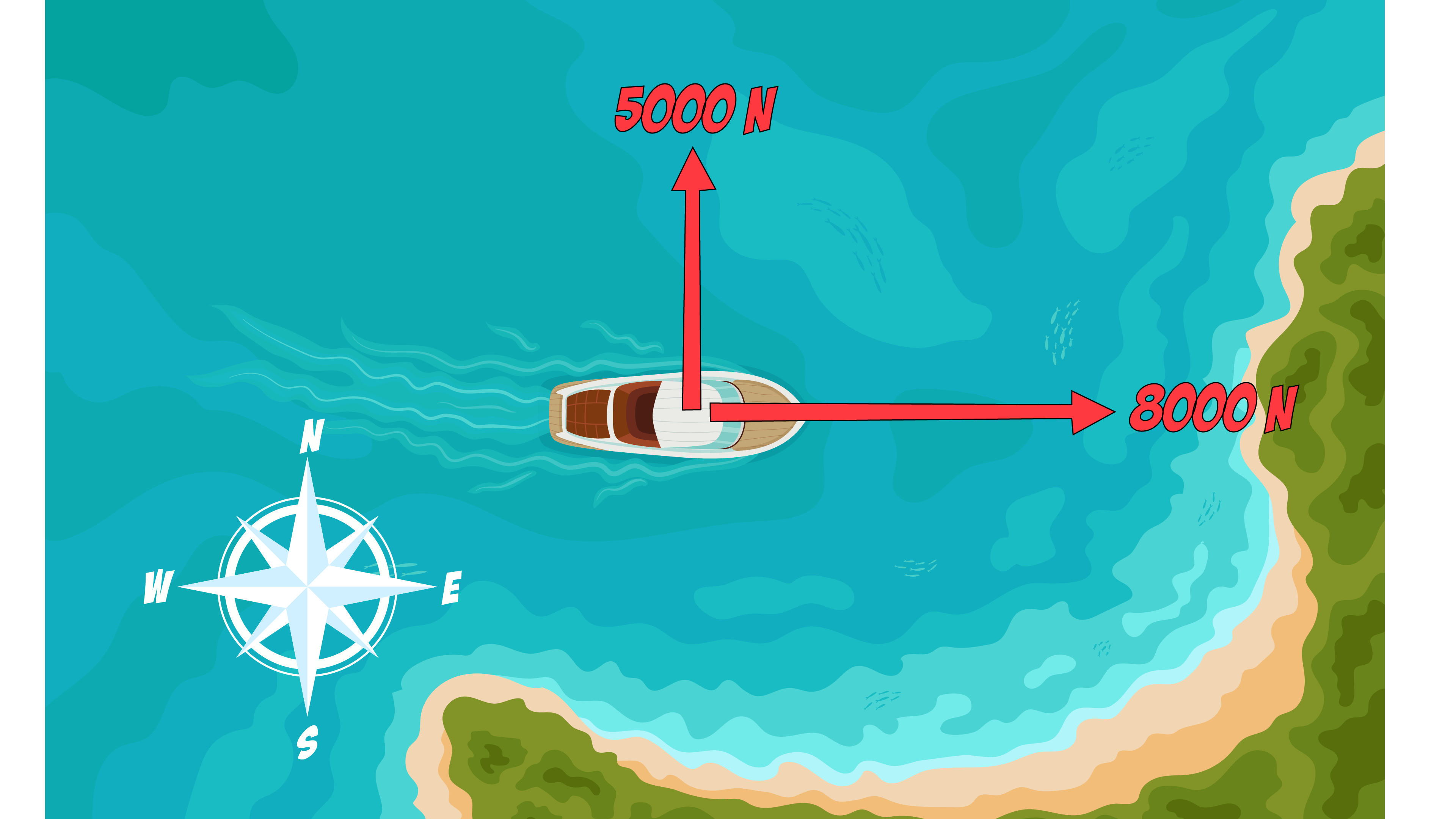
E.g. A boat has two forces acting on it. There is a force of 8000N east and another force of 5000N north. Use a vector diagram to determine the magnitude and direction of the resultant force.
Step 1: Draw the force on a square grid from ‘TIP TO TOE’. (The grid will be provided in the question). Use a sensible scale. Eg. 1000N represents 1cm.
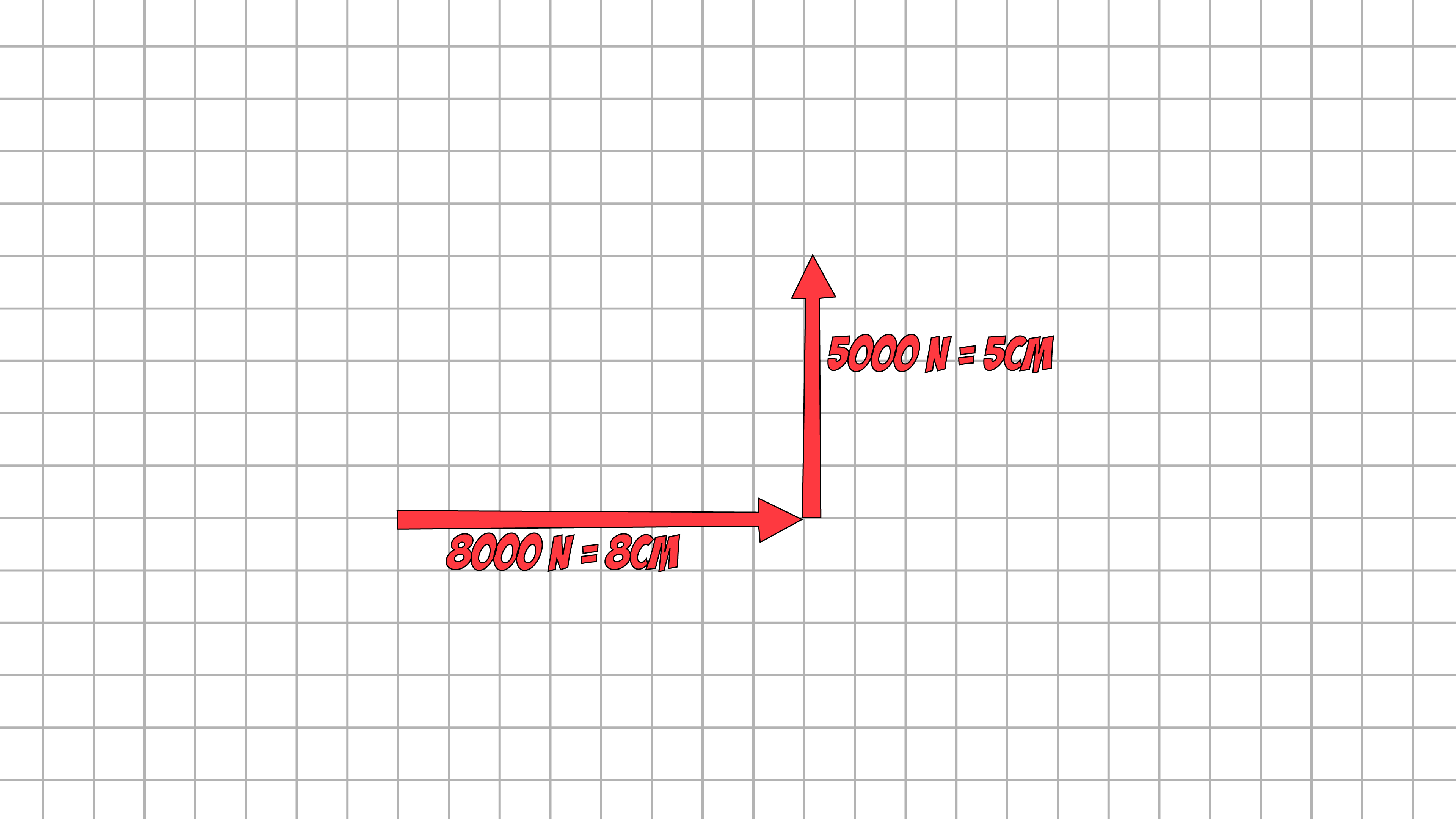
'Tip to toe' means when one force ends, the next one begins
Step 2: Draw a RESULTANT arrow from the START of the first force to the END of the second force.
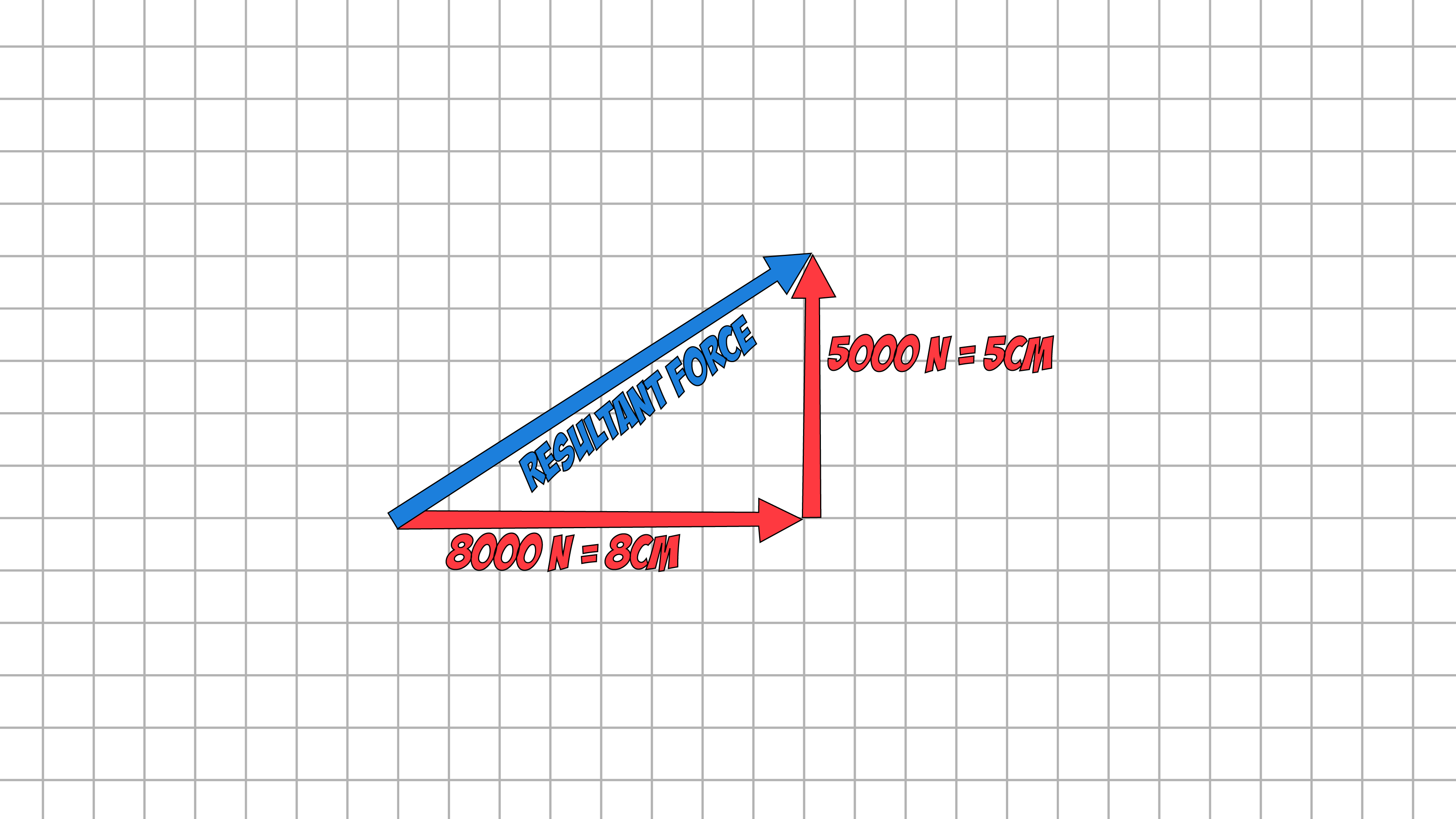
Step 3. Use a RULER to measure the length of the resultant force.
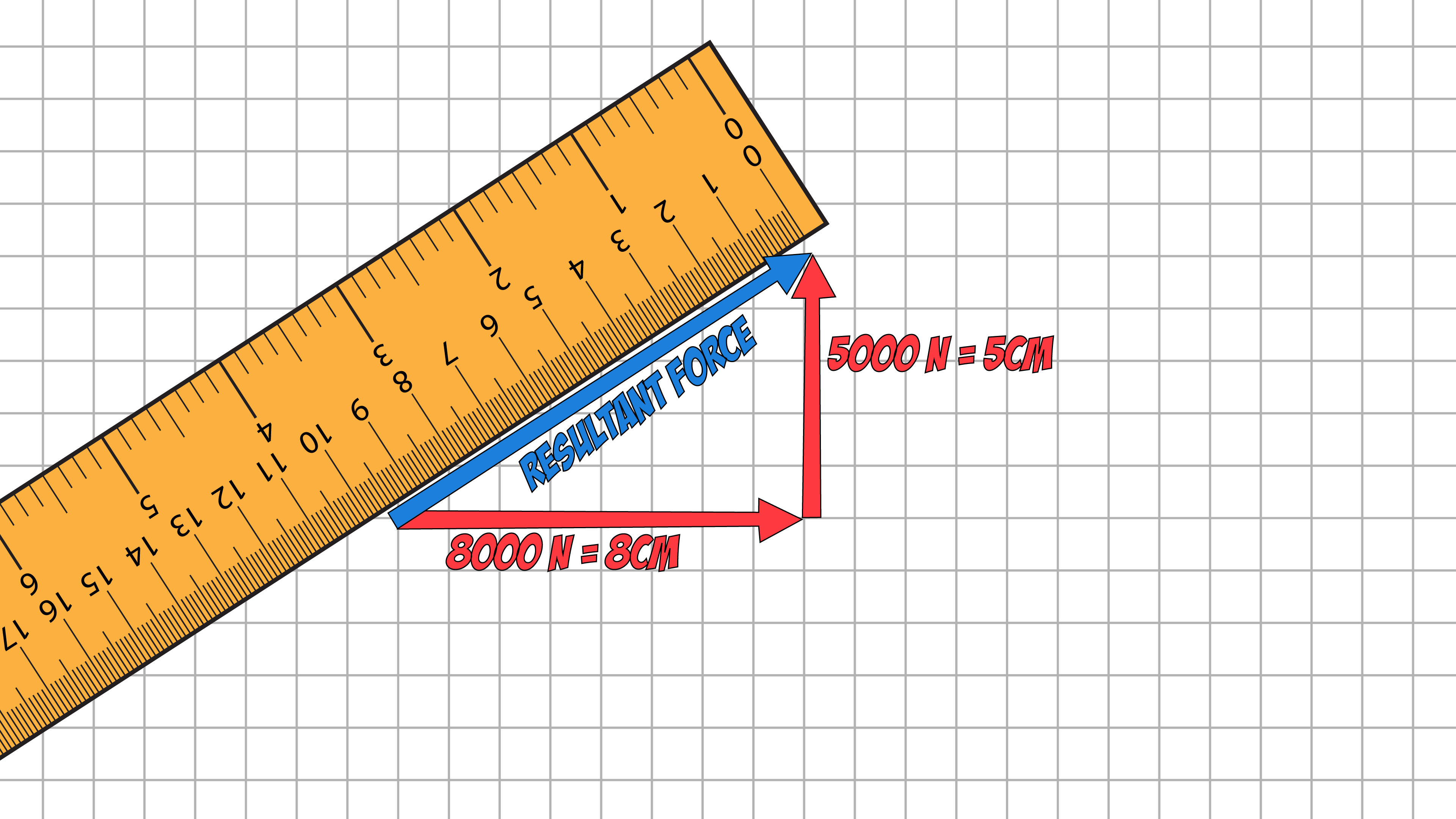
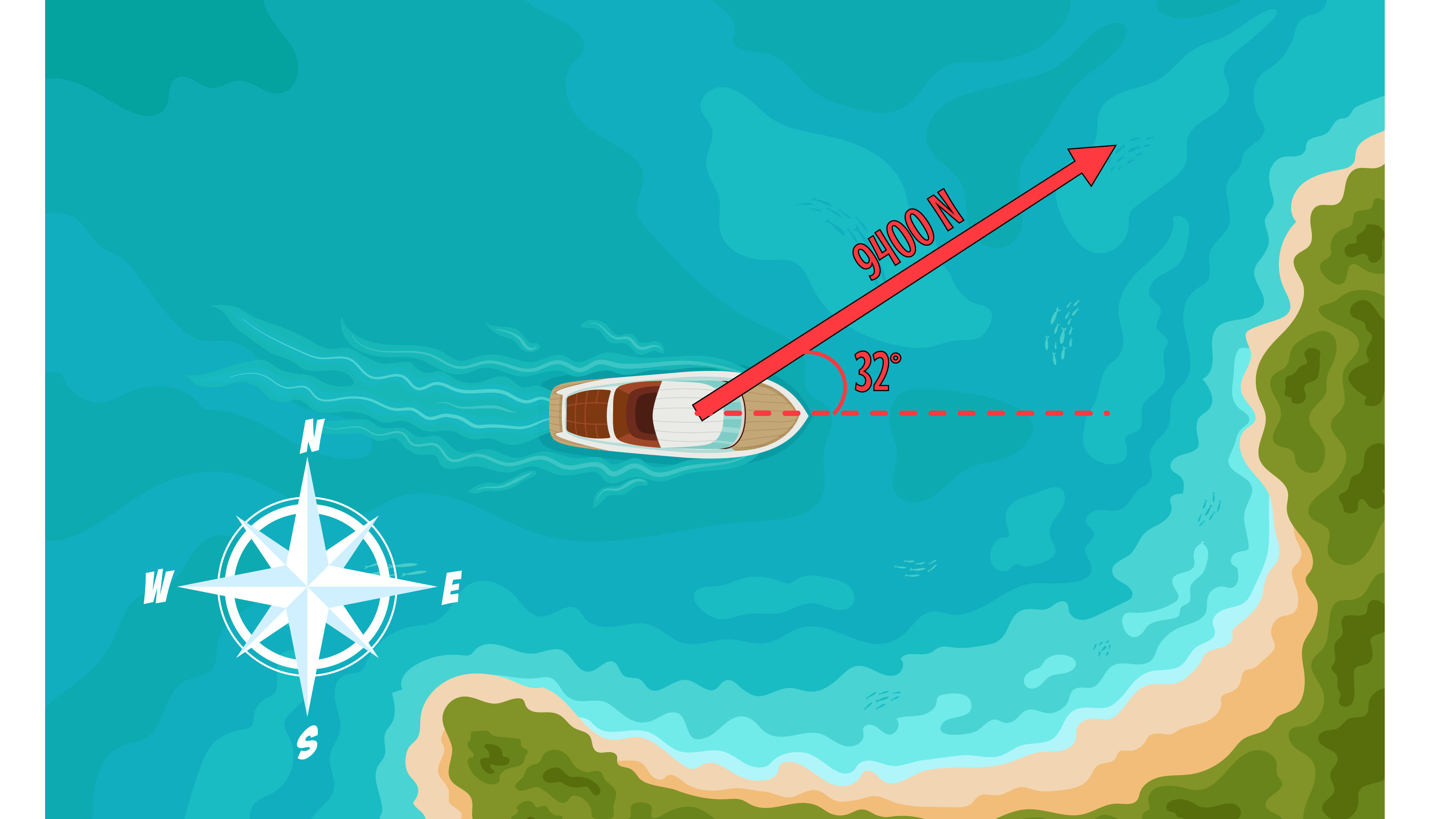
In this example, it measures 9.4cm which represents 9400N. This is the MAGNITUDE of the resultant force.
Step 4. Use a PROTRACTOR to measure the angle of the resultant force.
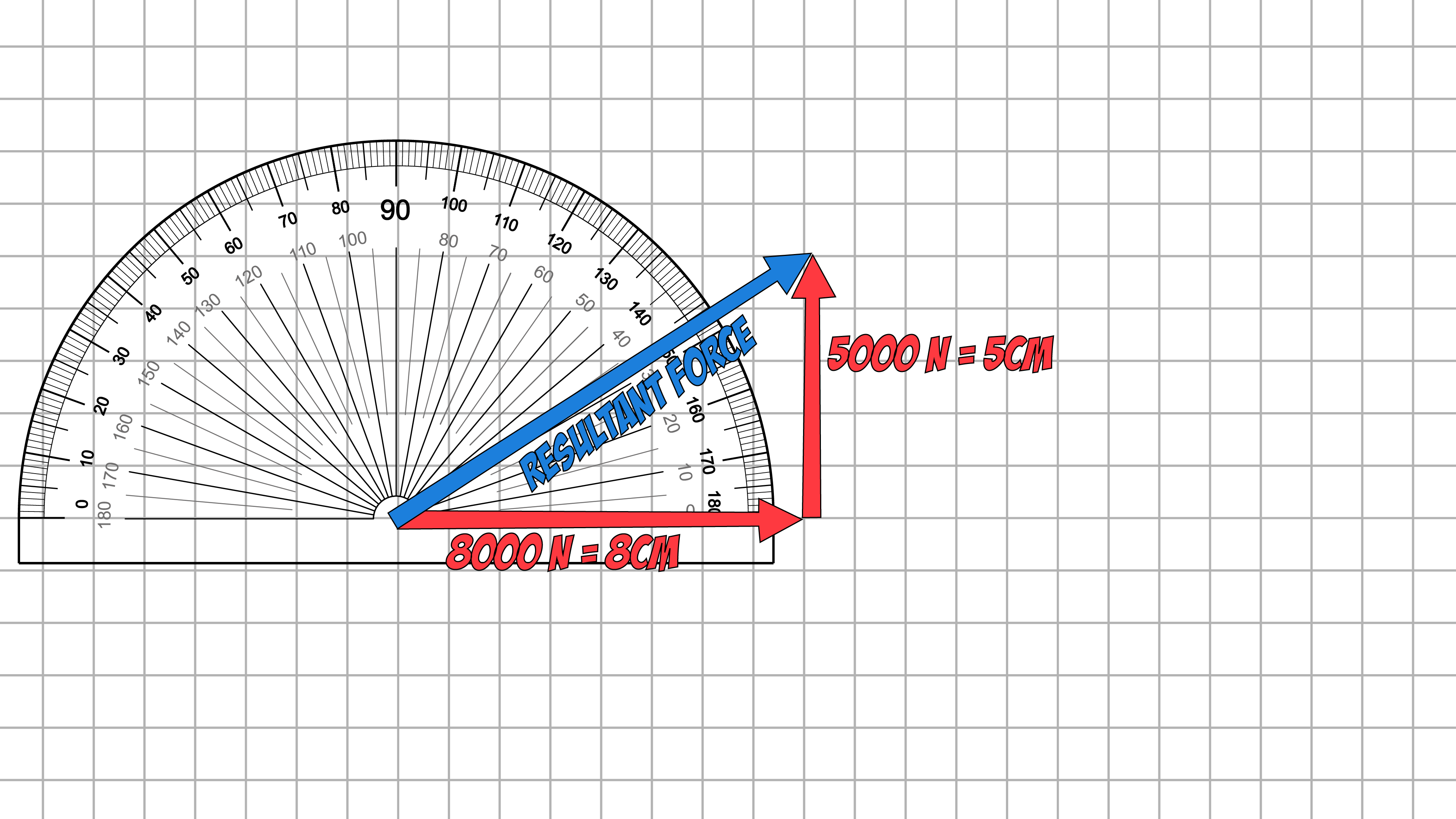
In this example, the angle measures 32°, so the DIRECTION of the of the resultant force is 32° to the horizontal.
This means that the final diagram of the boat can be drawn with a SINGLE RESULTANT ARROW with the information that has been calculated:
Components of a Force
All forces can be broken down into TWO COMPONENTS:
- HORIZONTAL COMPONENT
- VERTICAL COMPONENT
These components can be resolved using a SCALE GRID.
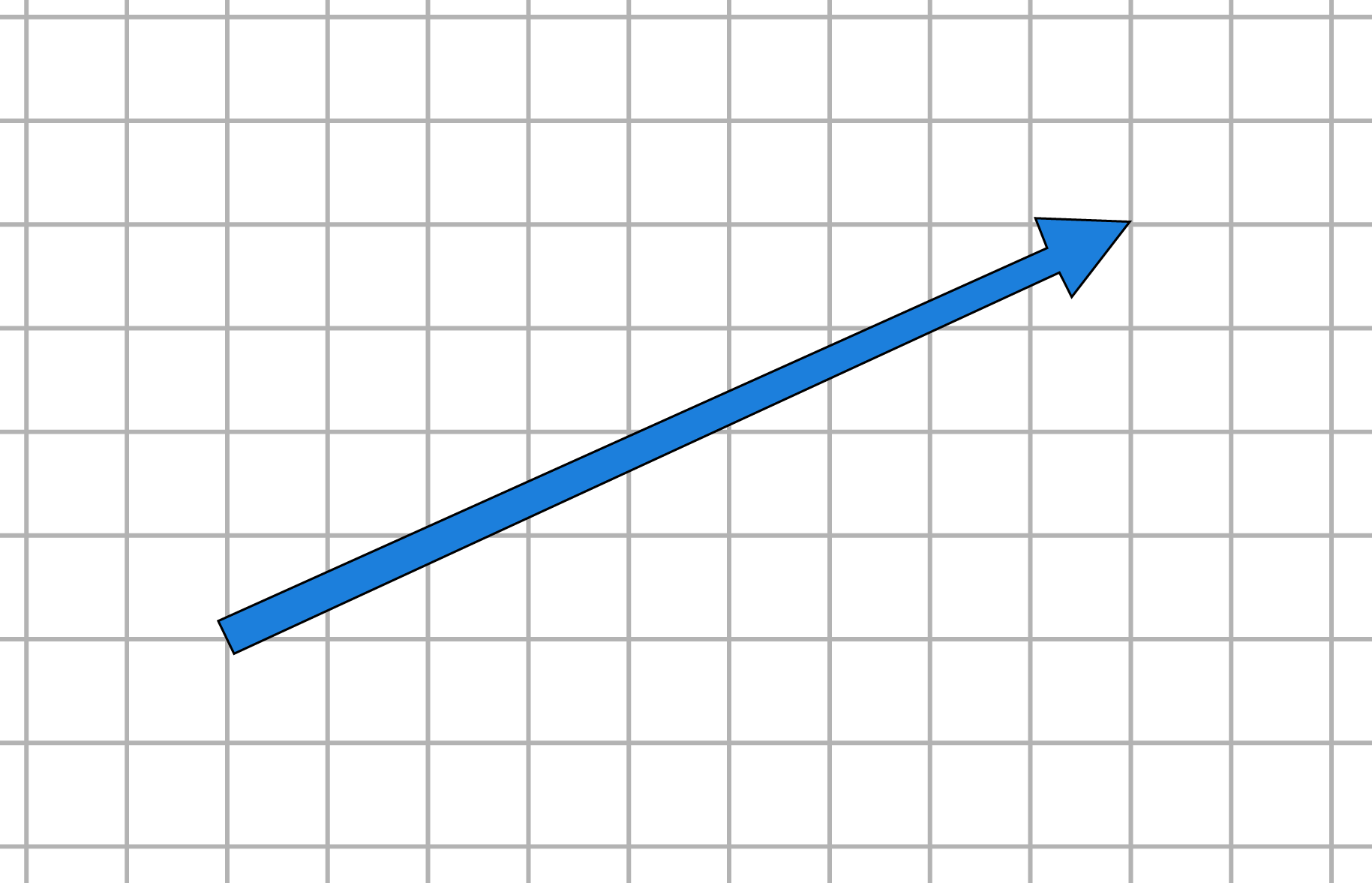
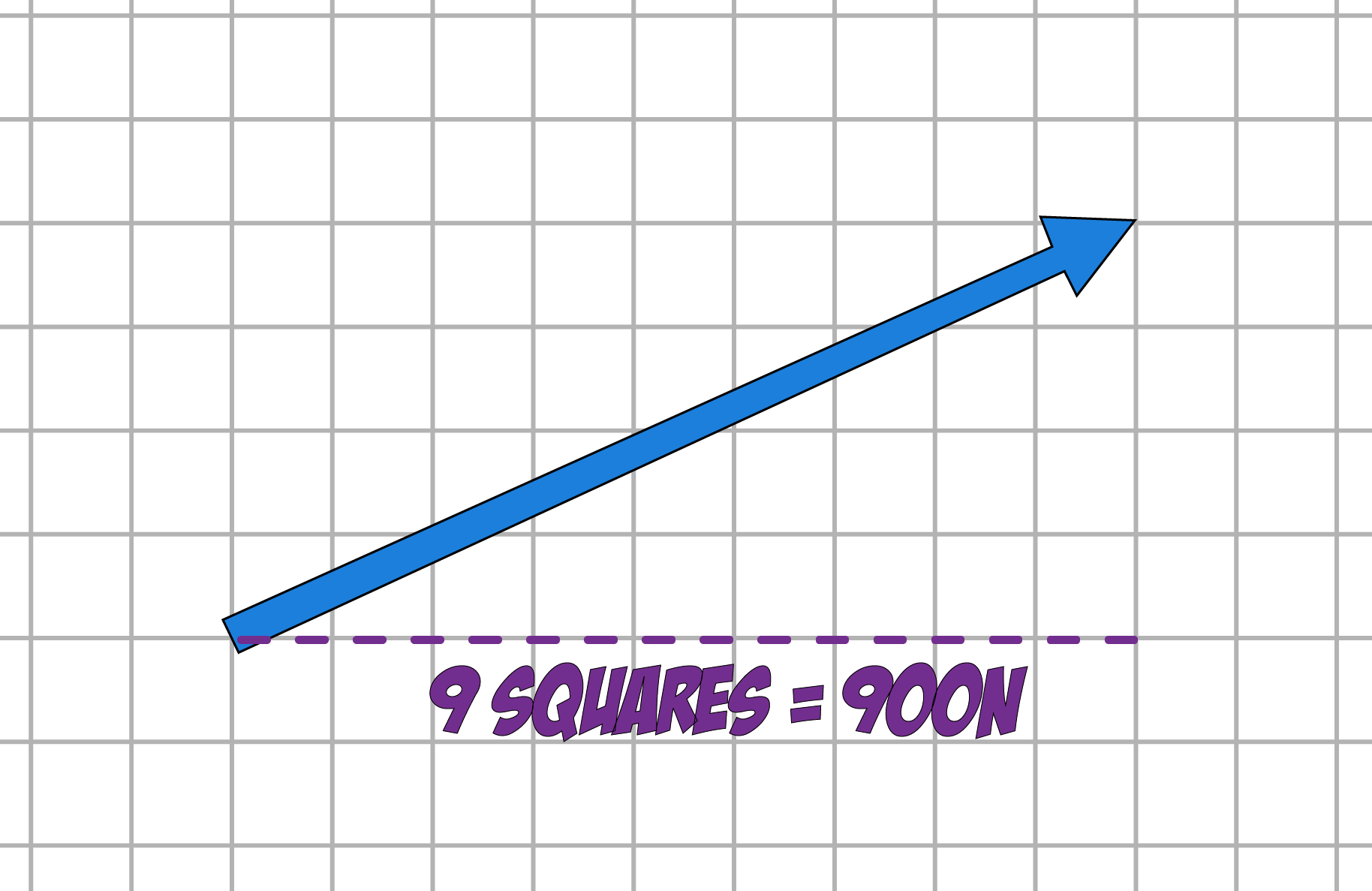
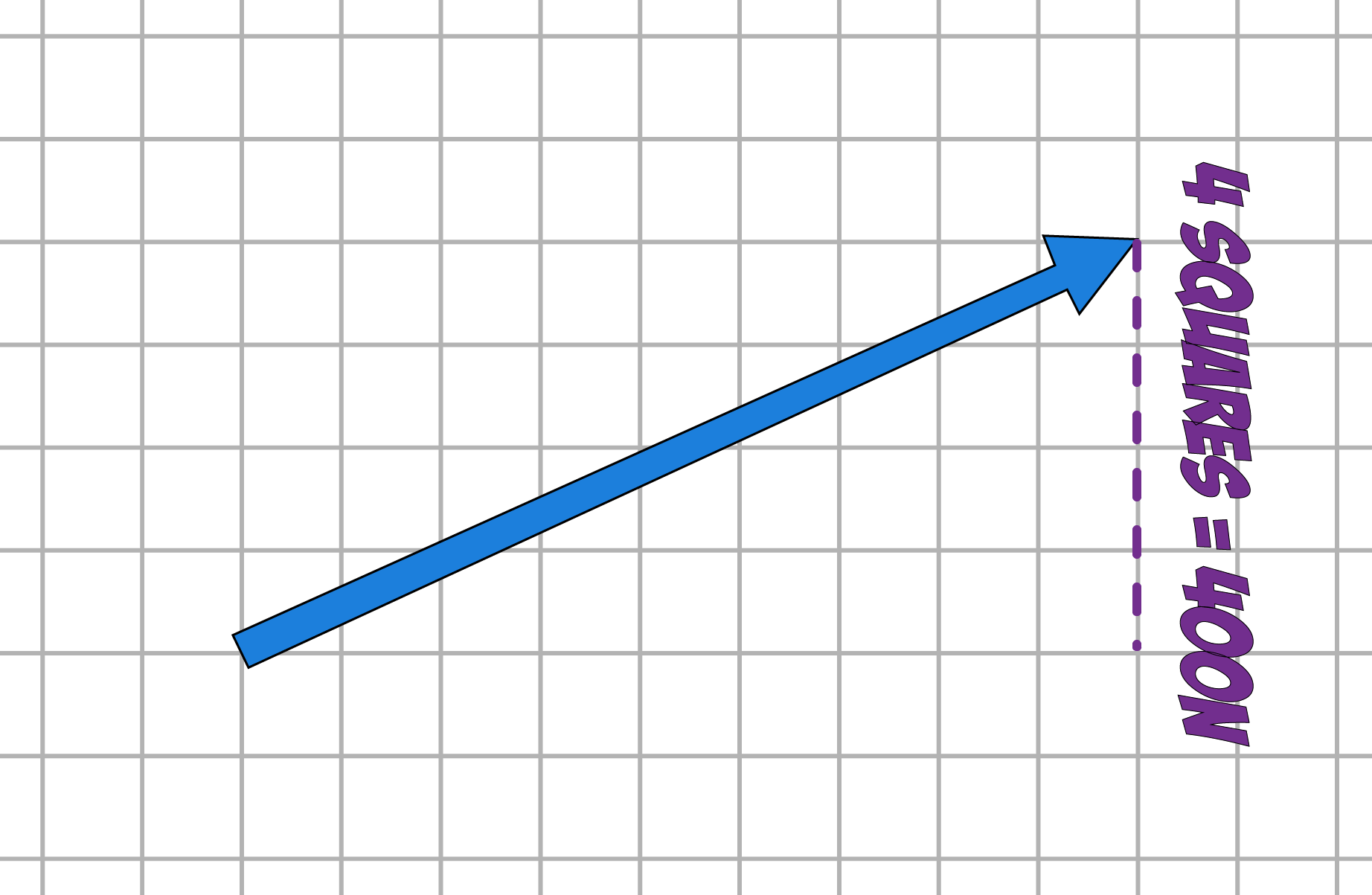
Let's say that in this example, 1 square represents 100N.
The HORIZONTAL COMPONENT can be found by measuring the HORIZONTAL LENGTH of the force.
The VERTICAL COMPONENT can be found by measuring the VERTICAL LENGTH of the force.
The two component forces COMBINED TOGETHER have the same effect as the ORIGINAL single force.