Gravity and Weight
Mass vs Weight
- MASS is the amount of MATTER in an object.
- WEIGHT is the force due to GRAVITY that is acting on an object with MASS.
- WEIGHT is different from mass as it is dependent on the GRAVITATIONAL FIELD STRENGTH that the Earth (or a planet) exerts on the object.
- Weight is commonly measured with a CALIBRATED SPRING-BALANCE (also known as a Newton meter).

Gravitational Field Strength
- The WEIGHT of an object is influenced by the GRAVITATIONAL FIELD STRENGTH where the object is located.
- This strength varies depending on the planet the object is on and the distance it is from the centre of the planet.
- The GRAVITATIONAL FIELD STRENGTH on Earth is 9.8 N/kg.
Calculating Weight
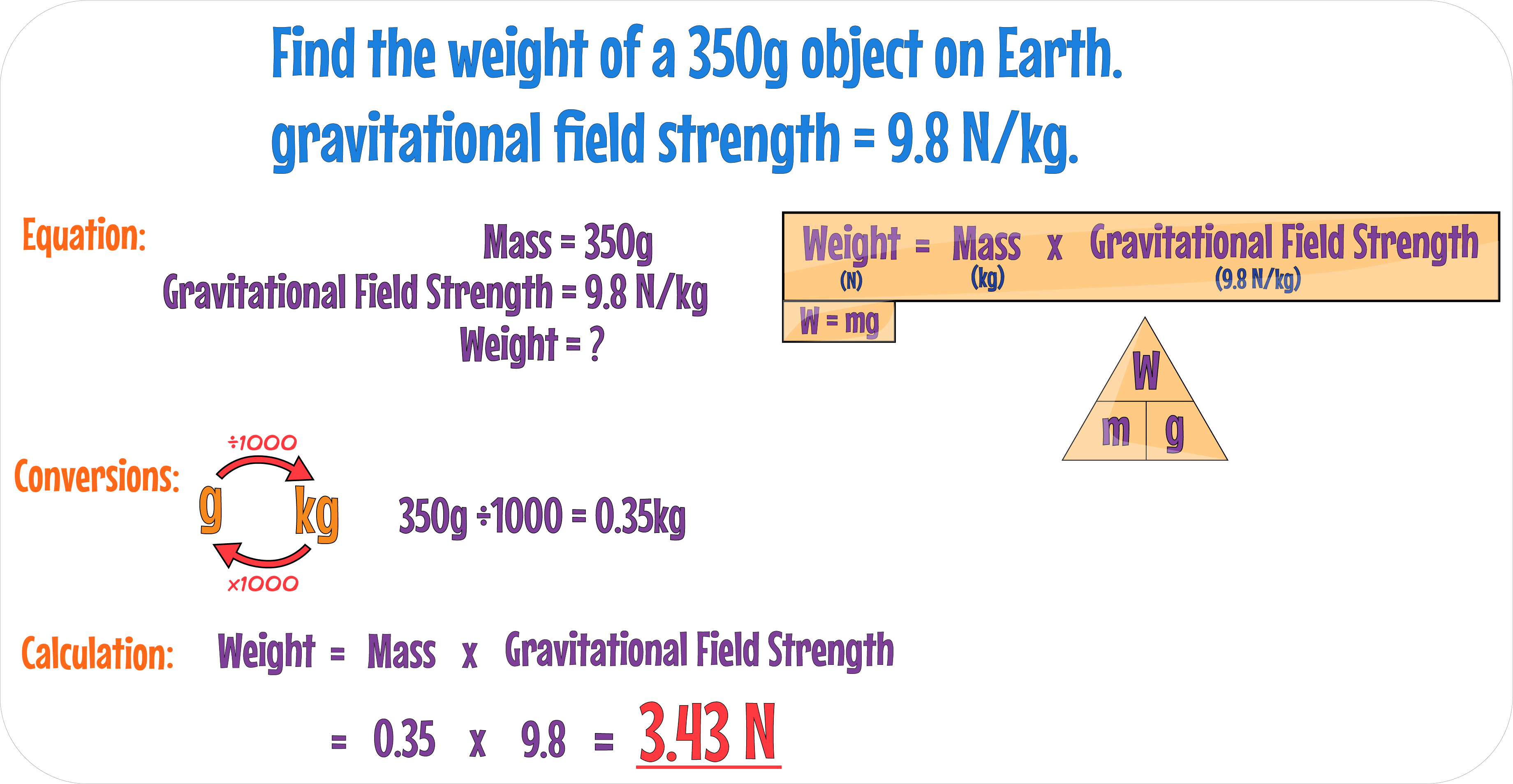
- To calculate the weight of an object, use the equation:
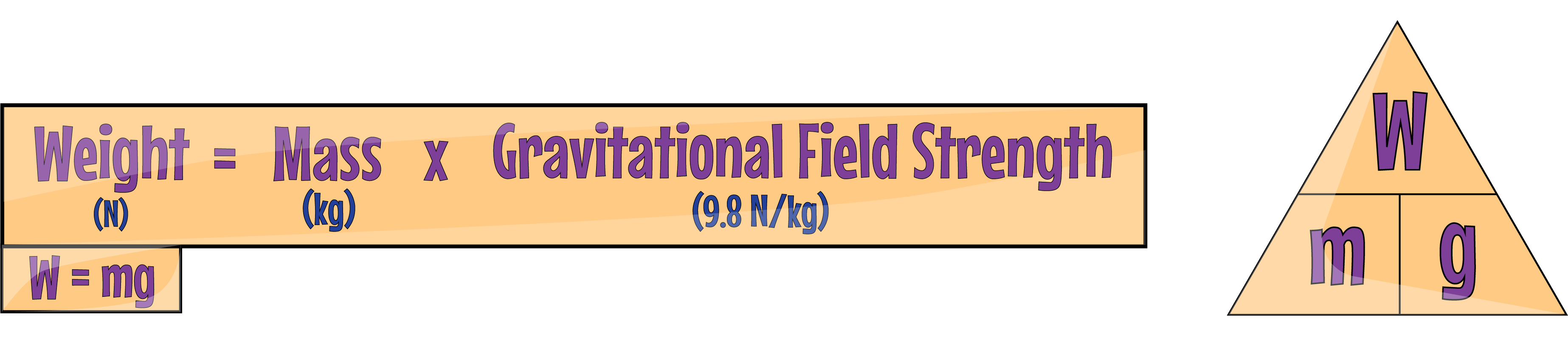
where:
- W is weight measured in Newtons (N).
- m is mass in Kilograms (kg).
- g is gravitational field strength in Newtons per kilogram (N/kg).
The gravitational field strength (g) will be given in any calculation required.
This equation shows that WEIGHT is DIRECTLY PROPORTIONAL to the MASS of an object.
This means if you DOUBLE the mass of an object, its weight also DOUBLES, provided that the gravitational field strength remains constant.
Centre of Mass
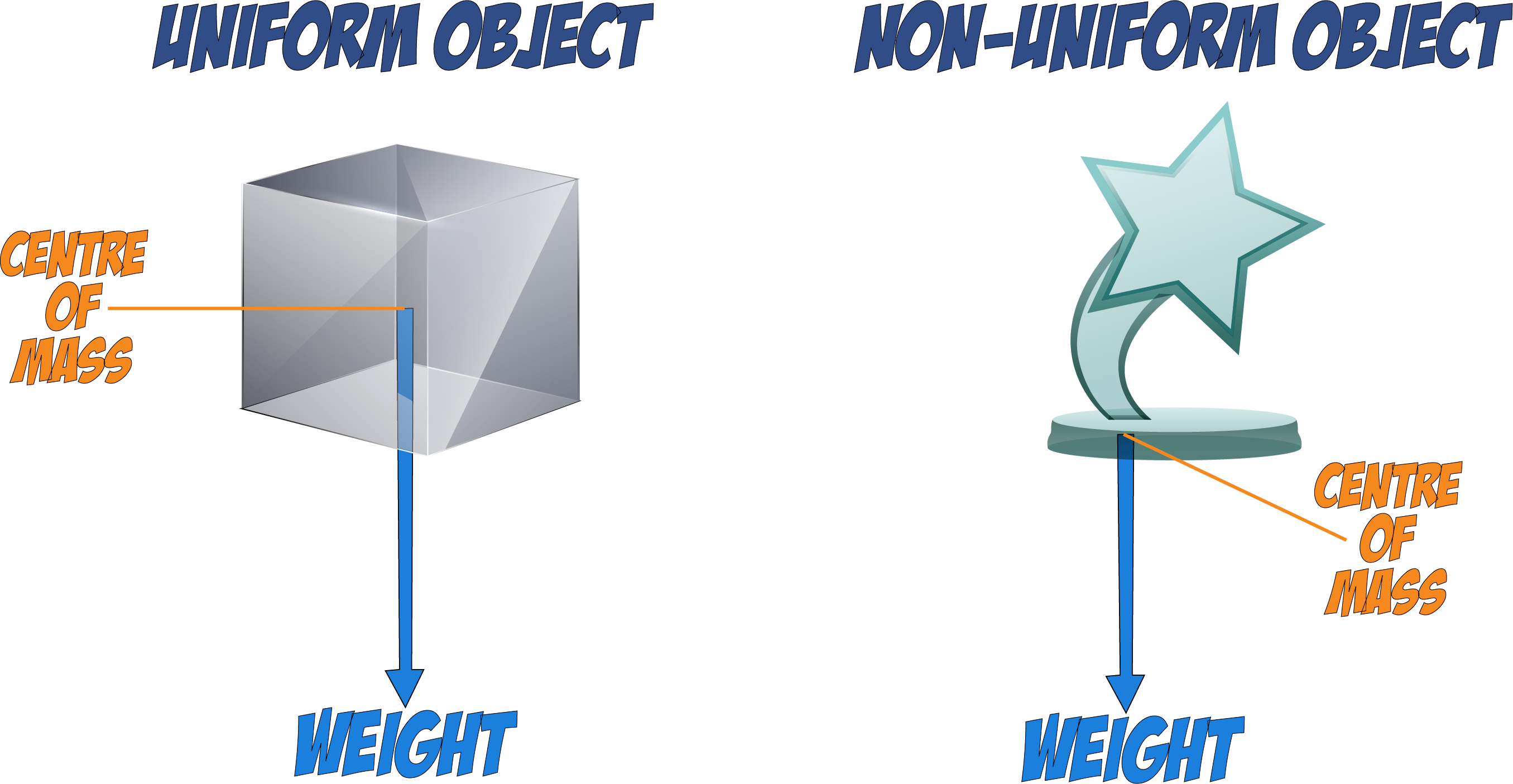
- The weight of an object acts through a single point known as the CENTRE OF MASS.
- For a UNIFORM and SYMMETRICAL object, this is at the CENTRE of the object, but its position can change based on the object.
- When representing WEIGHT on force diagrams, the arrow needs to start at the CENTRE OF MASS of the object.