
Nuclear Fusion
NUCLEAR FUSION is the OPPOSITE of nuclear FISSION.
NUCLEAR FUSION is the process where two light nuclei COMBINE to form a single, HEAVIER nucleus, releasing a significant amount of energy.
The Process of Fusion
During fusion, two NUCLEI (for example HYDROGEN NUCLEI), collide and fuse together to form a HELIUM NUCLEUS. This process typically occurs at extremely HIGH TEMPERATURES and PRESSURES.
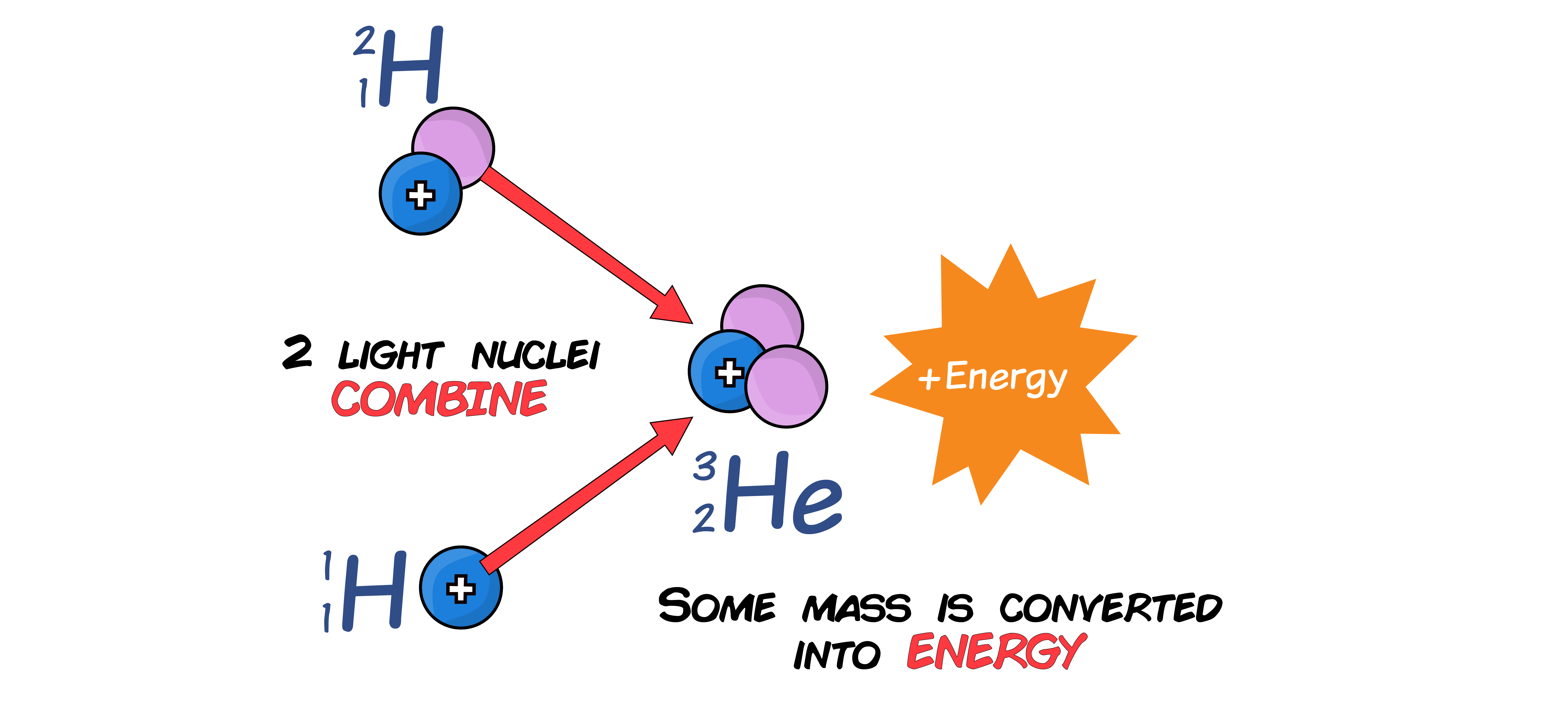
The resulting HEAVIER NUCLEUS from the fusion does not have as much mass as the combined mass of the original lighter nuclei.
Some of the mass is CONVERTED into ENERGY, which is released during the reaction.
Energy Release in Fusion
The energy released by FUSION is MUCH GREATER than what is typically produced in FISSION reactions for a given amount of fuel.
This makes fusion a potentially powerful energy source.