
Mass Number, Atomic Number and Isotopes
- Atoms of each element are represented by a CHEMICAL SYMBOL which can be found in the PERIODIC TABLE. E.g. Carbon has the symbol C.
- They can be represented as below:
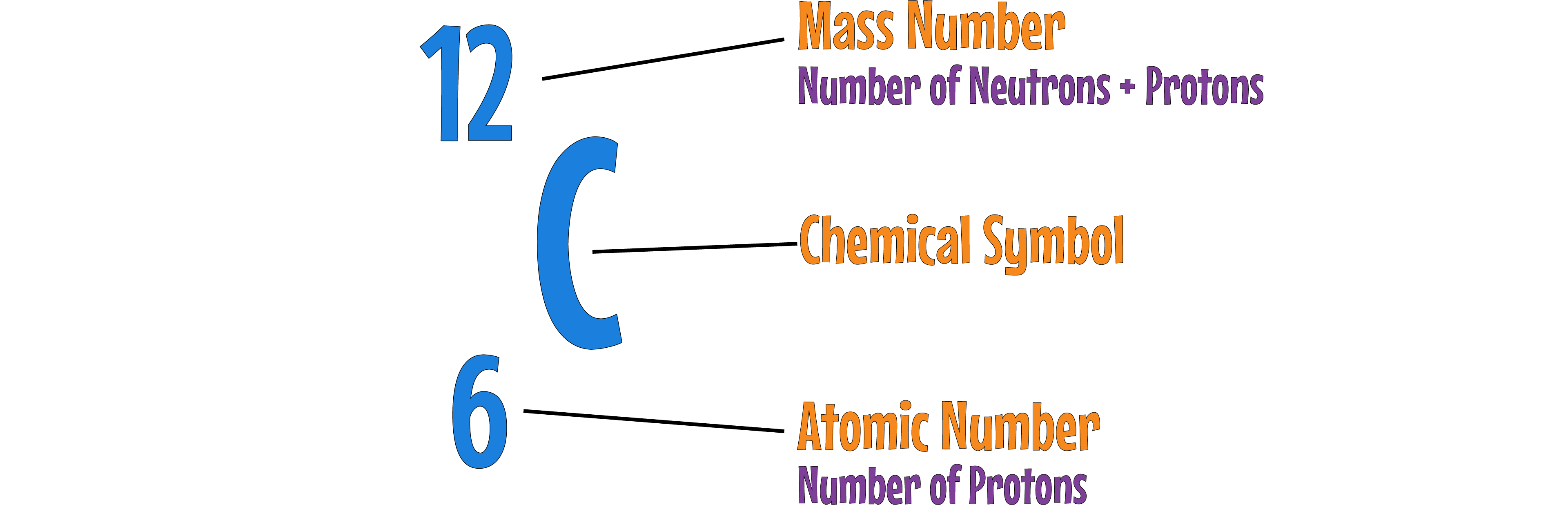
- The ATOMIC NUMBER indicates how many protons are in an atom's nucleus.
- The MASS NUMBER is the total count of both protons and neutrons.
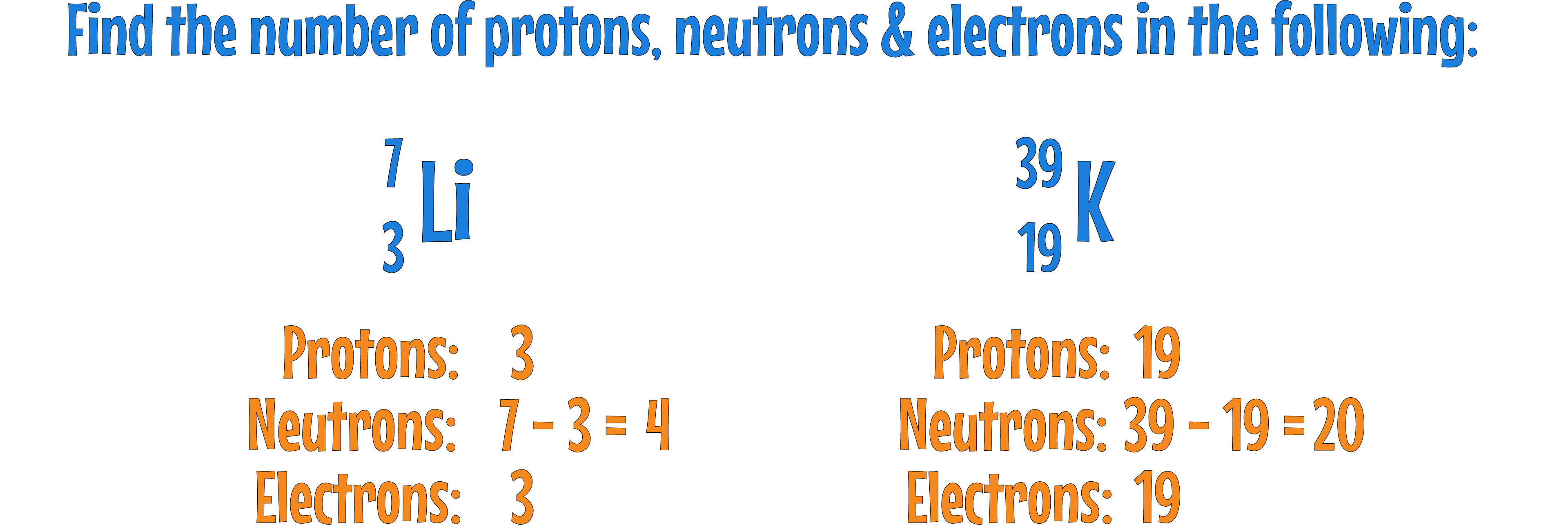
- To find the number of NEUTRONS, SUBTRACT the atomic number from the mass number.
Elements
- An ELEMENT is a substance made up of ONE TYPE OF ATOM.
- All the atoms in an element contain the SAME NUMBER of PROTONS in their nucleus.
- When atoms have different numbers of PROTONS, they are classified as DIFFERENT elements.
- This means the ATOMIC NUMBER determines the ELEMENT. For example, Carbon atoms ALWAYS have 12 protons (has an atomic number of 12).
Positive Ions
- Sometimes, radiation can cause electrons to be REMOVED from an atom in a process known as IONISATION.
- When this happens, an atom LOSES electrons to turn into a POSITIVE ION.
Isotopes
- All atoms of a particular ELEMENT have the same ATOMIC NUMBER but may have different numbers of NEUTRONS.
- ISOTOPES are different forms of the same element, having the SAME NUMBER OF PROTONS (same atomic number) but DIFFERENT NUMBERS OF NEUTRONS (different mass numbers).
- A common example is carbon-12, carbon-13 and carbon-14 which all have six protons but differ in the number of neutrons:
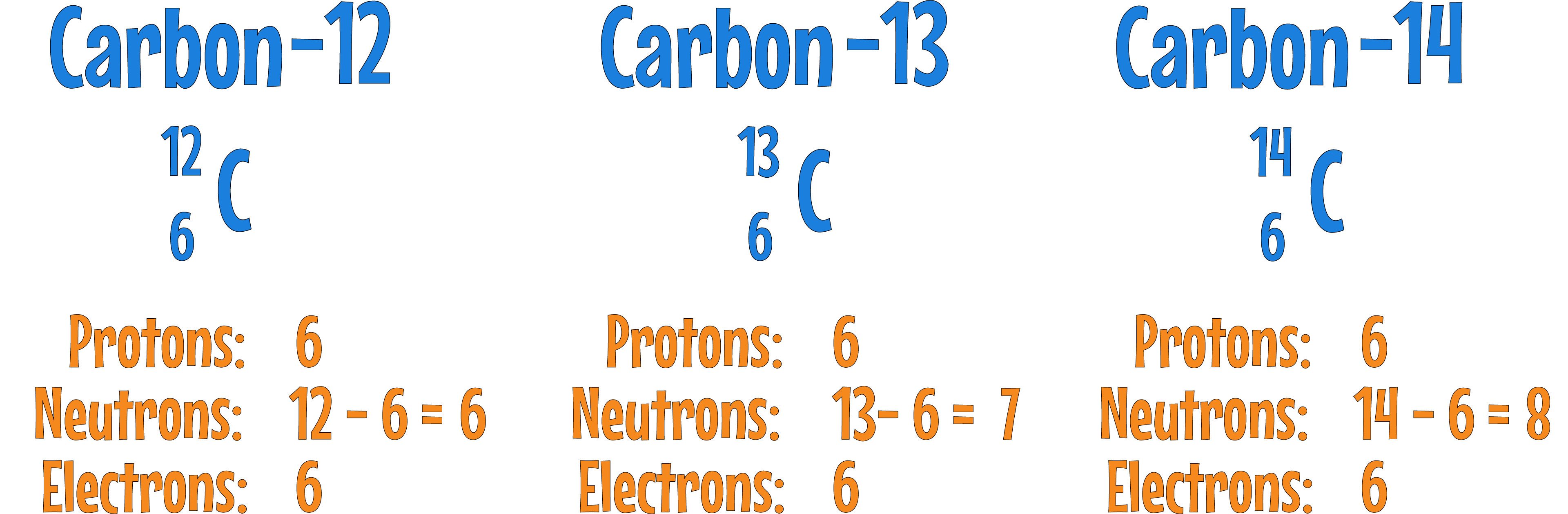
- The number of neutrons in an atom does NOT affect the charge of the atom, only its mass.
- This is because neutrons have no charge but do have mass.