
Structure of an Atom
- ATOMS are incredibly SMALL, and make up EVERYTHING in the universe.
- They are the SMALLEST part of an ELEMENT that can exist.
- They are composed of THREE even smaller particles known as SUB-ATOMIC PARTICLES: PROTONS, NEUTRONS, and ELECTRONS.
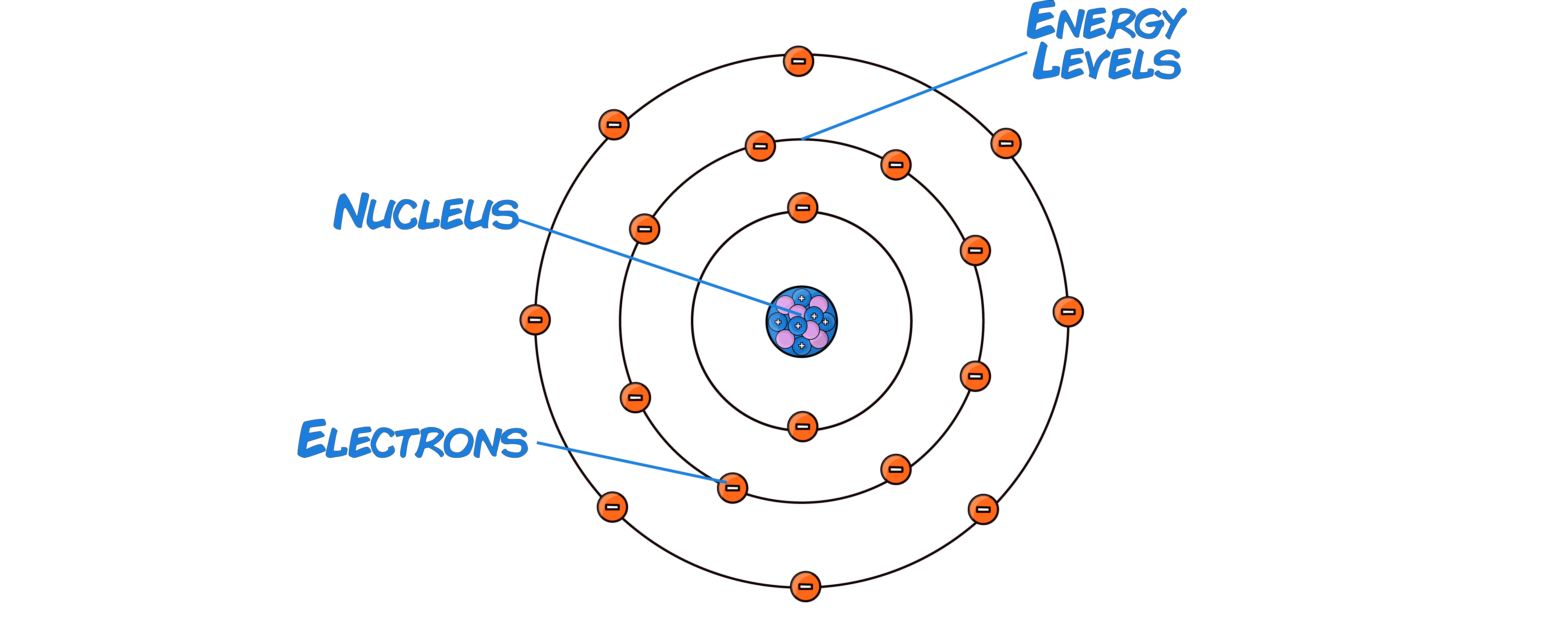
- At the center of an atom lies the NUCLEUS, containing PROTONS and NEUTRONS.
- PROTONS have a positive charge (+1).
- NEUTRONS have no charge (0).
- ELECTRONS are negatively charged (−1).
- They orbit the nucleus at different distances from the nucleus known as ENERGY LEVELS (shells).
- Sometimes electrons can MOVE to a HIGHER or LOWER ENERGY LEVEL.
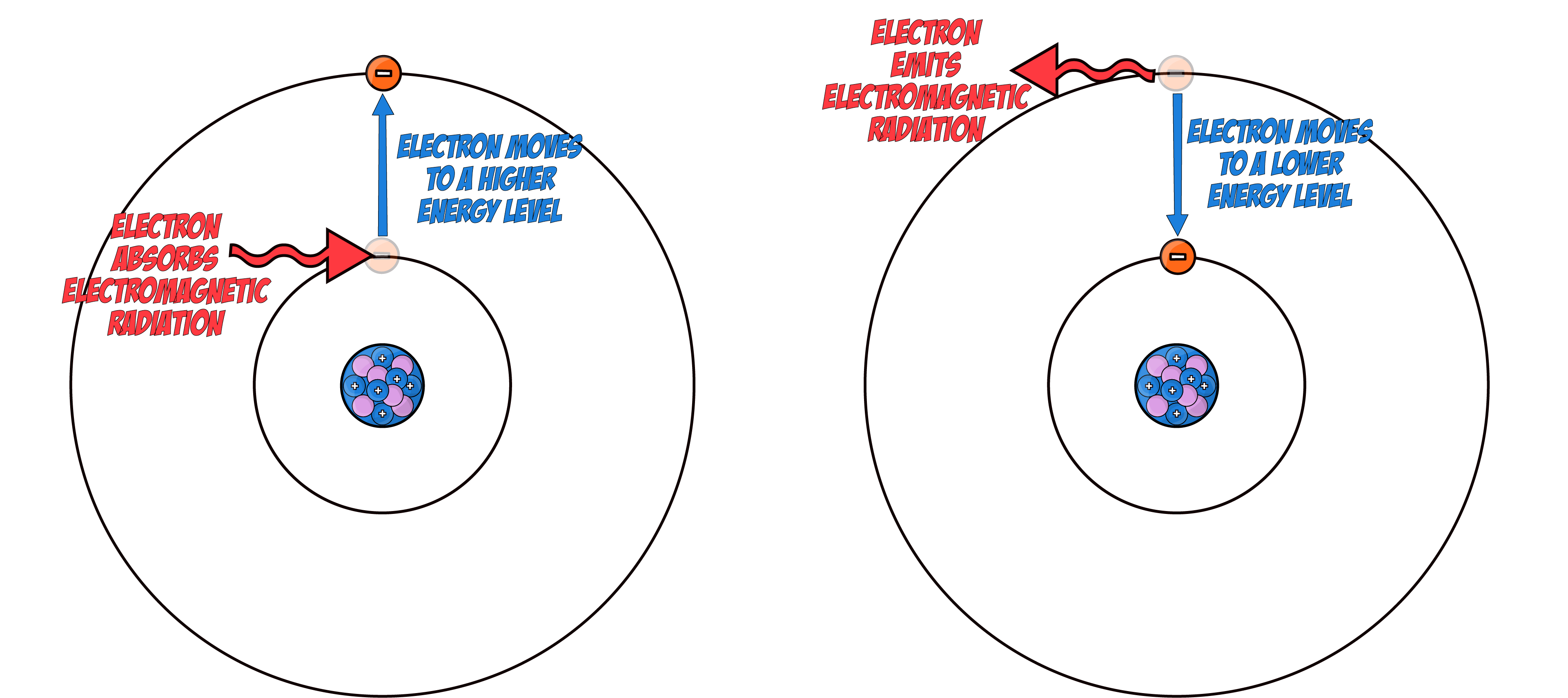
- When an electron ABSORBS ELECTROMAGNETIC RADIATION, it MOVES to a HIGHER energy level FURTHER from the nucleus.
- When an electron EMITS ELECTROMAGNETIC RADIATION, it MOVES to a LOWER energy level CLOSER to the nucleus.
- The NUCLEUS is tiny compared to the whole atom, about 1/10,000 of the atom's total size, but it holds nearly ALL the atom's mass.
Radius of an ATOM: 1 x 10⁻¹⁰ m
Radius of a NUCLEUS: 1 x 10-14 m
- Atoms are NEUTRAL and have NO OVERALL CHARGE.
- This is because they have the SAME NUMBER OF PROTONS AND ELECTRONS, which CANCELS OUT THEIR CHARGES.