
States of Matter
Matter is made up of tiny particles and can exist in three main states: solid, liquid, and gas. The PARTICLE MODEL of matter helps explain these states:
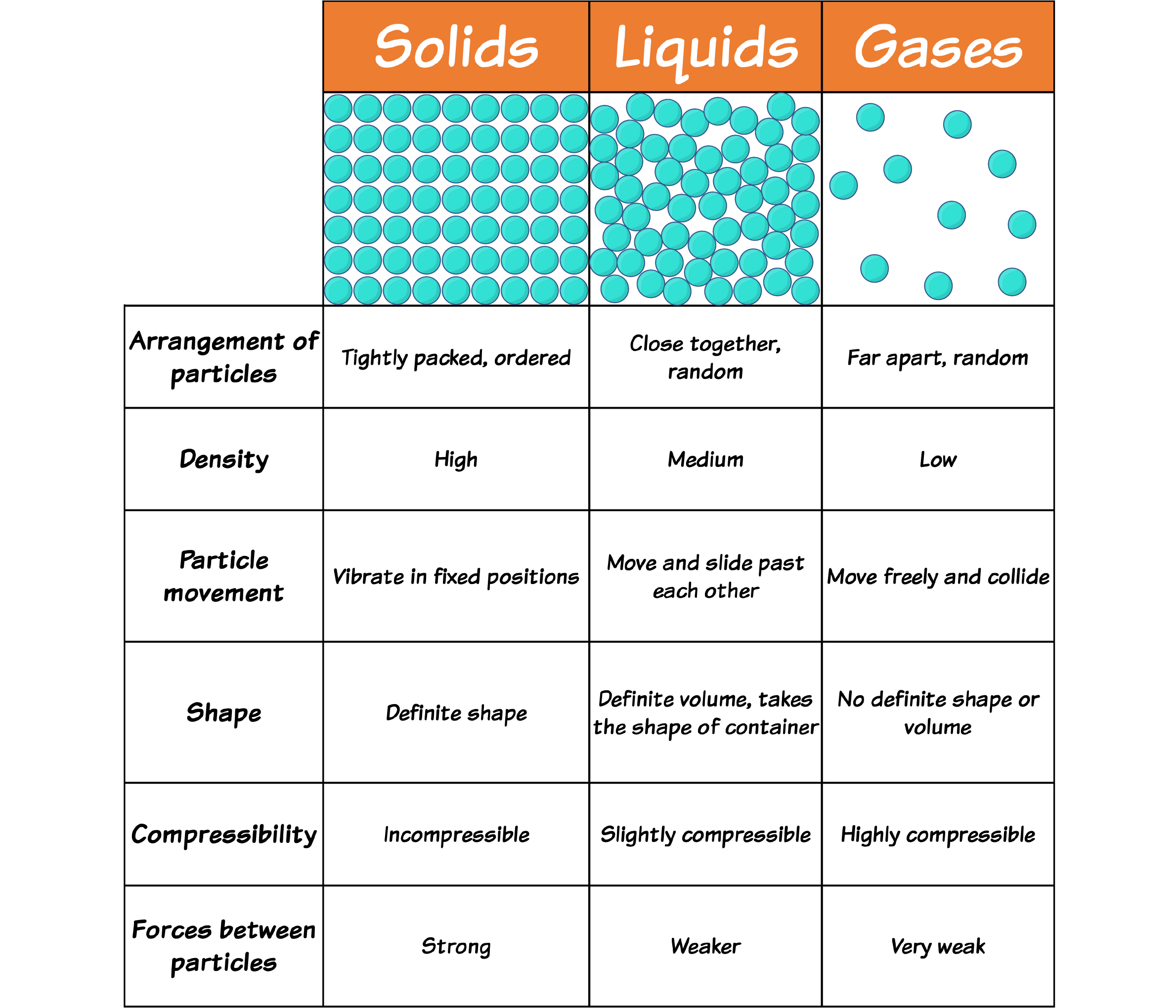
- SOLIDS: Particles are tightly packed in a FIXED, REGULAR PATTERN. They have strong forces between them and can only vibrate in place, giving solids a DEFINITE SHAPE and VOLUME.
- LIQUIDS: Particles are close but can move past each other due to WEAKER FORCES of attraction. This allows liquids to flow and take the shape of their container while maintaining a CONSTANT VOLUME.
- GASES: Particles in a gas move freely at high speeds due to VERY WEAK OR NO FORCES of attraction between them. Gases have NO FIXED SHAPE or volume and will EXPAND to fill any container.
DENSITY DIFFERENCES
The density of a substance is a measure of how tightly packed its particles are.
- In solids, particles are packed closely, which usually makes solids the MOST DENSE state of matter.
- Liquids are less dense than solids because their particles are more spread out.
- Gases are the LEAST DENSE, as their particles are far apart and move freely.
CHANGES OF STATE
When a substance changes from one state to another, like melting or boiling, it's a PHYSICAL CHANGE. The mass of the substance doesn't change during this process—MASS IS CONSERVED.
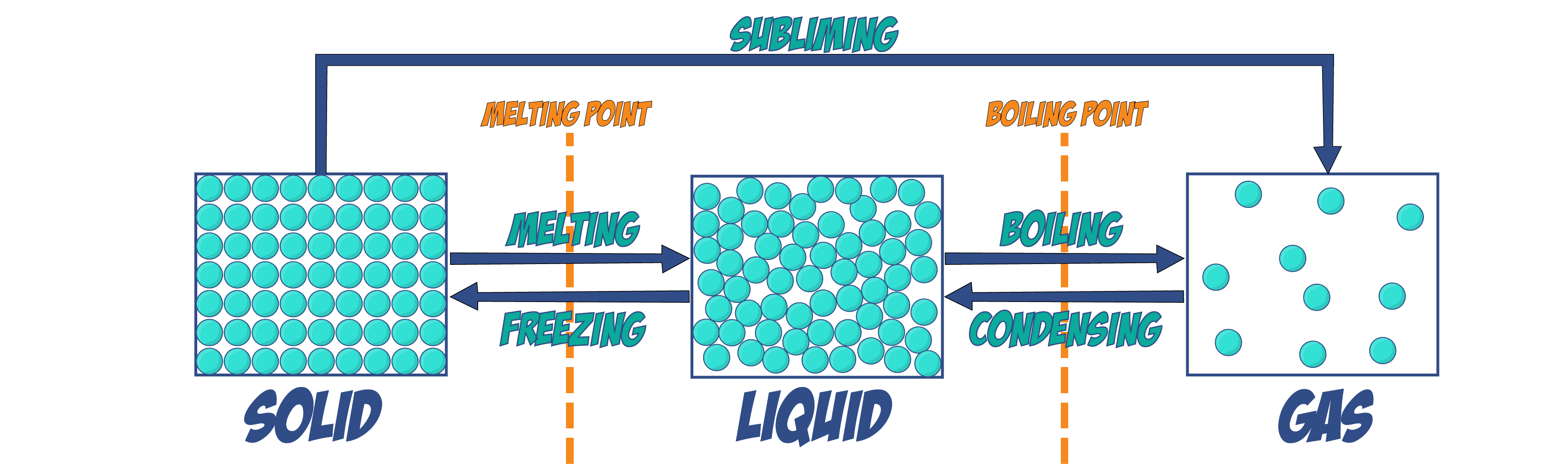
- When a solid turns into a liquid, it MELTS.
- When a liquid turns into a solid, it FREEZES.
- When a liquid turns into a gas, it BOILS.
- When a gas turns into a liquid, it CONDENSES.
- When a solid turns directly into a gas, it SUBLIMATES.
Changes of state are PHYSICAL changes which differ from CHEMICAL changes because the material recovers its original properties if the change is reversed.