Electric Fields
Any electrically CHARGED OBJECT creates an ELECTRIC FIELD around itself.
This means if you place a second electrically charged object in an electric field, the object will experience a FORCE.
The CLOSER to the object you get, the STRONGER the field is, and the GREATER the force it experiences.
This can be shown using FIELD LINES.
Field Lines
Electric fields are invisible but they can be represented on diagrams using FIELD LINES.
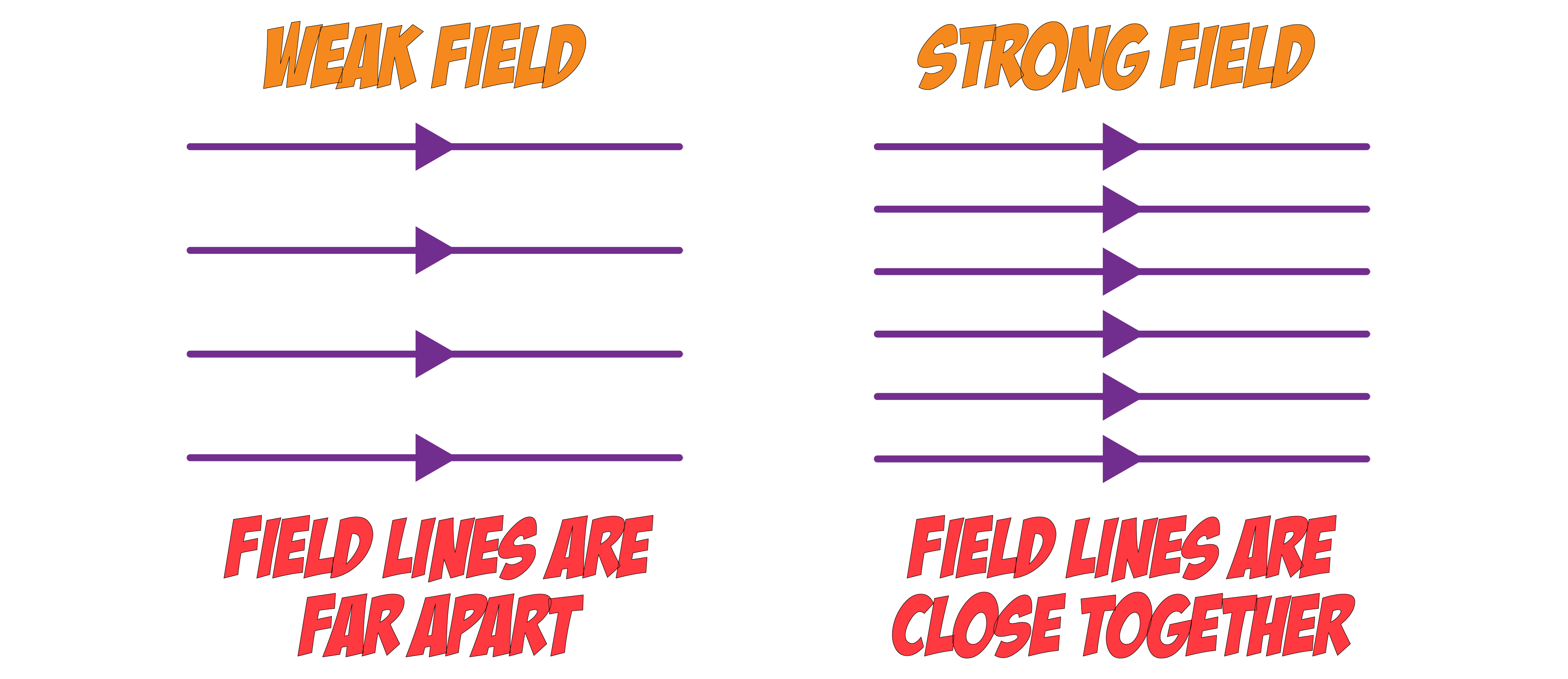
FIELD LINES are lines with arrows on them, which always point AWAY from a POSITIVE charge and TOWARDS a NEGATIVE charge.

The CLOSER TOGETHER the lines are, the STRONGER the field is:
You can DRAW the field lines for an ISOLATED, CHARGED SPHERE to represent the field:
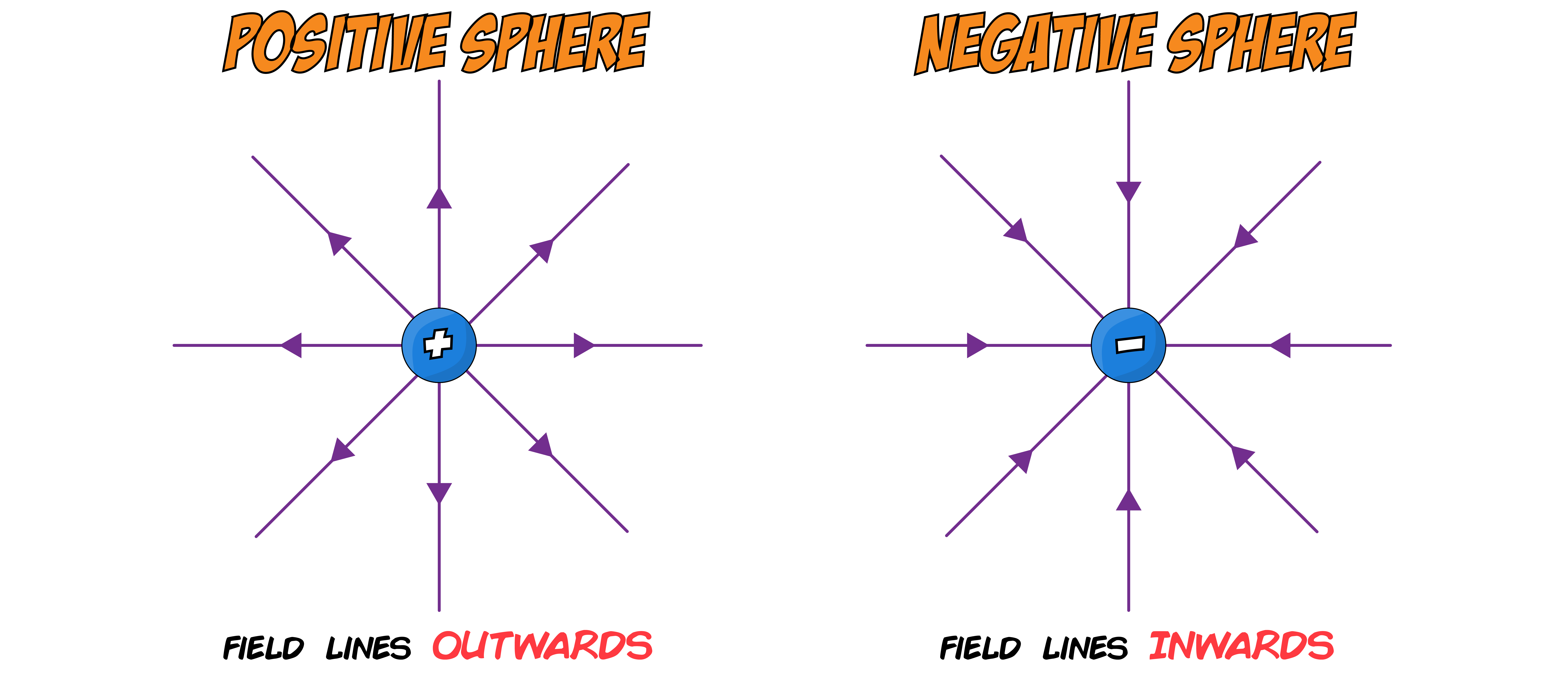
The field points OUTWARDS in POSITIVE spheres and INWARDS in NEGATIVE SPHERES.
The field lines are always at a RIGHT ANGLE to the surface.
The FURTHER from a charge you go, the further apart the lines are and so the WEAKER the field is.
Electrostatic Force
When a CHARGED OBJECT is placed in the ELECTRIC FIELD of another object, it feels an ELECTROSTATIC FORCE.
The force is caused by the ELECTRIC FIELDS of both charged objects INTERACTING with each other.
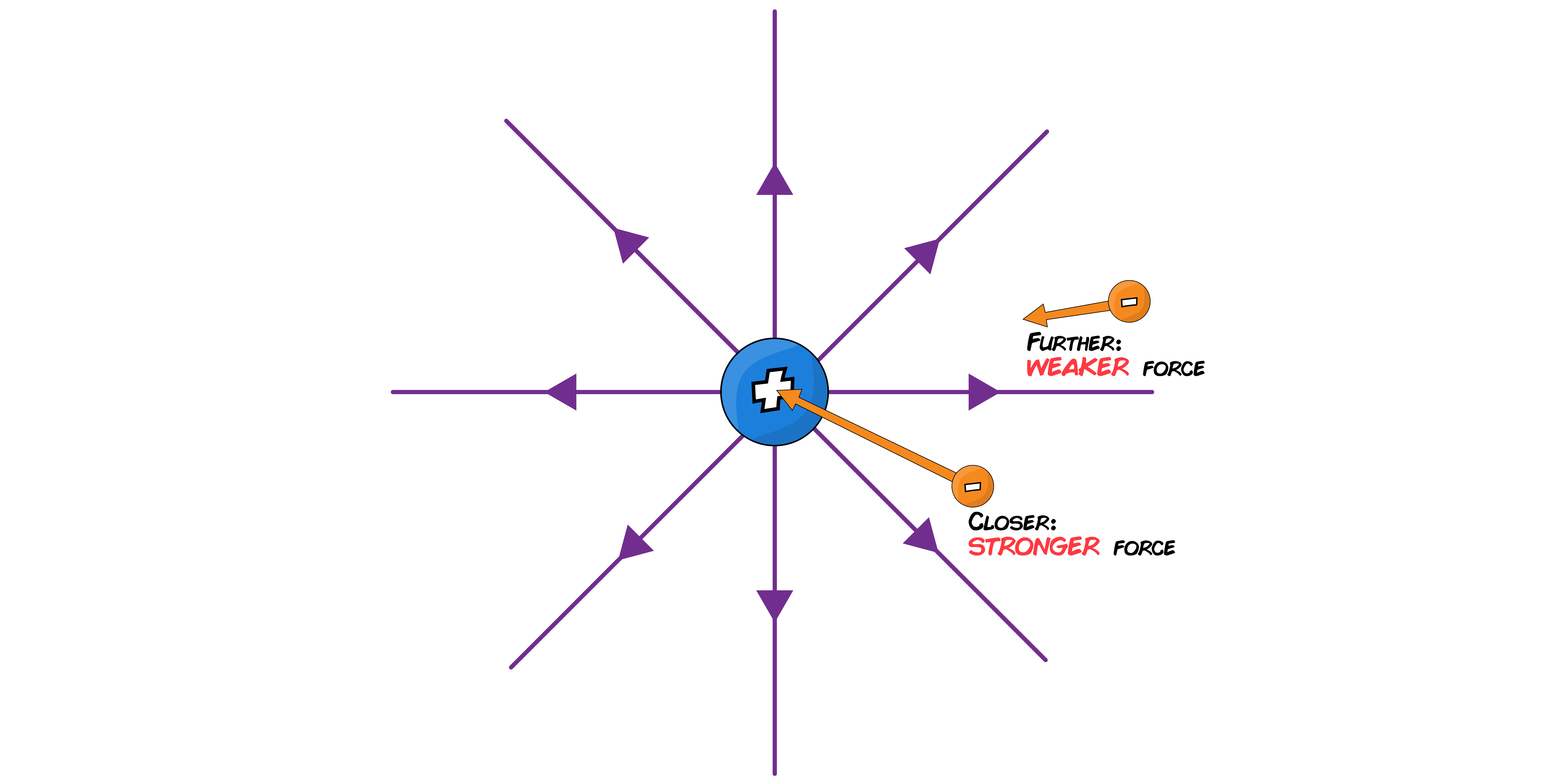
As you INCREASE the distance between the charged objects, the strength of the field DECREASES and the force between them gets SMALLER.
Electric Fields and Static
If an electric field becomes strong enough, the charges are FORCED through insulators such as air.
If the charge is an ELECTRON, the electrostatic force will be so high that it is FORCED through the AIR and JUMPS between two objects, creating a SPARK.
This is what happens for example, when a charged person touches a conductor and feels a shock.