
Static Electricity
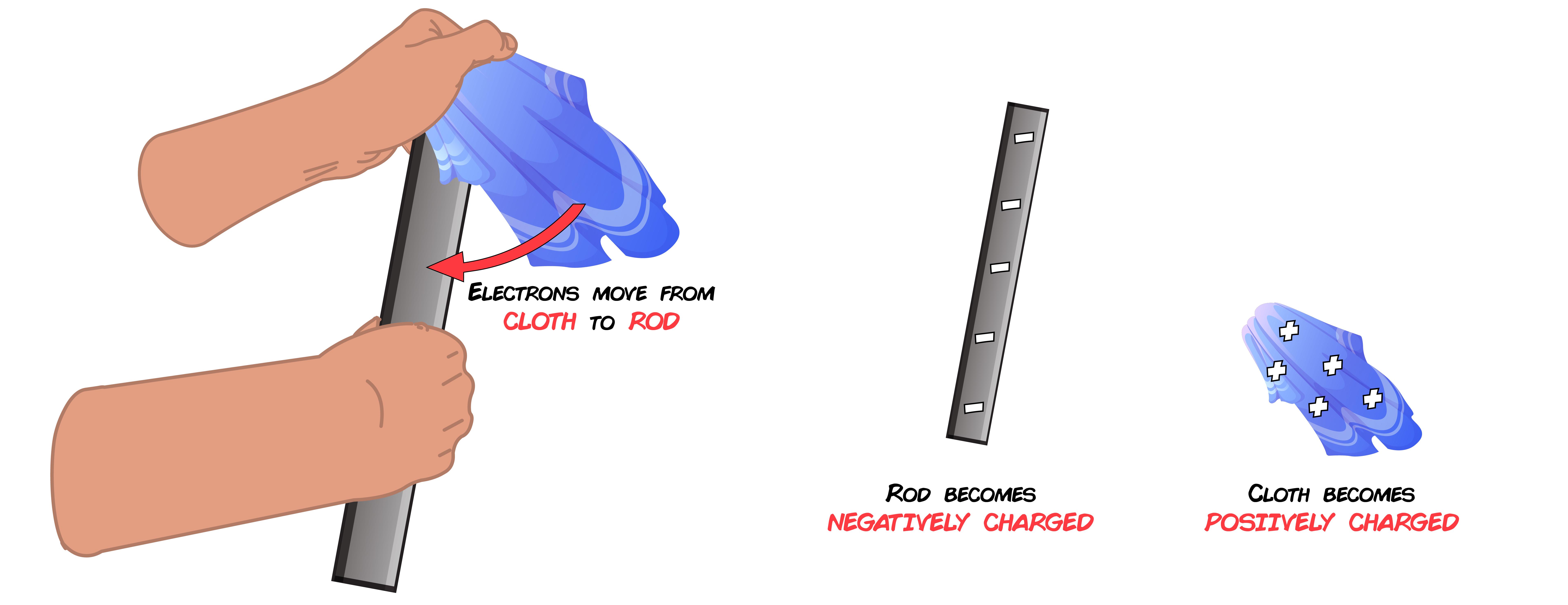
When certain INSULATING MATERIALS are RUBBED together, negatively charged ELECTRONS will be RUBBED OFF of one and onto the other.
This will leave the materials ELECTRICALLY CHARGED.
The object that LOSES ELECTRONS will be left with a POSITIVE STATIC CHARGE and the one that GAINS ELECTRONS an equal NEGATIVE STATIC CHARGE.
The direction that the electrons are transferred DEPENDS on the two materials involved.
One example of this is a plastic rod being rubbed with a CLOTH.
Attraction and Repulsion
Whenever two electrically charged objects are brought close together they EXERT A FORCE on one another.
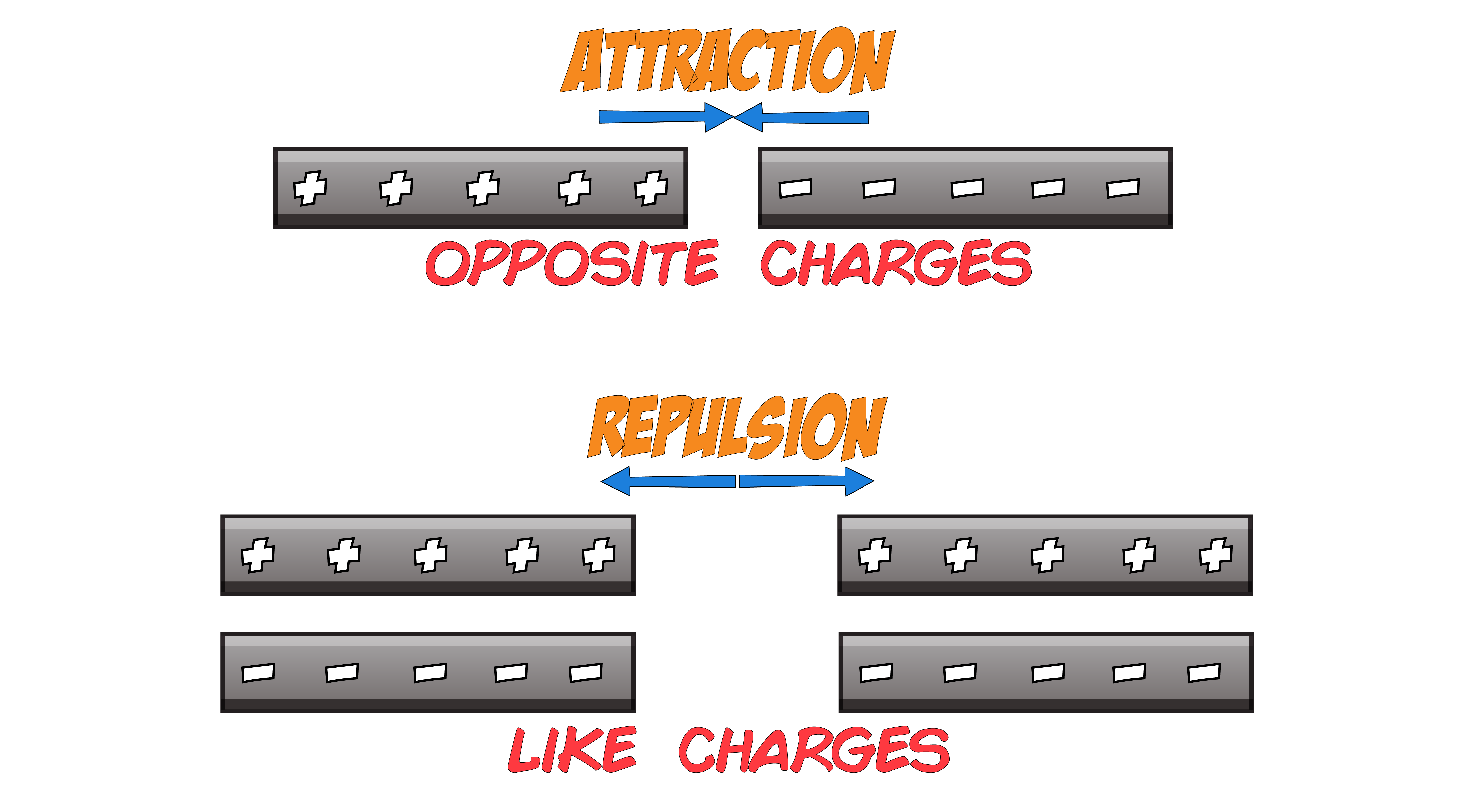
Objects with OPPOSITE electric charges are ATTRACTED to each other.
Objects with LIKE electric charges will REPEL each other.
These forces get WEAKER the FURTHER APART the two things are.
This force is known as ELECTROSTATIC FORCE and is a NON-CONTACT FORCE (the objects don't need to touch).
One way to see this force is to SUSPEND A ROD with a KNOWN CHARGE from a piece of string (so it is free to move). Placing an object with the SAME CHARGE nearby will REPEL the rod — the rod will MOVE AWAY from the object. An OPPOSITELY CHARGED object will cause the rod to move TOWARDS the object.
Sparks
As ELECTRIC CHARGE builds on an object, the POTENTIAL DIFFERENCE between the object and the earth (which is at 0 V) INCREASES.
If the potential difference gets LARGE ENOUGH, ELECTRONS can JUMP across the AIR GAP between the charged object and the earth. When this occurs, a SPARK appears (the spark is the ELECTRON).
Electrons can also JUMP to EARTHED CONDUCTORS that are near a charged object with a LARGE POTENTIAL DIFFERENCE.
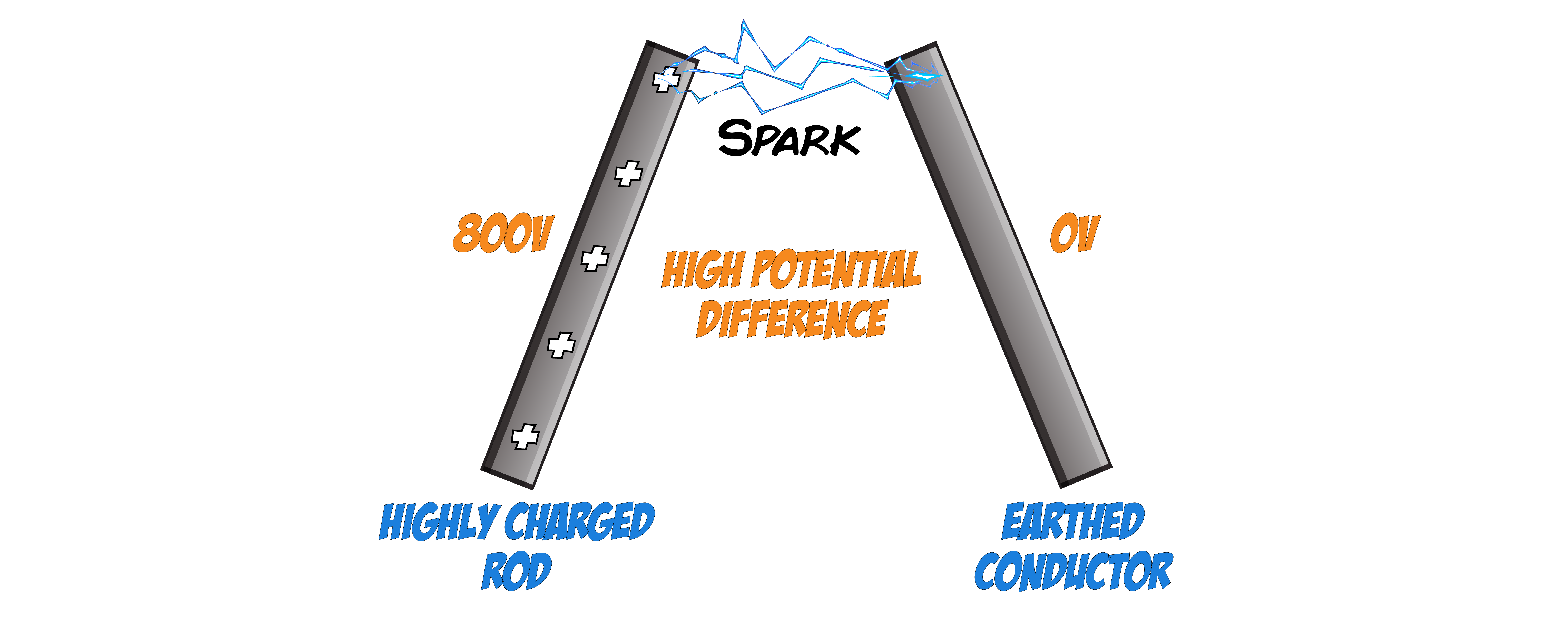
This USUALLY happens when the gap is SMALL.