
Required Practical: Making Salts
SALTS are often created by reacting an ACID with a BASE.
To make a SOLUBLE salt from an INSOLUBLE base, you need to use the correct reactants.
For example, if you wanted to make LITHIUM CHLORIDE. You would need to pick the correct BASE to give you the LITHIUM and the correct ACID to give you the CHLORIDE.
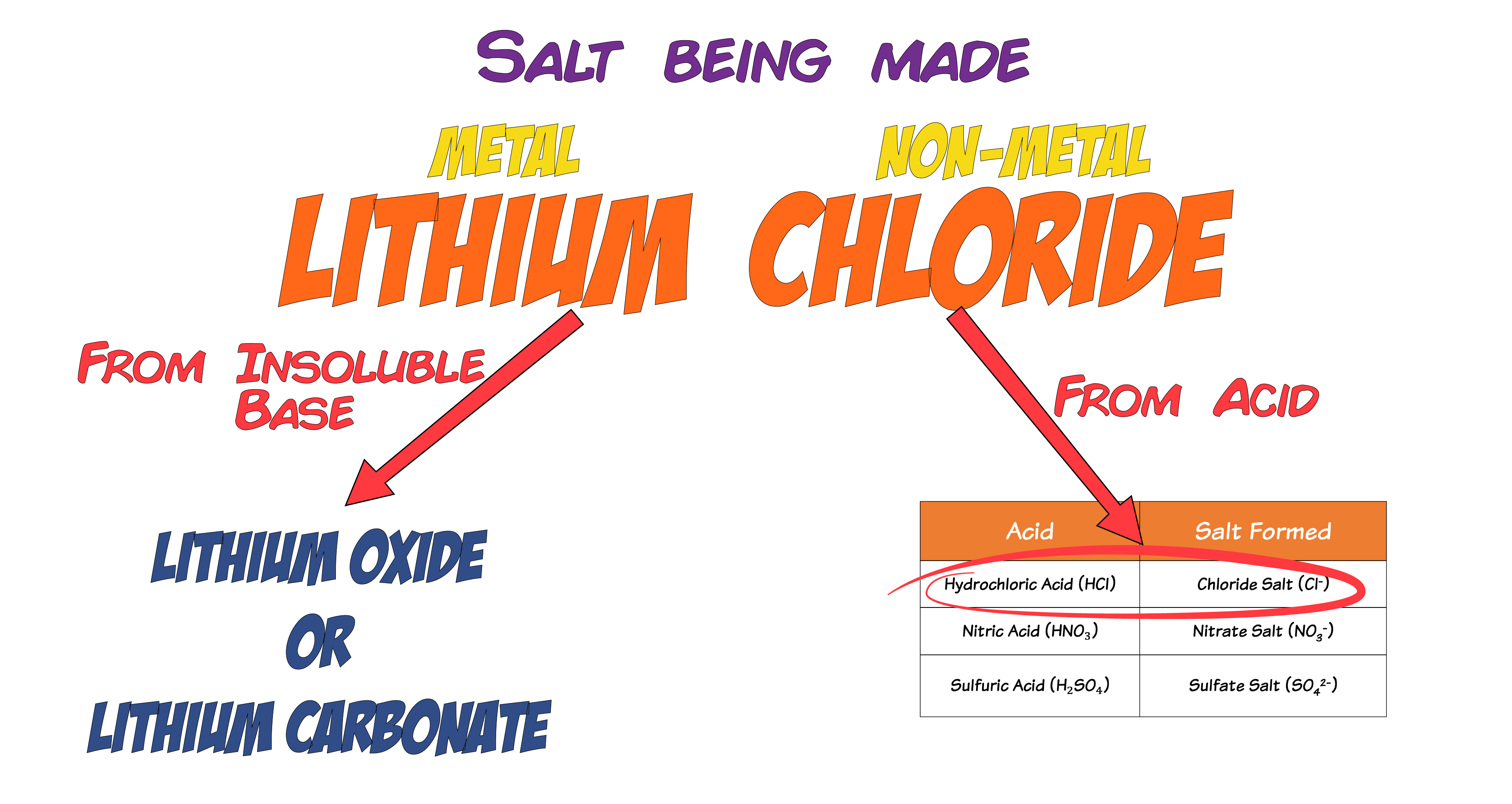
So to create a Lithium Chloride salt you can use the two possible combinations of reactants:
1. Lithium Oxide and Hydrochloric Acid
2. Lithium Carbonate and Hydrochloric Acid
Process of Making Salts
To make the salt, follow these steps:
You need to mix HYDROCHLORIC ACID (HCl) with LITHIUM OXIDE (LiO) in a beaker while the acid is warm:
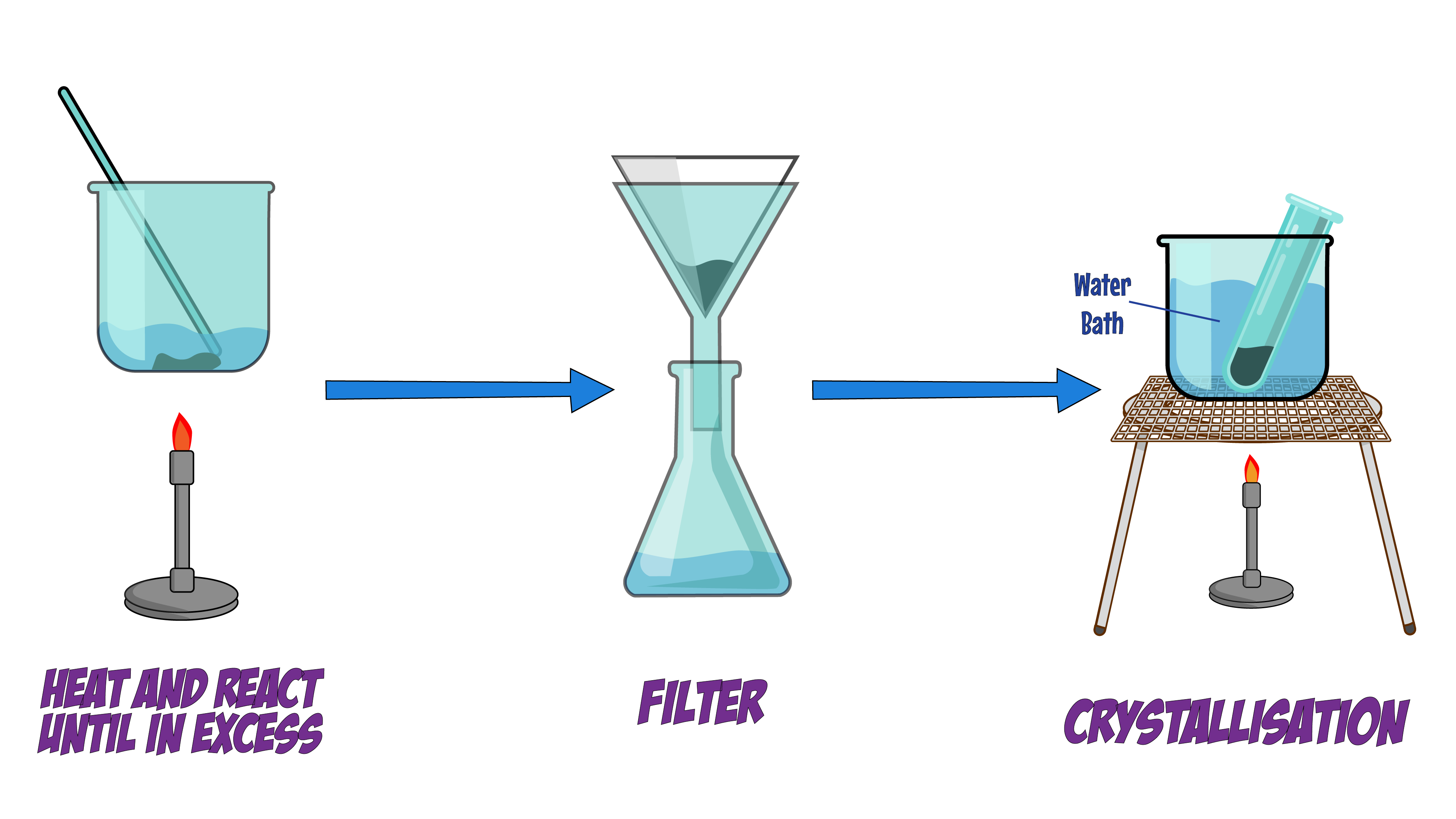
1. Heat the acid gently using a BUNSEN BURNER.
2. Add the LITHIUM OXIDE to the acid little by little while STIRRING. Continue until NO MORE DISSOLVES. At this point, the Lithium Oxide is in EXCESS and it will settle at the bottom of the beaker without reacting.
3. Remove the undissolved EXCESS Lithium Oxide by FILTRATION to collect the solution containing the salt.
4. To obtain pure, solid crystals of the salt, gently HEAT the solution using a WATER BATH to evaporate some water, increasing the solution's concentration. Once the solution is saturated, allow it to COOL. The salt will crystallise out and can be collected by filtration.