The pH Scale and Neutralisation
- pH is a measurement that tells you how ACIDIC or ALKALI an aqueous solution is.
- The pH scale goes from 0-14, and the HIGHER the pH value, the MORE ALKALI a solution is.
- ACIDS release HYDROGEN IONS (H+) in solution and have a pH less than 7.
- ALKALIS release hydroxide ions (OH⁻) and have a pH greater than 7.
- NEUTRAL SOLUTIONS have a pH of exactly 7, indicating a balance between H⁺ and OH⁻ ions.
How to Measure pH
Using Indicators:
- INDICATORS are dyes that show different colours at different pH levels.
- WIDE-RANGE INDICATORS: These can show a VARIETY of colours across the pH scale, allowing you to make a rough estimate of pH. An example of a WIDE RANGE INDICATOR is UNIVERSAL INDICATOR which can give the following colours:

Using pH probes:
- pH PROBES give a DIGITAL reading of pH, offering a more PRECISE measurement.
- The pH probe is immersed in the solution, and the meter gives a reading for the pH values.

Neutralisation
NEUTRALISATION is a type of chemical reaction in which an acid and a base react to form water and a salt.

You can also write the IONIC EQUATION for ANY neutralisation reaction like this:
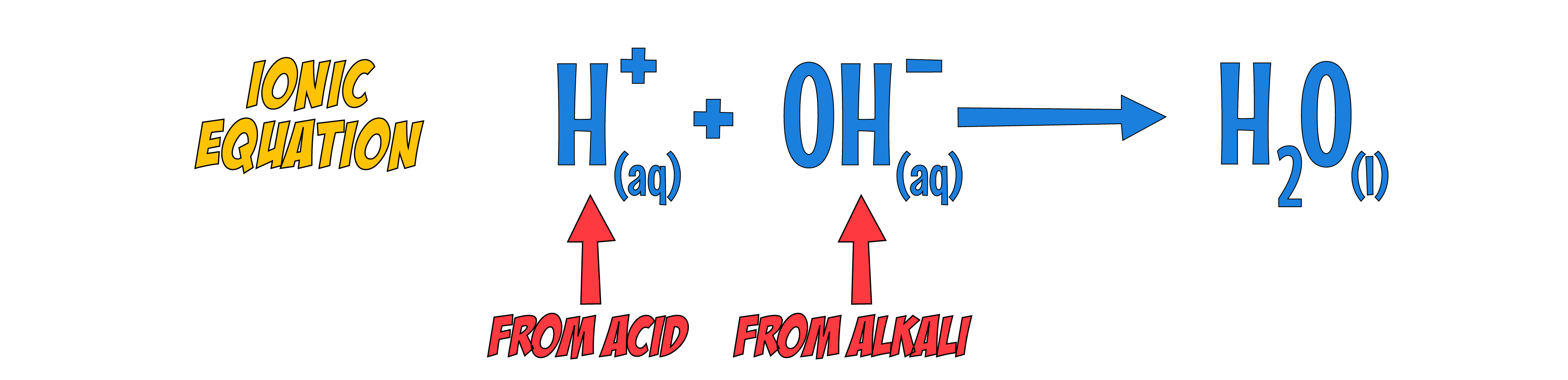
This reaction involves the transfer of H⁺ IONS from the acid to the OH⁻ IONS of the alkali, forming H₂O.