
The Development of the Oxygen Rich Atmosphere:
The presence of oxygen in the atmosphere is a result of life:
Around 2.7 billion years ago, ALGAE were the first organisms to PHOTOSYNTHESISE and began to use sunlight to convert Carbon Dioxide and water into Glucose and Oxygen.
- Word equation: CARBON DIOXIDE + WATER → GLUCOSE + OXYGEN
- Symbol equation: 6CO₂ + 6H₂O (light) → C₆H₁₂O₆ + 6O₂
This caused OXYGEN to be released into the atmosphere, and CARBON DIOXIDE to be REMOVED from the atmosphere.
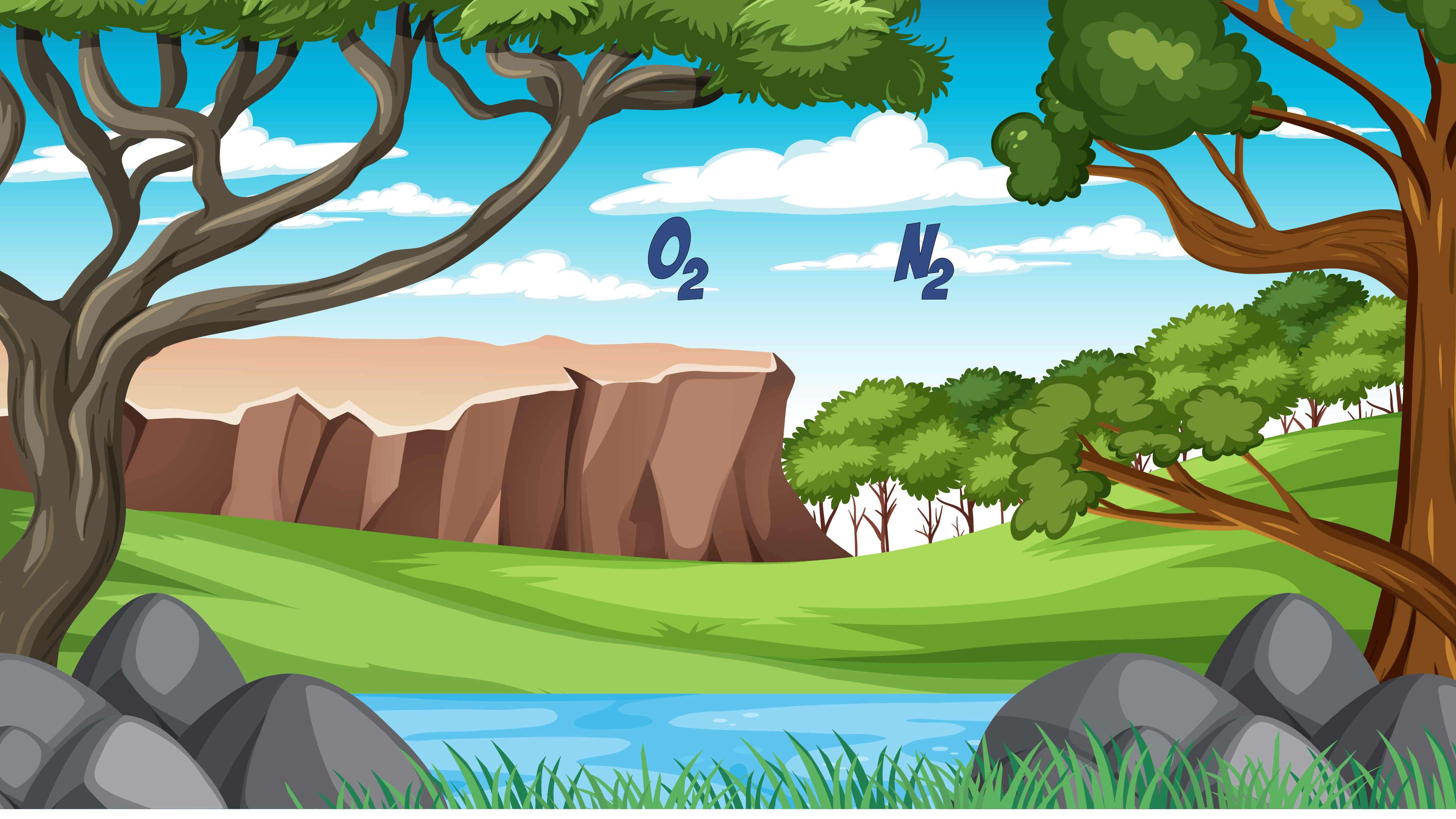
Over the next billion years PLANTS began to evolve, which increased the levels of Oxygen and decreased the level of Carbon Dioxide even more.
The high levels of Oxygen allowed ANIMALS to evolve.
Animals fed on the plants which transferred Carbon to their tissues including bones and shells.
When these organisms died, their remains formed SEDIMENTARY ROCKS.
Some of the living organisms were buried in mud when they died.
Over millions of years, the heat and pressure turned the dead organisms into FOSSIL FUELS (crude oil, natural gas and coal).
The formation of sedimentary rock and fossil fuels 'LOCKED UP' the Carbon from Carbon Dioxide in the early atmosphere.
This is how the large amounts of Carbon Dioxide in the early atmosphere were reduced.